

Out of stock
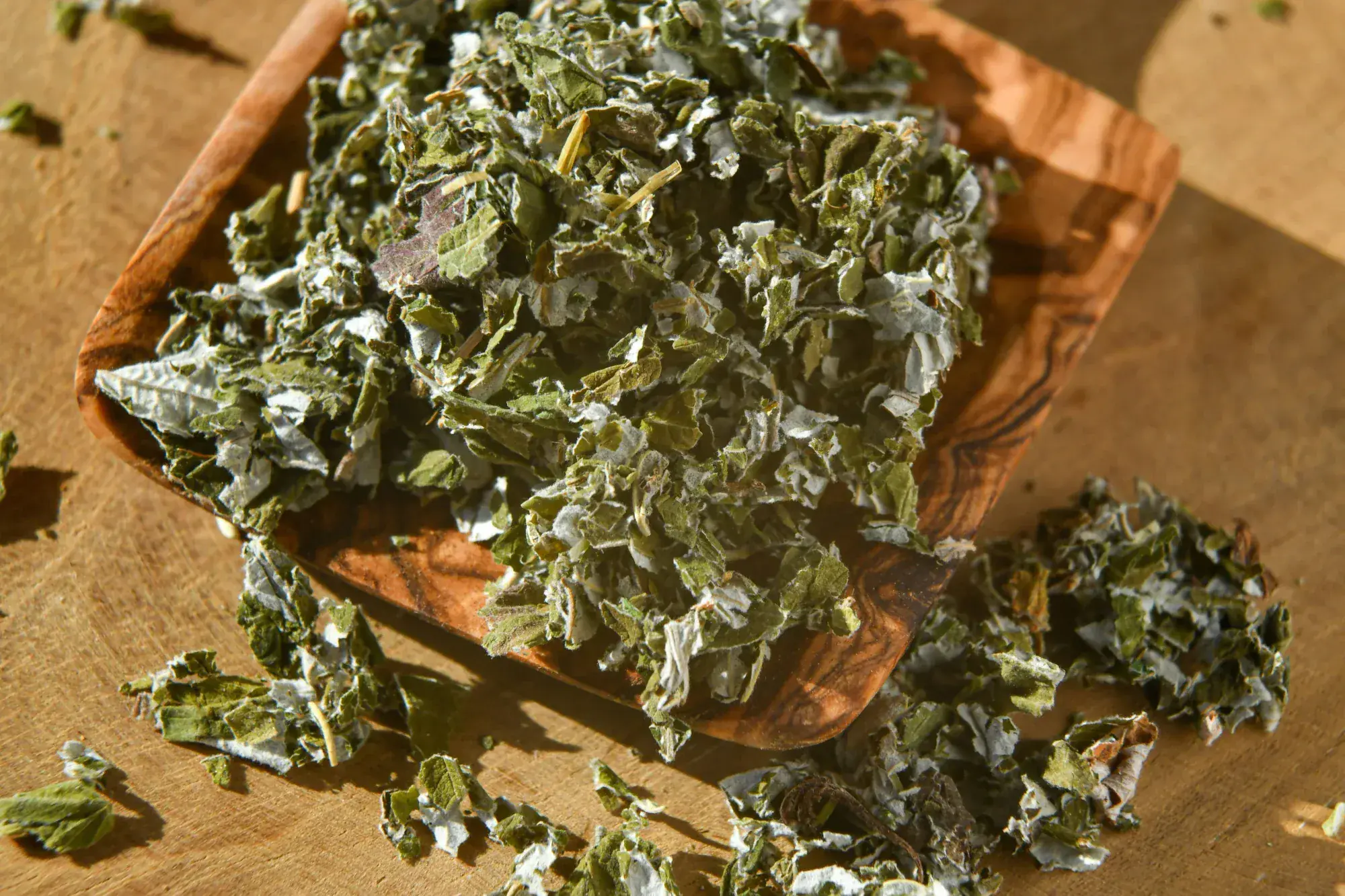
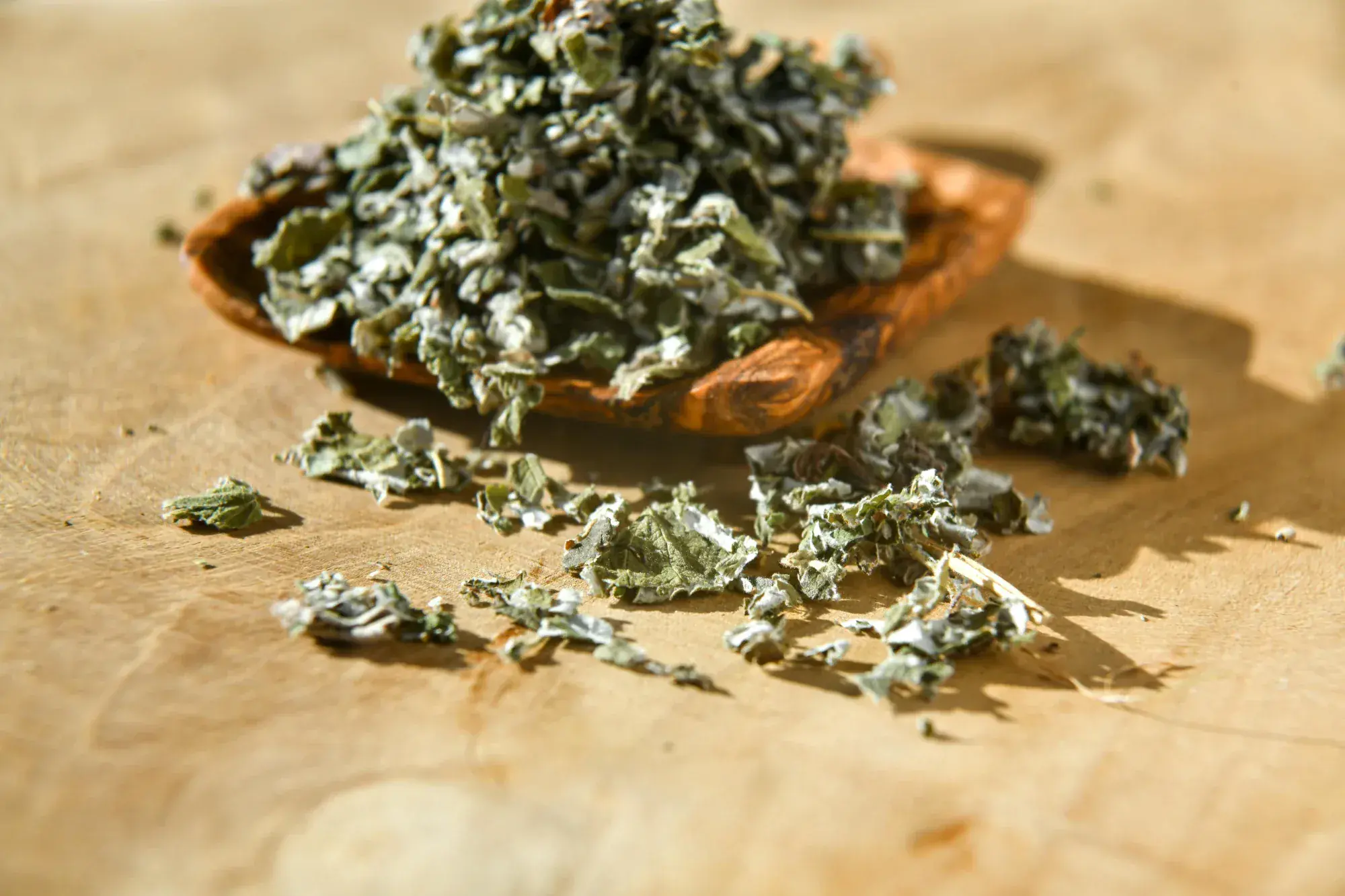
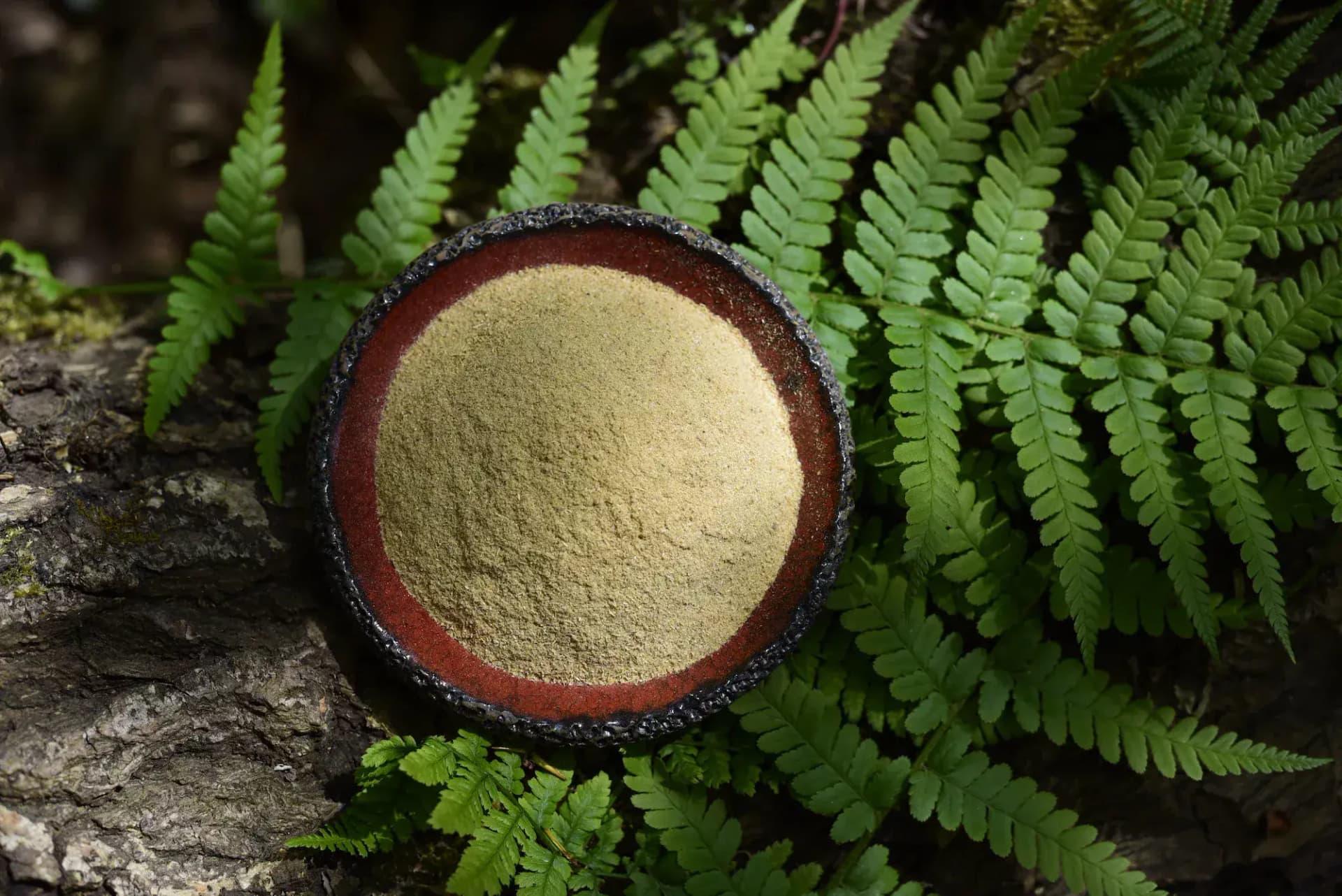
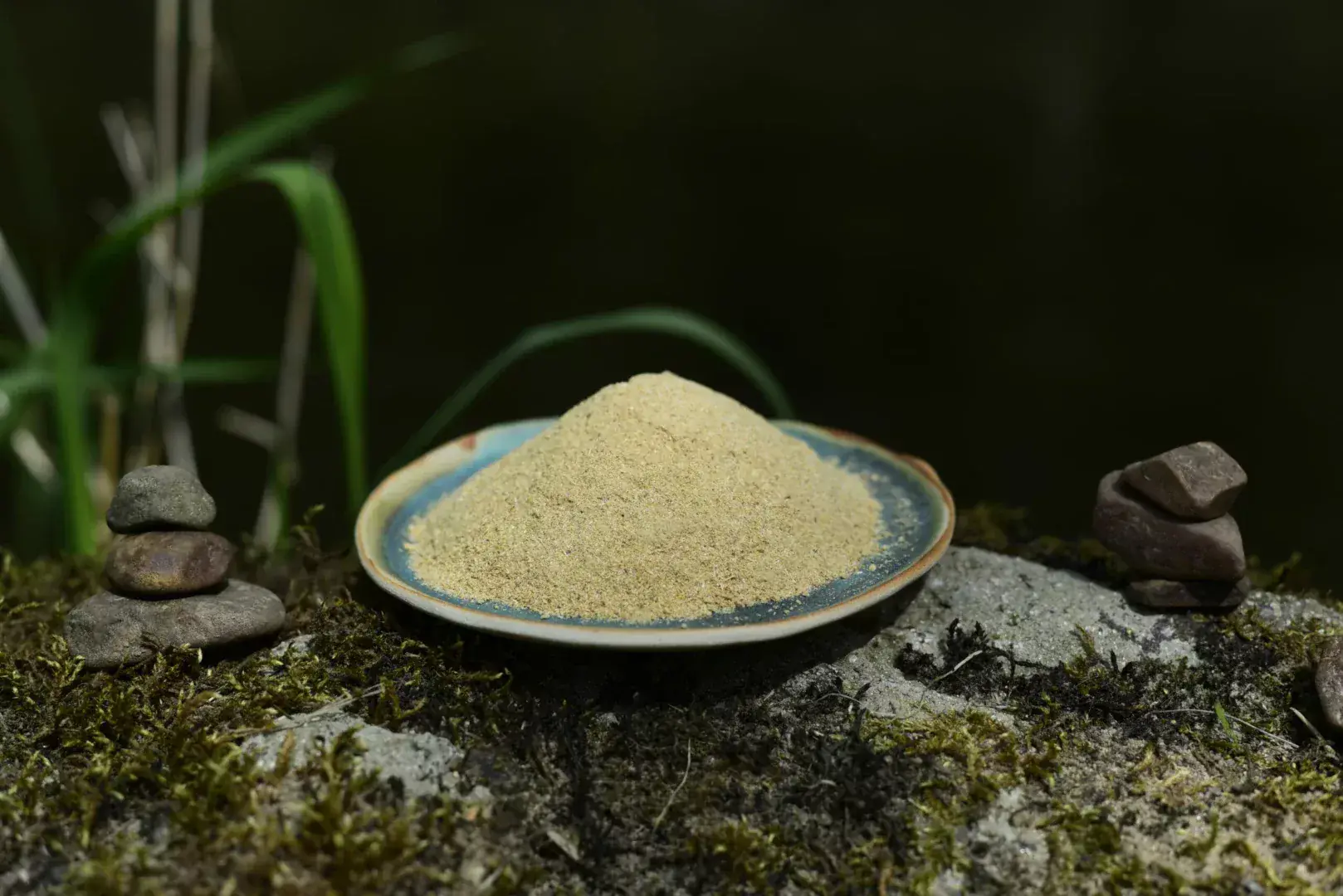
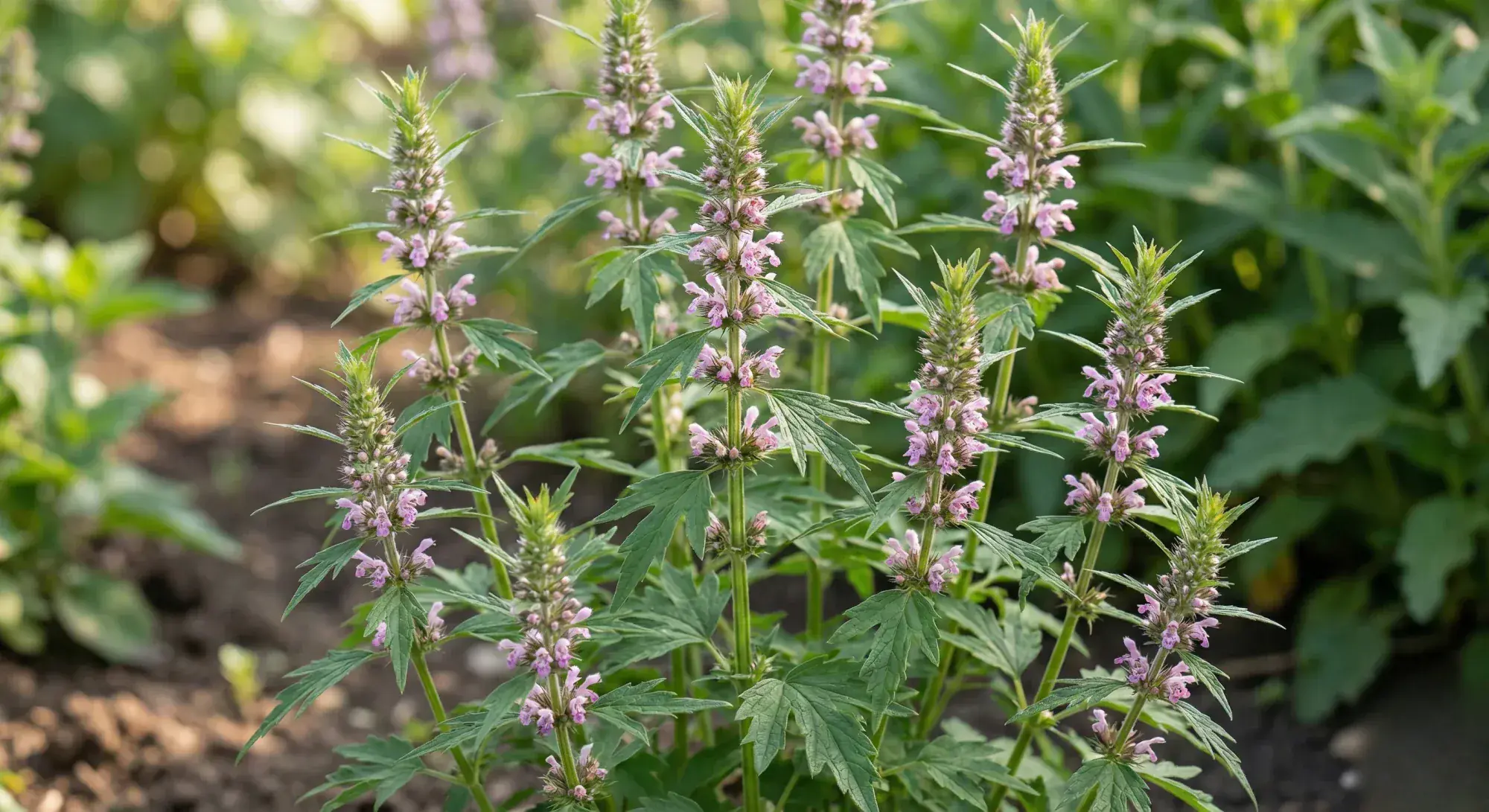
Mugwort
★4.9· 99 reviews
€7.00
Artemis’s mugwort, the rose of Aphrodite and of Mary, Lakshmi’s lotus, the tulsi that is married to Vishnu, the bee the Maya call the lady: the plants that traditions have entrusted to their goddesses and to women.
Artemis watched over childbirth, and Pliny reports that mugwort owes her its name.
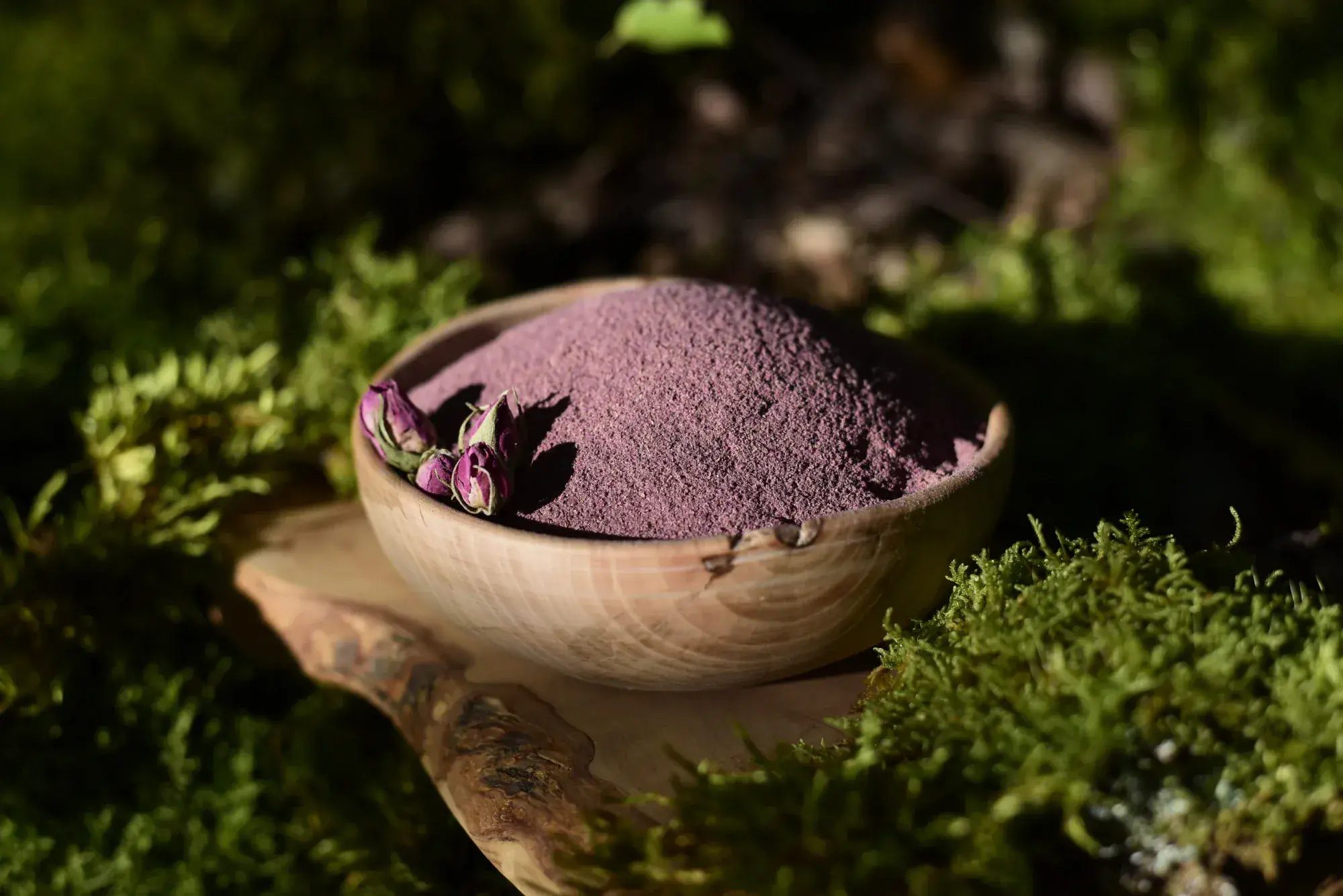
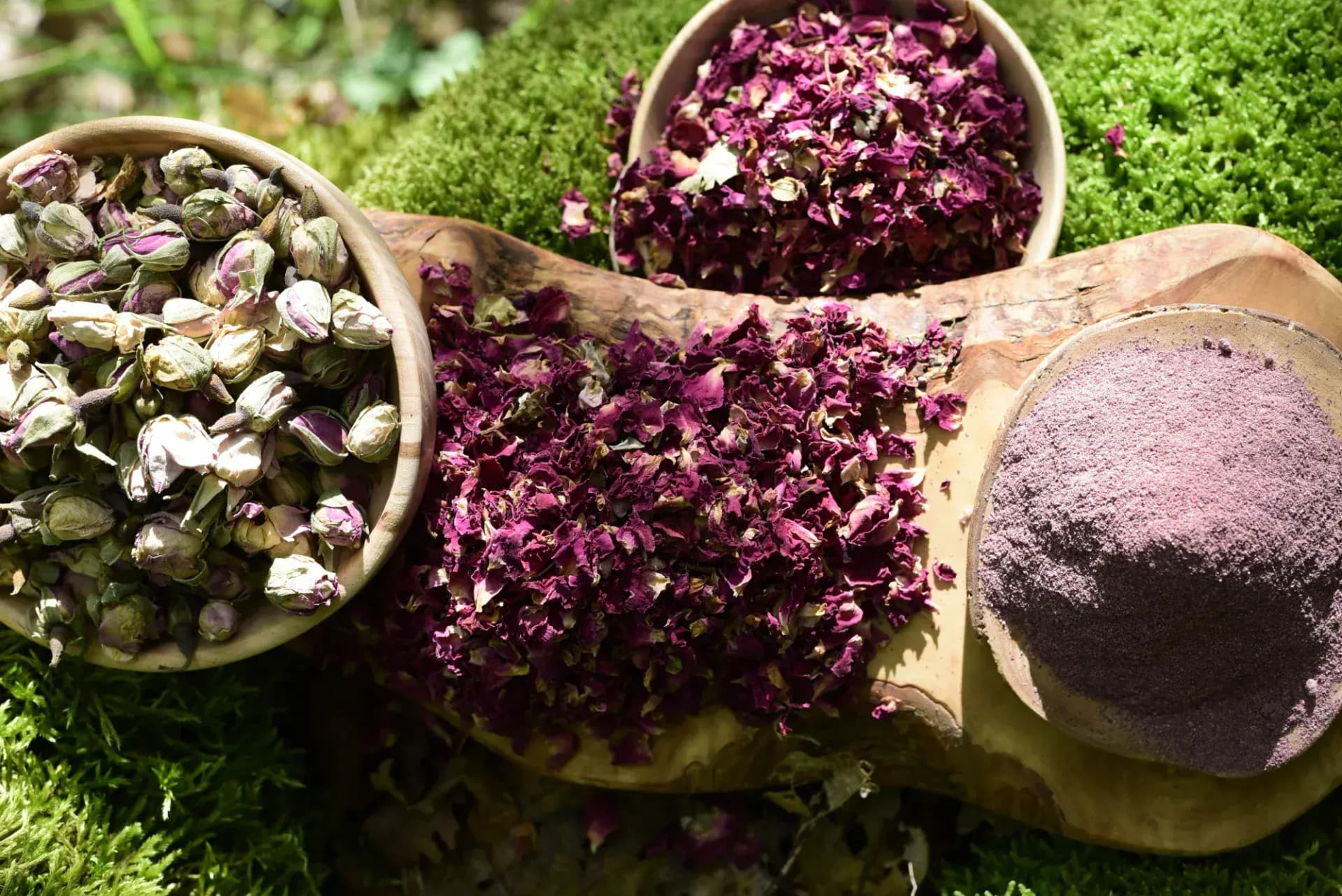
The rose, the flower of divine love. Symbol of the royalty of the heart, a magnificent flower to meet on its own or in synergy, and one that pairs ideally with ceremonial cacao. Placed in hot water, not boiling, it infuses gently.
Artemis’s mugwort, the rose of Aphrodite and of Mary, Lakshmi’s lotus, the tulsi that is married to Vishnu, the bee the Maya call the lady: the plants that traditions have entrusted to their goddesses and to women.
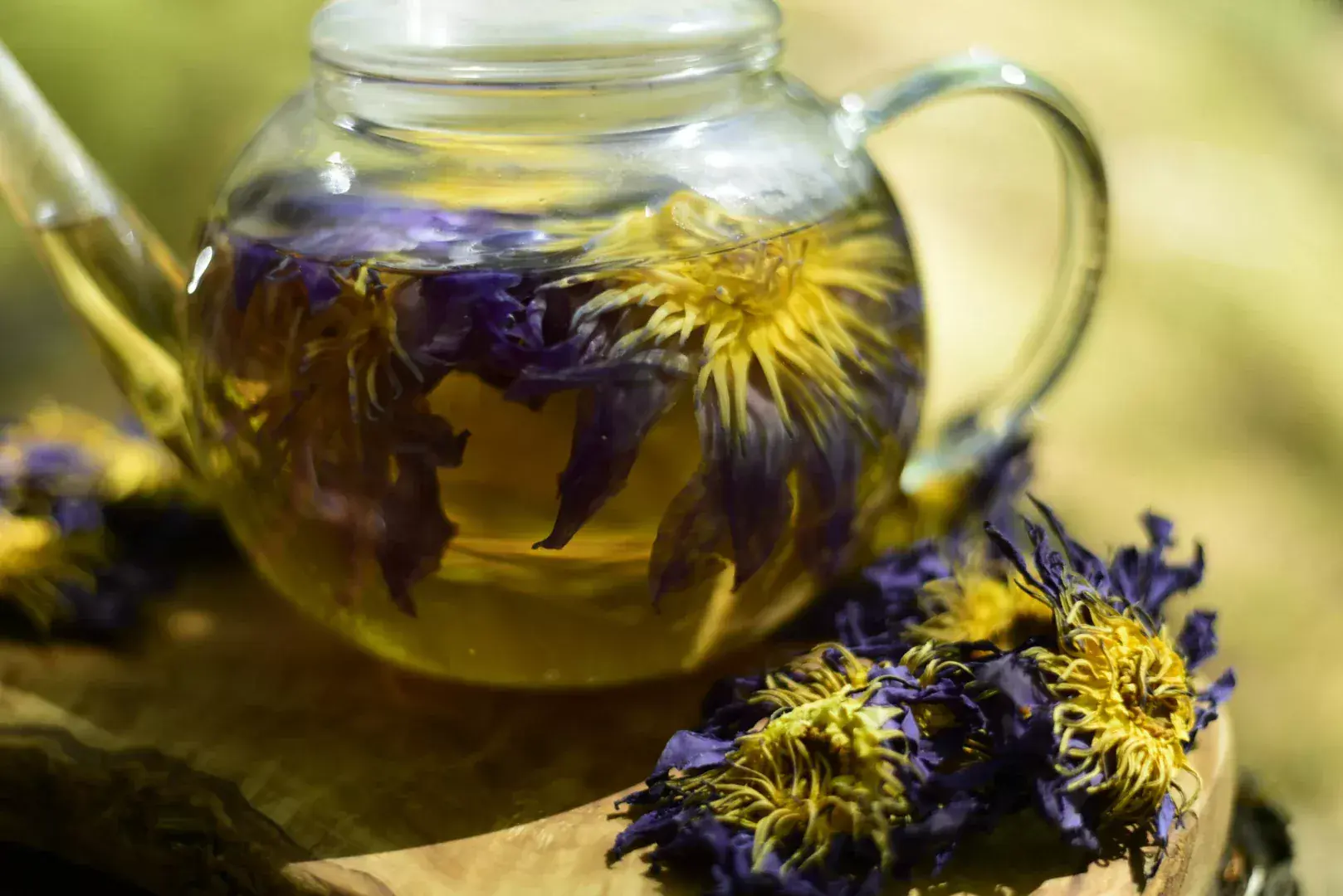
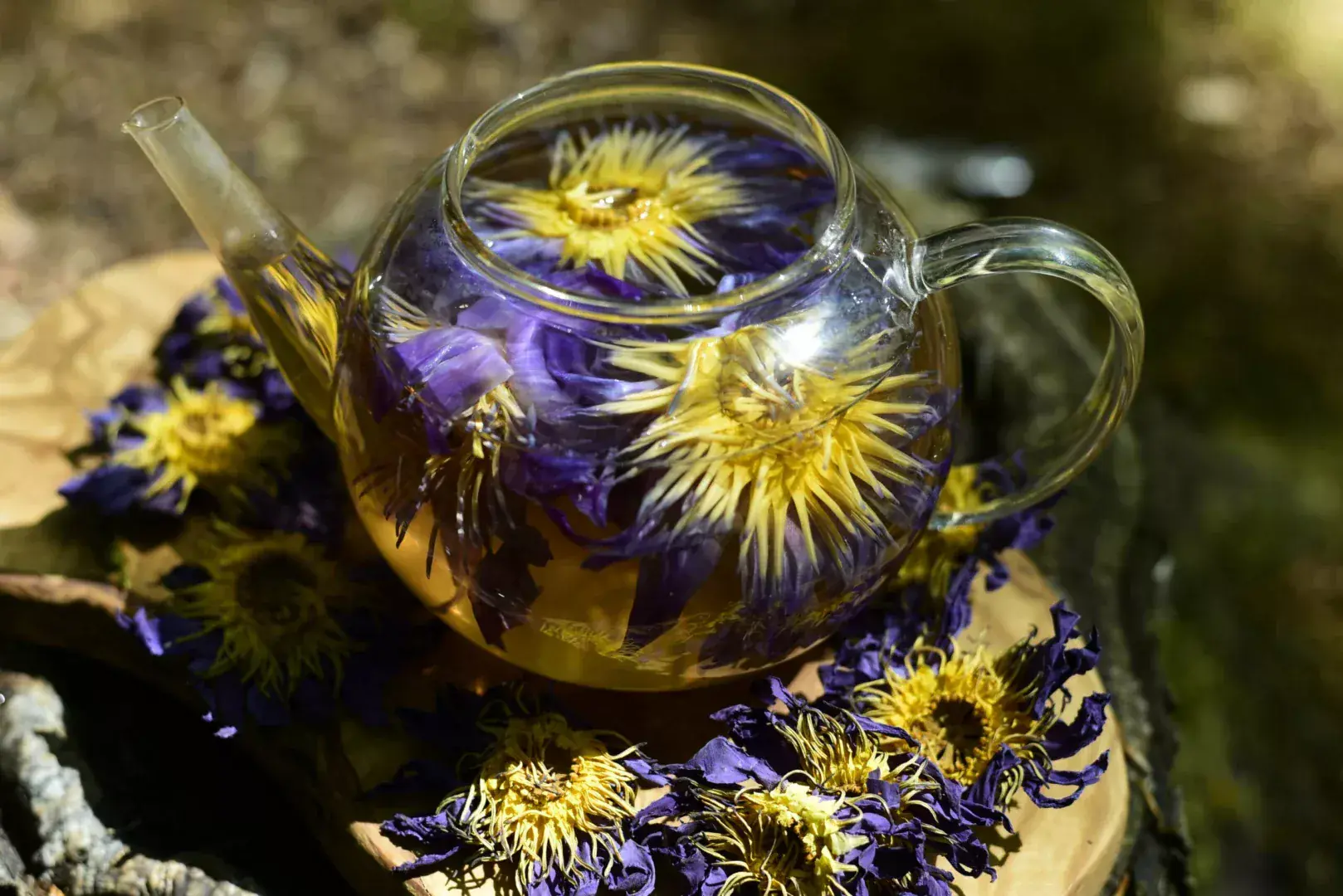
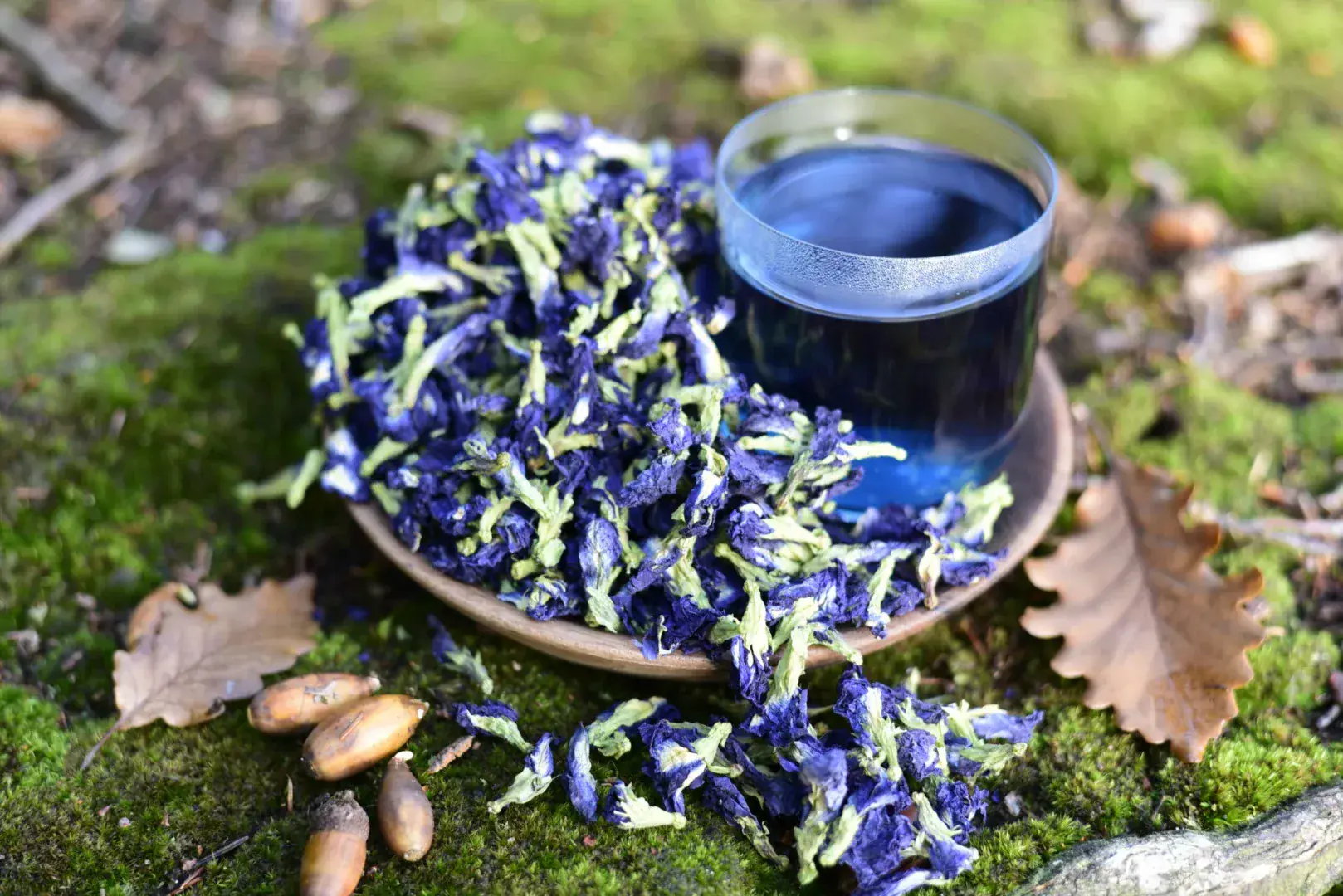
Rose, pink lotus, aparajita: placed in hot water, not boiling, and left to infuse. The rose, the flower of divine love; aparajita, which turns the water indigo blue.
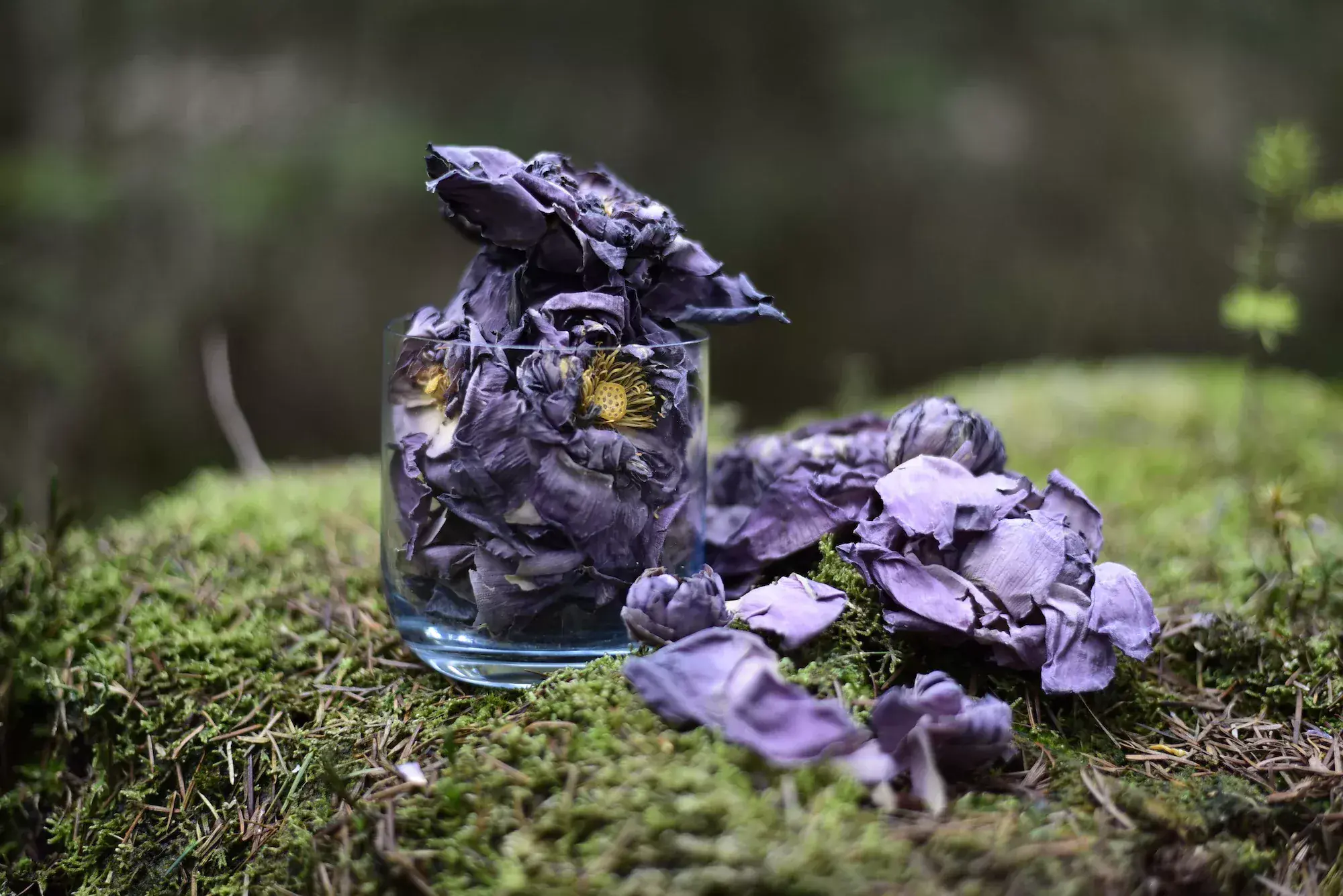
A rose for Mary, a lotus for Lakshmi, a sprig of tulsi: in India, in the month of Kartik, a lamp is lit each evening at the foot of the courtyard tulsi.
In Japan and Korea, you receive the steam of a bowl of hot mugwort, seated at a good distance. The steam stays lukewarm: steam that stings the skin is too hot.
On 3 March, the Girls’ Festival in Japan, people eat a rice cake whose green layer is made with mugwort. Tulsi is married to Vishnu in the month of Kartik, in October or November.
The phrase is recent; what it names is old. Goddesses hold flowers, festivals have their herbs, women pass on gestures of the kitchen, of steam and of the altar. This page stays on that ground: plants, the traditions that carry them, and the texts that keep their trace.
| Goddess or figure | Tradition | The plant | At INFUSE |
|---|---|---|---|
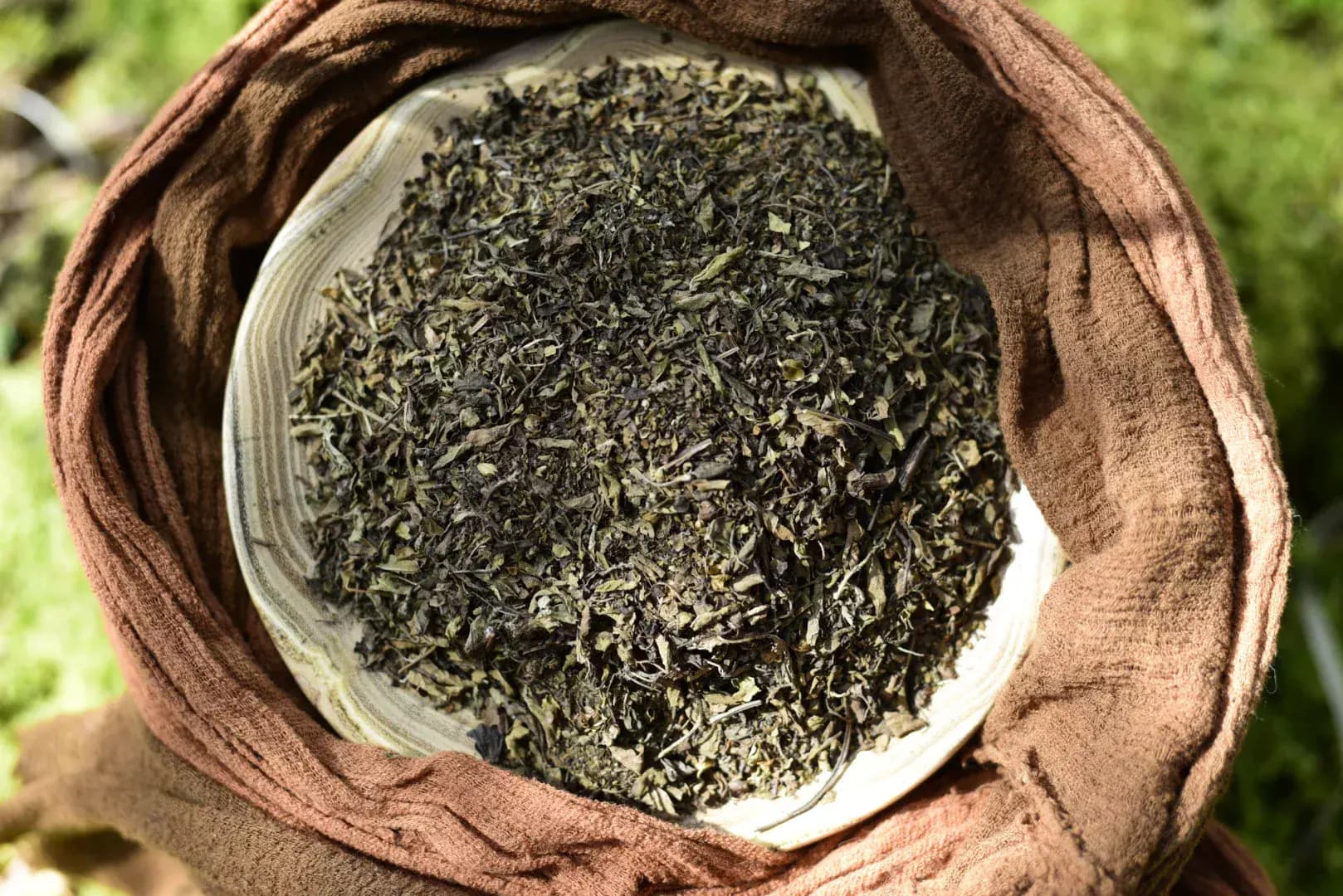
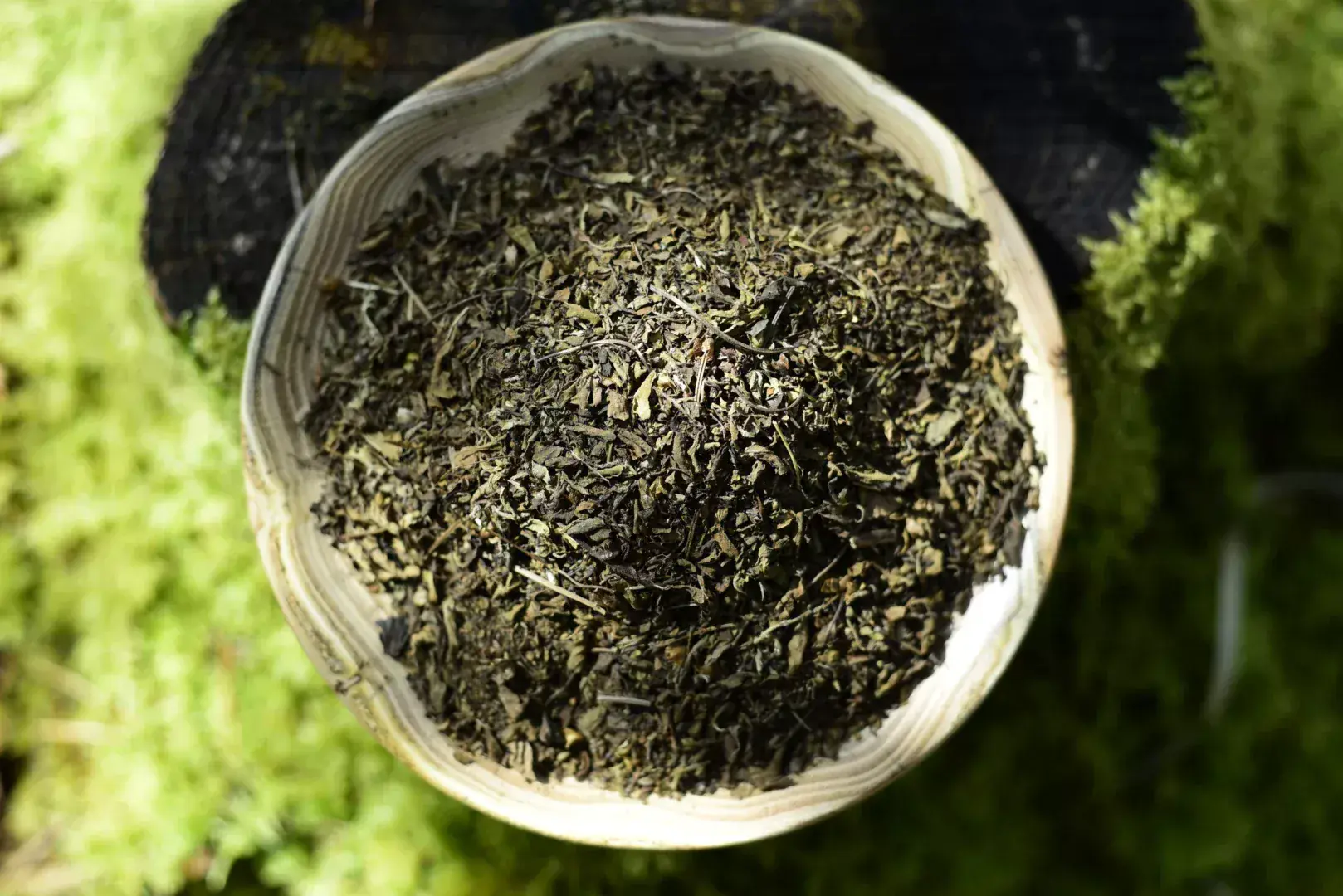
| Artemis | ancient Greece | mugwort: Pliny reports that it may take its name from Artemis Eileithyia, goddess of childbirth (Natural History, XXV) | Mugwort |
| Aphrodite | ancient Greece | the rose, her flower | Rose |
| Mary | Christianity | the rose: Rosa mystica, the mystical rose of the Litany of Loreto; the rosary takes its name from the Latin rosarium, a garland of roses | Rose |
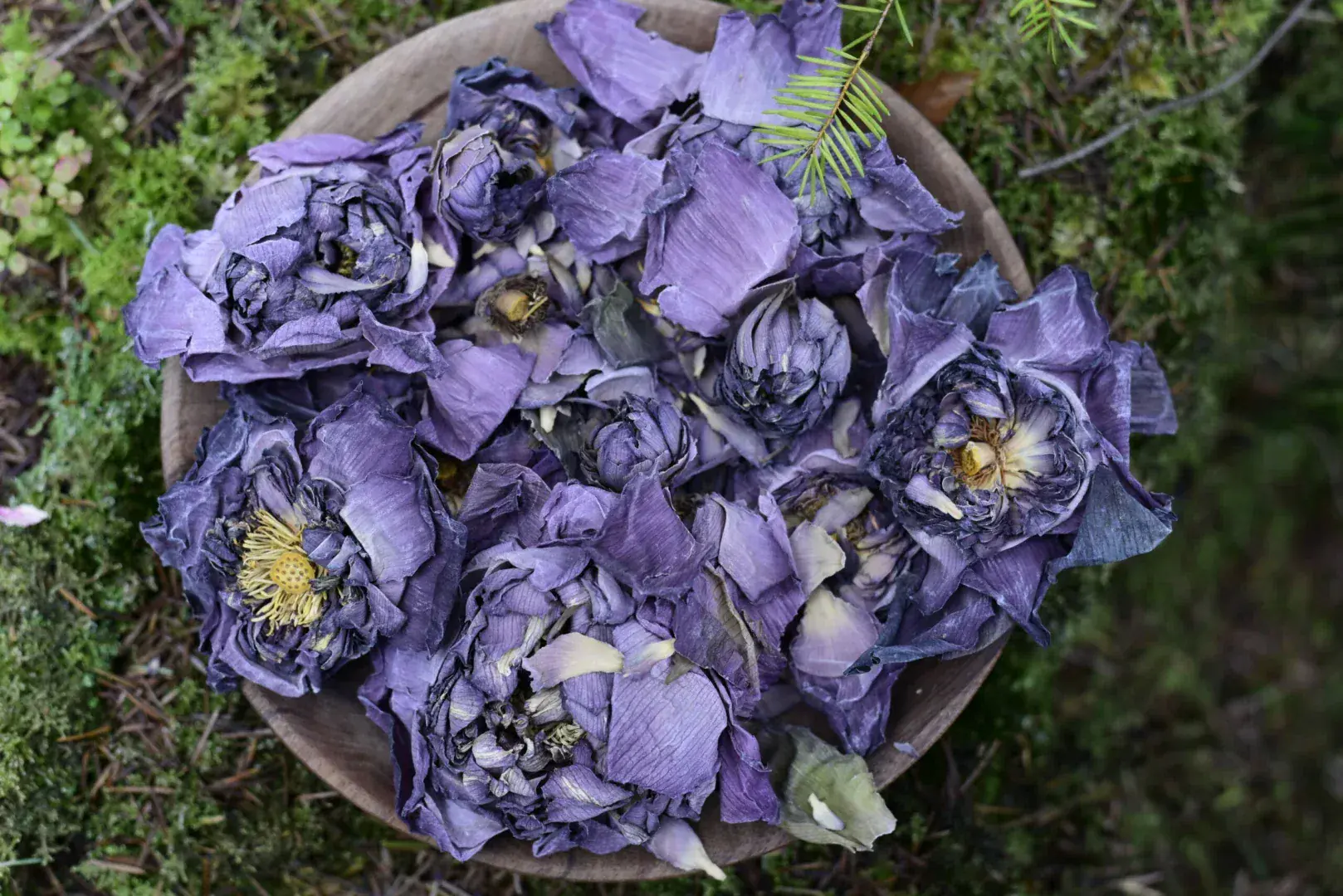
| Lakshmi | Hinduism | the lotus, padma: the goddess stands on a lotus flower and holds lotuses in her hands | Pink lotus |
| Tulsi, Vrinda | Hinduism | holy basil itself: the plant is a goddess, married to Vishnu at the Tulsi Vivah | Tulsi |
| Durga | Hinduism | aparajita, the flower of the goddess Durga, the Invincible | Aparajita |
| Xunan kab | Maya of Yucatán | the bee Melipona beecheii, whose Maya name translates as “royal lady bee” | Melipona honey |
| the nymph Ida | Greek legend | the raspberry: picking raspberries for the infant Zeus, she pricked her breast, and the white fruit took the colour of her blood; hence Rubus idaeus, the bramble of Ida | Raspberry leaf |
Pregnancy and breastfeeding: set aside mugwort, marihuanilla and shatavari; drink raspberry leaf only on the advice of your midwife or doctor. Allergy to the daisy family (Asteraceae): take care with mugwort. On hormonal, anticoagulant or antidepressant treatment: ask your doctor before taking any plant. The steam stays lukewarm and at a distance. Our plants are freely sold in France and the European Union; the law varies from country to country, so check yours before ordering.
The ones traditions link to their goddesses and to women: Artemis’s mugwort, the rose of Aphrodite and of Mary, Lakshmi’s lotus, tulsi, the plant-goddess of India, Durga’s aparajita, the raspberry of the nymph Ida, the honey of the Maya lady bee. The table above gives the source of each.
Each tradition has its own, and many pass through a flower: Lakshmi’s lotus, the rose of Mary and of Aphrodite. In Europe, mugwort carries the name of Artemis.
In Europe, mugwort, since Pliny tied it to Artemis, goddess of childbirth. In India, tulsi, which grows at the centre of the courtyard; in Japan, the yomogi of the Girls’ Festival rice cake. These are traditions, told as such.
Mugwort, marihuanilla and shatavari are set aside during pregnancy and breastfeeding. Raspberry leaf is drunk only on the advice of your midwife. For the others, ask your doctor first.
Sitting over a bowl of hot water in which mugwort is steeping, known in Korea and Japan, where it is called yomogi-mushi. The method, the plants and the precautions are on our page the yoni steam.
In the Forest, the plants of the sacred feminine tell the story of twelve plants and their lineages. All our plants of this family are gathered in the Sacred Feminine family.
Ask the Forest: ethics of a plant, dose, lineage, synergy. It shares what peoples have transmitted and what books have written.