Lavender
€7.00
On the eve of 24 June, Europe gathers its herbs, lights its fires and leaves a bowl of flower water outside until morning. From Galicia to Poland, the same plants come back.
On 24 June the Church celebrates the birth of John the Baptist, six months before Christmas.
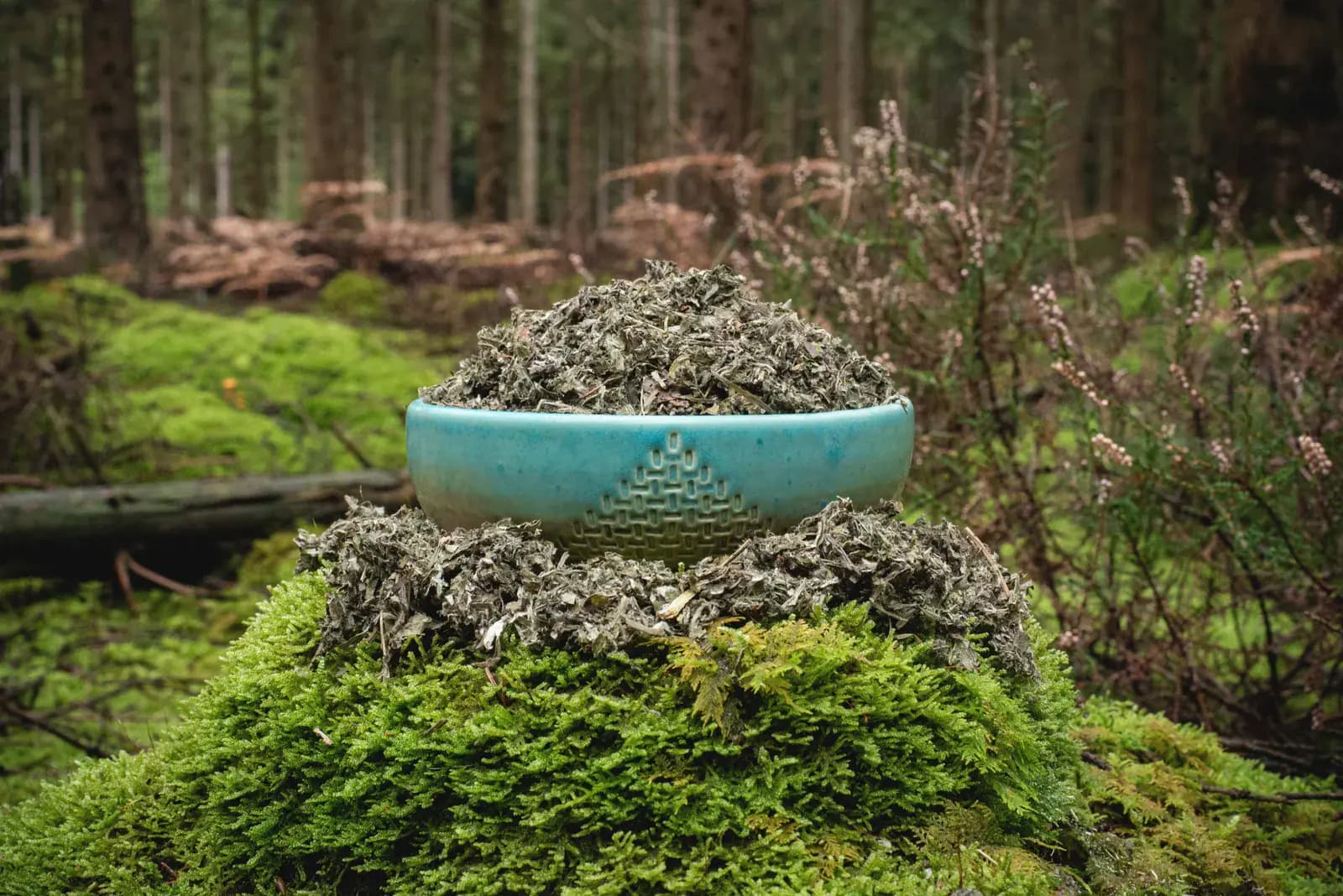
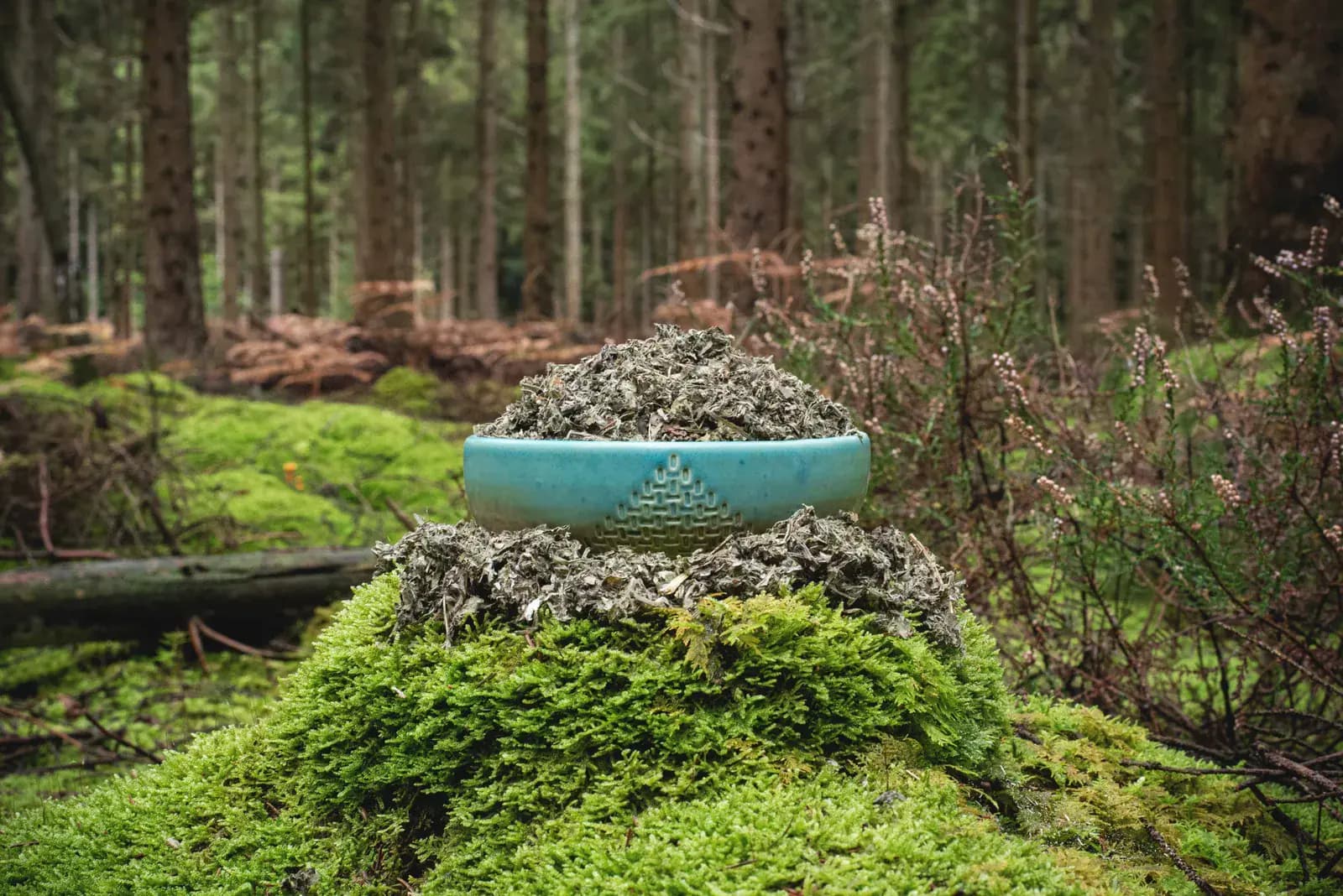
In the Middle Ages a crown of mugwort was worn on the evening of 23 June: St John's girdle. Ours is wild-harvested in France; on a charcoal, a pinch holds the smoke of one evening.
On the eve of 24 June, Europe gathers its herbs, lights its fires and leaves a bowl of flower water outside until morning. From Galicia to Poland, the same plants come back.
On 23 June, late in the day or at dawn on the 24th, gather what is flowering around you. In Galicia some houses begin on the 22nd. The bunch changes from one village to the next.
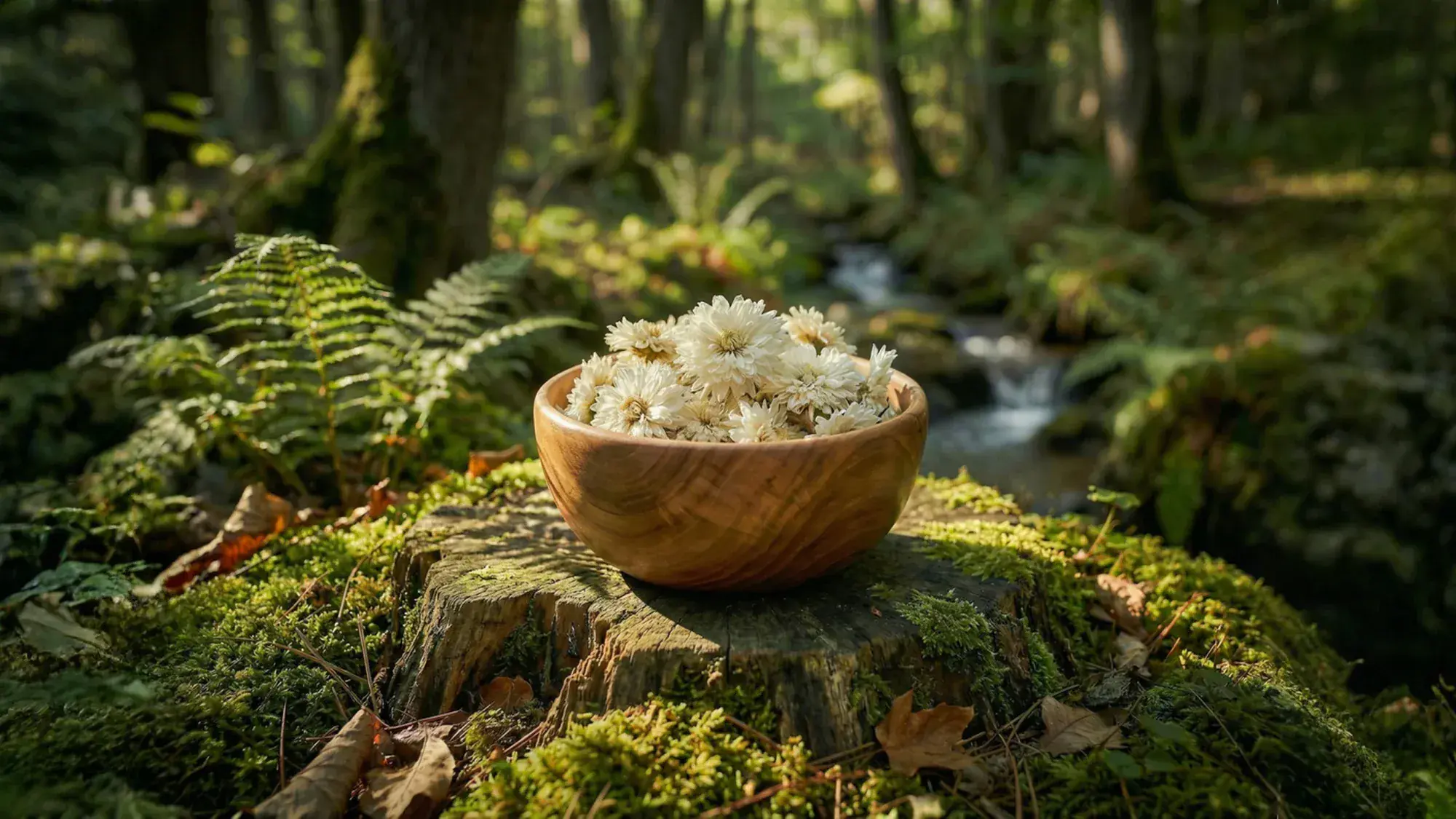
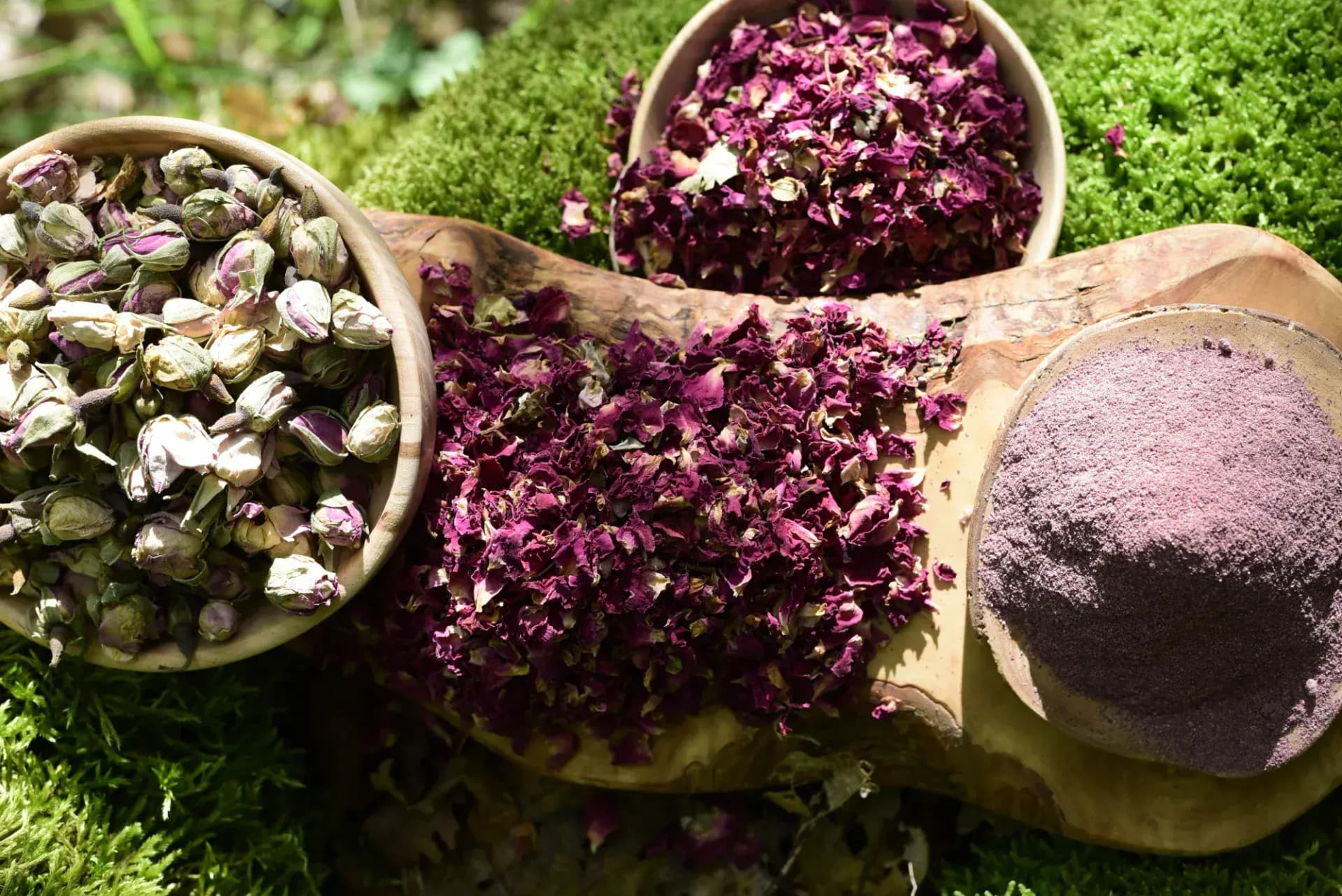
Flowers and herbs in a basin of water, outdoors all night, under the dew. On the morning of the 24th, wash your face and hands with it: this is Italy's *acqua di San Giovanni*. Lavender, rose and chamomile float well in it.
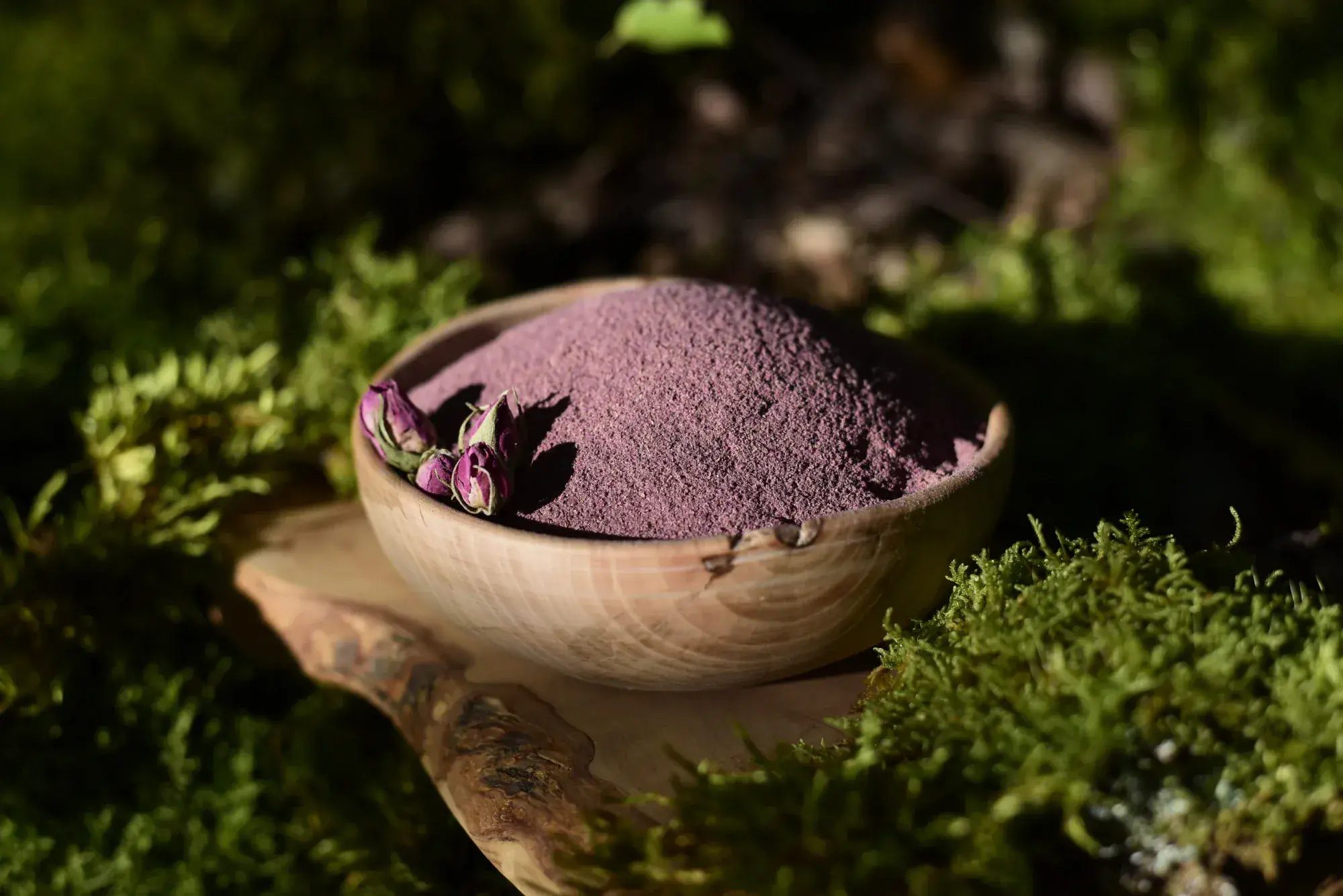
A bunch of mugwort and the day's herbs, hung above the lintel and kept until the next summer. In Italy the little bunch goes under the pillow, to dream what is coming, they say.
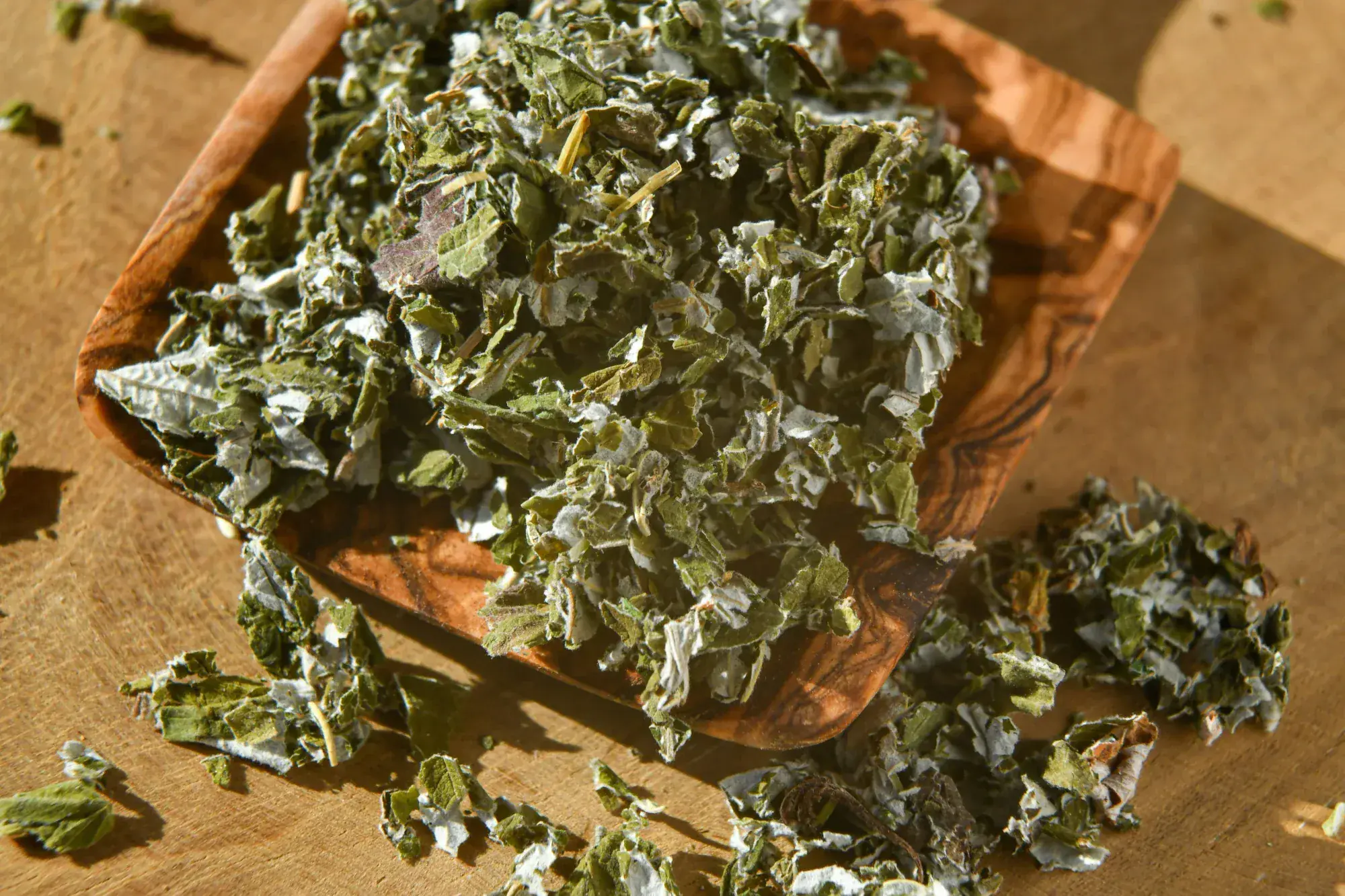
In the evening, people leap over the flames and throw herbs into the bonfire. At home, mugwort goes loose on a lit charcoal, in a bowl that holds the heat, with the window ajar. The ember goes out completely before you leave the room.
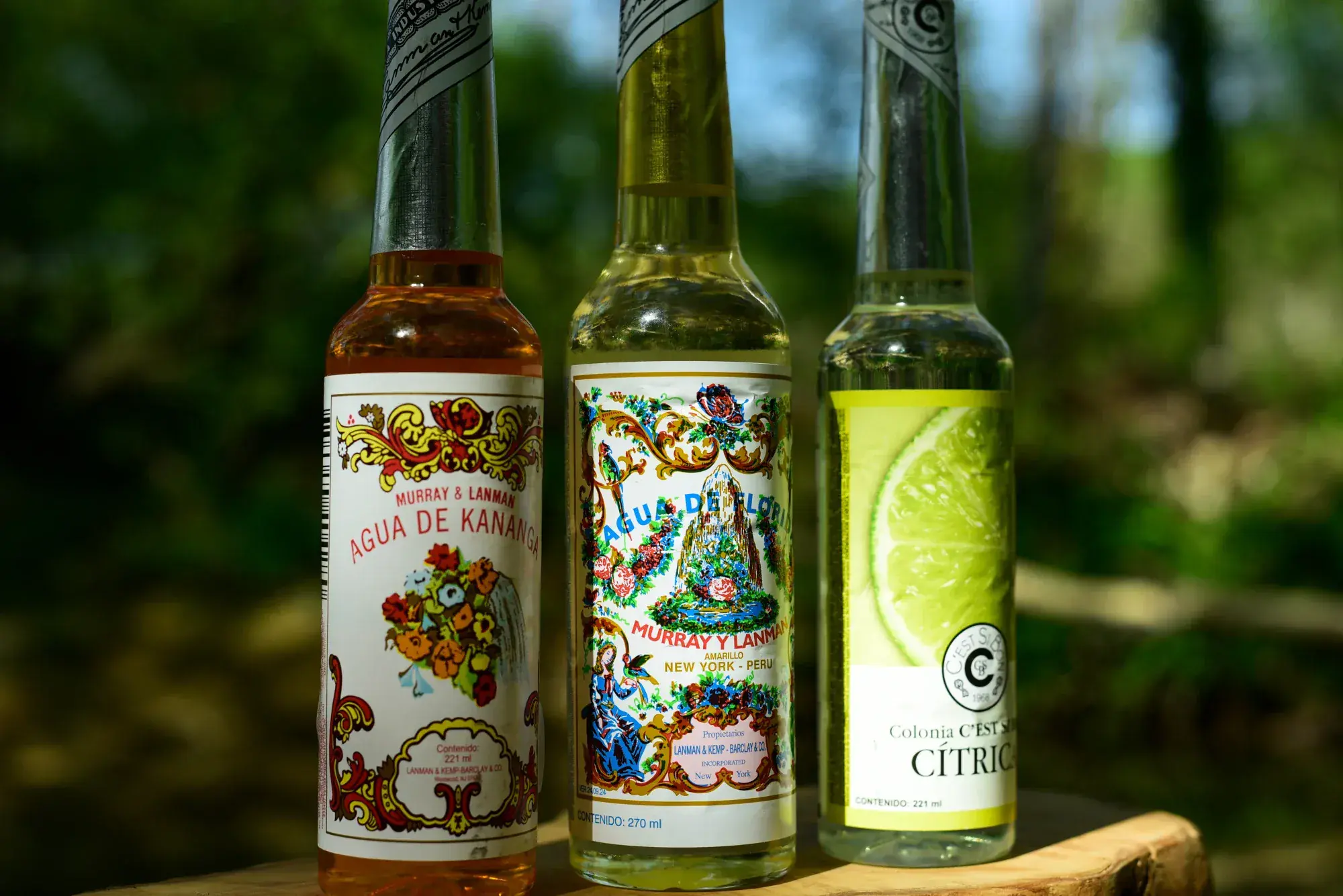
Chamomile, rose, lavender and raspberry leaf, 5 minutes in just-boiled water, then strain. Enough to keep watch through the shortest night until the early dawn.
St John's Eve is the night of 23 to 24 June, the vigil of the feast of John the Baptist. The feast falls at the summer solstice, and the solstice fires stayed with it: in France and in Spain, people still light bonfires that night and leap over the flames. In Scandinavia the same days are Midsummer; among the Slavs, Kupala Night (Wikipedia).
It lasts one night, the shortest of the year: the herbs are gathered on the evening of the 23rd or at dawn on the 24th, the flower water is used in the morning, and the bunch is kept until the next summer.
The name first means one plant: St John's wort, Hypericum perforatum, in flower around 24 June. It also means a bunch. In France, the St John's herbs counted at least seven plants of different families, and the list changed from region to region: St John's wort, mugwort, yarrow, ground ivy, vervain, fennel, peppermint, ox-eye daisy, mullein (Wikipedia (fr)).
In the Middle Ages, mugwort, Artemisia vulgaris, was called Cingulum Sancti Johannis, St John's girdle: a crown of its sprays, worn on St John's Eve, gave protection from evil (Grieve, 1931).
The same night, from one end of Europe to the other, with the herbs each tradition names:
| Where | The night | What people do | Herbs named |
|---|---|---|---|
| Italy | notte di San Giovanni | the acqua di San Giovanni: herbs in water all night, faces washed in the morning | St John's wort, lavender, mugwort, mallow, mint, rosemary, sage |
| Galicia | noite de San Xoán | water from seven springs left under the dew, the orballo; face and feet washed in it | fennel, male fern, codeso, St John's wort, mallow, rosemary, lemon verbena, mugwort |
| France | St John's Eve | the bonfire, herbs thrown into the flames, the bunch kept at home | mugwort, St John's wort, yarrow, vervain |
| Poland | Noc Kupały | wreaths on the river, fires by the water, the fern flower | mugwort, St John's wort |
| Russia, Ukraine, Belarus | Ivan Kupala, night of 6 to 7 July | the herb steam bath on the eve, wreaths, fires | mugwort, St John's wort, fern |
| Brazil | São João | the June-festival bonfire; in Belém, the banho de cheiro | scented leaves and roots from the Ver-o-Peso market |
The bunch under the pillow has its own page: prophetic dreams.
St John's wort, rosemary, fennel, vervain, mallow and sage are St John's herbs we do not sell. For the bath: herbal baths of the world. For the herbs of the cunning folk: witch herbs.
St John's wort is not sold by INFUSE. Before drinking it or taking it in capsules, talk to your doctor or pharmacist: it weakens the effect of many medicines, including birth control pills, some antidepressants, warfarin, cyclosporine, digoxin, HIV drugs and chemotherapy, and with serotonergic antidepressants it can cause serious effects. In large doses or on the skin, it makes skin sensitive to sunlight. It is avoided in pregnancy and while breastfeeding (NCCIH).
Mugwort: avoid during pregnancy and breastfeeding; take care with an allergy to the daisy family. Smoke is made with the window ajar, away from curtains, babies and animals. Our plants are freely sold in France and the European Union; the law varies from country to country, so check yours before ordering.
The night of 23 to 24 June, the vigil of the feast of John the Baptist, at the summer solstice. People gather herbs, light bonfires and leap over the flames; in Italy and Galicia, a bowl of flower water spends the night outdoors for washing in the morning.
One night, from the evening of 23 June to the morning of 24 June. In 2027 it falls from Wednesday to Thursday. The Churches that follow the Julian calendar keep Ivan Kupala on the night of 6 to 7 July.
It marks the birth of John the Baptist, six months before Christmas. The date sits at the summer solstice, so the feast took in the older solstice customs: the fires, the herbs gathered at their peak, the dew.
St John's wort first, in flower at that time, then mugwort, yarrow, vervain, fennel, mint, mullein; in Italy also lavender, rosemary, sage and mallow. Each region has its own bunch.
The Slavic feast of the shortest night, on 23 to 24 June in Poland, also called sobótka or St John's night: fires by the water, wreaths set on the river, the search for the fern flower. Mugwort runs through the whole night.
Kupala is the name of the Slavic solstice feast; the Church joined it to the eve of John the Baptist, and both names live side by side today. That is why the night is called Ivan Kupala, John of Kupala.
Ask the Forest: ethics of a plant, dose, lineage, synergy. It shares what peoples have transmitted and what books have written.