Lavender
€7.00
Also as an oil macerate€15.00
St Agnes' Eve in England, Hallowe'en in Scotland, the first dream of the year in Japan: the nights when people fast, pray or slip something under the pillow to dream what is coming.
Every people has its nights when the dream speaks of what is to come.
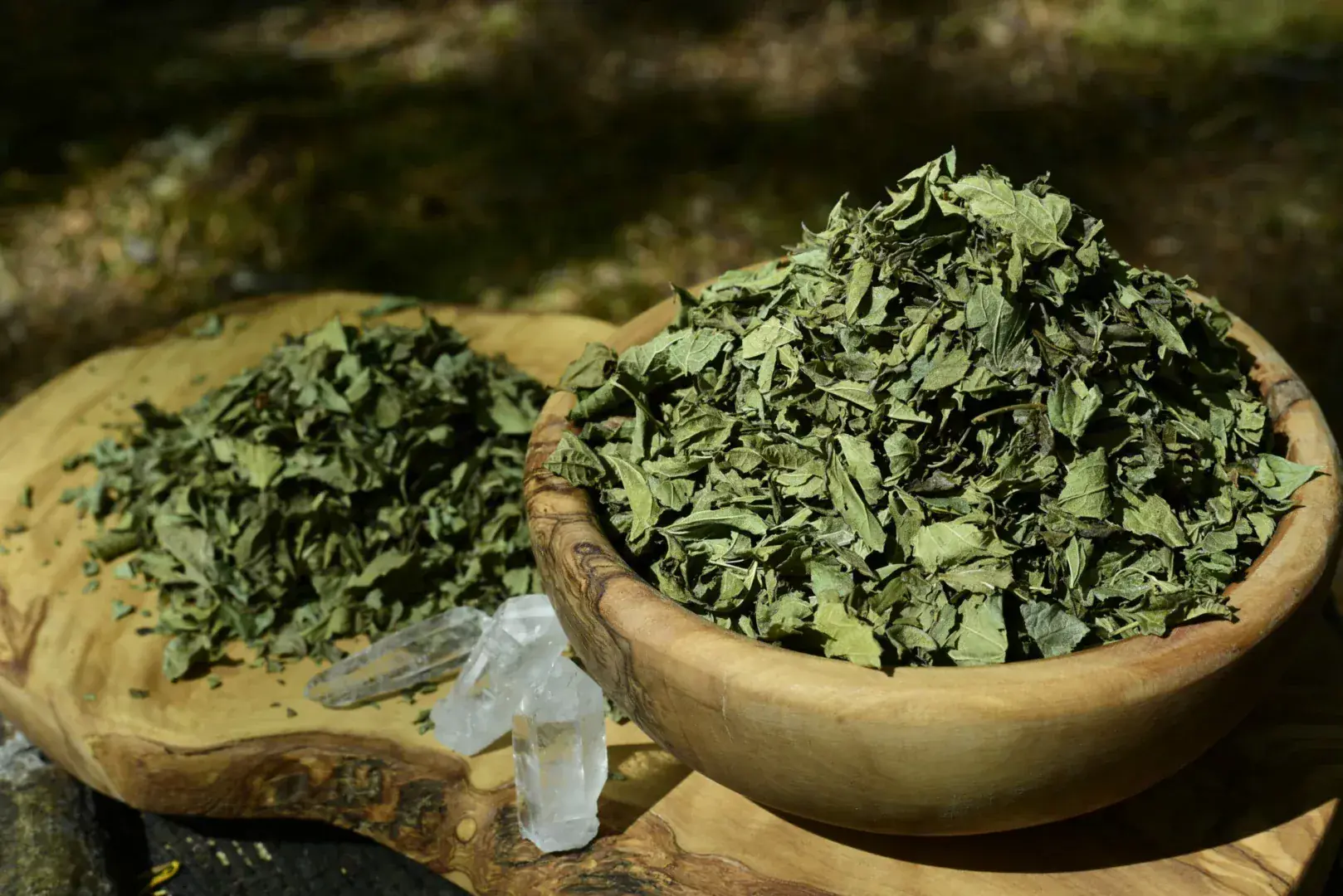
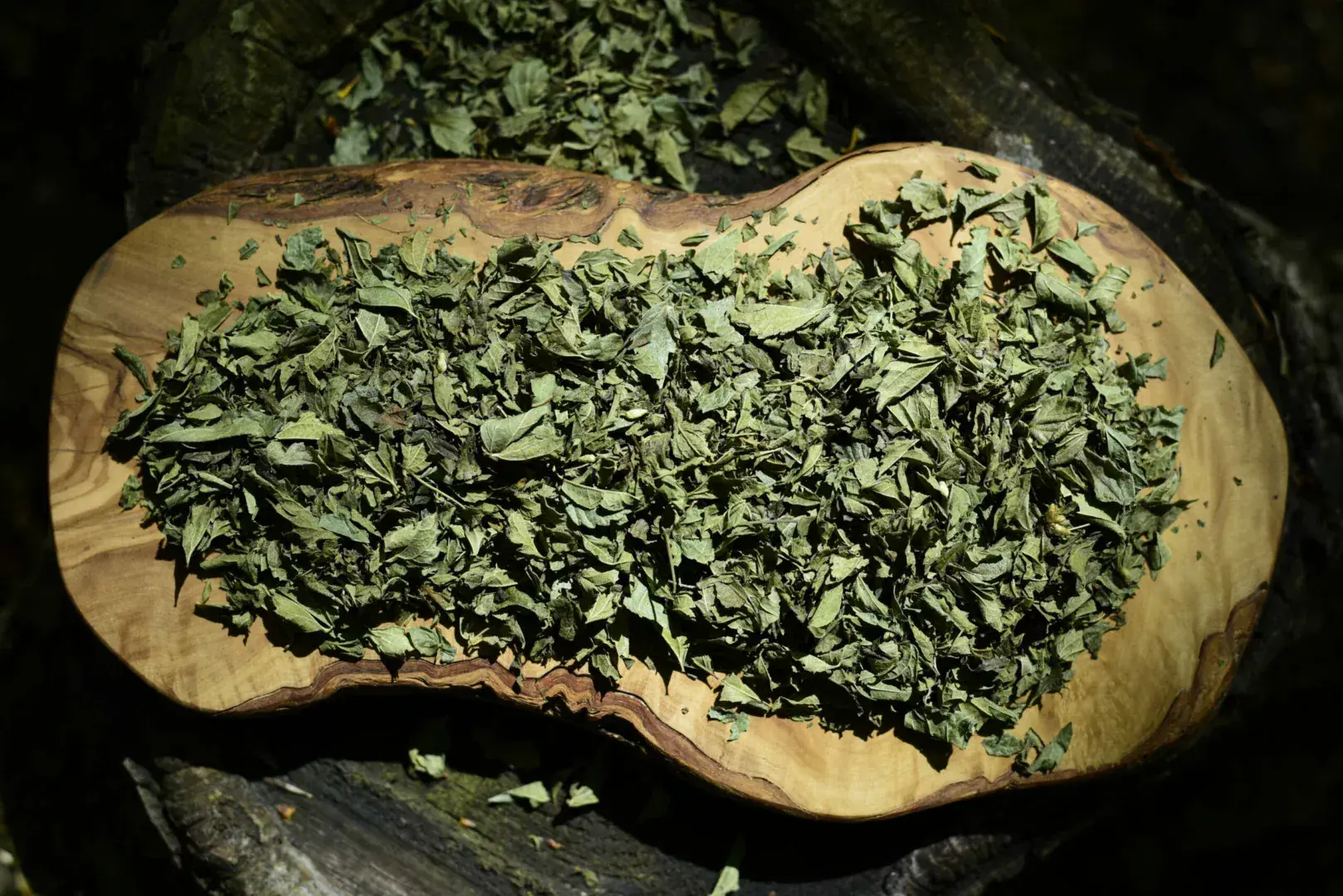
Calea, *thle-pela-kano*, the Herb of the Gods. The Chontal of Oaxaca drink her, smoke her or slip her under the pillow to receive messages in dreams. She awakens the Dreamer within you.
St Agnes' Eve in England, Hallowe'en in Scotland, the first dream of the year in Japan: the nights when people fast, pray or slip something under the pillow to dream what is coming.
The table below gives the dates: St Agnes' Eve on 20 January, Hallowe'en on 31 October, St Andrew's Night at the end of November, the Russian *Svyatki* in January, the first dream of the year in Japan, St John's Night in June. For the Russian belief, any Thursday night.
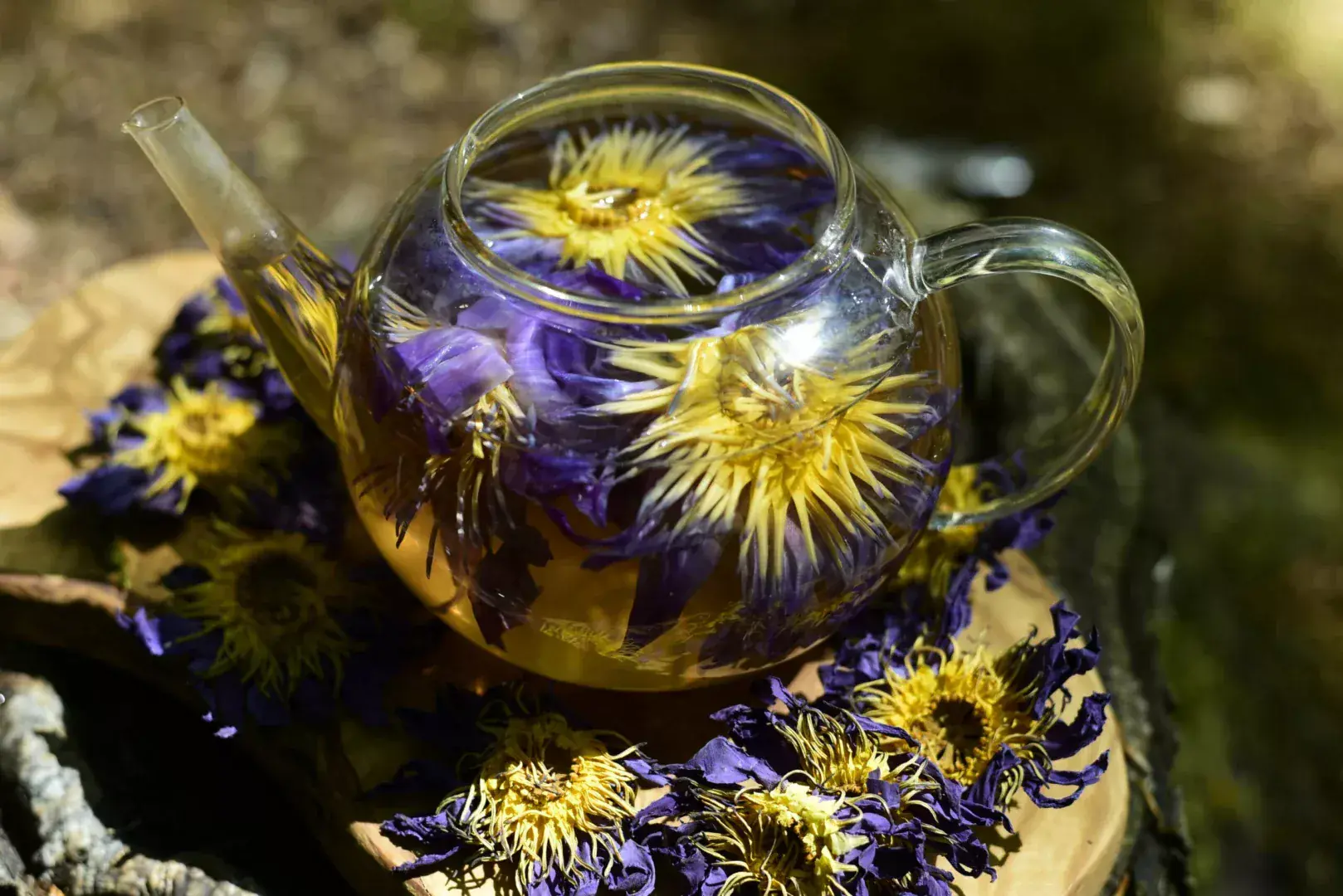
A teaspoon of Calea, about 2 g, in water just off the boil, 3 minutes, in the evening. Or a few dried leaves in a small cloth pouch under the pillow, as the Chontal do.
A question is asked in the evening, and the answer the day does not give is sought in the dream. This is how the Chontal receive Calea.
On waking, a notebook by the bed keeps the image before it fades. One line is enough: the dream can be read again later, in the light of what came.
An omen night is a night when custom says the dream foretells what is coming: the face of a future spouse, the colour of the year ahead. They gather around St Agnes' Eve, Hallowe'en, St Andrew's Day, Christmas, New Year and Midsummer. Here are the ones we found a trace of, with their sources at the bottom of the page.
| Night | Date | Where | The gesture | What people hope to see |
|---|---|---|---|---|
| St Agnes' Eve | 20 January | England | fasting, a rhyme to St Agnes, a dumb cake baked in silence; Keats made a poem of it in 1819 | the future husband, in a dream |
| Hallowe'en, Samhain | 31 October | Ireland, Scotland | a mirror, an apple peel, nuts in the fire; Robert Burns gave these divinations his poem Halloween, in 1785 | the future spouse |
| Andrzejki, St Andrew's Night | night of 29 to 30 November | Poland | wax poured into cold water through the bow of a key; fasting and prayer to St Andrew | the future beloved, in a dream |
| Ondřejská noc | the same night | Czech Republic | seven first names on slips of paper, under the pillow; molten lead | “what you dream that night comes true” |
| Andreasnacht | the same night | Austria, Germany | the Andreasgebet, St Andrew's prayer, said while kicking the bed | the beloved appears |
| Sint-Andries, Sinte-Lucia, Sint-Thomas | 30 November, 13 and 21 December | Flanders | a wish or a prayer to the saint of the day | to see in sleep the one who will come |
| Thomasnacht | 21 December | Austria (Salzkammergut) | kicking the foot of the bed | the future husband, in a dream |
| Rauhnächte | 25 December to 6 January | Germany, Austria | in the old farmers' rule, each night foretells the weather of one month of the year | today, many also read their dreams in them |
| Svyatki (Святки), the Holy Days | 7 to 19 January | Russia | four card kings under the pillow; a new comb and the words suzhenyi-ryazhenyi, “my destined one” | the betrothed, in a dream |
| 初夢, hatsuyume | most often the night of 1 to 2 January | Japan | the picture of the treasure ship (宝船, takarabune) under the pillow, with its poem that reads the same both ways | Mount Fuji, a hawk, an aubergine: a lucky year |
| Midsommar | Midsummer Eve | Sweden | seven or nine kinds of flowers under the pillow, picked in silence | the future spouse, in a dream |
| Notte di San Giovanni, St John's Night | night of 23 to 24 June | Italy | St John's herbs under the pillow; the acqua di San Giovanni, St John's water, left outside overnight | prophetic dreams |
| São João, São Pedro | 24 and 29 June | Brazil | a new knife stuck into a banana tree; a table laid for São Pedro | the initial of the love to come; love, in a dream |
| The night from Thursday to Friday | every week | Russia | a folk belief, with its formula of the days | a veshchii (вещий) dream, one that comes true |
| The Calea night | all year round | Mexico (Oaxaca) | Calea drunk, smoked or slipped under the pillow, among the Chontal | messages in dreams |
On almost all these nights, something slips under the pillow: names in Bohemia, four kings in Russia, a treasure ship in Japan, seven flowers in Sweden. In Italy, it is the St John's bouquet, St John's wort, mugwort, rosemary, lavender: slipped under the pillow, it brings prophetic dreams, so they say. The plants we have for these nights:
For lucid dreaming, these plants and others have their guide, the best herbs for lucid dreaming, and their own page: to dream lucidly.
The psychologists who have studied them see first the work of memory: we keep the dreams that “matched” an event and forget the others, and some people find correspondences more readily (Watt et al., 2014; Blagrove, French and Jones, 2006). The omen nights are handed down like feasts, with their words and their gestures.
Calea, mugwort, blue lotus: during pregnancy and breastfeeding, they are best left aside, for lack of data; mugwort is traditionally advised against during pregnancy. These plants are not suited to children. If you take medication, ask a doctor before any plant. The Dream Elixir is macerated in an eau-de-vie, a distilled spirit: a few drops of alcohol per dose. Calea and the other plants on this page are freely sold in France and the European Union; the law varies from country to country, so check yours before ordering.
Each tradition has its own: St Agnes' Eve (20 January) in England, Hallowe'en (31 October) in Ireland and Scotland, St Andrew's Night (29 to 30 November) in Poland, the Czech Republic and Austria, Svyatki (7 to 19 January) in Russia, the first dream of the year in Japan, St John's Night in Italy (23 to 24 June) and Midsommar in Sweden. In Russia, it is also said that dreams from Thursday to Friday come true.
It depends on the night: slips of paper bearing names (Czech Republic), four card kings (Russia), the picture of the treasure ship (Japan), seven or nine kinds of flowers (Sweden), the bouquet of St John's herbs (Italy). Among the Chontal of Oaxaca, Calea leaves.
The first dream of the year, in Japan: most often the dream of the night of 1 to 2 January. The picture of the treasure ship and its seven gods of good fortune goes under the pillow. Dreaming of Mount Fuji, a hawk or an aubergine foretells a lucky year: ichi Fuji, ni taka, san nasubi.
It is a Russian folk belief: the dream of the night from Thursday to Friday is said to be veshchii, a dream that comes true. Girls recited a formula that night to see their betrothed. Research explains the feeling of premonition by memory, which keeps the dreams that “matched”.
About 2 g of leaves, a teaspoon, in water just off the boil, 3 minutes, in the evening before sleep. Her bitterness is unmistakable: it is how you recognise Calea. The Chontal also slip her under the pillow. The product page gives the full preparation.
Published studies do not prove them: they mostly describe selective memory and a readiness to find correspondences (Watt et al., 2014). The omen nights are still lively feasts, from England to Japan.
Ask the Forest: ethics of a plant, dose, lineage, synergy. It shares what peoples have transmitted and what books have written.