Blue Lotus
★4.9· 543 reviews
€6.00
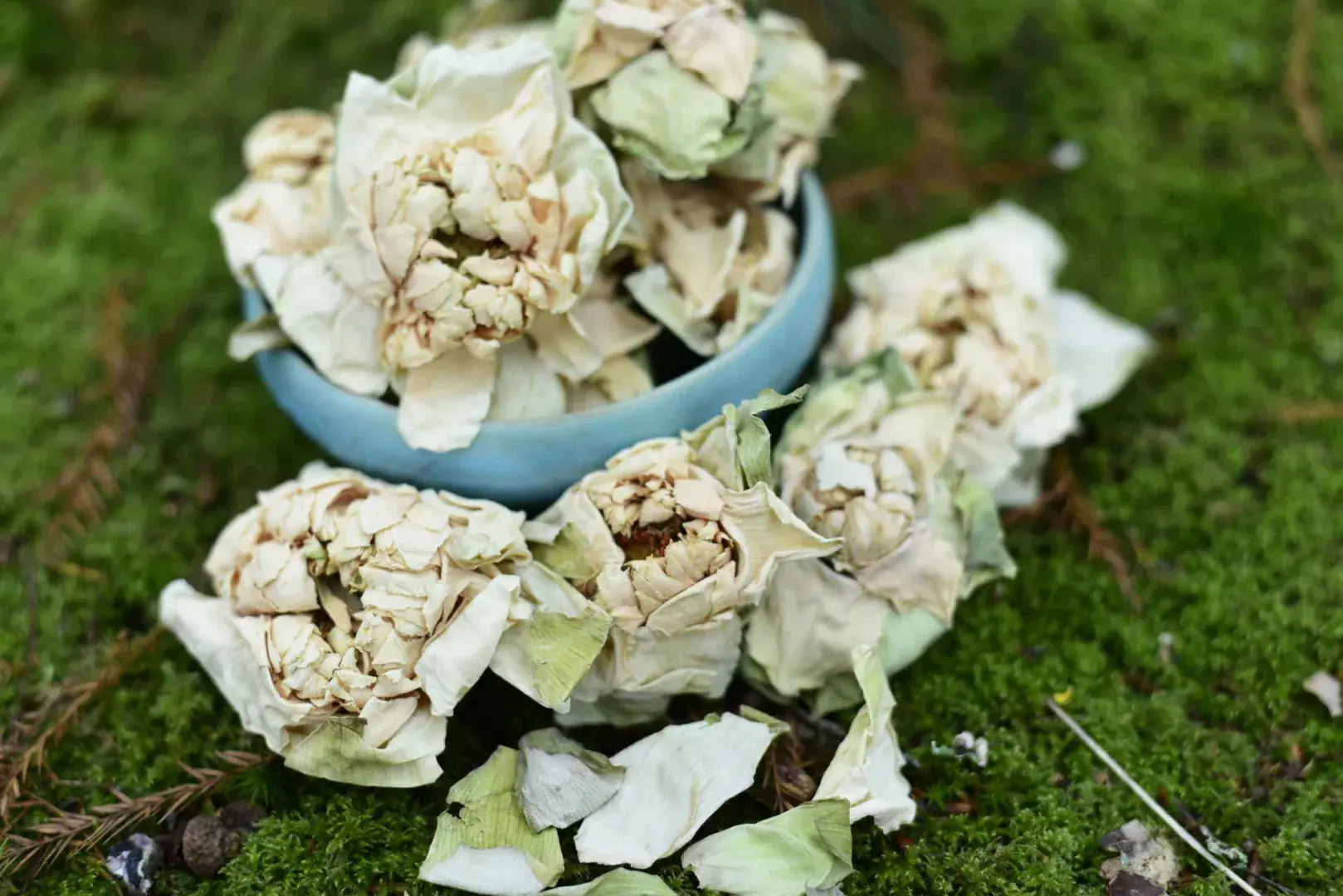
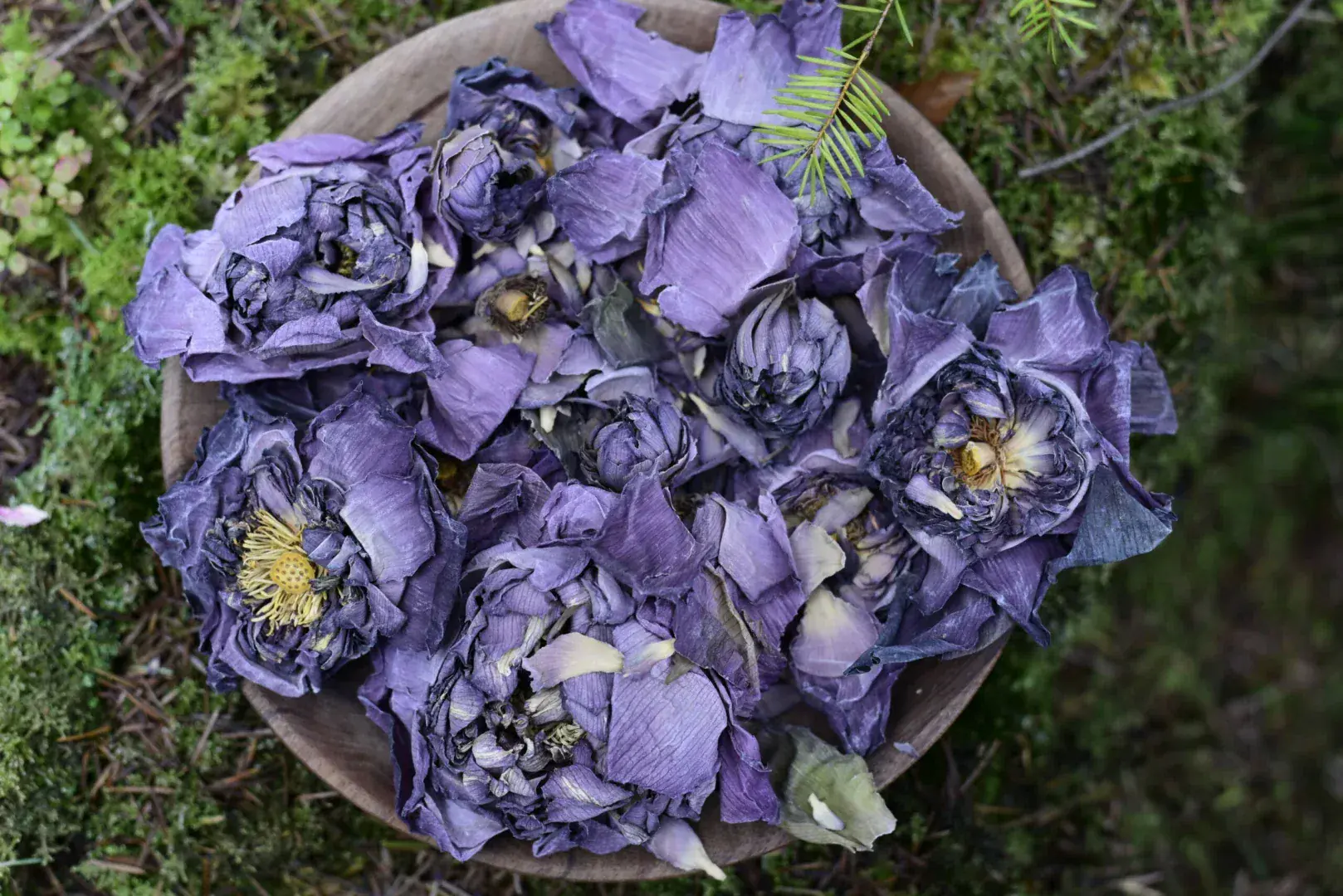
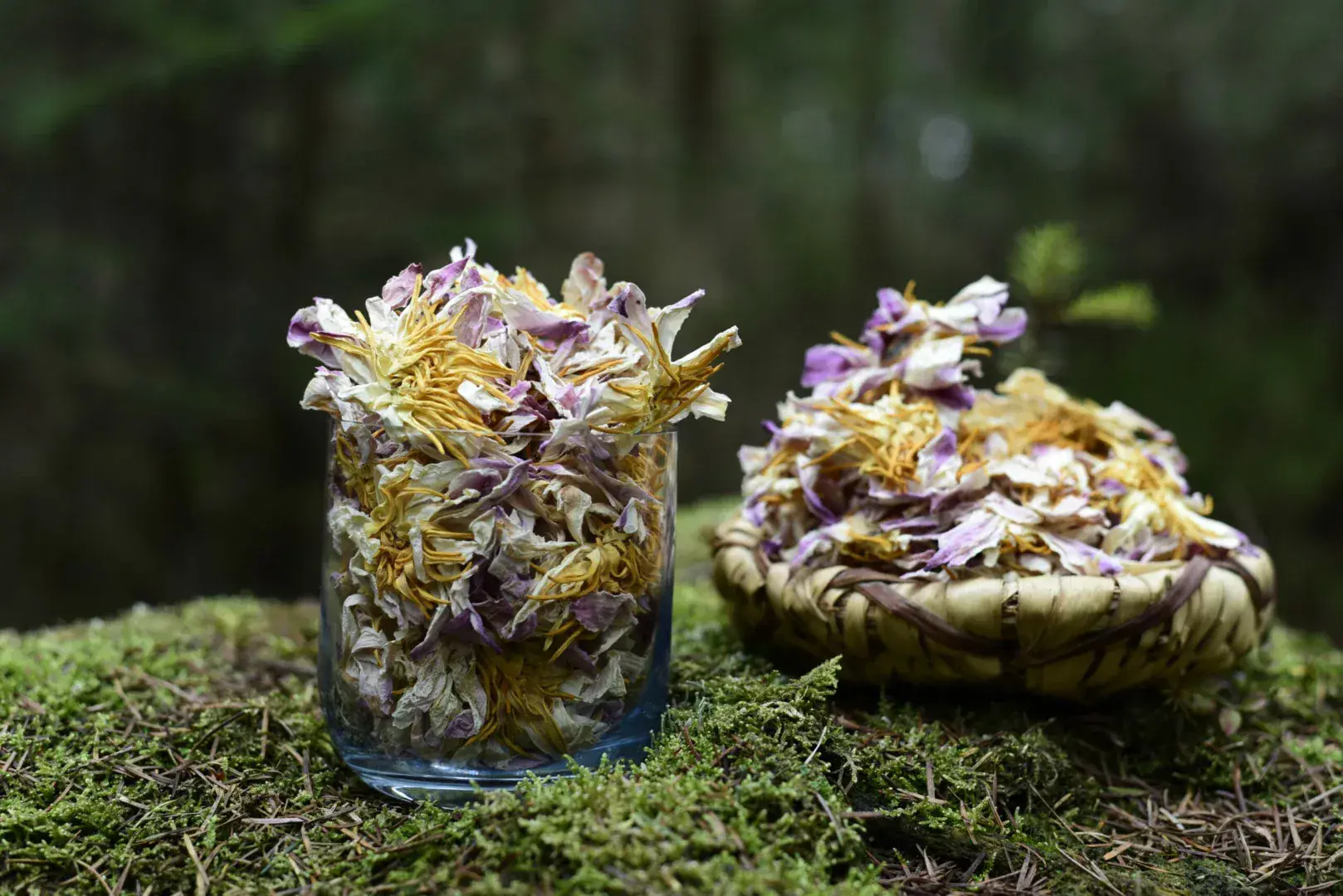
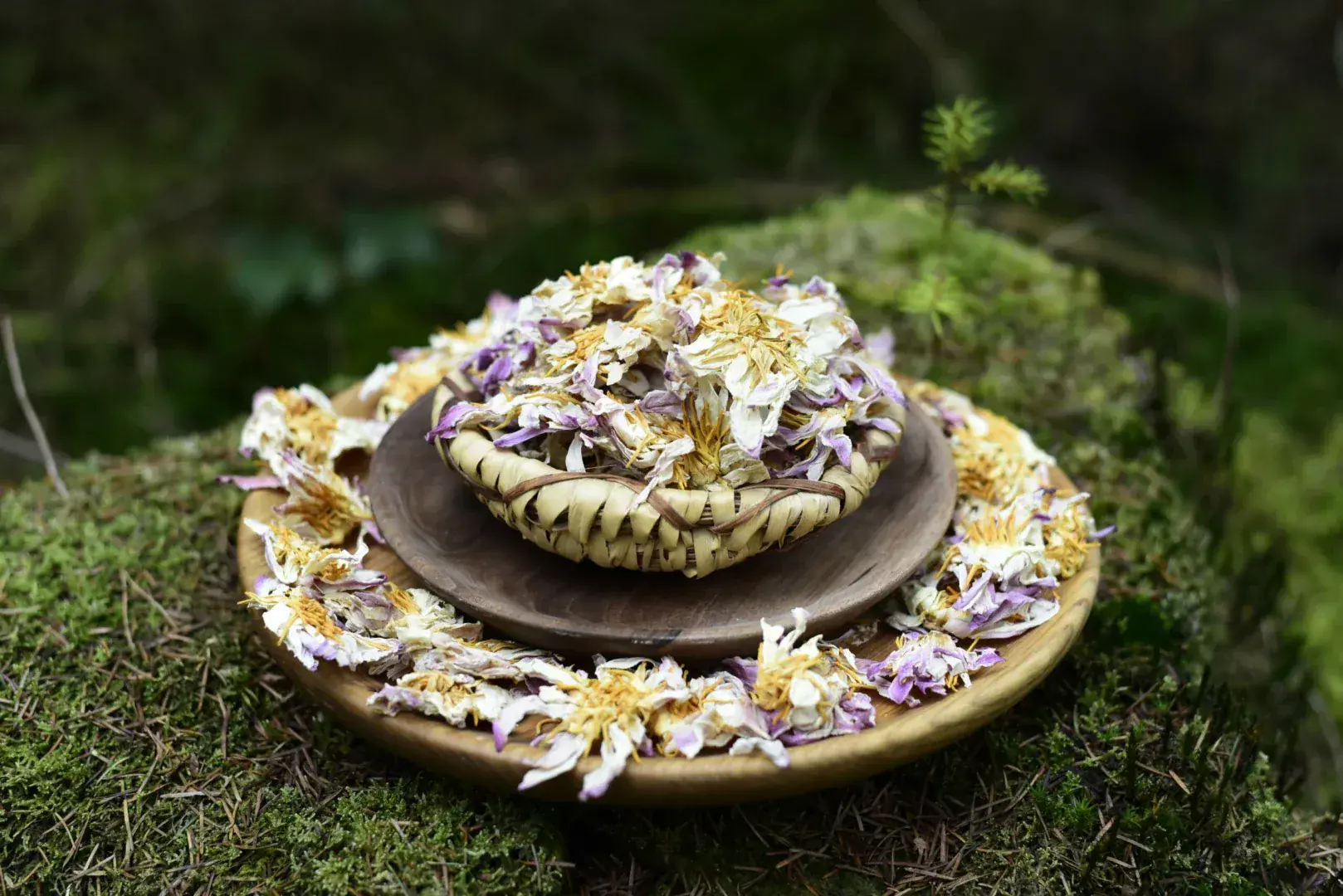
The Buddha's lotus holds its round leaves up above the water; the blue water lily of Egypt lays its own, split, flat on the surface: two lineages far apart, and five flowers on our table.
People have mixed them up since Linnaeus, who filed the sacred lotus among the water lilies.
Flower of enchantment, awakening and rebirth. We finally found the real Blue Lotus, *Nymphaea caerulea*, the true blue water lily of the Egyptian priestesses. The Egyptian Blue Lotus flower takes you on a journey to your Highest Self.
The Buddha's lotus holds its round leaves up above the water; the blue water lily of Egypt lays its own, split, flat on the surface: two lineages far apart, and five flowers on our table.
Round, unsplit, the stalk joined at its centre, held up above the water: a lotus. Floating, glossy, split right to the centre: a water lily. This is the surest sign.
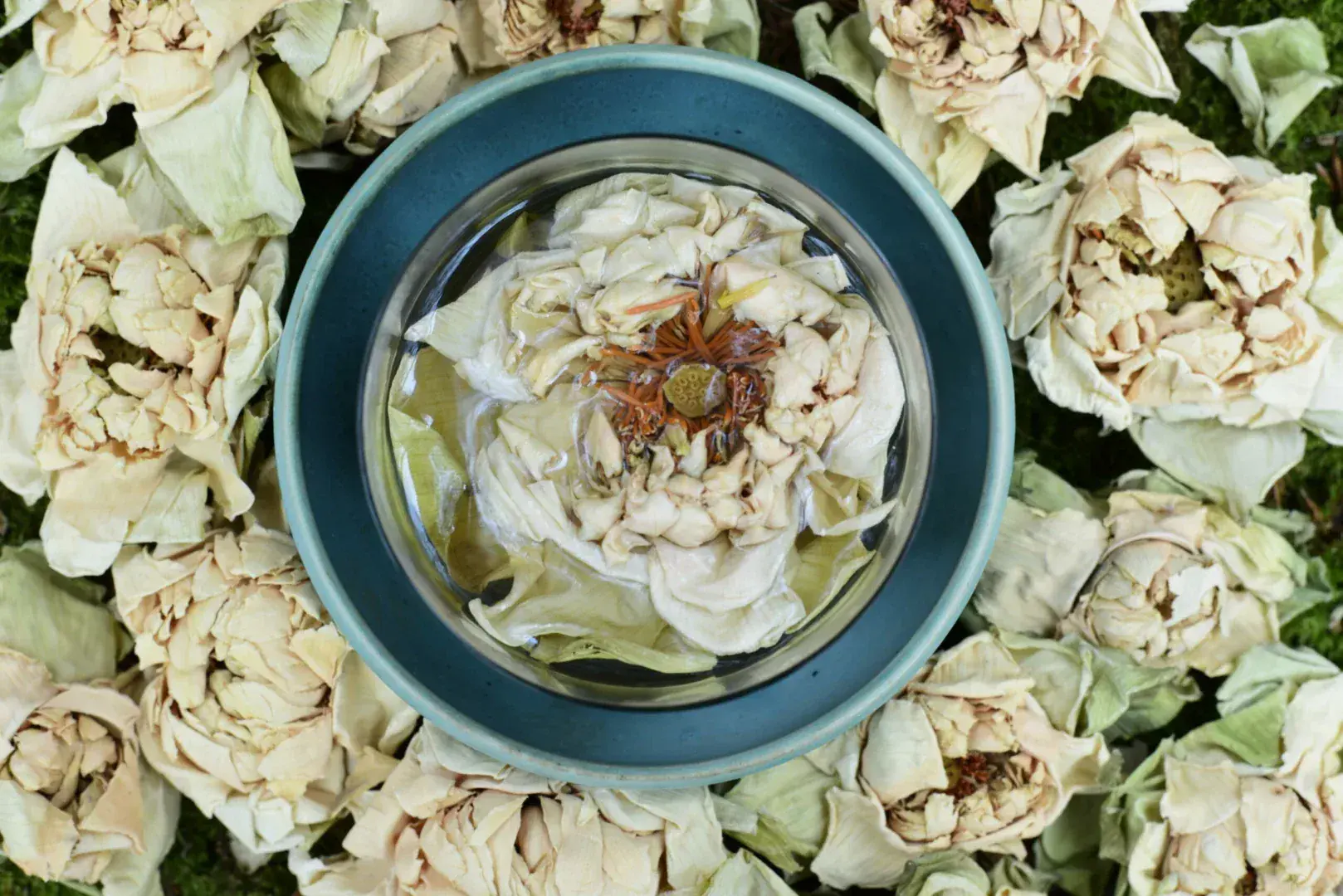
The lotus carries its flower high on a thick stalk, and leaves behind a seed head shaped like a showerhead. The water lily blooms on the surface of the water, or a little above it.
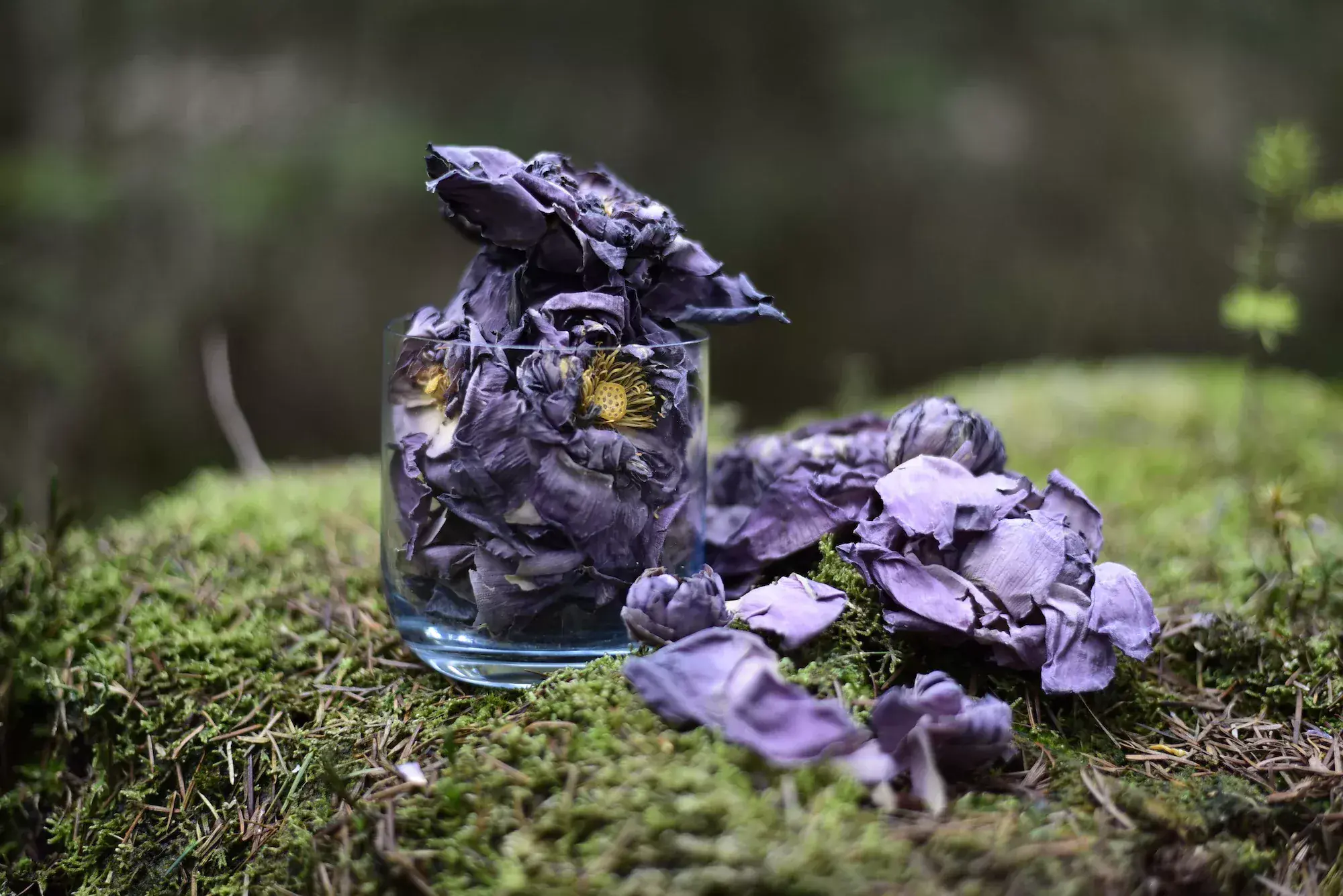
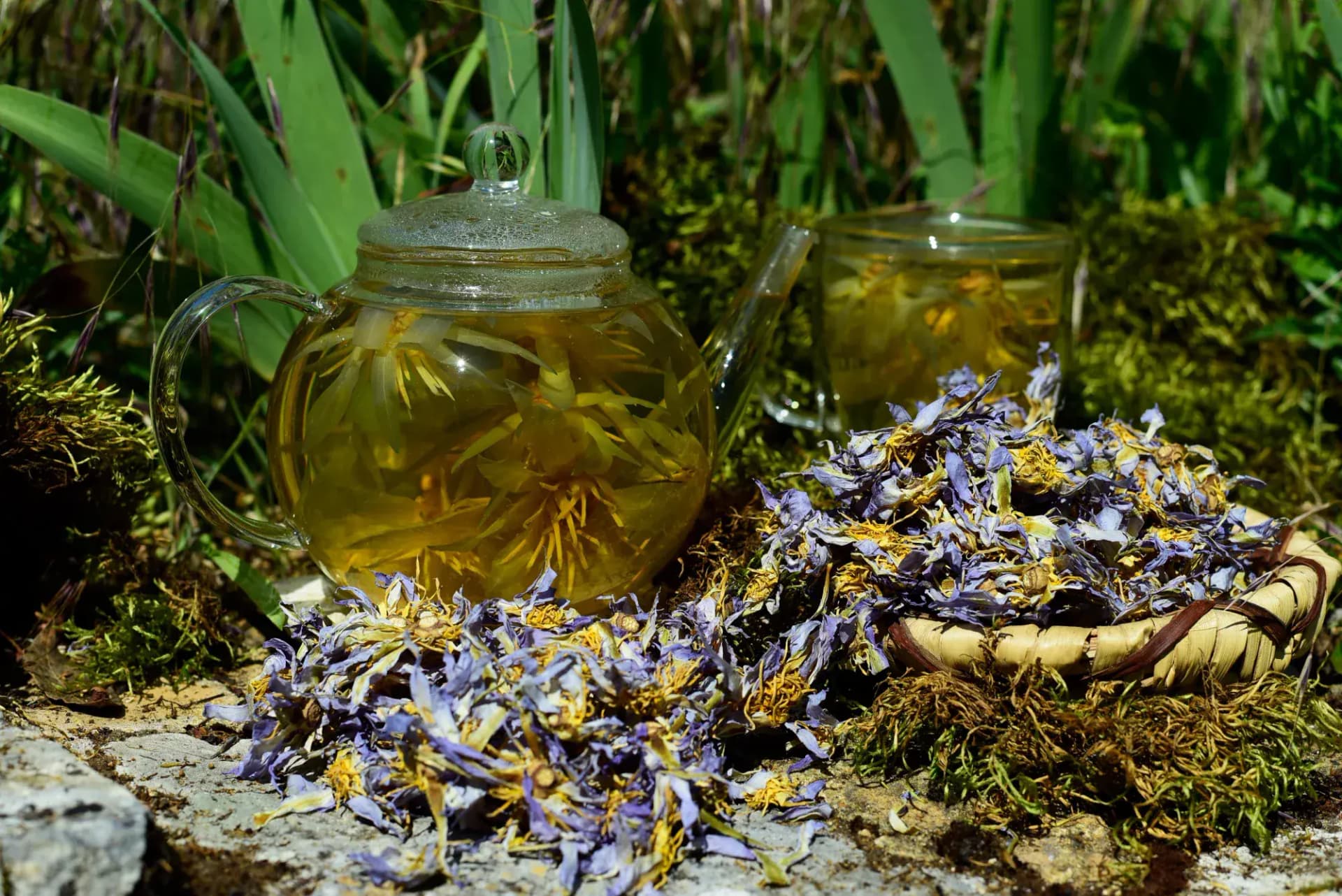
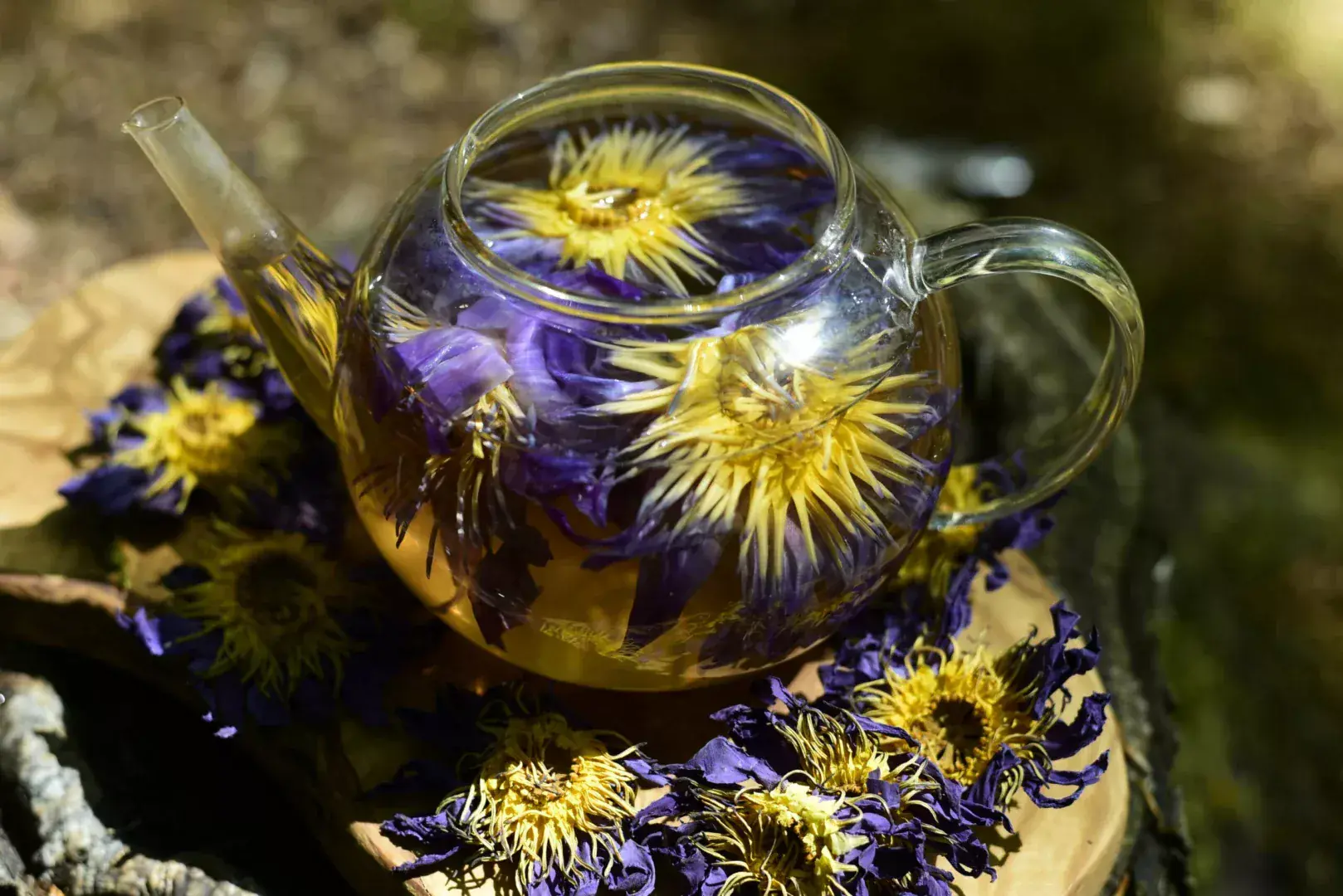
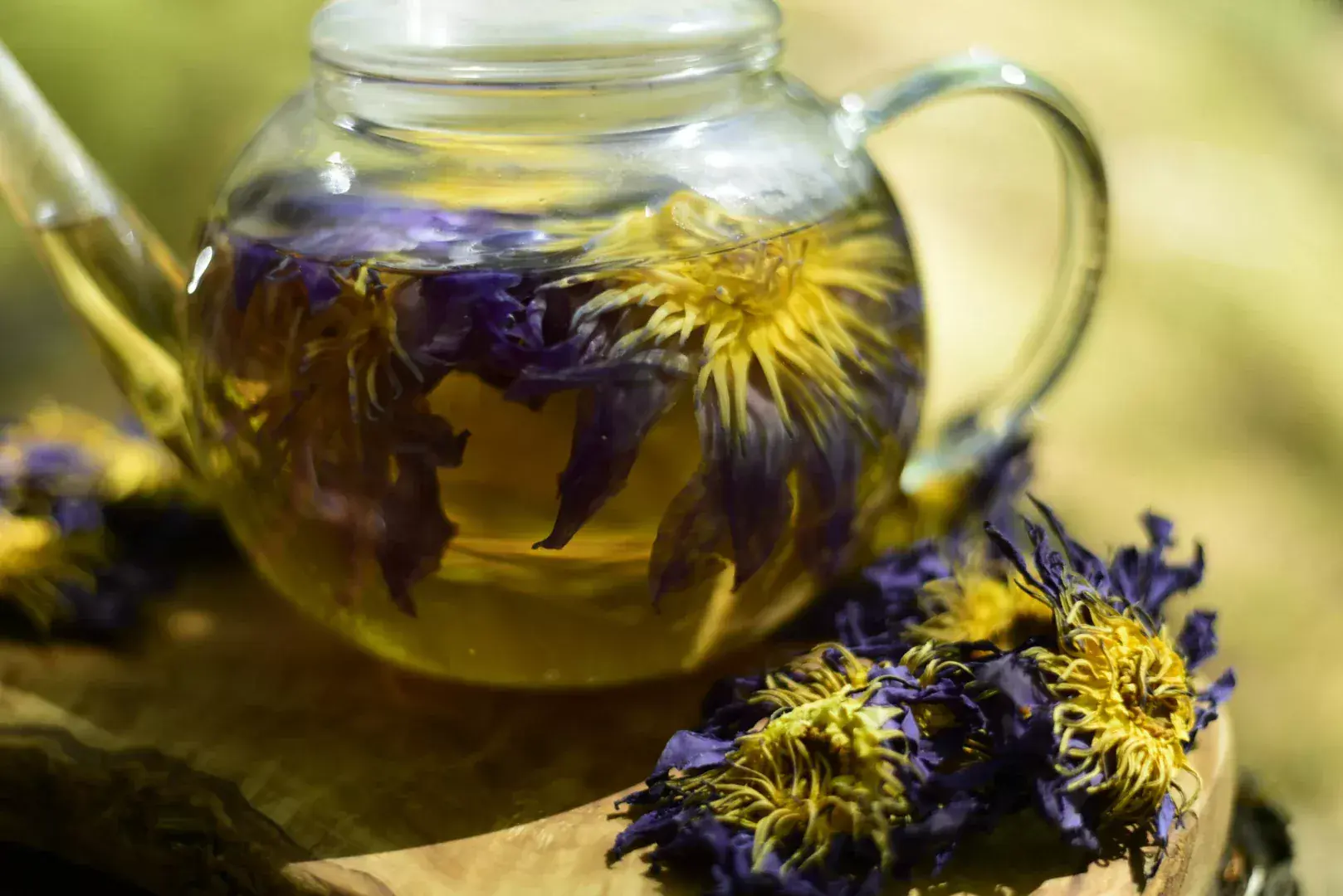
A lotus or water lily flower dropped into hot water, short of boiling: it opens little by little and reshapes to its original form at the bottom of the cup.
The lotus (Nelumbo) and the water lily (Nymphaea) look alike from a distance and belong to two lineages far apart. The surest clue is the leaf: the lotus holds it up above the water, round and unsplit; the water lily lets it float, notched (Kyoto Prefecture; Hokkaido University).
| Lotus, Nelumbo | Water lily, Nymphaea | |
|---|---|---|
| Family | Nelumbonaceae, in the order Proteales, alongside plane trees and proteas | Nymphaeaceae, a lineage that split off very early from the other flowering plants |
| Leaf | round, unsplit, the stalk joined at the centre, held above the water; water beads up and rolls off | floating, glossy, split right to the stalk |
| Flower | high above the water, up to 35 cm across | on the surface, or a little above it in tropical species |
| After the flower | a seed head shaped like a showerhead, set with seeds | the fruit forms close to the water, with no upright seed head |
| Day or night | opens early in the morning | depends on the species: the blue lotus by day, the white Egyptian water lily by night |
| Under water | a rhizome pierced with channels, the renkon of Japanese cooking | a rhizome, edible in some species |
| Species | two: N. nucifera in Asia, N. lutea in the Americas | many species, on every continent |
The Greek lōtos already named several plants: no one knows which one the Lotus-eaters of the Odyssey ate, and the word still names a bird's-foot trefoil, a jujube and a date-plum today (Wikipedia). In 1753, Linnaeus named the white water lily of Egypt Nymphaea lotus, and placed the sacred lotus in the same genus, as Nymphaea nelumbo.
The “lotuses” of ancient Egypt are two water lilies, which the Egyptians called seshen: the blue one, Nymphaea caerulea, and the white one, Nymphaea lotus. The pink lotus, Nelumbo, arrived only much later, in the Persian period according to most authors (Willockx). Herodotus, though, describes two “lilies” of the Nile, one of which bears a fruit that recalls a wasps' comb: a description that evokes the seed head of the lotus.
And Monet painted water lilies, the ones in his garden at Giverny, now at the Musée de l'Orangerie.
The lotus grows in the mud, and its leaves and flowers rise out of it clean. In 1063, the Chinese scholar Zhou Dunyi wrote that he loved the lotus because it “rises from the mud unstained” (愛蓮說). Buddhism made it the flower of awakening; according to Hindu mythology, Brahma was born from a lotus that grew from the navel of Vishnu while he slept. India holds it as its national flower. Science named the “lotus effect” after it: on its leaf, covered in microscopic waxes, drops roll off and carry the dust away (Barthlott and Neinhuis, 1997). A lotus seed about 1,300 years old, found in a dried-up lake in China, has germinated (Shen-Miller et al., 1995), and the flower keeps its warmth, between 30 and 35 °C, even when the air drops to 10 °C (Seymour and Schultze-Motel, 1996).
The blue water lily opens in the morning and closes at dusk: in Egypt, it was the flower of the sun and of rebirth. In Sri Lanka, the nil manel, Nymphaea nouchali, has been the national flower since 1986 (Mongabay); in Bangladesh, it is the shapla, a water lily (Banglapedia).
Our flowers come from Sri Lanka. Two are true lotuses, three are water lilies:
To go further: the blue lotus of Egypt, the pink lotus, flower of the Buddha.
Pregnancy and breastfeeding: we leave them aside, unless a professional advises otherwise. Blue lotus and water lilies: take care with antidepressants, anti-anxiety drugs and sedatives, and no driving after the cup. Pink and white lotus: take care with blood pressure and diabetes medication. If you take medication, ask a doctor before any plant. Our flowers are freely sold in France; the law varies from country to country, so check yours before ordering.
The lotus (Nelumbo) holds round, unsplit leaves up above the water and carries its flower high on a stalk; it leaves behind a seed head shaped like a showerhead. The water lily (Nymphaea) has floating, split leaves and blooms on the surface. They are two very distant families: the lotus's closest relative is the plane tree.
“Blue lotus” is actually a water lily: Nymphaea caerulea, and in our collection also Nymphaea nouchali, of the same lineage. It got the name “lotus” in Antiquity, when the word named several plants. It is the flower of the Egyptian priestesses.
It depends on the plant. Our White Lotus is a true lotus, white-flowered Nelumbo nucifera, sister of the pink lotus. The “white Egyptian lotus” is a water lily, Nymphaea lotus, which blooms at night: you'll find it on our Red & White Water Lily page.
Water lilies: the Nymphéas, painted in his garden at Giverny and installed at the Musée de l'Orangerie since 1927.
Its surface is covered in tiny bumps of wax: water can't spread out on it, so it beads up, rolls off and carries the dust away. The botanists Wilhelm Barthlott and Christoph Neinhuis named this the “lotus effect” in 1997.
One flower dropped into hot water, short of boiling, and left to steep: it opens little by little and takes back its shape. Each product page gives its own preparation and precautions.
Ask the Forest: ethics of a plant, dose, lineage, synergy. It shares what peoples have transmitted and what books have written.