⊹ To weave around
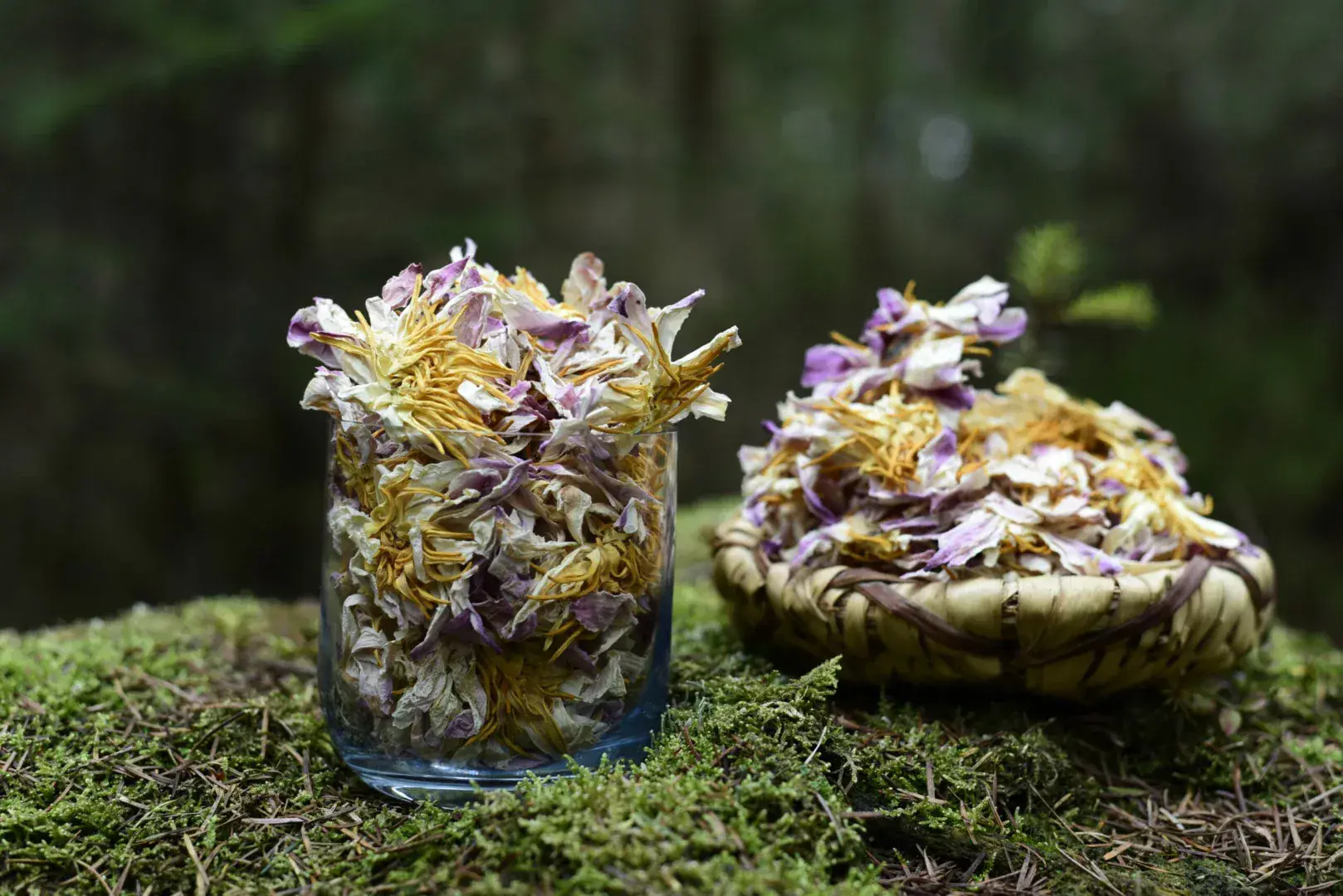
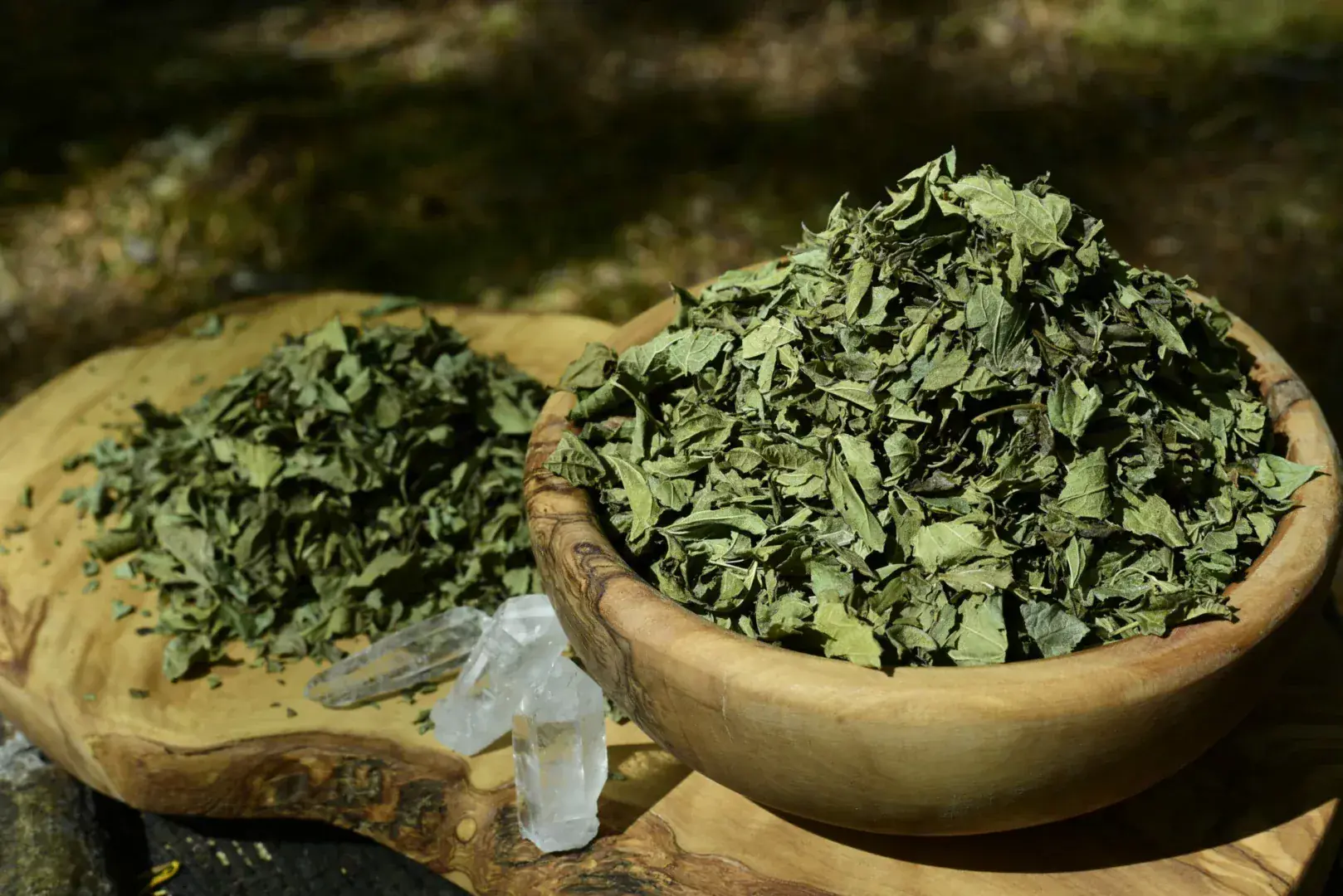
To accompany Red & White Water Lily
Click a card to see why it pairs — and choose your form.
Read it through your world
The whole page is read through this lens.
✦ Red & White Water Lily · in one breath ✦
The two Nymphaea the blue eclipsed — the royalty of the soul.
⊹ The path of the plant
⊹ Community voices
What the community murmurs.
Average · 29 reviews
including 28 left on our Etsy shop
Breakdown
Hello, the quality of the item is excellent, the customer service is just perfect. There was a small quantity issue, but the seller quickly resolved it and sent a replacement. They are reliable, humble, and empathetic people.
Armand
Ritual · left on our Etsy shop · 7 January 2026
Very relaxing when smoked it tastes sweet to me, very happy and relaxed.
Jareth
Ritual · left on our Etsy shop · 29 November 2025
What shall I write? EXELLENT like always! And thanks for a sample. I mixed it with red lotus. Nice calming tea!
Neine
Ritual · left on our Etsy shop · 19 August 2020
very good, excellent tea and deep calm
marie
Ritual · left on our Etsy shop · 27 May 2024
Beautiful flowers, sweet and pleasant taste
gaelle
Ritual · left on our Etsy shop · 8 April 2024
It's a wonderful tea. Great to drink and to calm down🙏
Stefan
Ritual · left on our Etsy shop · 26 April 2023
Ask the Forest about Red & White Water Lily
408 books digested, 97,512 indexed passages. She answers on lineages, synergies, cautions, ritual variations.
⊹ FREQUENT QUESTIONS ⊹
We answer.
What are red lotus and white water lily?
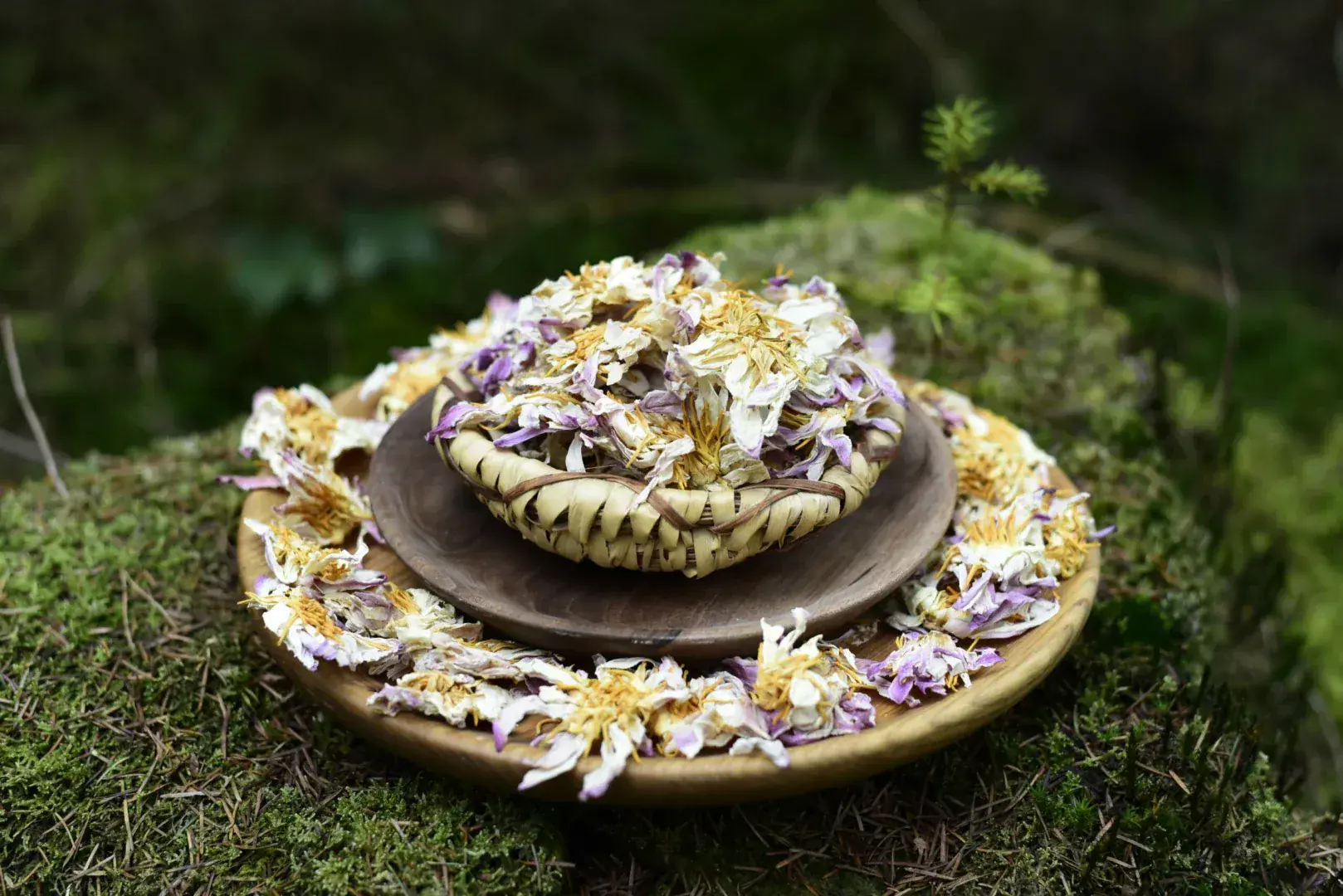
They are two water lilies of the Nymphaea genus — the red (Nymphaea rubra) and the white (Nymphaea lotus) — botanical sisters of the famous Blue Lotus. Water lilies, from a different genus than the Nelumbo lotus: the red is an Asian water lily, the white the white water lily that ancient Egypt honoured alongside the blue lotus. In Sri Lanka, where our flowers come from, they are called olu.
What is the difference between red lotus and blue lotus?
They are three flowers of one family, Nymphaea. The blue (caerulea) is the most solar, a flower of the day. The red carries a warmer pulse, the white is more still and silent, a meditation flower. Three sisters of the same genus.
How do I prepare red lotus as an infusion?
Place a whole red lotus flower (or two white water lily flowers) in a large cup, pour simmering but never boiling water, and let infuse 7 to 10 minutes, ideally in the evening. The same flower can be reinfused two to three times. A little honey or lemon enhances the flavour.
Does red lotus give dreams?
Tradition describes her as oneirogenic — a flower that sows dreams. Drunk in the evening, she is reputed to accompany settled, composed, almost written dreams. A notebook by the bedside helps to gather what she deposits during the night.
Are red lotus and white water lily the same as the sacred lotus?
No. The Buddhist sacred lotus is a Nelumbo (Nelumbo nucifera), of another botanical family — closer to the plane tree than to the water lilies. Red lotus and white water lily are Nymphaea, water lilies. Their effects are said to be close, but Nymphaea is described as more nocturnal, Nelumbo more contemplative and solar.
What precautions with red lotus?
Start with a low dose to observe how your body reacts. Avoid during pregnancy and breastfeeding for lack of data. Caution in case of psychotropic intake (antidepressants, sedatives) and do not drive after consumption. Do your own research (DYOR).
Where does INFUSE's red lotus come from?
Our red lotus and white water lily flowers are wild-harvested in lakes of Sri Lanka, in collaboration with a small family business.
How to use red lotus in a cacao ceremony?
Red lotus is beloved of cacao circles. You can place one or two whole flowers in the cacao decoction, or arrange them around the cup as offering and altar decoration. The flower opens the night, cacao opens the heart.
⊹ Chapter · Questions ⊹
Ask, answer, share.
One question, one answer — sometimes several voices. The community answers first; INFUSE steps in when it should.
Nobody has opened a thread yet about this plant. You can be the one — a real question, a use, a doubt, a detail.
Anonymous if you prefer.
In depthbotany · phytochemistry · history
The name
Nymphaea comes from the Greek numphē, the nymph, a young divinity of the waters: the name carries an aquatic femininity before any botanical description. Rubra means “red”. The word lotus, for its part, is botanically imprecise: in antiquity it named several very different plants before settling, out of habit, on the water lilies.
Water lily or lotus?
The red water lily (Nymphaea rubra) and the white water lily (Nymphaea lotus) are water lilies, of the Nymphaeaceae family. Nelumbo nucifera — the sacred pink and white lotus of Buddhist imagery — belongs to a wholly different lineage, closer to the plane tree than to the water lilies. The blue lotus, the red lily and the white lily are all Nymphaea: aquatic flowers that open above the water and close their corolla again. It is the botanical distinction that places each flower in its true lineage.
Two flowers, two worlds
The red lily — Asia. Nymphaea rubra, which some botanists attach to Nymphaea pubescens, is an Asian water lily: Sri Lanka, north-east India, as far as western Malaysia. Its peduncles and seeds are traditionally eaten. In Sanskrit the red lily is called *Rakta Kamala*.
The white lily — Egypt. Nymphaea lotus is the white water lily that ancient Egypt honoured alongside the blue lotus (Nymphaea caerulea): a night-blooming flower of East Africa and South-East Asia. In Sri Lanka, where our flowers come from, these water lilies are called olu.
An American cousin — *Nymphaea ampla*. On the other side of the world lives a close relative, Nymphaea ampla, the white water lily of Mexico and the Maya region, which the Maya called nikte'ha'. Researchers — the botanist William Emboden (Journal of Ethnopharmacology, 1981) and the anthropologist Marlene Dobkin de Rios (Current Anthropology, 1974) — read in the frescoes of Bonampak and in ceremonial pottery that this flower may have accompanied certain Maya rituals: this is an interpretation of iconography, not a use attested by texts. INFUSE does not offer this species.
What is known of their chemistry
Little, honestly. The pharmacology specific to Nymphaea rubra and Nymphaea lotus is little studied; most of what is read about them is extrapolated from work on the blue lotus (Nymphaea caerulea). We prefer to assert nothing about their composition as long as it is not established for these particular species.
Safety
No acute toxicity documented at traditional doses, but respect is due for a plant whose pharmacology remains little mapped. To be avoided in pregnancy and breastfeeding (insufficient data), in children, and when taking psychotropic medication (antidepressants, sedatives). Do not drive after consumption; avoid combining with alcohol or other sedatives. In case of a particular condition, seek medical advice. Do your own research.