⊹ To weave around
To accompany Bala
Click a card to see why it pairs — and choose your form.
✦ Bala · in one breath ✦
Traditionally associated with strength, courage and vitality.
⊹ The path of the plant
⊹ Community voices
What the community murmurs.
No testimony yet for this plant — nothing invented, nothing fabricated. If you have met it, your account can open the way for those who come after.
Ask the Forest about Bala
408 books digested, 97,512 indexed passages. She answers on lineages, synergies, cautions, ritual variations.
⊹ FREQUENT QUESTIONS ⊹
We answer.
What is Bala (Sida cordifolia)?
Bala is a plant of the Ayurvedic pharmacopoeia, classed among the rasayana — the substances of restoration. In Sanskrit, bala means strength, but also childhood and beginning — a strength that restores tissues rather than hardening them. She is traditionally used for vata-type imbalances and states of convalescence.
What is Bala used for in the Ayurvedic tradition?
Ayurvedic tradition ranks Bala among the balya (that which gives strength) and the brmhaniya (that which gives mass back to tissues). The vaidyas have used her for more than two thousand years for convalescence, postpartum weakness, senescence and vata disorders of the nervous system. She is a plant of ground, not an occasional stimulant.
Does Bala contain ephedrine?
Yes. Sida cordifolia naturally contains ephedrine and pseudoephedrine, in small amounts: around 0.1% of the whole plant, mostly in the aerial parts, the root being the poorest part (Ghosal et al., 1975) — far less than Chinese ephedra. These are stimulant alkaloids acting on the cardiovascular system: Bala therefore calls for discernment (see Precautions).
Is Bala dangerous?
At small dose, in traditional whole-root preparation and short cure, Bala fits within a millennia-old use. The risk concerns concentrated forms of isolated alkaloids and prolonged high oral doses. Bala is contraindicated in case of cardiovascular disorder, hypertension, pregnancy, and before any anti-doping control.
Is Bala legal?
Freely sold in France. Check the law in your country.
How do I prepare Bala powder?
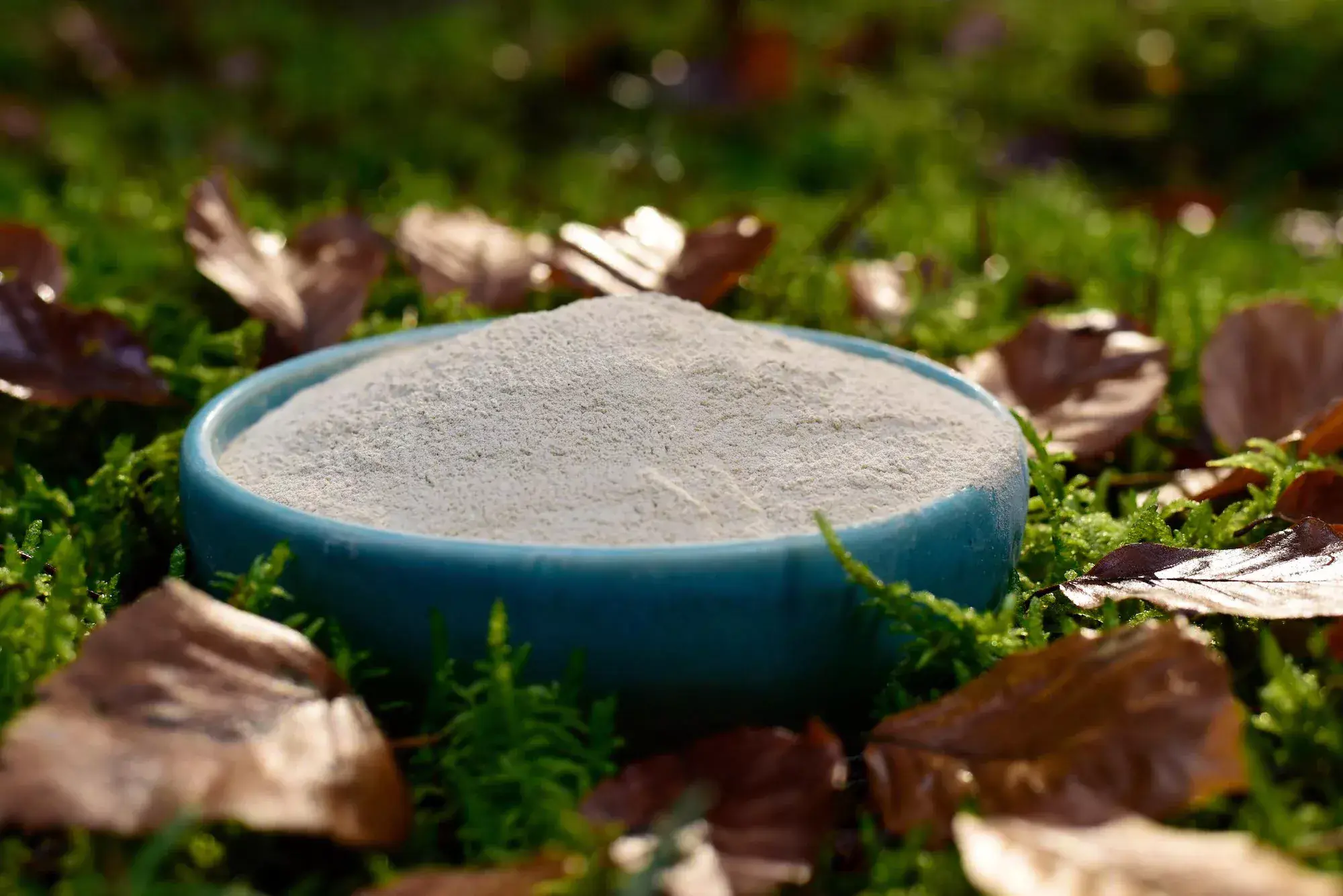
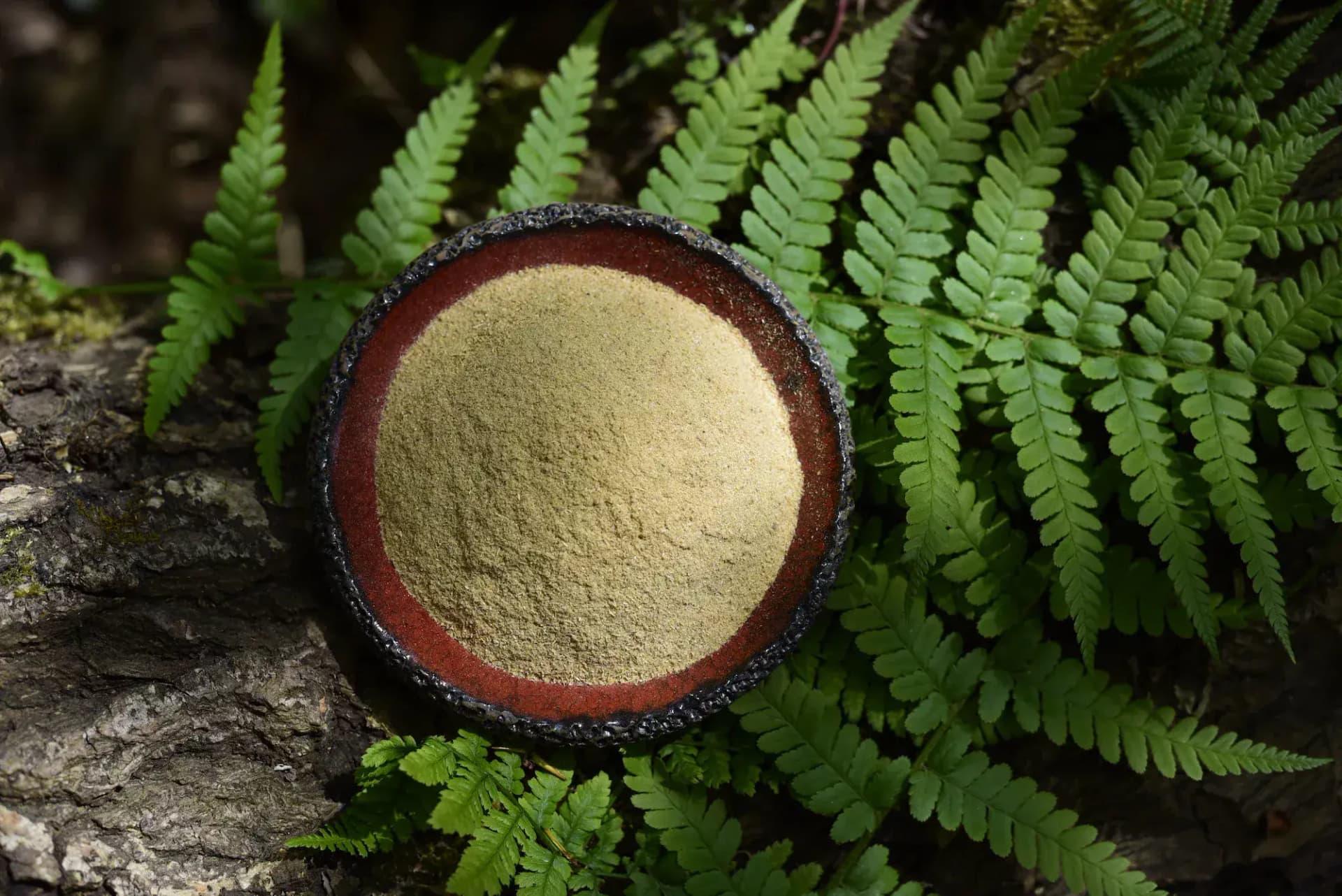
Dilute about 3 to 5 g of powder (a teaspoon) in a warm drink — plant milk or simmering water at 80°C — or a smoothie, without bringing to boil. The Ayurvedic way readily associates rasayana with a fatty and warm vehicle. To receive in small dose, in short cure, never in indefinite daily habit.
What is Ksheerabala?
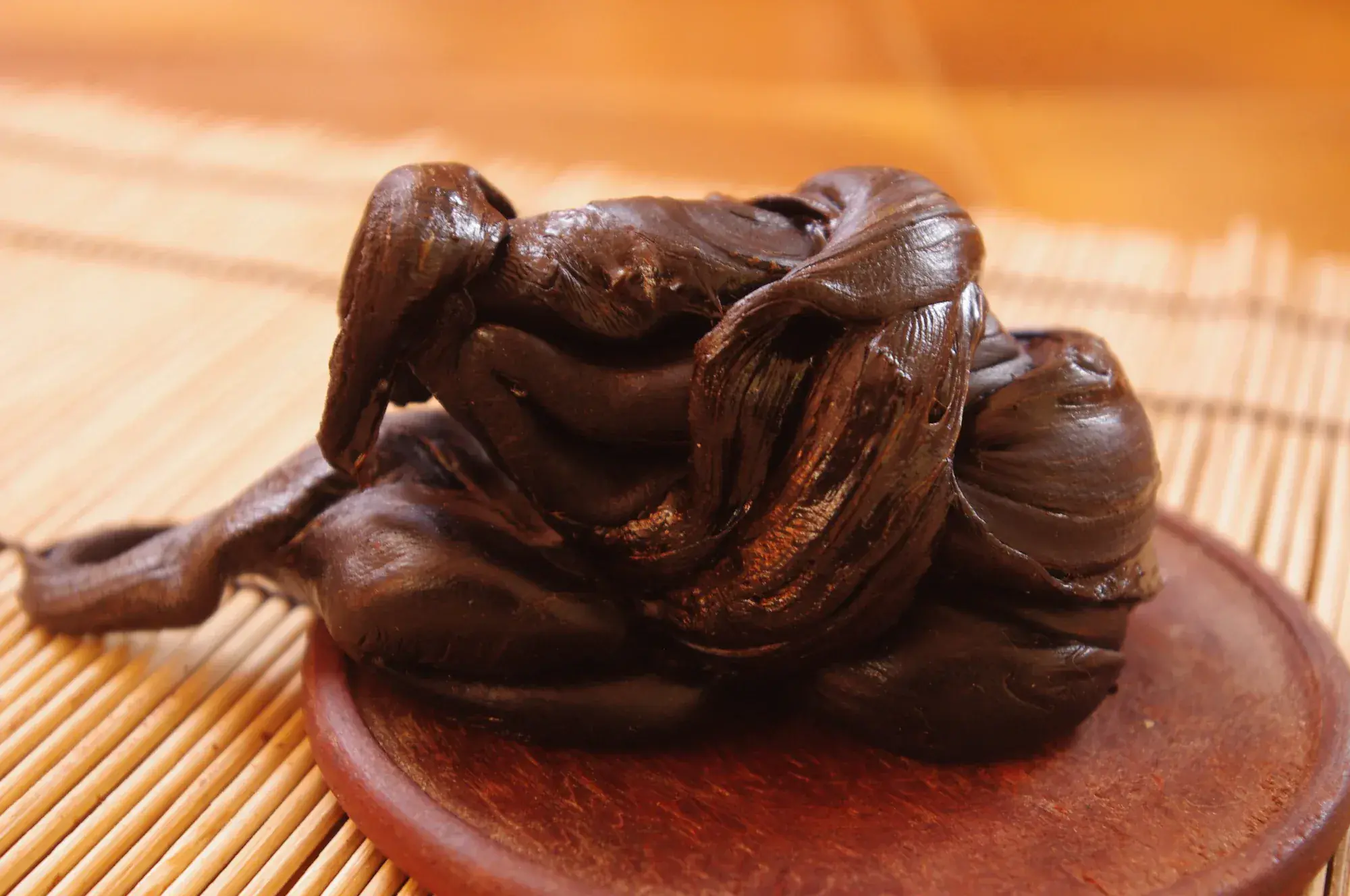
Ksheerabala is the purest form of Bala in tradition — not an herbal tea but an oil. The root is long-cooked in milk and sesame oil, sometimes seven times or a hundred and one times, to give a medicated oil used in massage (abhyanga) and as a stream on the forehead (shirodhara). INFUSE offers the root in powder, not this oil.
Is Bala suitable for everyone?
No, and we assume it. Bala is a plant of long tradition that demands discernment. She is contraindicated for people with heart disorder or hypertension, pregnant or breastfeeding women, children, and people on cardiovascular treatment or MAOI. When in doubt, your doctor before the plant.
⊹ Chapter · Questions ⊹
Ask, answer, share.
One question, one answer — sometimes several voices. The community answers first; INFUSE steps in when it should.
Nobody has opened a thread yet about this plant. You can be the one — a real question, a use, a doubt, a detail.
Anonymous if you prefer.
In depthbotany · phytochemistry · history
Botany and distribution
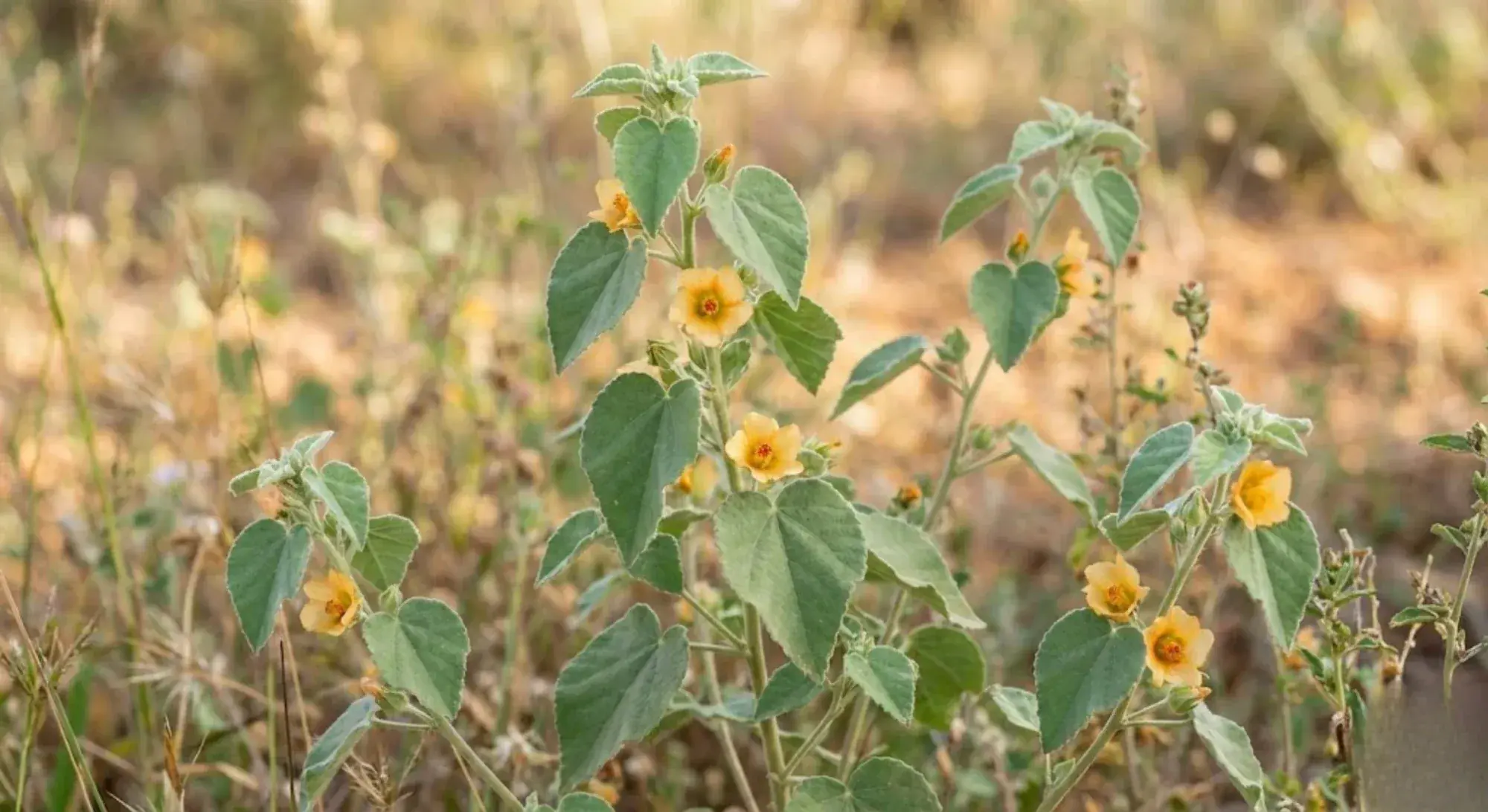
Bala (Sida cordifolia L.) is a perennial subshrub of the Malvaceae family — the family of hibiscus, marshmallow and cotton. The genus Sida numbers about two hundred species across the warm and tropical zones of both hemispheres. Sida cordifolia, the "heart-leaved sida", is native to India and widely distributed from the subcontinent to Brazil, by way of Bangladesh, Sri Lanka, tropical Africa, Australia and the Caribbean. It is a ruderal plant: it settles in poor soils, on roadsides and in fallow land, where other plants give up.
Phytochemistry (descriptive)
The plant contains a range of compounds well described in the literature: ephedrine-type alkaloids (ephedrine, pseudoephedrine, and tryptophan derivatives such as S-N-methyltryptophan methyl ester); vasicinone and vasicinol, alkaloids with bronchodilator and expectorant properties, found in small amounts in the roots; choline and betaine; phytosterols (β-sitosterol, stigmasterol); fatty acids and flavonoids. Ephedrine is present in small amounts, around 0.1% of the whole plant, mostly in the aerial parts, with the root the poorest part (Ghosal et al., 1975) — far below Ephedra sinica (Chinese ma huang, commonly 0.5 to 2.5%). The form of preparation matters: a slow decoction or a long-cooked oil gives a different profile from a concentrated alkaloid extract.
What the studies report
Modern clinical studies on the whole root are rare. The available research almost always concerns the isolated alkaloids, in pharmacological conditions that match no traditional use, and what it most often measures is the sympathomimetic action of ephedrine. Preclinical work explores analgesic and anti-inflammatory avenues, and the traditional respiratory use (in Brazil and in India) is consistent with the known bronchodilator action of ephedrine-type alkaloids. These data do not amount to a demonstration of efficacy in humans, and nothing here is therapeutic advice.
A wider cultural memory
In Brazil, bala is known as malva-branca ("white mallow") and has a place in folk medicine for respiratory complaints (Franzotti et al., 2000). In Hawaiʻi, a related species, Sida fallax, is the ʻilima: its yellow-orange flower, the official flower of the island of Oʻahu, takes five hundred to a thousand blossoms to string a single lei, and was prized by the aliʻi, the chiefs. In India, the word bala, strength, is tied to Hanuman, the hero of strength with a devoted heart; in Vedic astrology (Jyotish), bala names the "strength" of a planet, calculated along several dimensions.
Safety notes
Bala is a plant of long tradition that calls for discernment, and it is best kept for informed use. Set it aside in case of hypertension, cardiovascular disease (arrhythmia, heart failure, coronary disease), hyperthyroidism or angle-closure glaucoma, and with MAOIs, stimulants, antihypertensives or any cardiovascular treatment. It is not advised during pregnancy or breastfeeding, nor for children, and should be avoided before an anti-doping test. The window of use is narrow, the starting dose low, and listening to the body is central. In case of doubt, consult a qualified practitioner before any use.