Mycelial synergy
Four intelligences. Check them all for the complete synergy.
Read it through your world
The whole page is read through this lens.
✦ Lion's Mane · in one breath ✦
The clarity that accumulates — memory, concentration, the attention of the mountain sage.
⊹ The path of the plant
⊹ Community voices
What the community murmurs.
No testimony yet for this plant — nothing invented, nothing fabricated. If you have met it, your account can open the way for those who come after.
Ask the Forest about Lion's Mane
408 books digested, 97,512 indexed passages. She answers on lineages, synergies, cautions, ritual variations.
⊹ FREQUENT QUESTIONS ⊹
We answer.
What is Lion's Mane?
Lion's Mane (Hericium erinaceus) is an edible mushroom that grows as a cascade of white spines on old trunks. It carries three names across cultures — lion's mane in the West, yamabushitake (the monk's mushroom) in Japan, houtou (monkey head) in China — and is taken as a daily cure for clarity and baseline attention.
What are the traditional uses of Lion's Mane?
In Chinese medicine, houtou has long been used to strengthen the internal organs and to support digestion and vigour. In Japan, legend has it that the yamabushi monks took it as a companion through their long meditations.
How do I prepare Lion's Mane?
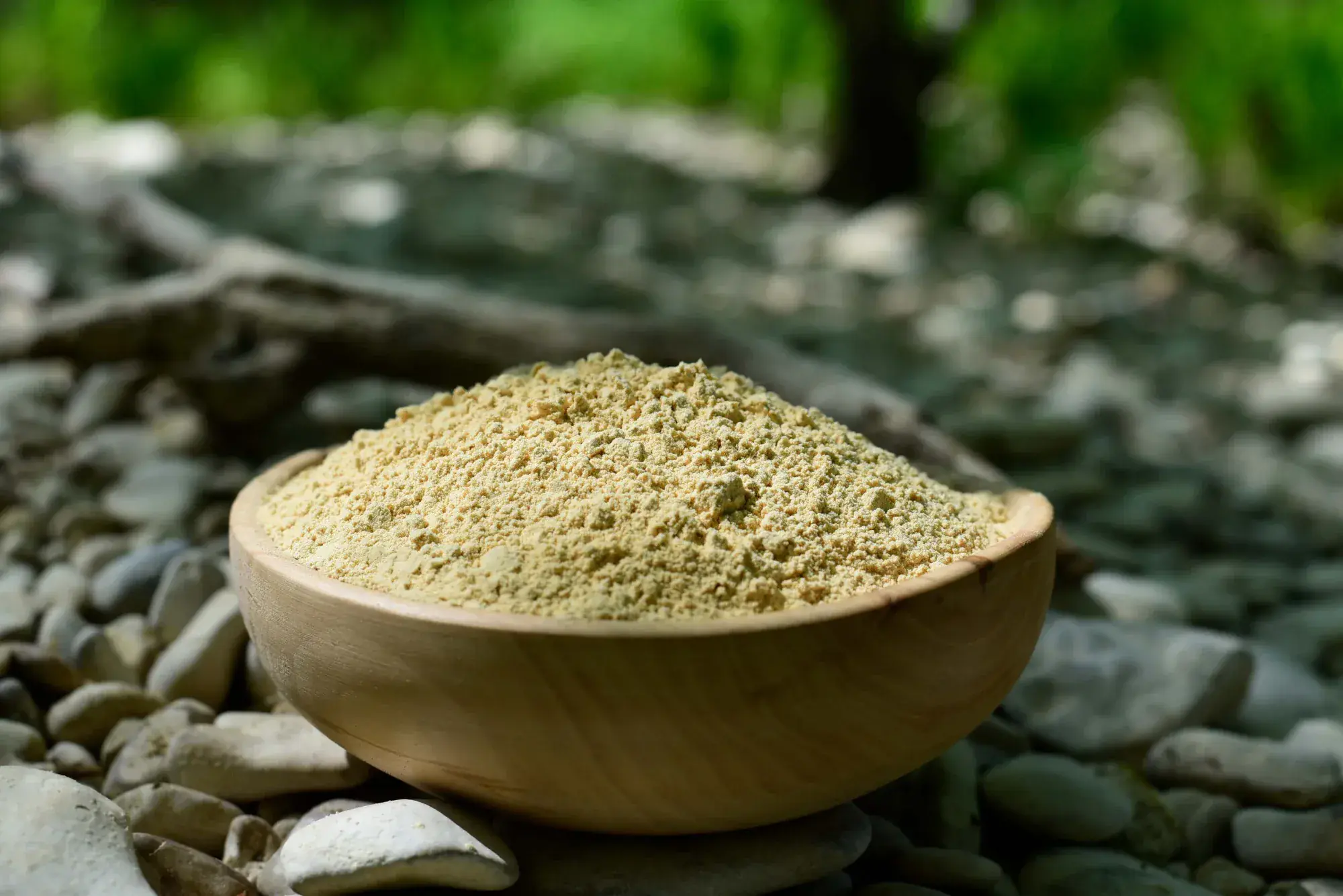
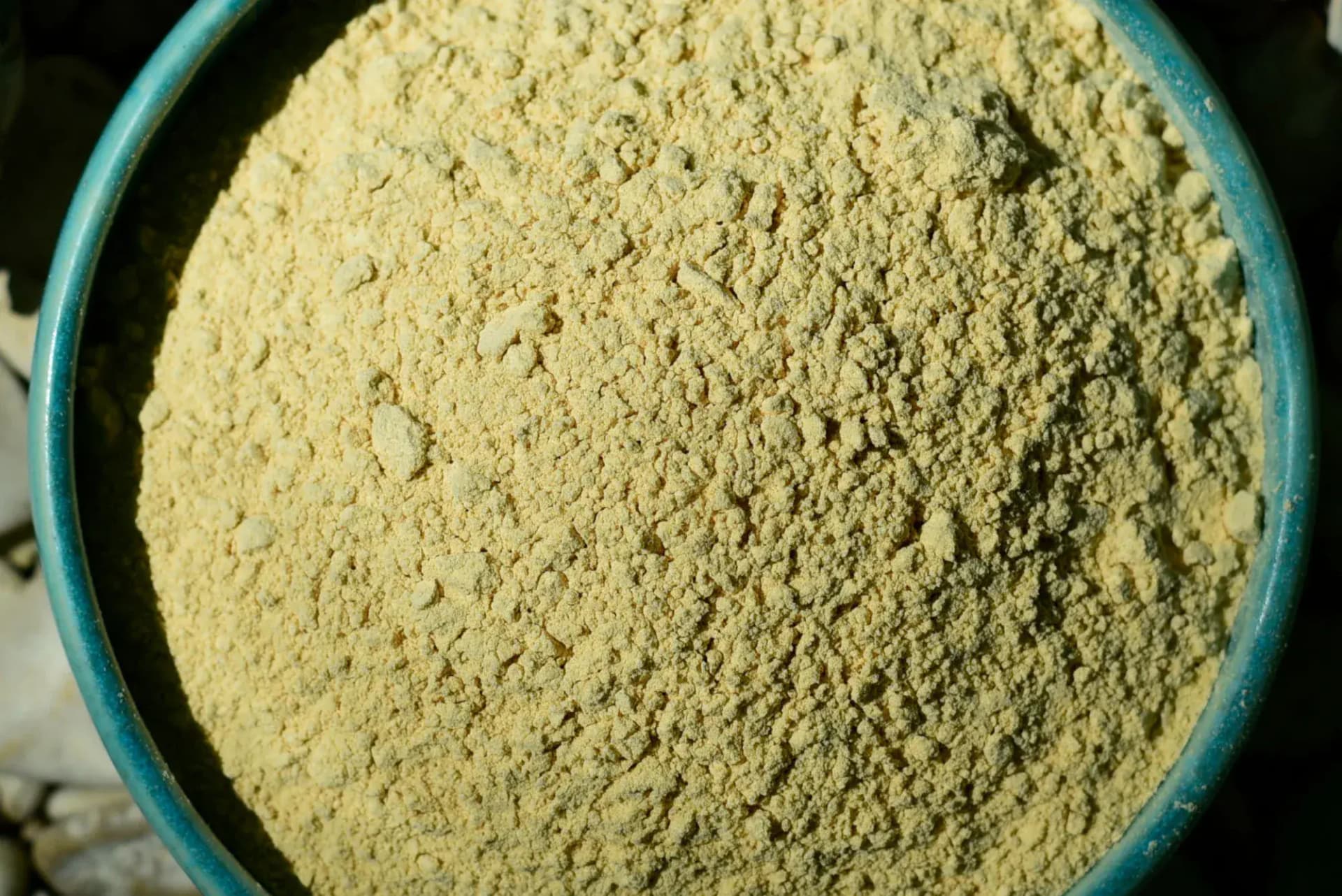
A teaspoon of powder (3 to 5 g) in a hot drink — plant milk, water, smoothie — in the morning. The water should stay steaming, around 80°C, never at a rolling boil. The 8:1 powder extract is dosed at 0.5 g, once or twice a day, stirred into water, tea or food.
Morning or evening — when to take Lion's Mane?
Rather in the morning. It is the grammar of the DAILY mode — a fixed point at the threshold of the day, repeated. Some sensitive people prefer to avoid a late intake; listening to your body is part of the cure.
How long before Lion's Mane takes effect?
It is a background plant. Sources and research point to regularity over several weeks to several months — the 2009 Mori study ran for sixteen weeks. The supposed benefit rests on consistency far more than on any single dose, and it is reversible once you stop.
Fruiting body or mycelium — what's the difference?
The fruiting body is the visible white cascade; the mycelium is the underground network. On the market, mycelium grown on grain can be rich in starch and poor in compounds. INFUSE works with the fruiting body, with an extract guaranteed at least 18% beta-glucans, without added filler.
Does Lion's Mane have side effects?
It is regarded as well tolerated, but a few users report an unusual malaise — anxiety or low mood — after several weeks of continuous use, generally resolved on stopping. Caution too in case of mushroom allergy, anticoagulant treatment, autoimmune disease, pregnancy or breastfeeding.
Is Lion's Mane legal and where is it sourced?
Yes. Freely sold in France and the European Union. INFUSE currently sources its Lion's Mane in Japan.
⊹ Chapter · Questions ⊹
Ask, answer, share.
One question, one answer — sometimes several voices. The community answers first; INFUSE steps in when it should.
- fdghjklm34Sep 8
Combien de temps avant les premiers effets ?
- flordelparaisoestelarINFUSE teamSep 8
Le Lion's Mane n'est pas une plante à effet immédiat — c'est un champignon de fond, un tisserand lent. La tradition et les usages documentés s'accordent sur une durée de plusieurs semaines de prise régulière avant que quelque chose de perceptible s'installe : souvent entre 2 et 4 semaines pour une première impression de clarté ou de constance d'attention, parfois un peu plus. Ce qu'on observe généralement dans l'ordre : * les premières semaines, souvent rien de spectaculaire; c'est normal * vers la troisième ou quatrième semaine, une qualité d'attention plus stable dans la durée * sur le long cours (2 à 3 mois), c'est là que la tradition place l'essentiel de son intérêt C’est un compagnon de routine, pas de réponse rapide. La régularité compte davantage que la quantité. Cependant, selon votre degré de sensibilité, votre état de présence et divers facteurs vous pourrez commencer à ressentir des effets et sensations plus subtils dès les 1ers jours de cure.
In depthbotany · phytochemistry · history
Botany
Hericium erinaceus is a mushroom of the Hericiaceae family, saprophytic and weakly parasitic on hardwoods — oak, beech, maple, walnut. It is circumboreal and native: Eurasia and North America. Its morphology is unlike any other mushroom of the temperate forest: neither cap nor stem in the classic sense, but a cascade of white spines (teeth) hanging from the bark, which can reach several tens of centimetres. It often grows high up, on old trees and wood wounds, and fruits from late summer into autumn. Several close species share this look — Hericium americanum, Hericium coralloides — with more or less pronounced branching.
Phytochemistry (descriptive)
Lion's Mane carries two families of compounds characteristic of it, distributed according to the part of the mushroom. The hericenones (hericenones A to H and beyond) are aromatic compounds found in the fruiting body — the visible cascade. The erinacines (cyathane diterpenes, at least fifteen or so identified, A to K then P to S) are found mainly in the mycelium, the underground network. To these are added the beta-glucans, cell-wall polysaccharides common to medicinal mushrooms, soluble in hot water. This distribution explains why the form of the product (fruiting body vs mycelium-on-grain) and the extraction method (hot water vs alcohol) determine what is actually captured.
What the studies report
Modern research on Lion's Mane is recent. It was a Japanese randomised double-blind study, Mori et al. (2009, *Phytotherapy Research*), that brought it out of obscurity: conducted on some thirty people aged 50 to 80 with mild cognitive impairment, using fruiting-body powder over sixteen weeks, it reports an improvement on a cognitive-function scale — an effect that fades four weeks after stopping. A pilot study by Li et al. (2020, *Frontiers in Aging Neuroscience*) explored a longer course enriched in erinacine A. Since then, more than a hundred publications describe, mostly in animal models and in vitro, possible mechanisms: stimulation of nerve growth factors (NGF, BDNF), hippocampal neurogenesis, myelin support, modulation of inflammation, gastro-protective effects. These works describe leads, not effects established in the general human population; clinical results remain limited and the observed effect is cumulative and reversible. None of this data constitutes a therapeutic promise.
Fruiting body, mycelium, and the extraction debate
Part of a Lion's Mane's quality is decided before the cup. On the market, many products are mycelium grown on grain: convenient to produce, but often diluted by the substrate's starch, which a stated "polysaccharide" figure does not reveal (starch is one). The mycological literature (notably Christopher Hobbs) clearly distinguishes fruiting body from mycelium. For the erinacines, alcohol-soluble and housed in the mycelium, a double extraction (alcohol maceration then long decoction) is the clinical reference form — the same logic as for Reishi or Chaga. INFUSE makes a different, deliberate choice: a hot-water extract of the fruiting body, aimed at the hericenones and beta-glucans of the visible cascade, guaranteed at ≥ 18% beta-glucans, without filler. This is a product orientation, not a claim of absolute superiority: the double-extraction tincture remains another path, more complete on the mycelium's compounds.
A long history
The Chinese thread is the oldest: houtou appears in the pharmacopoeia and on imperial tables, a rare treasure reserved for the court. The Japanese thread links the mushroom to Shugendō, the syncretism born in the mountains from the 7th century onward that blends esoteric Buddhism, Shinto and Taoism: the yamabushi, "those who prostrate themselves in the mountain," are said to have made it an ally of their long ascetic practices. The North American and Ainu threads, more discreet, are a reminder that the same form spoke to cultures with no contact between them. And the modern thread — the 2009 Mori study — shows how a single well-run piece of research can move a plant from ethnobotanical curiosity to an actively researched subject.
Safety notes
Lion's Mane is regarded as well tolerated, but a few points deserve attention. A "lion's mane crash" is reported anecdotally: an unusual malaise — anxiety, low mood — in a minority of users after several weeks of continuous use, of unknown mechanism and generally resolved on stopping. Caution applies in case of mushroom allergy, anticoagulant treatment (limited data), scheduled surgery, autoimmune disease, and during pregnancy and breastfeeding (insufficient data). In case of doubt or ongoing treatment, a doctor's advice takes precedence over the plant.