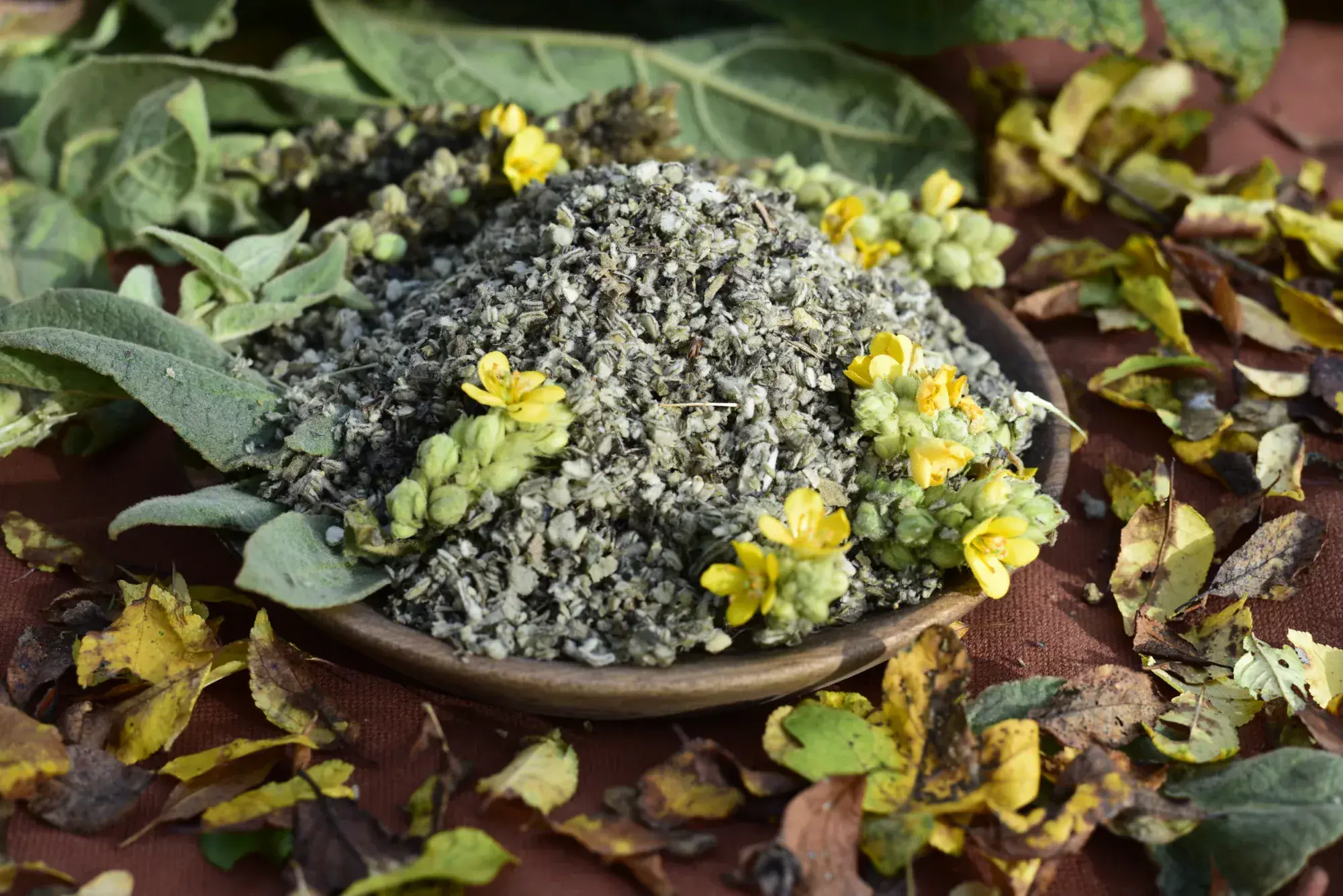
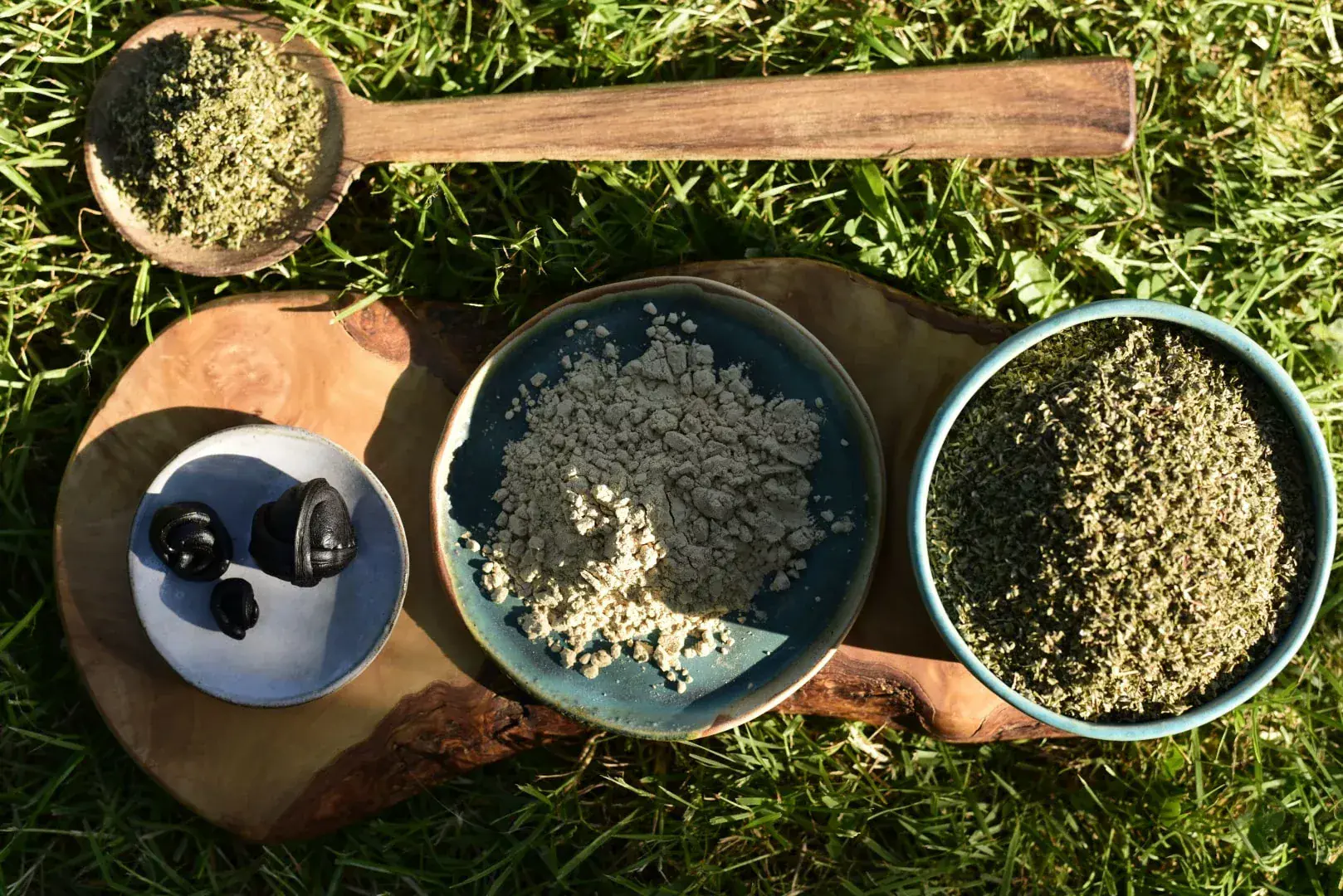
⊹ To weave around
To accompany Raspberry
Click a card to see why it pairs — and choose your form.
✦ Raspberry · in one breath ✦
Cottony texture, neutral taste — a plant of tissue, without dependence.
⊹ The path of the plant
⊹ Community voices
What the community murmurs.
No testimony yet for this plant — nothing invented, nothing fabricated. If you have met it, your account can open the way for those who come after.
Ask the Forest about Raspberry
408 books digested, 97,512 indexed passages. She answers on lineages, synergies, cautions, ritual variations.
⊹ FREQUENT QUESTIONS ⊹
We answer.
What is raspberry leaf?
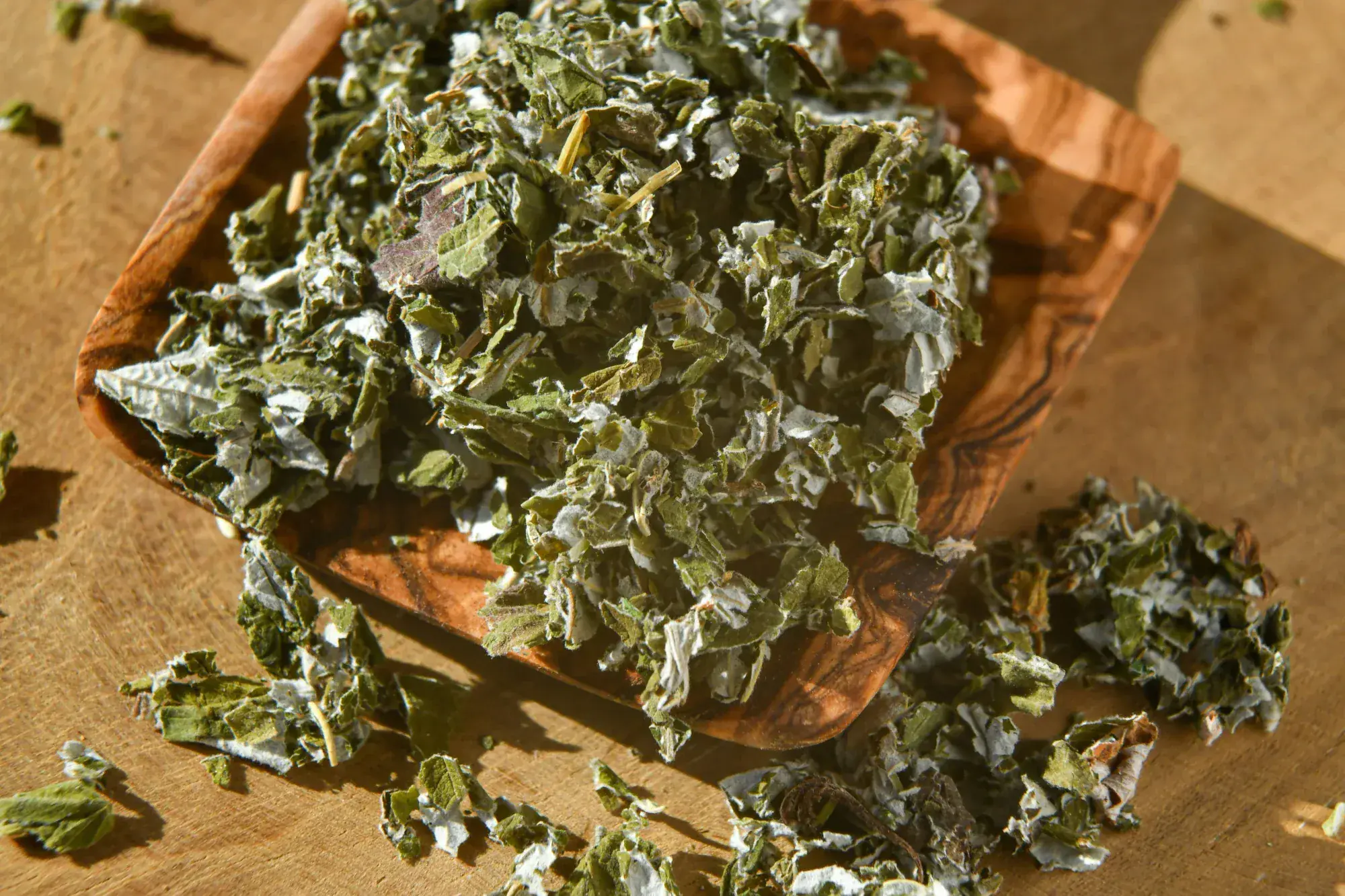
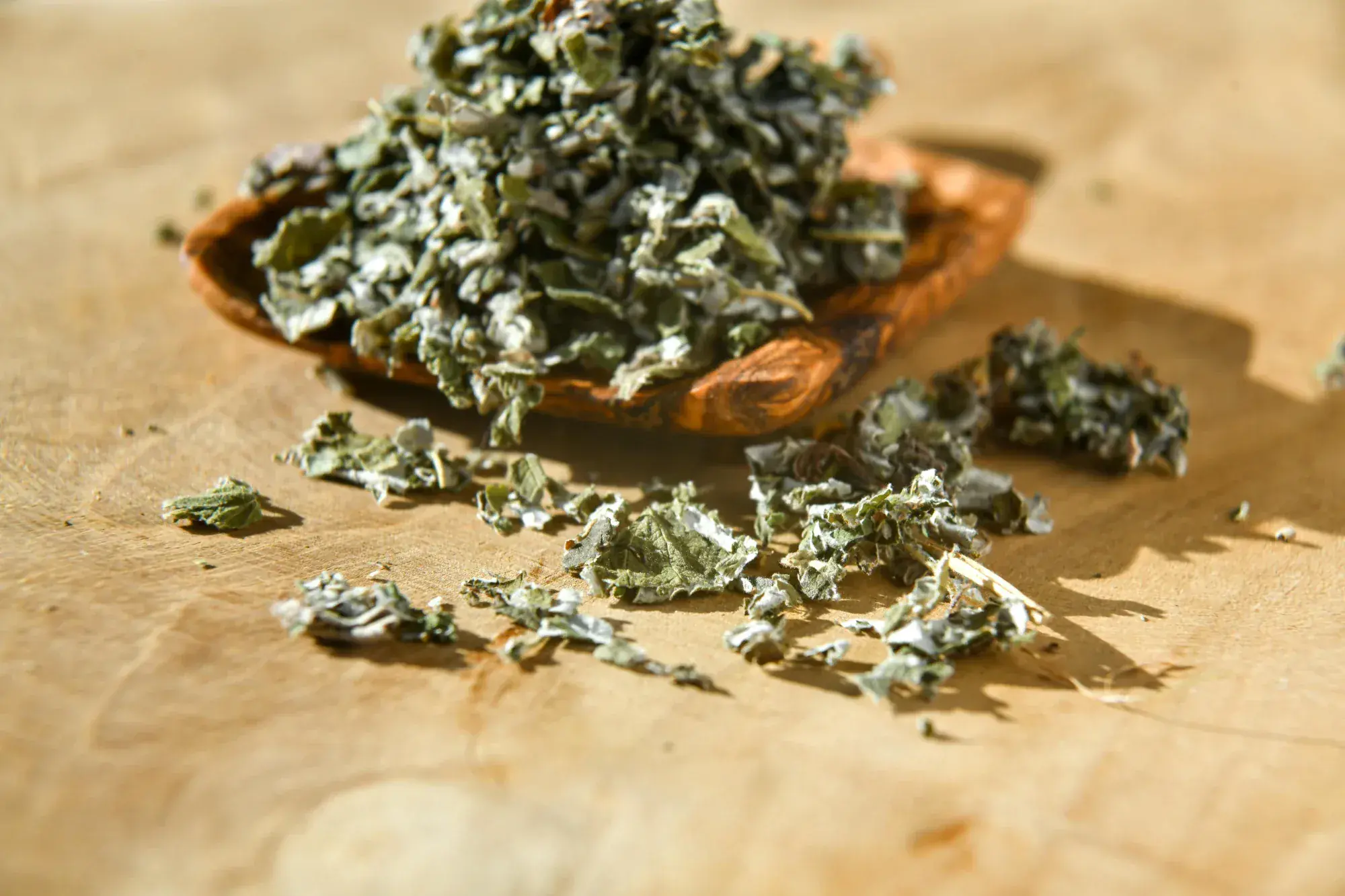
Raspberry leaf is the leaf of Rubus idaeus, the thorny Rosaceae shrub that gives the red raspberry. Far beyond her fruit, her leaf has been known since Greek Antiquity as "the women's herb" — companion of the feminine cycle from first menstruation to menopause. INFUSE offers her as whole organic leaves from France, as tea or as non-tobacco smoking base.
What are the traditional uses of raspberry leaf?
Across ancient Greece, European midwives, Cherokee and Algonquin women, Slavic tradition and French folk medicine, raspberry leaf is the plant of the feminine cycle and bodily transitions — menstruation, end of pregnancy, postpartum, menopause. She is one of the rare plants that tradition accompanies throughout a woman's life.
How do I prepare a raspberry leaf tea?
Place about a teaspoon of whole leaves in 250 ml of simmering water (around 80°C, never boiling), cover and let infuse 5 to 10 minutes, then strain. Feminine tradition also knows the long infusion — a large handful of leaves in one litre, left several hours, for a nourishing drink to sip during the day.
Can pregnant women drink raspberry leaf?
The tradition of European midwives reserves this use for the last trimester, never in early pregnancy, and always under the watch of a midwife or healthcare professional. INFUSE gives no medical advice — we transmit an ancient transcultural use and invite each woman to be accompanied.
Can raspberry leaf be smoked?
Yes — in Europe, raspberry leaf has served for centuries as a non-tobacco smoking blend base. Her cottony texture and her neutral, lightly fruity taste make her a soft base, without nicotine or addictive substance. Any smoke remains smoke however — vaporisation is gentler for regular use.
What's the difference between short and long raspberry infusion?
The short infusion (5 to 10 minutes) gives a light, fruity, everyday tea. The long infusion (several hours, sometimes overnight) extracts more of the leaf's minerals and gives a denser drink — it is the herbalists' "nutritive" way, to drink fresh or warm during the day.
Why is raspberry called the women's herb?
Because cultures separated by oceans and centuries — ancient Greeks, English midwives, Cherokee women, Slavic grandmothers — arrived independently at the same conclusion: raspberry leaf accompanies the feminine cycle at all her ages. This transcultural convergence is one of the strongest signatures of a traditional plant.
Does raspberry leaf have contraindications?
She counts among the gentlest plants of European pharmacopoeias. Caution applies mostly to early pregnancy (to avoid before the last trimester), history of miscarriage, and Rosaceae allergy, rare. In case of medical treatment, signal her use to your practitioner. Do your own research (DYOR).
⊹ Chapter · Questions ⊹
Ask, answer, share.
One question, one answer — sometimes several voices. The community answers first; INFUSE steps in when it should.
Nobody has opened a thread yet about this plant. You can be the one — a real question, a use, a doubt, a detail.
Anonymous if you prefer.
In depthbotany · phytochemistry · history
Botany
Rubus idaeus — the red raspberry, or European raspberry — is a thorny shrub of the Rosaceae family, native to Europe and northern Asia. Upright canes covered in prickles, compound leaves with a downy white underside, discreet white flowers, and a red fruit made of dozens of small drupes clustered around a receptacle that stays on the plant when the berry is picked. It is the leaves — not the fruit — that make up the traditional medicinal material; they are gathered by preference before fruiting, then dried in the shade to keep them supple.
The species name idaeus means "of Mount Ida." Two Mount Idas contend for the origin: the one in Crete, where the goddess Ida raised the infant Zeus to hide him from Cronos, and the one in Anatolia, tied to Cybele and the Trojan War. Both are mother-mountains. The name thus carries three superimposed inscriptions: the bramble that protects, the mother that nourishes, the mountain that endures.
Phytochemistry (descriptive)
Raspberry leaf brings together several families of compounds. In 1941, Burn and Withell described in The Lancet a principle in the leaf able to relax uterine muscle in vitro; its exact nature has never been clearly identified, and no isolated active compound is confirmed today. The leaf is otherwise rich in tannins (ellagitannins, ellagic acid), astringent and antioxidant compounds, and contains flavonoids (kaempferol, quercetin glycosides). Finally, often overlooked, its nutritive dimension: the leaf contains vitamin C, calcium, magnesium, potassium and iron. It is this mineral load that justifies the herbalists' long infusion — several hours to draw out the minerals, where ten minutes are enough for a pleasant everyday tea.
What the studies say
The traditional use of raspberry leaf in late pregnancy has been examined by research, without any proof of efficacy emerging. The randomised controlled trial by Simpson and colleagues (2001, *Journal of Midwifery & Women's Health* 46:51-59) showed no shortening of the first stage of labour. The European Medicines Agency (EMA/HMPC, 2014) concluded that use during pregnancy and breastfeeding could not be recommended, for want of sufficient data. The United Kingdom's Committee on Toxicity (COT, 2024) rates the risk as low, but with high uncertainty. Tradition, for its part, reserves the use for the last trimester and under guidance. None of this amounts to a promise about childbirth or to medical advice.
The long history
The story of raspberry leaf is that of a women's knowledge that resisted erasure. For centuries, in the villages of Europe, midwives — often illiterate, passing their knowledge on by word of mouth — carried it with them to the grave. When official medicine took control of childbirth in the 19th century, whole tracts of knowledge vanished. Raspberry leaf is one of the rare fragments that survived: through gardens, through grandmothers, through the countrywomen who kept on.
The 1941 observation, at the very heart of the Second World War, marks the moment when science turned its attention to a knowledge until then passed on only by word of mouth. And the plant carries on a second, humbler life today, in non-tobacco smoking blends — heir to the mullein, coltsfoot and raspberry leaves that were rolled in times of scarcity.
Safety notes
Raspberry leaf is among the best-tolerated plants of the European pharmacopoeias. Traditional reservations concern early pregnancy (use set aside before the last trimester, out of caution), a history of miscarriage and premature labour. Rosaceae allergy is possible but rare. Astringent tannins may, at high doses, accentuate a tendency to constipation. For smoking use, the rule stays simple: any smoke remains smoke, and vaporisation is preferable for regular use. In case of medical treatment, it is better to mention the plant's use to one's practitioner. None of this constitutes medical advice.