Blue Lotus
The flower of ceremonies
from €6.00
Five lotuses, side by side. The two blue lotuses, the pink and the white lotus, the white and red water lilies — as whole flower, powder, resin and elixir.
5 plantsfrom €6.00
Three plants from the family, depending on what you are looking for.
The flower of ceremonies
from €6.00
The authentic caerulea
from €17.00
Pundarika, the white lotus
from €9.89
Two botanical families, and for each one, its exact name.
The space held by smoke, flask, and water.
EnterReceiving a master plant.
EnterThe heart that lets itself be crossed.
EnterSensuality as ritual.
EnterThe feminine has its ally plants.
EnterTraveling without tearing yourself away.
EnterThe word lotus travels across at least two plants that botany keeps far apart. On one side, Nymphaea, the water lilies — the blue lotus opens its flower on the water or above it. On the other, Nelumbo nucifera, the sacred pink and white lotus, which lifts its flower above the water and is botanically closer to the plane tree than to the water lily. Our five lotuses fall into these two families.
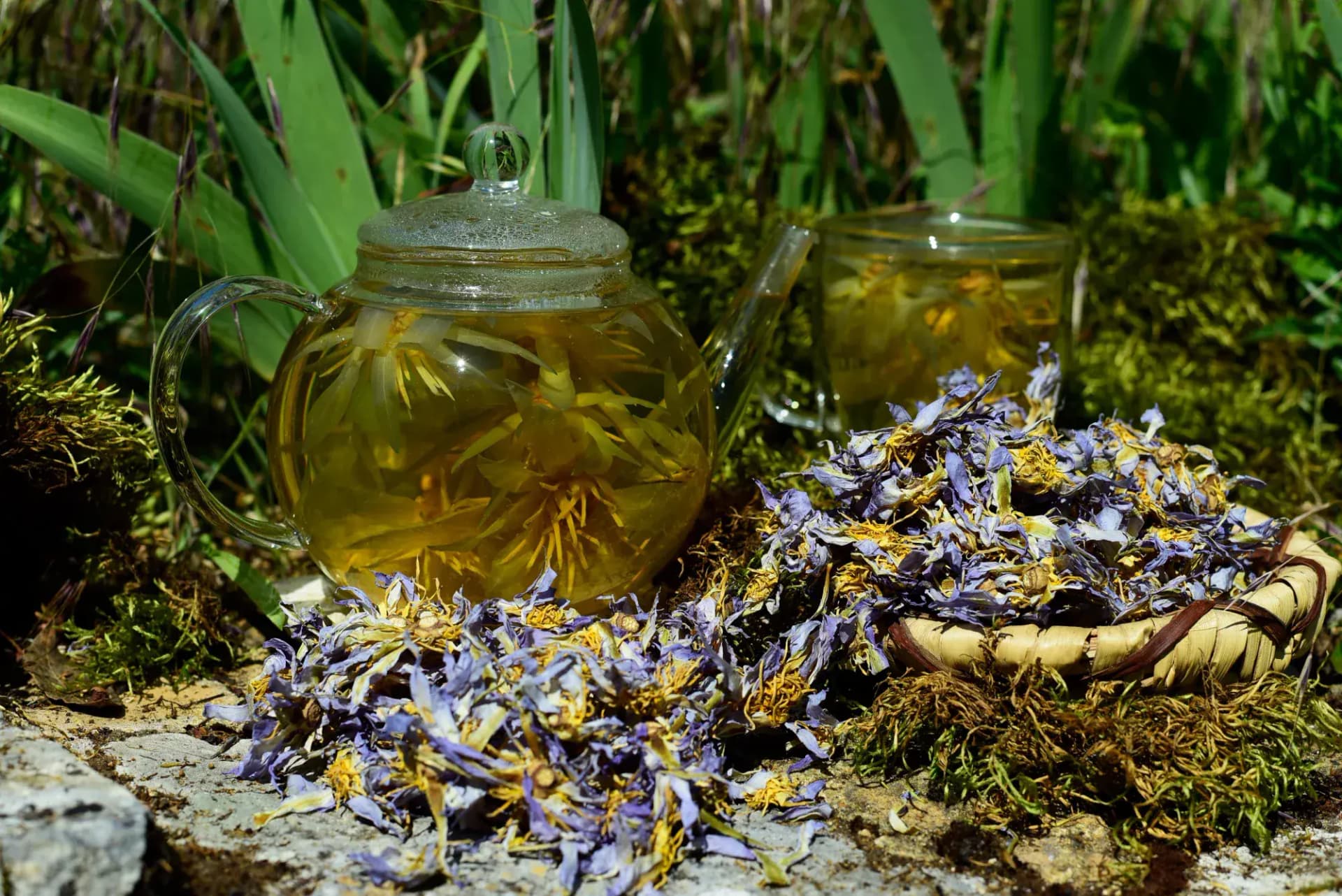
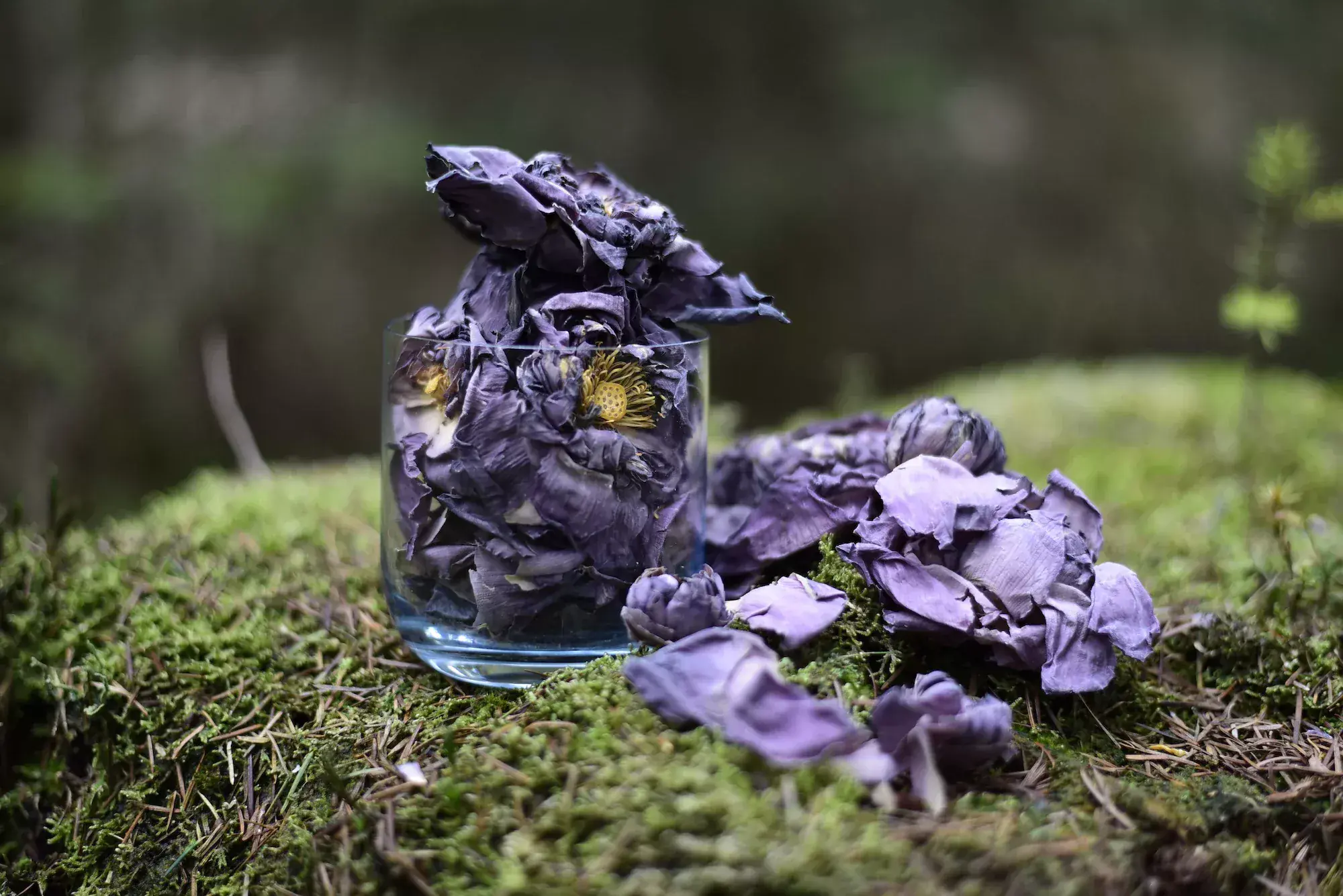
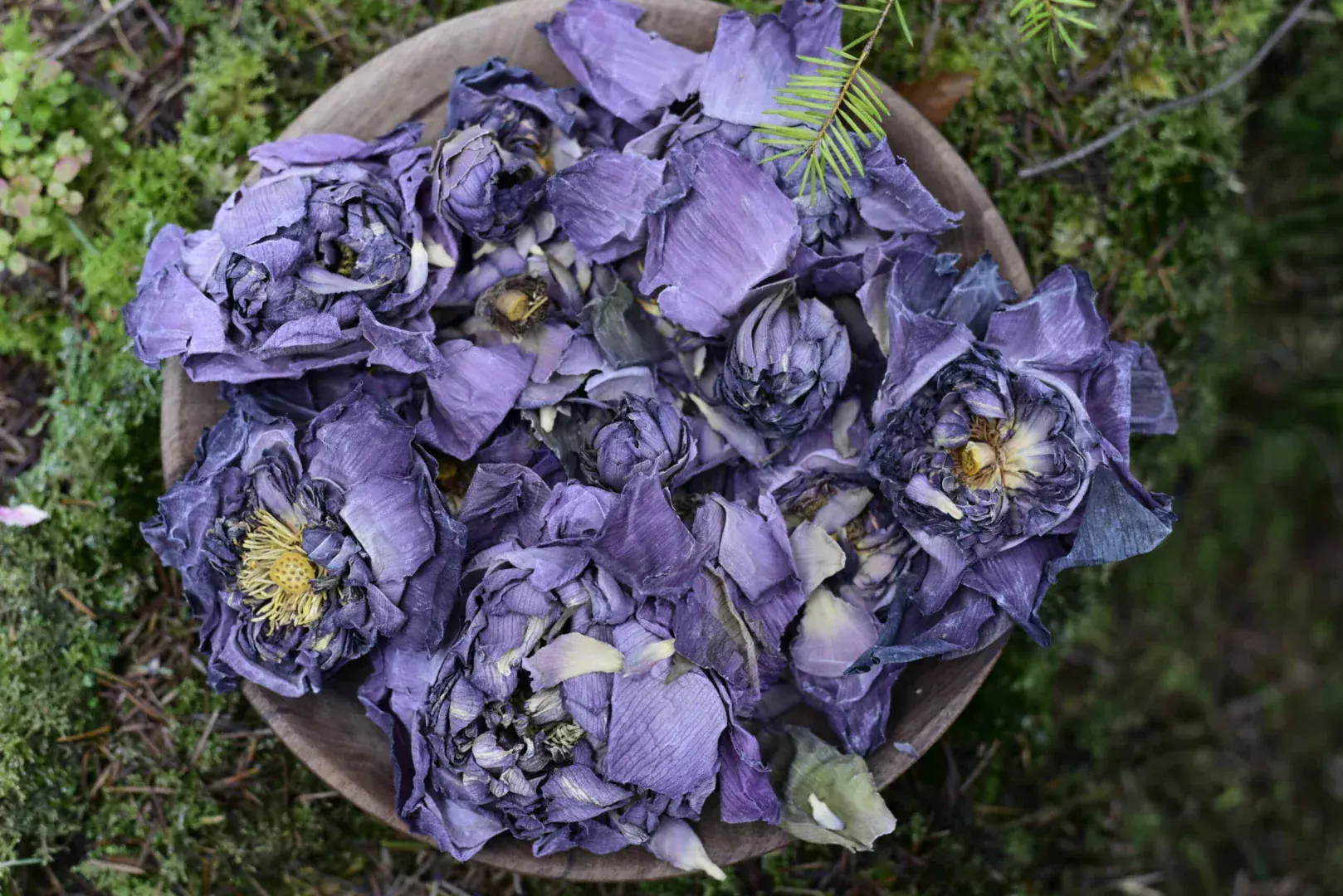
Two blue lotuses first, both from Sri Lanka: the Authentic one, the one we hold to be the true blue lotus (Nymphaea caerulea), as a flower and as an elixir; and the everyday Blue Lotus — commonly called Nymphaea caerulea, in fact Nymphaea nouchali — the one everyone loves, as a flower, powder and resin. Then the two sacred lotuses, pink and white, a single Nelumbo nucifera in two colors. And the two water lilies, the white (Nymphaea lotus) and the red (Nymphaea rubra). For each one, we say which plant it is.
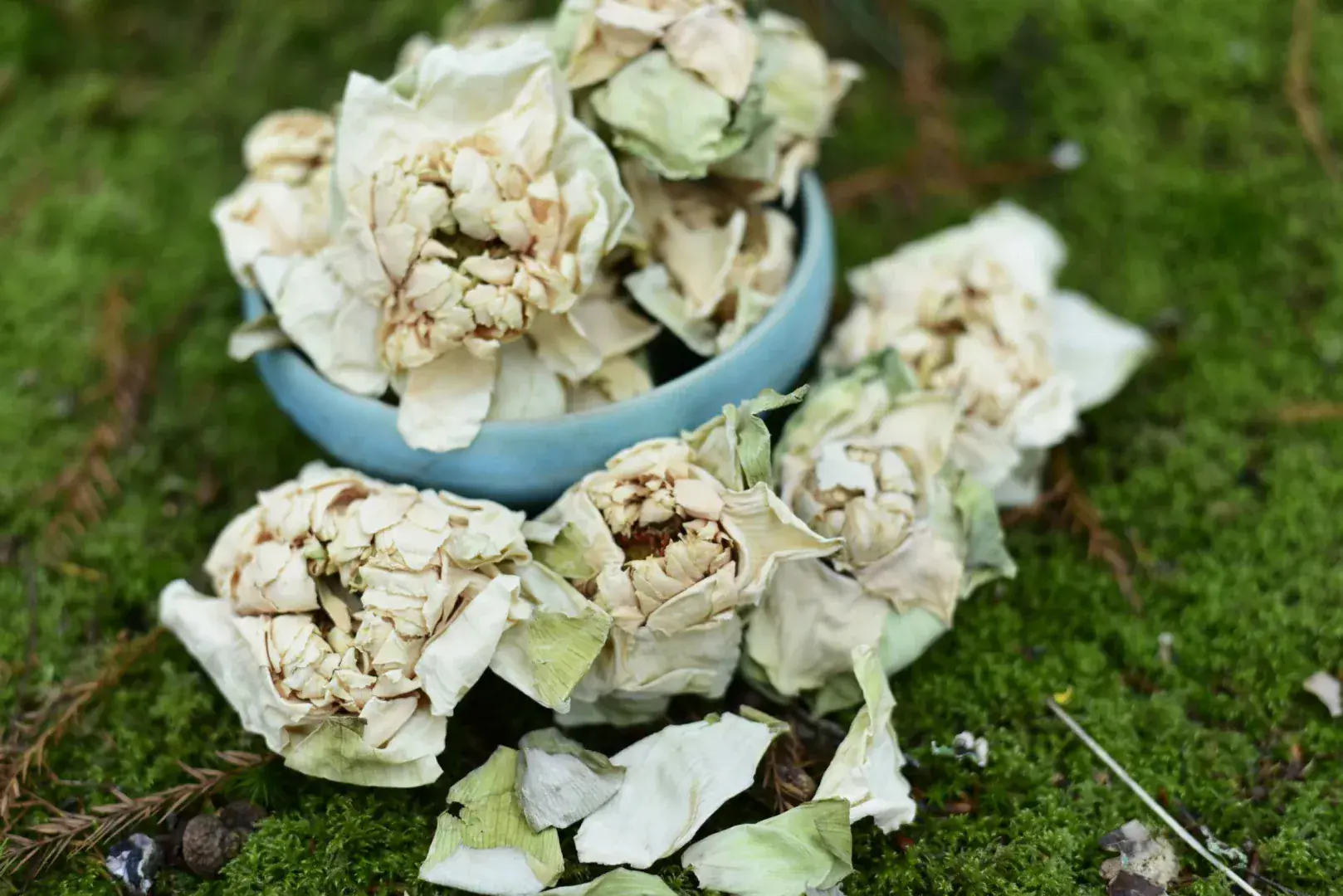
What sets our lotuses apart begins with the flower and the form.
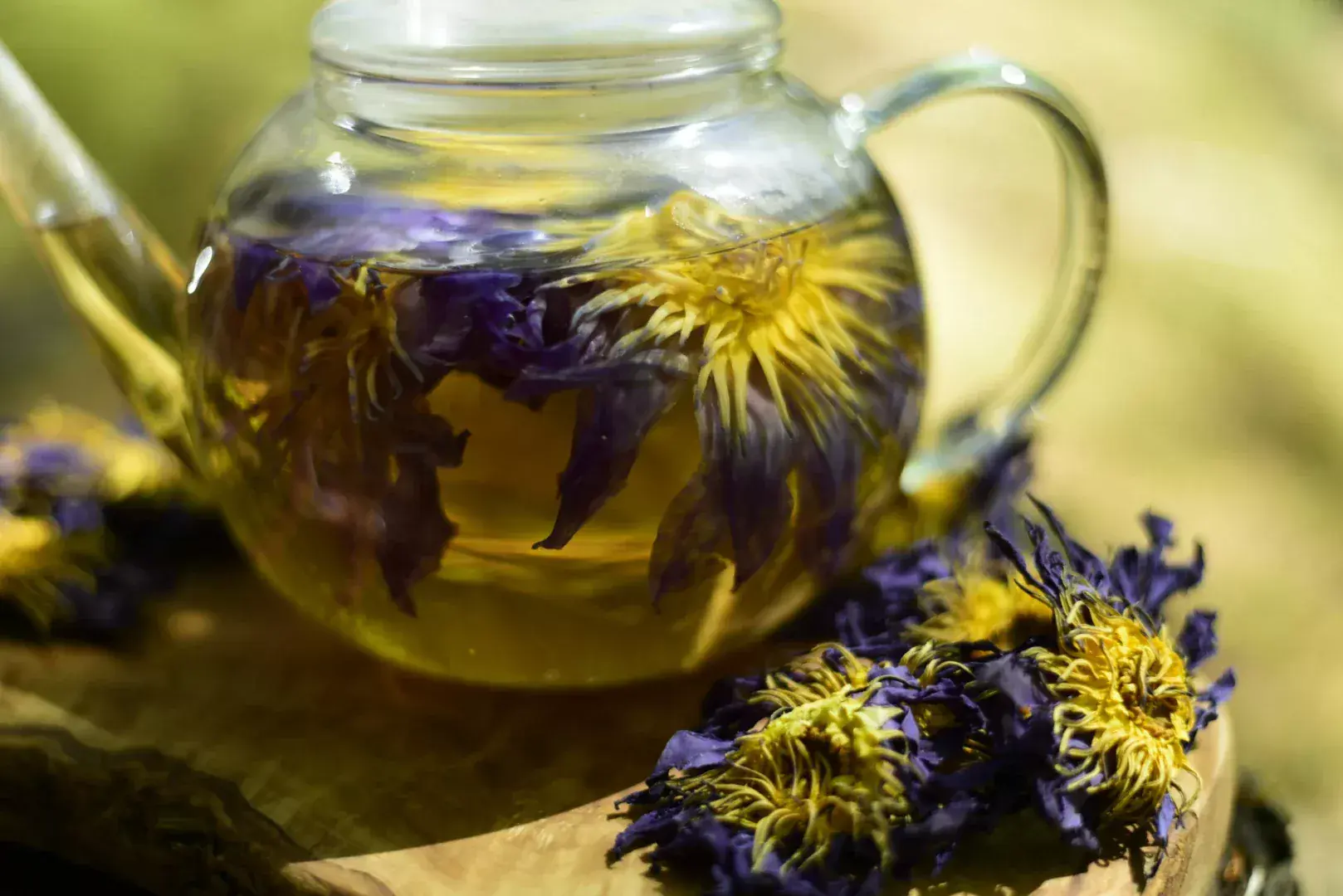
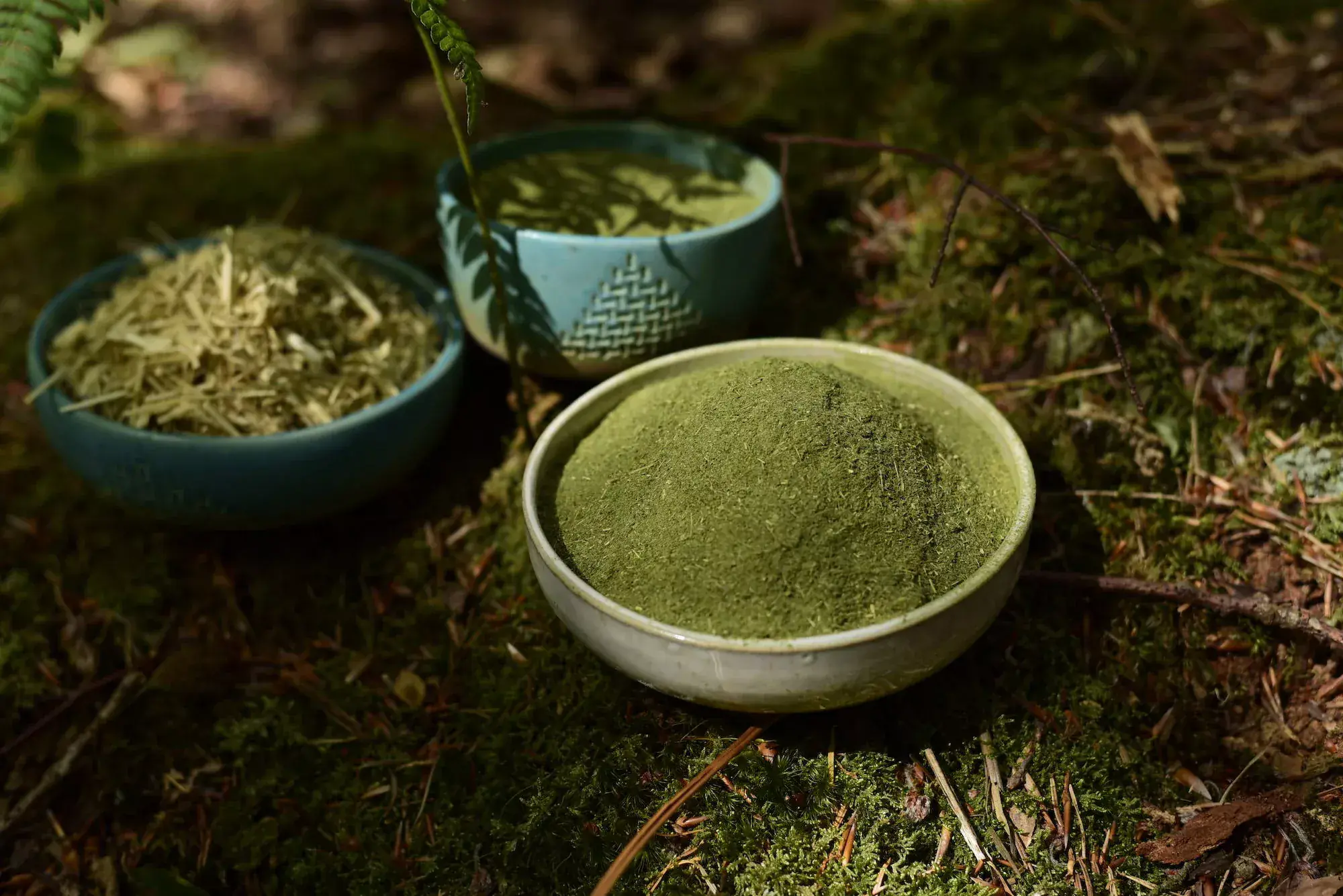
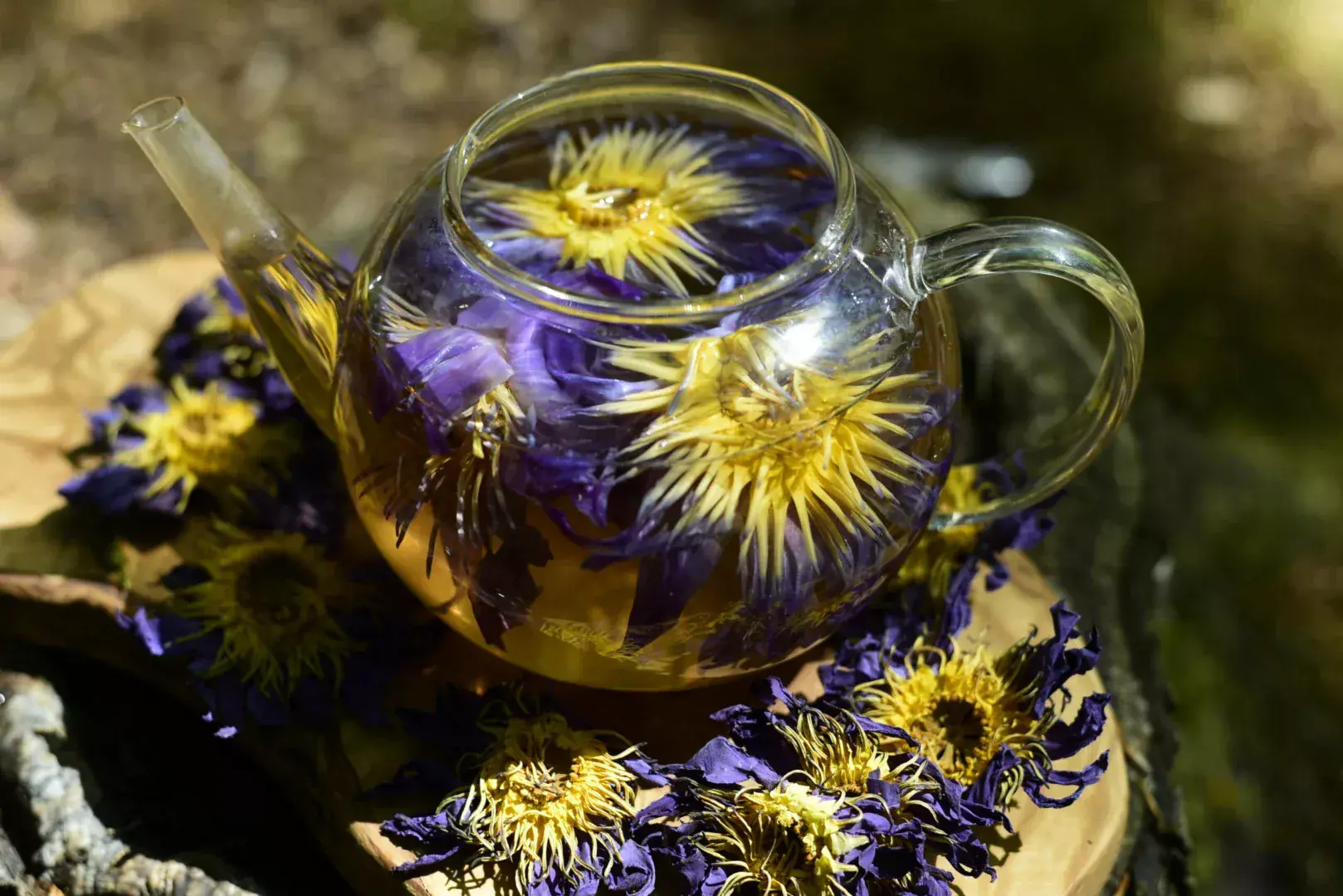
The blue lotuses are taken as an infusion — one flower, water just off the boil — and the Authentic one also comes as an elixir; the everyday one keeps as powder and resin.
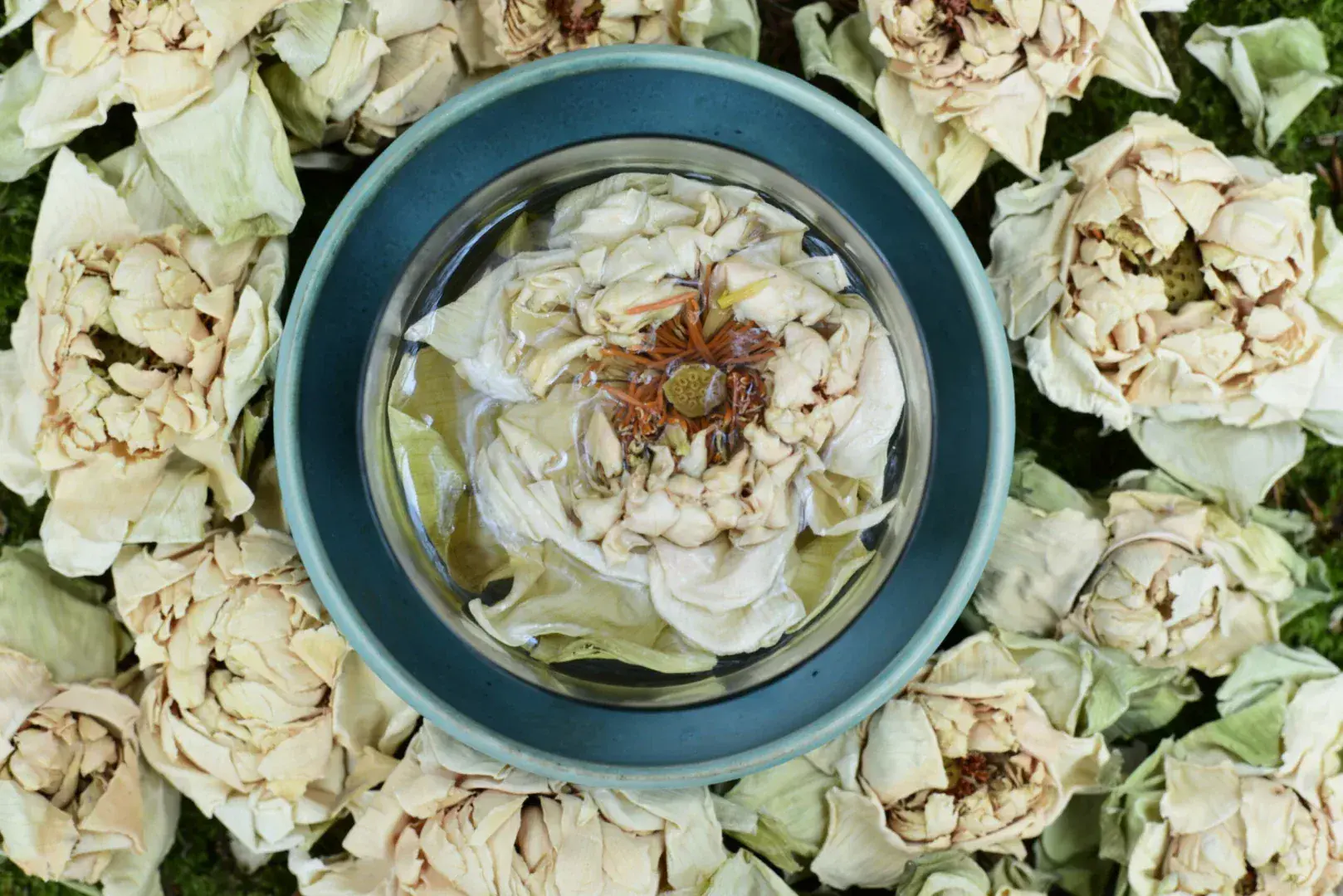
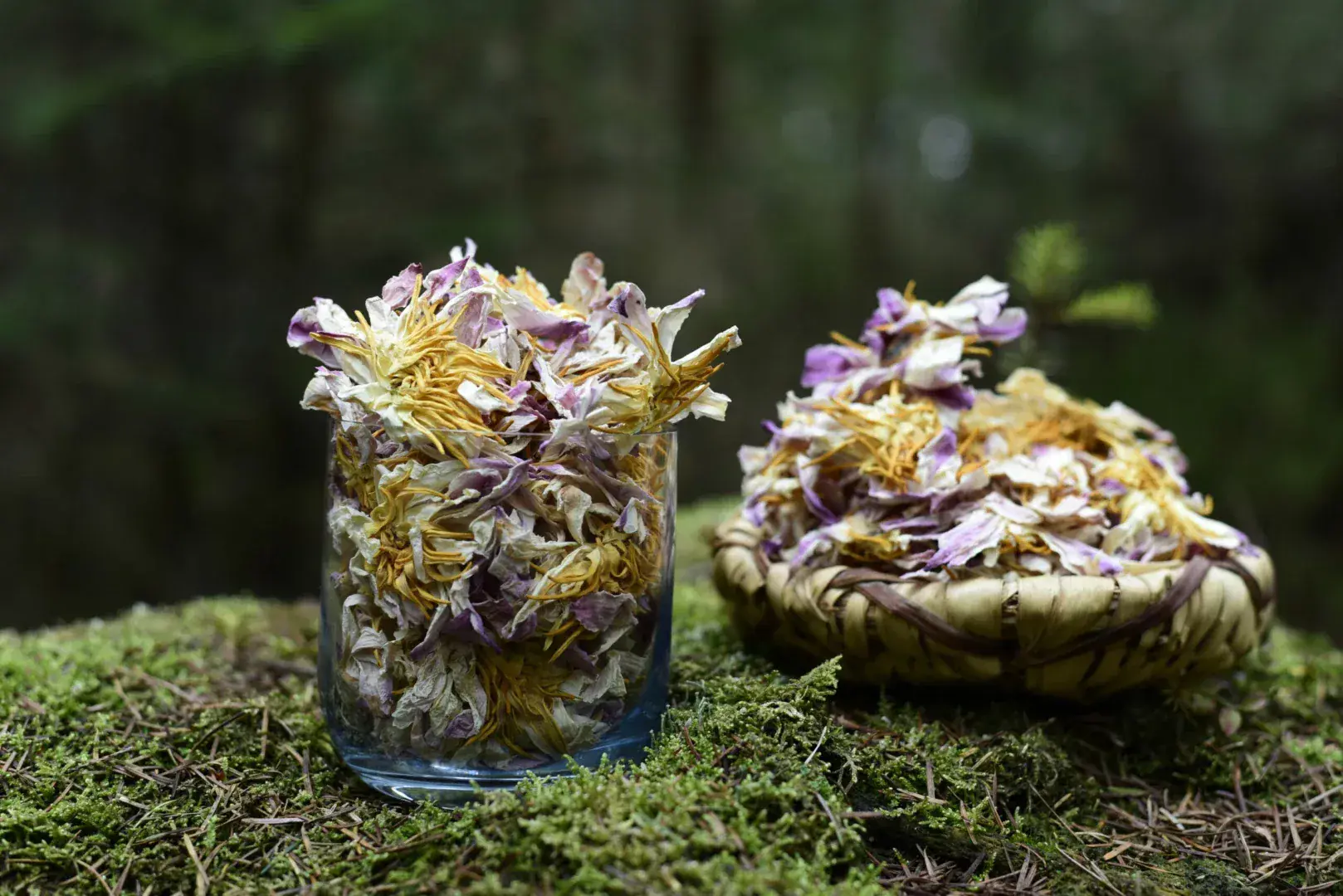
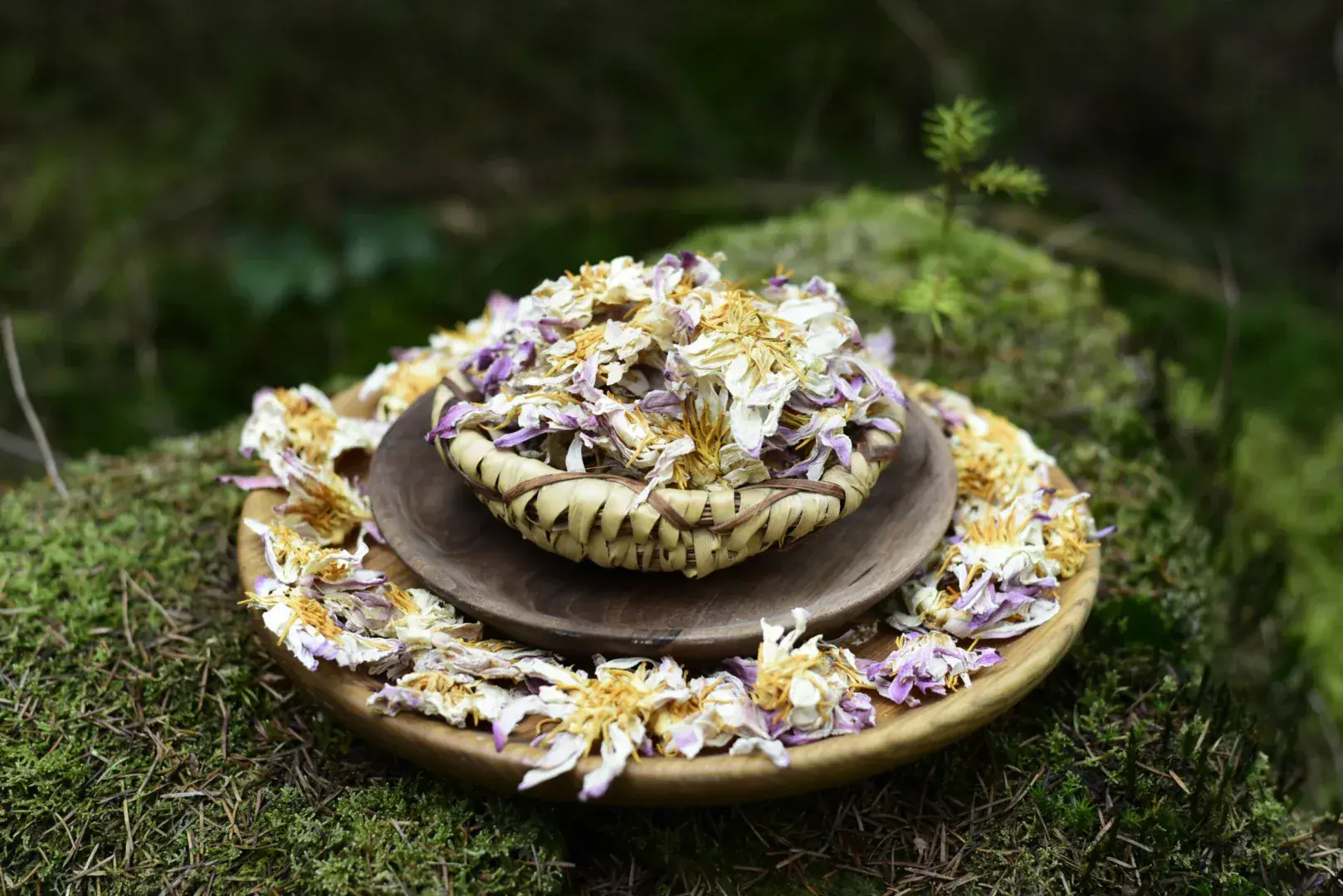
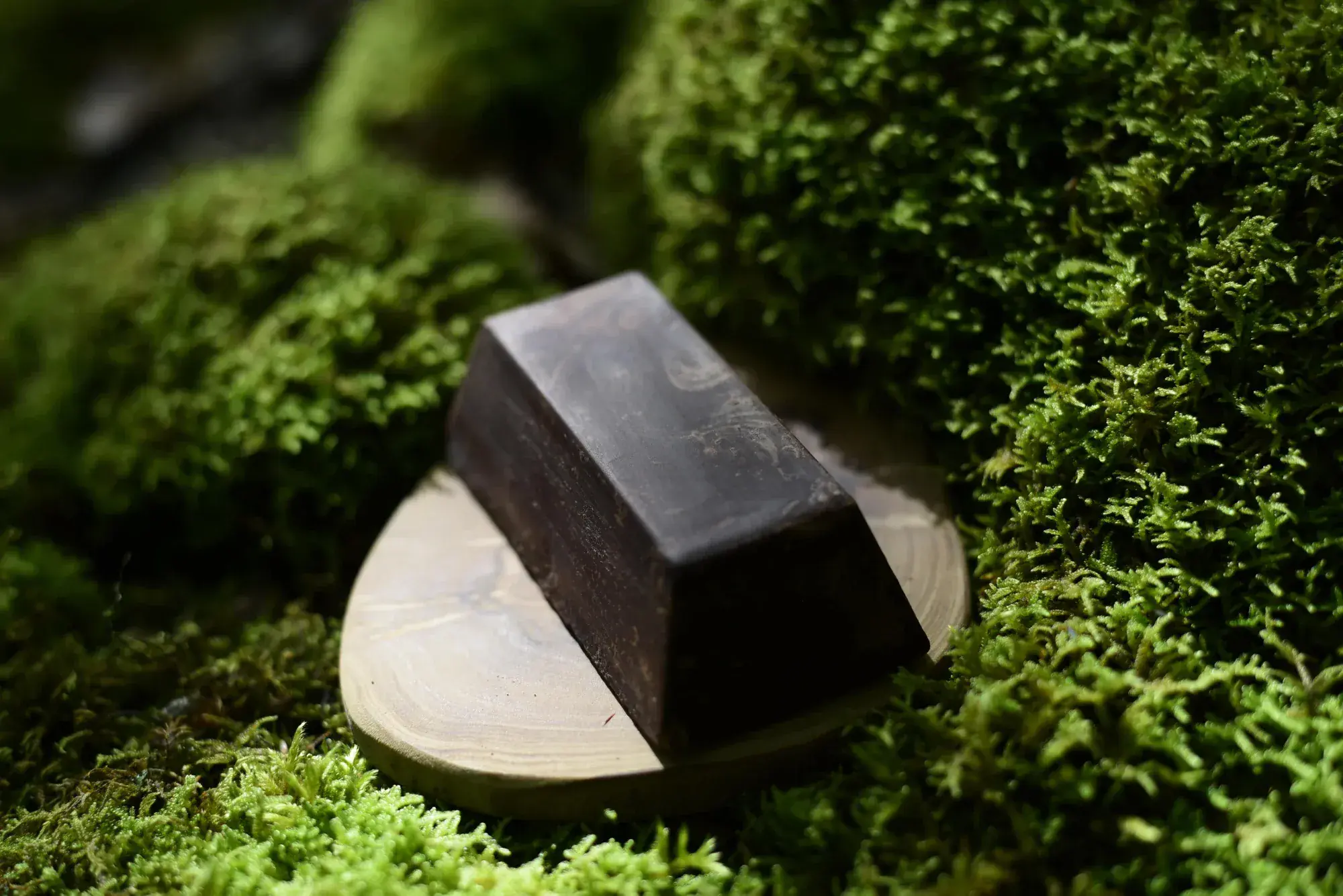
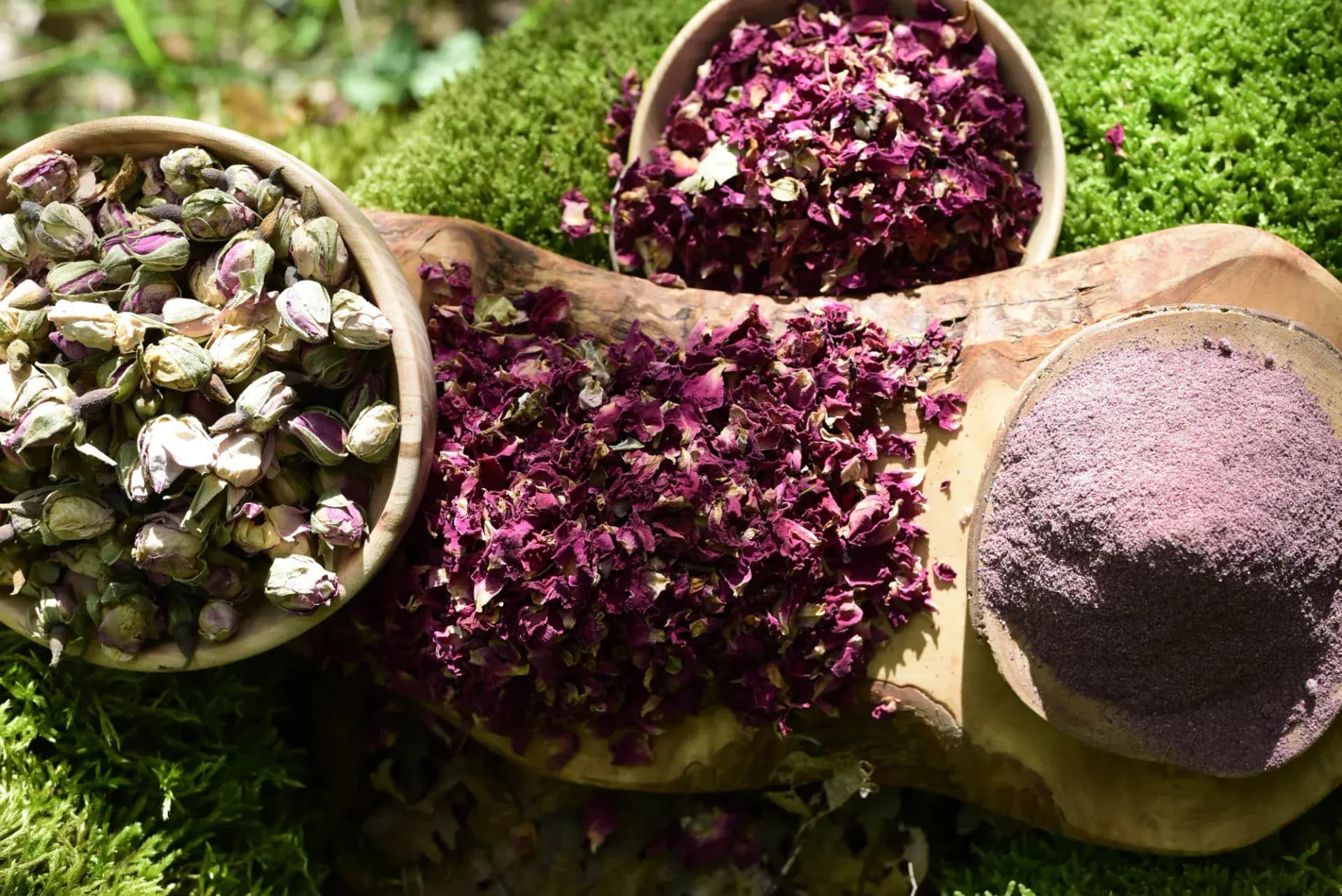
The sacred lotuses, pink and white, are whole flowers to contemplate as much as to infuse; the pink also gives its stamens and its powder, the white its resin.
The water lilies, white and red, are two flowers of the water — two hues that answer each other.
Two distinct botanical families. Water lilies (Nymphaea) carry their flower on the water or above it, depending on the species: the blue lotus is one of them. The sacred lotus (Nelumbo nucifera), pink or white, lifts its flower above the water and is botanically closer to the plane tree than to the water lily. The word "lotus" covers both.
Two blue lotuses from Sri Lanka — the Authentic one (Nymphaea caerulea) and the everyday one (Nymphaea nouchali, often called caerulea); the pink lotus and the white lotus, a single Nelumbo nucifera in two colors; and two water lilies, the white (Nymphaea lotus) and the red (Nymphaea rubra).
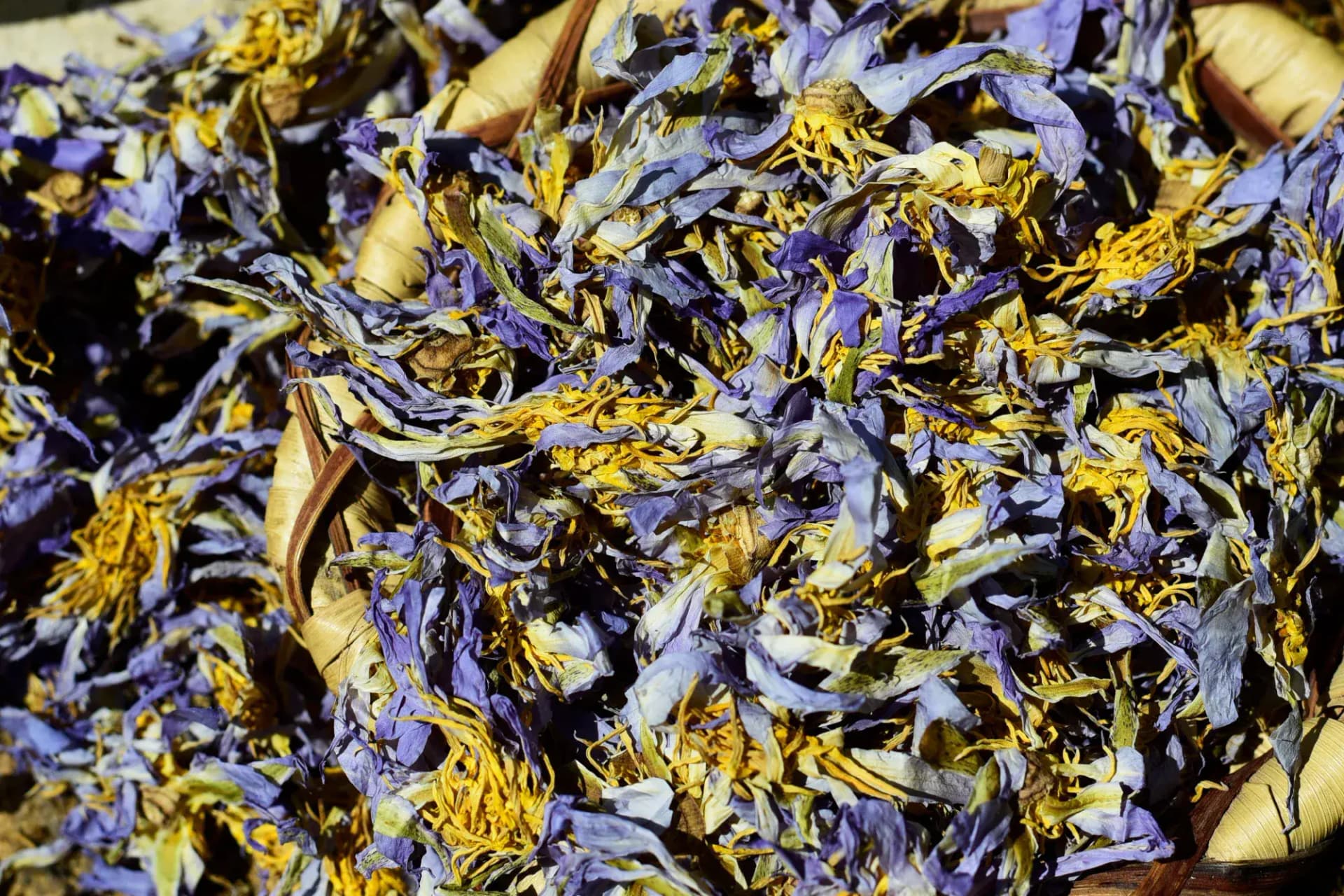
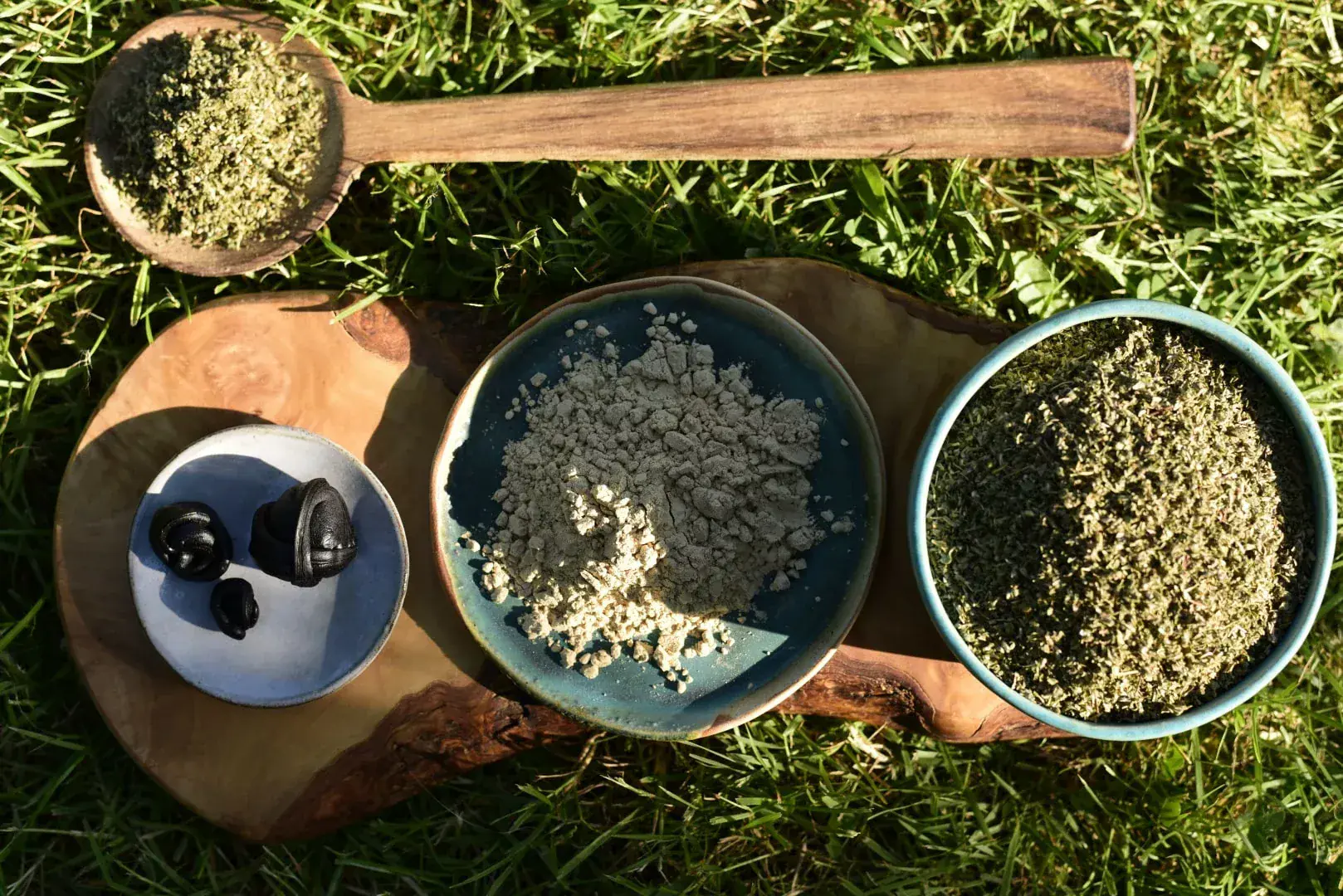
As a whole dried flower, to infuse or to contemplate; as powder and extract resin for the everyday blue lotus; as stamens and powder for the pink lotus; as resin for the white lotus; and as an elixir for the Authentic blue lotus.
One flower in a cup, water just off the boil poured over it, a few minutes to steep. The Egyptian tradition also steeped blue lotus in wine. The elixir is taken in drops.
In 2023, an analysis (Dosoky) compared eleven commercial extracts sold as blue lotus to authentic extracts: not one resembled them. This is why we name the species of each of our lotuses.
Our five lotuses all come from Sri Lanka, where the blue water lily (nil mānel) is the national flower: the two blue lotuses, the sacred pink and white lotus (Nelumbo nucifera) and the white and red water lilies.
Freely sold in France. Check the legislation in your country.
Voiced essays that extend these plants — traditions, gestures, lineages.