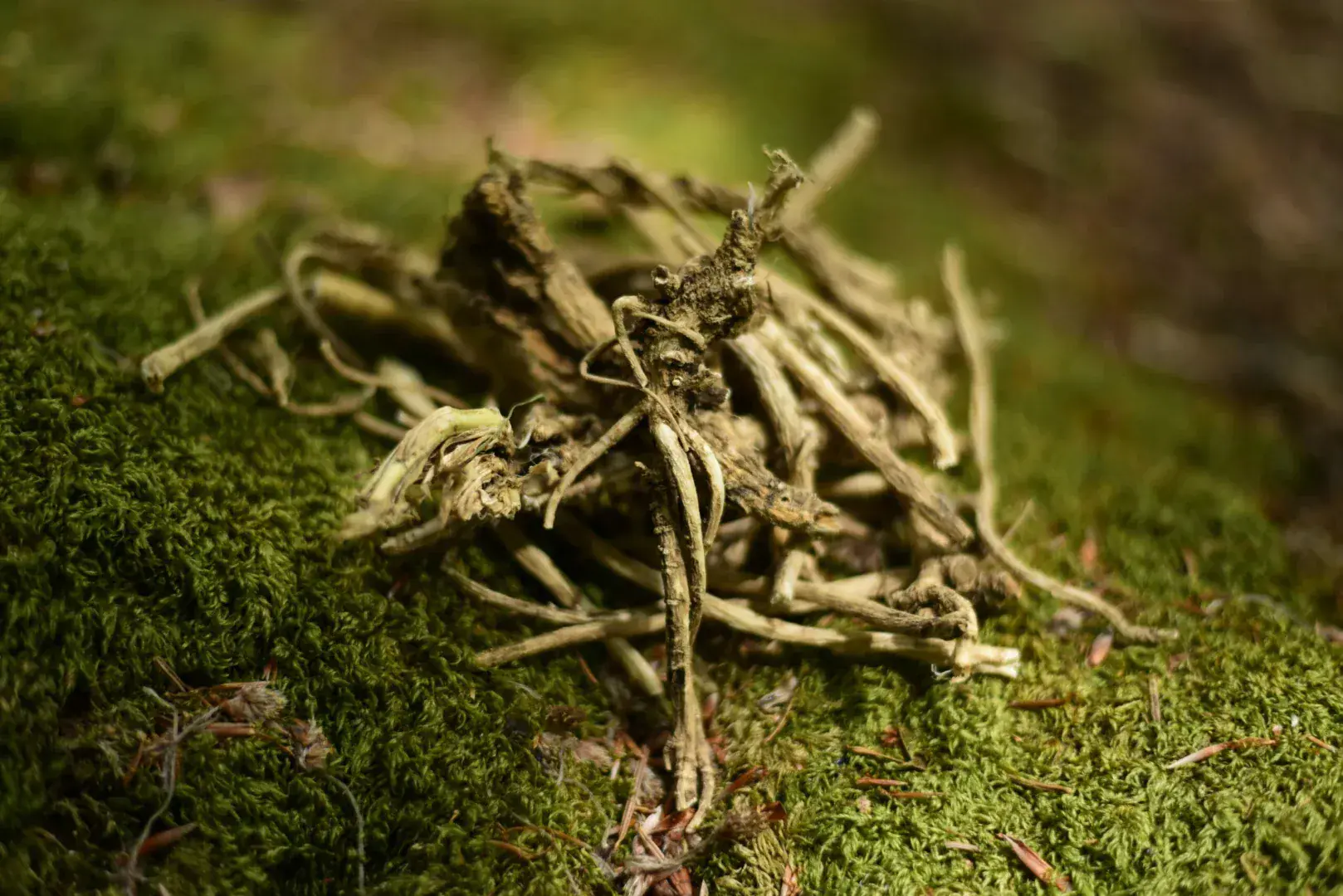
⊹ To weave around
To accompany Undlela Ziimlophe
Click a card to see why it pairs — and choose your form.
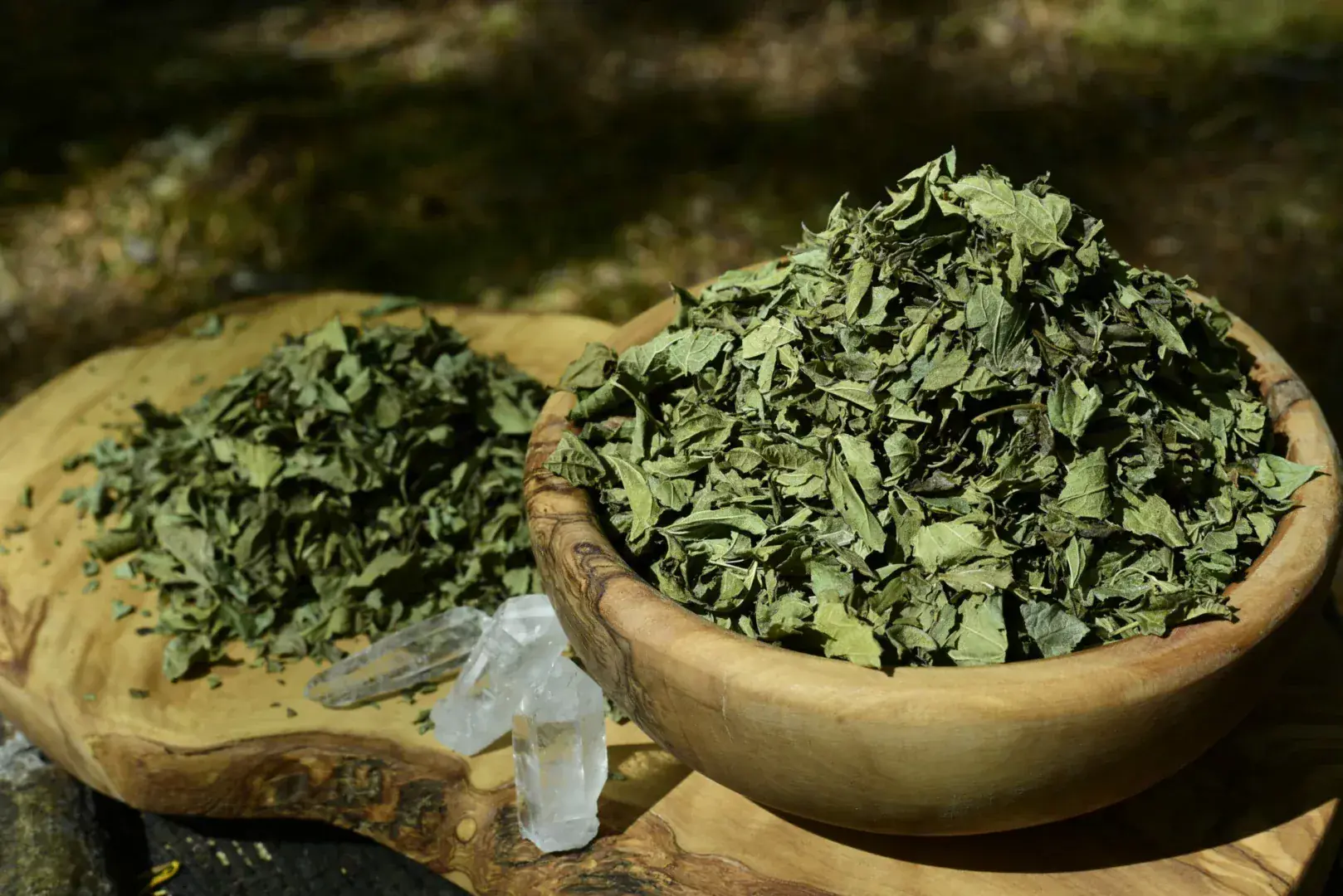
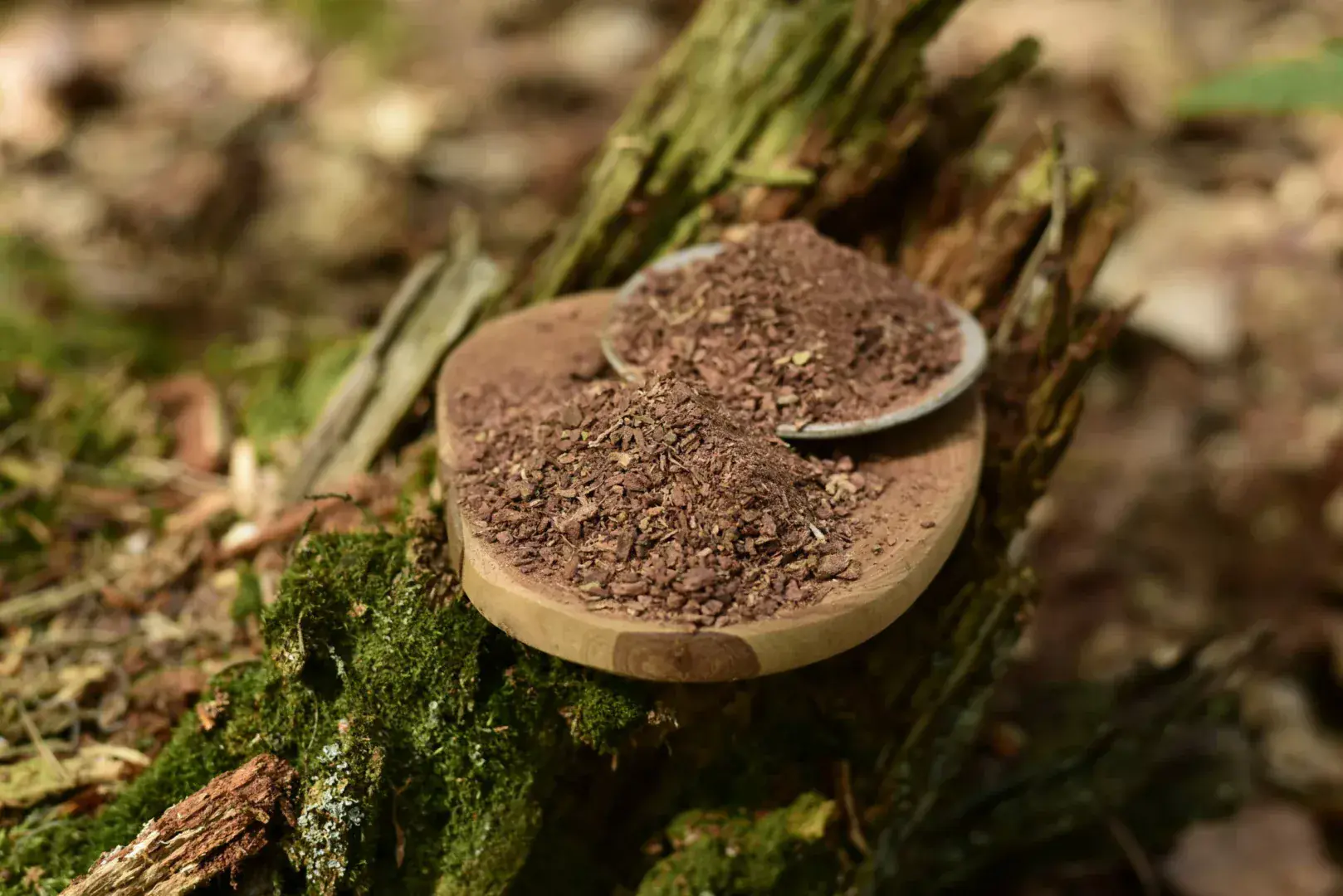
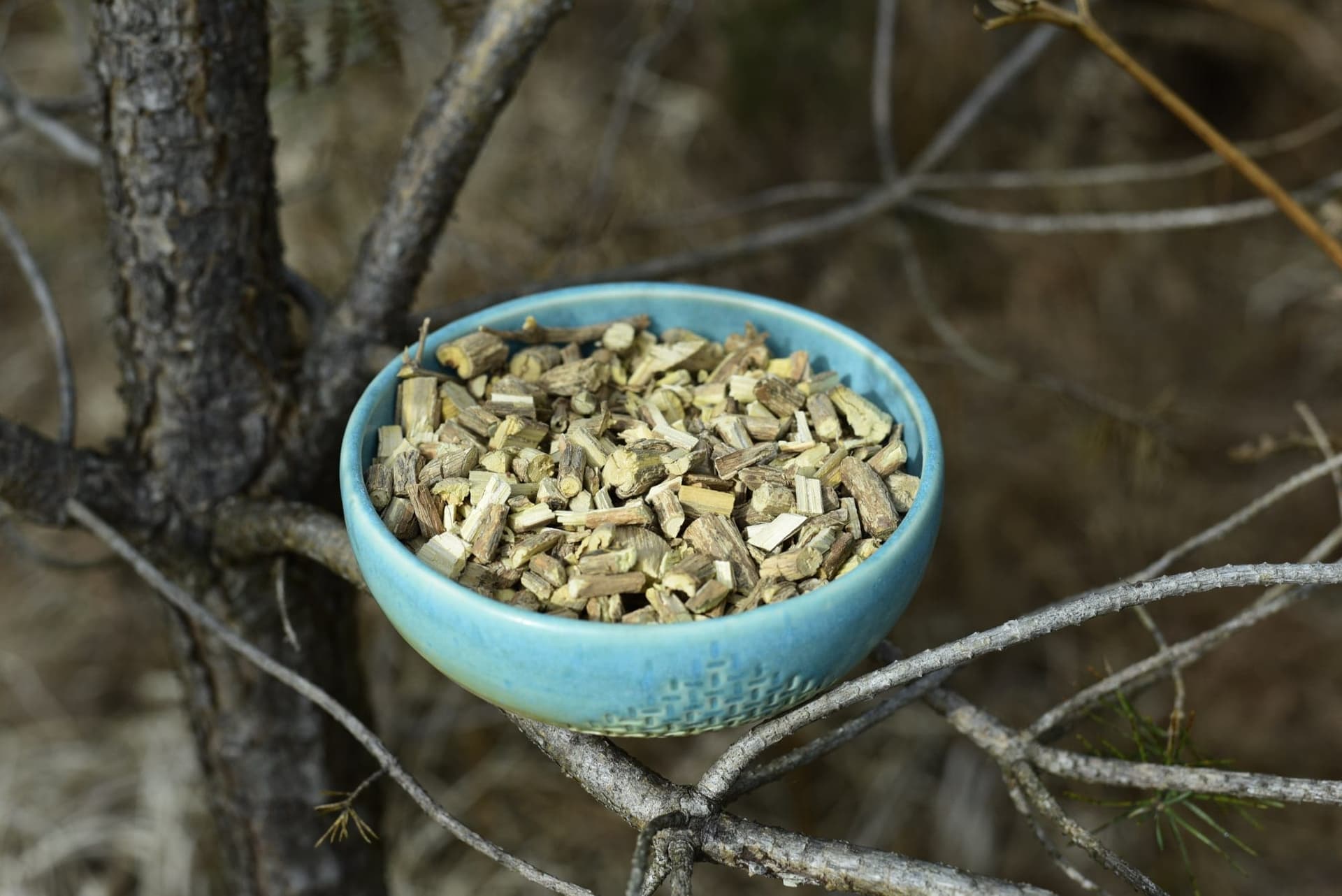
Read it through your world
The whole page is read through this lens.
✦ Undlela Ziimlophe · in one breath ✦
The luminous way the soul walks to rejoin the ancestors in sleep — the leader of the Ubulawu.
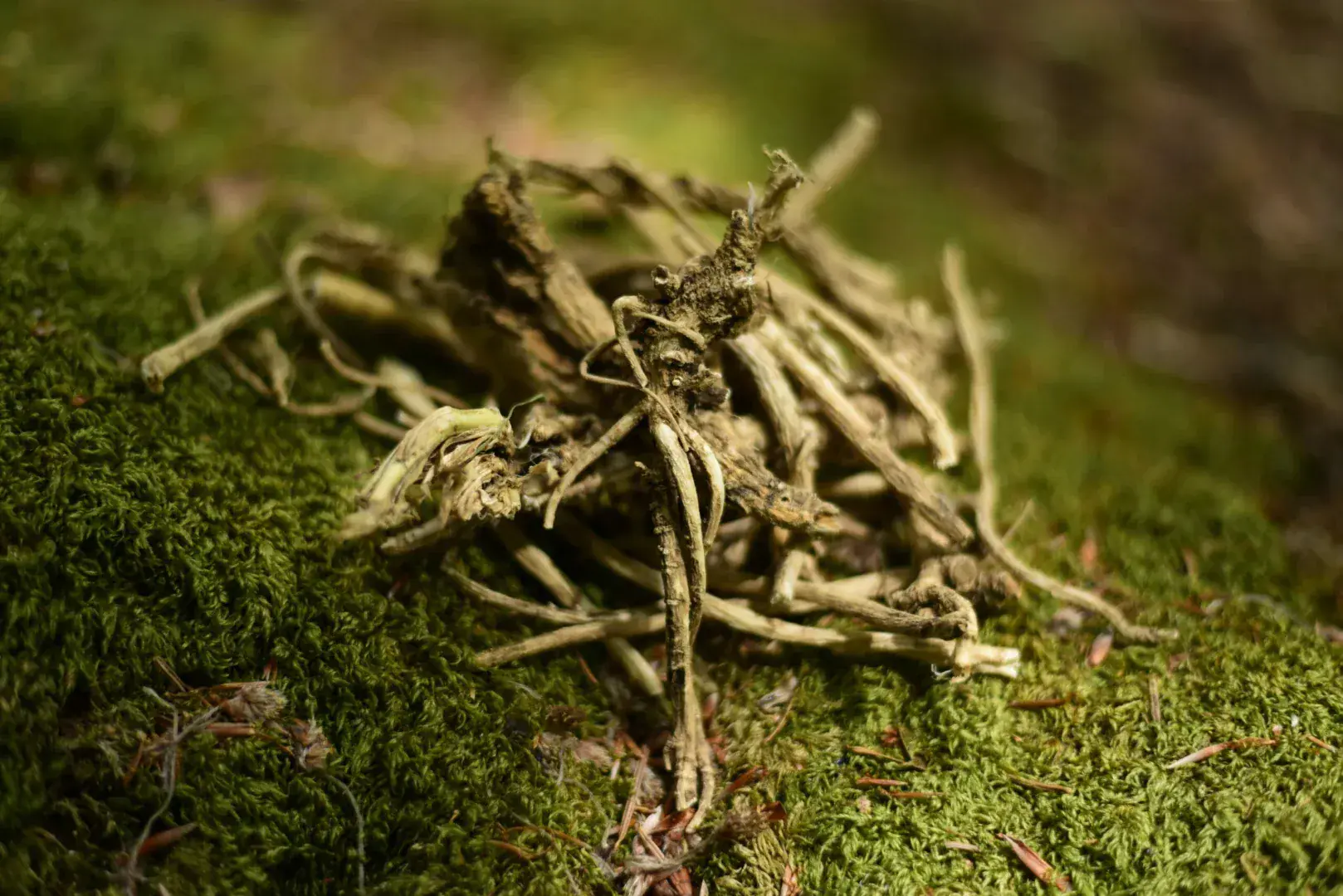
⊹ The path of the plant
⊹ Community voices
What the community murmurs.
Average · 186 reviews
including 183 left on our Etsy shop
Breakdown
This root is powerful and incredible. It's very helpful with empowering dream cohesion. I aim to take it in the morning as soon as possible as a tea. I use a mortar and pestle and grind it by hand as much as I can, then I pour it into something to help me then scoop and pour it into an empty teabag. It's usually around 11 days when you'll see results I've noticed, as I like to share my enthusiasm with herbs with my family and celebrate their progress and spiritual achievements. (It's great with filtered water and raw organic honey too actually.)
James
Dream · left on our Etsy shop · 19 January 2025
Again happy with my purchase. Fast shipping of the order and small gift much appreciated, thank you. The product is of good quality because after more than a month of ingestion, I continue to have very detailed dreams, in color and every time I wake up. I remember 3-four detailed dreams per night. My sleep is deep and restorative, and my day is calm thanks to this wonderful plant.
Chantal Seguin
Dream · left on our Etsy shop · 2 December 2022
I was a little worried because there wasn't tracking and it got delayed. However, it was coming from overseas and had to go through customs. I actually haven't had a chance to properly try this one out because I have been loving one of the extras that came with it. I have tasted it in foam form and it tastes a lot better than the one I have been obsessed with, but have yet to test it's full effects when used properly. The one I tried was the Mexican dream herb and it actually gives me incredibly normal dreams. My family contemplated that it might be because I have such wild dreams that the reverse effect happens to me. Why I love it so much is I toss and turn all night usually, waking up about 30 times. With the Mexican dream herb I sleep through the night and have SO MUCH energy the next day.
Emily
Dream · left on our Etsy shop · 13 June 2019
Products of excellent vibrational quality. You can tell the herbs are selected with care and respect. Everything arrived in time for my spiritual work. I will definitely return. Thank you for your professionalism.
La pièce
Dream · left on our Etsy shop · 2 February 2026
This was my first contact with the roots,there were different sizes of the roots to my surprise and since the seller was very communicative,I was told the price range for bigger roots was different from what I paid.However when embarking on a journey with a new teacher,attitudes are tested so trusting that I was on the right path came as I connected with the roots. Having African heritage for me the connection was both metaphorical as well as literal so I chose to soak the roots for 6-8 hours in luke warm water ,drinking the water then chewing the roots.While I didn't have lucid dreams ,I understand everyone's path/pace is different and for me facing certain subconscious blocks was a direct result of the roots....Going deeper into introspection during waking hours rather than during my sleep...for now.
Itemeka
Dream · left on our Etsy shop · 25 February 2025
reception rapide et efficace, les plantes sont toutes très qualitatives, c'est un véritable bonheur. Grand merci pour ce précieux héritage, je recommande vivement et Undlela Ziimlophe est une plante extra pour se souvenir de ses rêves et devenir plus conscient dans toutes les dimensions.
audrey lehy
Dream · verified purchase · 15 October 2024
So many good things to say the shop and my first order. Very quick and reliable shipping, and very kind sellers. The sellers gifted a sample of the White Wings - Sagan Dalya, which is amazing and i will definitely buy next time. They also gave a coupon for the next order, thank you. I am very impressed with this root, a few cm boiled in tea gave me very long and visual dreams the same night.
Anna
Dream · left on our Etsy shop · 6 December 2022
Good quality herbs, the seller knows their stuff. I took the herb 3 nights in a row with the jar shaking method, and i'll have to say its very effective! My dreams were longer, more coherent and i felt more stable in the dream. Will order more!
paegasusflameheart
Dream · left on our Etsy shop · 5 October 2022
This is tricky because everything is subjected but heres what happened. I drank the tea for a few days and had a dreams that were useful. My significant other drank it and I very clearly can provide security footage and text, the man is a narcissist. That tea will bring out the Angels and Demons, the one you feed most is the one you cant hide. For me I started building animal houses because winter is coming. For him, he got physiologically abusive, gas lightning, cynical and he couldn't hide it. I'm going to order more and give it to everyone close to me. Lets see who we all really are.
Tina
Dream · left on our Etsy shop · 1 October 2022
Absolutely phenomenal herb. Never tried it before and it really did connect me to my ancestors. Thank you so much for the amazing quality.
Elona
Dream · left on our Etsy shop · 14 November 2021
After just one use, I remembered four dreams in one night, including a dream within a dream where I met an entity. Highly recommend for lucid dreamers and inner explorers !
Cleo
Dream · verified purchase · 6 August 2025
Beautiful roots. Very intense and wonderful Lucid Dream on first night of taking it. Very speedy delivery and great prices. Loving this shop.
Teresa
Dream · left on our Etsy shop · 22 June 2023
Ask the Forest about Undlela Ziimlophe
408 books digested, 97,512 indexed passages. She answers on lineages, synergies, cautions, ritual variations.
⊹ FREQUENT QUESTIONS ⊹
We answer.
What is Silene capensis, the African dream root?
Silene capensis (accepted name: Silene undulata) is a small perennial of the Eastern Cape, South Africa, in the carnation family. Her root is one of the ubulawu, the foaming roots that Xhosa diviners drink to strengthen the dream (Hirst 2005; Sobiecki 2008).
Undlela ziimhlophe (zimhlophe): what does the name mean?
'The white paths', in Xhosa (Hirst 2005). It is also spelt undlela ziimhlophe or undlela zimhlophe. For the diviners, ubulawu 'casts a white light on the dream', making it more vivid and more memorable.
How is the African dream root prepared?
Among the Xhosa, the ground root is churned in water with a forked stick until a thick white foam rises, drunk on an empty stomach (Hirst 2005). Our way: 250 mg to 1 g of powder in at least 3 litres of cold water, left for 7 hours, then whisked; eat the foam on an empty stomach before sleep. Another way: a gentle decoction of about 2 g, 20 to 30 minutes, in the morning on an empty stomach or at bedtime. The foam is always whipped in cold water.
How many nights does it take to feel the effects?
Xhosa novices drink it over three days, at the full moon (Hirst 2005). We offer it over 3 to 5 nights, with prayers, and the Dream Gates open up. For many, the strongest dreams come a few days after the diet, and the effect can last for weeks.
What is the Silene capensis dosage?
The traditional sources give no dose in milligrams: novices drink the foam until they bring a little back up (Hirst 2005). Our markers: no more than 2 g per day of the diet, over 3 to 5 days, then at least two months' break. Start low.
What does Silene undulata taste like?
Earthy, slightly bitter, with a subtle, surprisingly agreeable sweetness.
Is Silene capensis a psychedelic?
The diviners of southern Africa class her among the dream plants, those of 'true visions', apart from the hallucinogens (Sobiecki 2008). A single computer-modelling study predicts β-carbolines in the root that act on the 5-HT2A receptor (Alhawarri & Olimat, PubMed 38561607); no human trial. Hirst, who drank it, had very vivid dreams and an unchanged waking state.
Is the African dream root legal?
Freely sold in France. Check the law in your country.
What precautions should I know?
The root holds saponins, toxic in large amounts, irritating and emetic: small amount, empty stomach, short cycle. Taken in capsules at high doses outside ritual, some users had confused, unsettling dreams (Sobiecki 2012). Ask your doctor if you take antidepressants (SSRIs, MAOIs), triptans or lithium. Avoid during pregnancy, breastfeeding, in children and with any acute psychiatric condition.
What is the difference between Silene capensis and Silene undulata?
None: they are two names for the same plant. Silene undulata Aiton is the accepted botanical name today; Silene capensis is a synonym still widely used in trade and in books.
Are Undlela Ziimlophe and Uvuma Omhlope the same plant?
No. Undlela Ziimlophe is Silene undulata (carnation family); Uvuma Omhlope is Synaptolepis kirkii, from another family (Thymelaeaceae). Both are ubulawu, and Sobiecki notes that the trade often confuses them, although their doses and effects differ.
What do people who tried the root say?
Of 186 reviews published on INFUSE, 31 tell of a night: 15 more vivid dreams, 7 better recall, 6 a lucid dream, 6 better sleep, 6 nothing in particular in their dreams, at least at first. Cleo: 'After just one use, I remembered four dreams in one night, including a dream within a dream where I met an entity.'
Can you grow Silene capensis?
Yes: she is a perennial grown from seed, and specialist seed sellers offer it. INFUSE offers the dried root, ready to whip into foam.
Why choose 20 g or 50 g?
To have a chance of receiving the big roots. Our Silene comes from Zimbabwe: it is the finest root we have found in twelve years of sourcing, often three to four times bigger and older than the ones we have seen elsewhere. The biggest roots do not fit in a 10 g bag; in 20 g or 50 g, they can be part of the parcel. The exact size of the roots in a parcel is not guaranteed.
⊹ Chapter · Questions ⊹
Ask, answer, share.
One question, one answer — sometimes several voices. The community answers first; INFUSE steps in when it should.
Nobody has opened a thread yet about this plant. You can be the one — a real question, a use, a doubt, a detail.
Anonymous if you prefer.
In depthbotany · phytochemistry · history
For those who want to go below the page: botany, chemistry, then four voices, each one named. ◆ what the tradition left in writing, ◇ what research has measured, ● what our dreamers tell us, ☾ what the House says.
Botany
Silene undulata Aiton is the accepted name; Silene capensis Otth, still the name most used in trade, is its synonym. She is a small perennial of the Caryophyllaceae, the carnation and campion family, growing in the Eastern Cape of South Africa. The medicine lives in the root: fine and pale, it turns water white when beaten. Above ground the plant stays discreet, with small white flowers; the South African National Biodiversity Institute (SANBI) links her Xhosa name, "the white paths", to those flowers. SANBI lists her as Least Concern, an automatic status that reflects her wide range more than the health of any given stand.
Phytochemistry
The root is rich in triterpene saponins. Whipped in cold water, they raise the thick white foam of the tradition. Saponins irritate the mucous membranes and make you vomit in larger amounts, which is why the root is taken in small quantity, on an empty stomach.
◆ The documented tradition
Silene belongs to the ubulawu, the foaming dream roots of the diviners of southern Africa, documented by the anthropologist Manton Hirst (1990, 2005) and the ethnobotanist Jean-François Sobiecki (2008, 2012). The word ubulawu is said to come from ukulawula, "to control". For the diviners, Hirst writes, ubulawu does less to cause dreams than to "cast a white light on the dream" (ukukhanya okumhlophe), making dreams more vivid and more memorable (Hirst 2005, Indo-Pacific Journal of Phenomenology 5(2)).
Her Xhosa name, undlela ziimhlophe, means "the white paths" (Hirst 2005); Hirst also renders it "the path or way of white things or symbols" (1997, cited by Sobiecki 2008, p. 339). Among the Xhosa, Hirst describes the gesture. The finely ground root is churned (ukuphehla) in a cup of water with a forked stick (ixhayi) until a thick white foam rises. Novices drink it on an empty stomach "to strengthen the dream", until they bring a little back up, the sign they have taken enough, then wash their body with what remains. This is done over three days, at the full moon. The same foam is churned at the kraal for the umbuyiso, the rite that brings a dead head of family home as an ancestor, and offered at the river, during initiation, to the People of the River, the ancestors. Sobiecki counts her among the plants drunk at the initiation of Xhosa diviners for lucid dreams tied to the ancestral spirits (2008, p. 347); the Sotho use her for fevers and delirium.
Hirst also records dreams of the plant itself: two diviners dreamt of the place where she grew, and one of them said the whole plant would be "surrounded by a white light".
One thing to say plainly: among the Xhosa, only a diviner initiated at the river can identify the plant, and so gather and use it; it never appears in the herbalist's pharmacopoeia (Hirst 2005). The root we offer is wild-harvested by small rural communities; it reaches you outside that initiatory frame, and the lineage it comes from is a living one. Sobiecki says the same: these plants belong to a living tradition, to be respected, with support for the regions they come from.
◇ The studies
No clinical trial has tested the root. Hirst, who drank it himself, had very vivid dreams at night with no change to his waking state, and judged the mechanism "an enigma" (2005). Its saponins, he writes, induce dreaming at a low dose "only in very sensitive subjects" (1997, cited by Sobiecki 2008).
A study in Current Pharmaceutical Biotechnology (Alhawarri & Olimat, published online in 2024, PubMed 38561607) analysed the root by LC-MS/MS and molecular modelling. It reports β-carbolines, predicted by computer to bind the serotonin receptor 5-HT2A. It is a single study, an in silico prediction and an analytical screen, with no human trial behind it.
● Our dreamers
Of 186 reviews published on INFUSE, 31 tell of a night (read one by one in September 2026; a review can say several things): 15 speak of more vivid dreams, 7 of better recall, 6 of a lucid dream, 6 of better sleep, 3 of meaningful dreams, and 6 say they noticed nothing in their dreams, at least at first.
"After just one use, I remembered four dreams in one night, including a dream within a dream where I met an entity." — Cleo
"I took the herb 3 nights in a row with the jar shaking method, and i'll have to say its very effective! My dreams were longer, more coherent and i felt more stable in the dream." — a dreamer
"the root itself hasn't done much for my dreams" — Monika
☾ The House
Our own words, from the first page: "After taking these medicines for 3 to 5 days with prayers and respect, the Dream Gates open up. This simple cure is usually enough for months of Dream Activation. It is not necessary to consume these herbs frequently to achieve potent long-term effects." And: "For many users, the most potent dreams are gifted only a few days after the diet with the Ubulawu Medicines." We advise no more than 2 g, and at least two months between diets, as the root keeps working below the surface. Her taste: "earthy, slightly bitter taste with a subtle, surprisingly agreeable sweetness."
Conservation
International demand puts pressure on wild populations. Ethical cultivation projects are emerging in South Africa; choosing responsible sources is part of using this plant well.
What precautions with Silene capensis? Safety and legal status
The root holds saponins described as toxic. Use outside the traditional frame (capsules of ground root, larger amounts, no ritual) has given some people confused and unsettling dreams, and they stopped (Sobiecki 2012, p. 221). Hence the short cycle, the small amount and the empty stomach.
Because β-carbolines are predicted to act on serotonin, ask your doctor first if you take antidepressants (SSRIs, MAOIs), triptans or lithium. Avoid during pregnancy and breastfeeding (no data), in children, and with any acute psychiatric condition (psychosis, bipolar disorder). A mild emetic effect is possible. After use, avoid driving or operating machinery.
Freely sold in France. Check the law in your country.
Going further
The Forest gives it an article: Silene capensis, the Xhosa dream root of the sangoma. Silene capensis belongs to the ubulawu family, the dream roots of South Africa's diviners; all our dream herbs are gathered on one page; and what our dreamers lived is told in 174 dreamers' accounts.
Sources: Hirst M. 2005, Indo-Pacific Journal of Phenomenology 5(2):1-22 · Sobiecki J.F. 2008, Southern African Humanities 20:333-351 (pp. 337-339, 347) · Sobiecki J.F. 2012, Journal of Psychoactive Drugs 44(3):216-223 (doi:10.1080/02791072.2012.703101) · Alhawarri & Olimat, Current Pharmaceutical Biotechnology (PubMed 38561607) · SANBI Red List of South African Plants. Reviews: INFUSE database, September 2026.