⊹ To weave around
To accompany Lavender
Click a card to see why it pairs — and choose your form.
Read it through your world
The whole page is read through this lens.
✦ Lavender · in one breath ✦
Gently and upstream — a threshold toward the night.
⊹ The path of the plant
⊹ Community voices
What the community murmurs.
No testimony yet for this plant — nothing invented, nothing fabricated. If you have met it, your account can open the way for those who come after.
Ask the Forest about Lavender
408 books digested, 97,512 indexed passages. She answers on lineages, synergies, cautions, ritual variations.
⊹ FREQUENT QUESTIONS ⊹
We answer.
What is lavender tea?
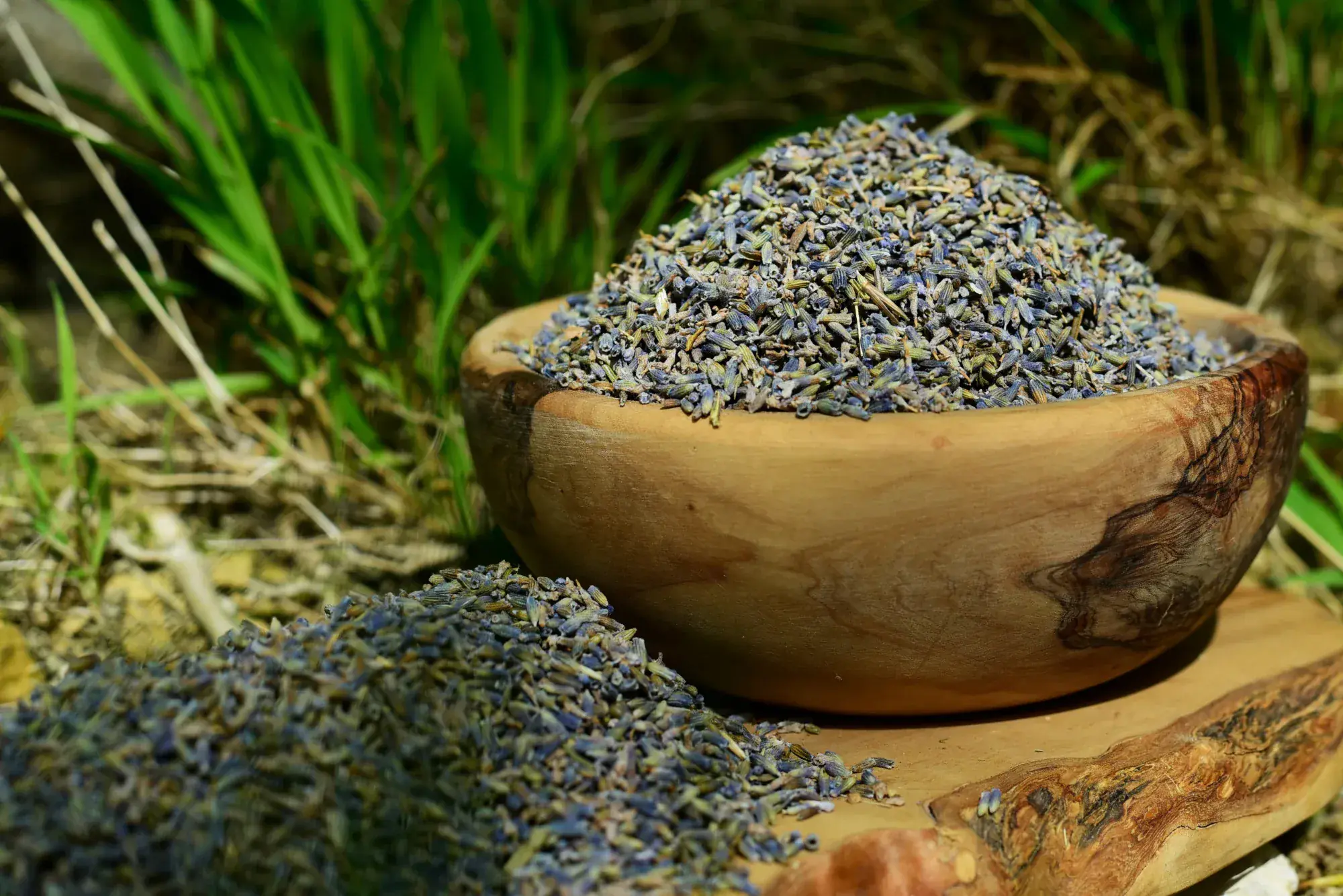
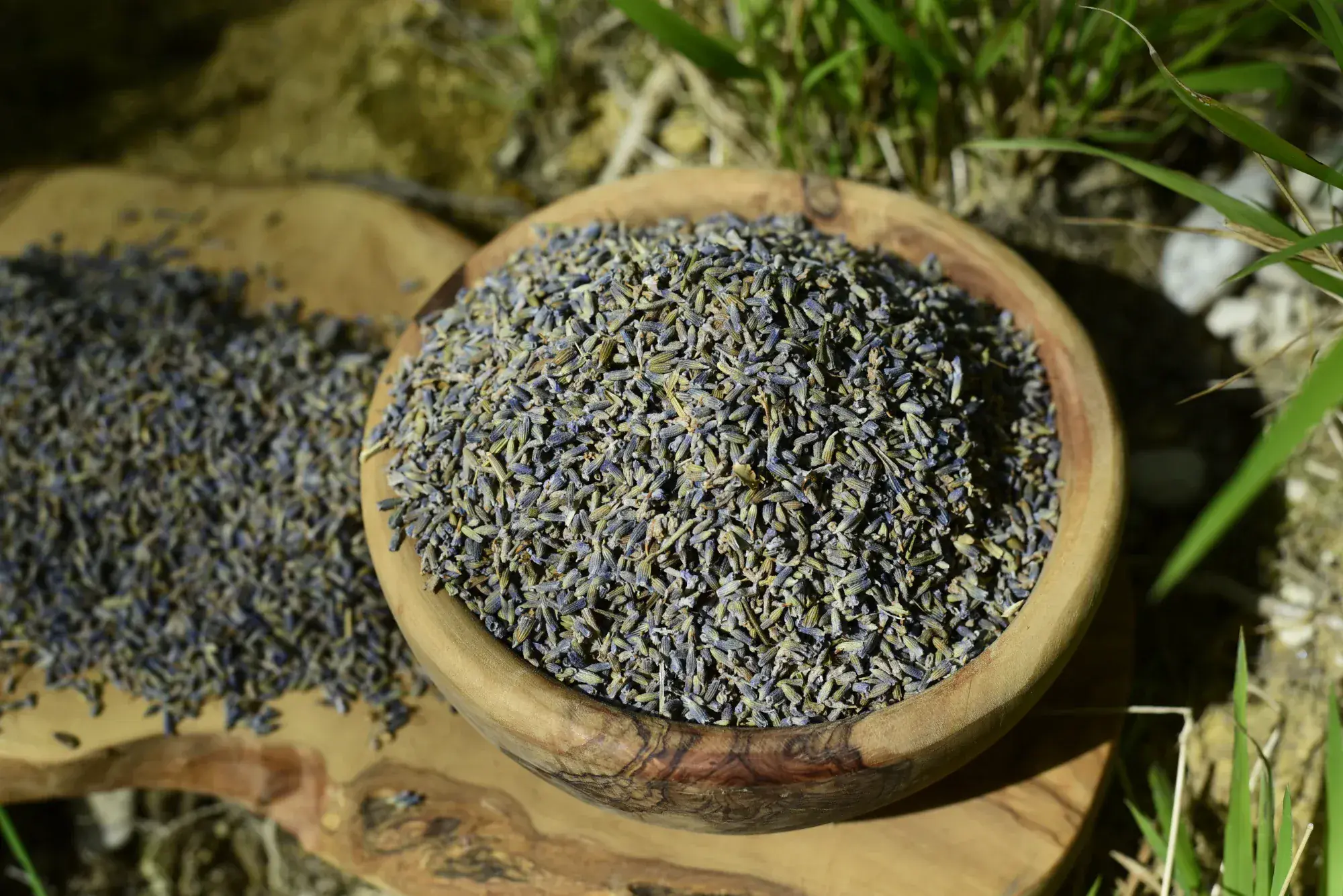
Lavender tea is an infusion of the dried floral tops of true lavender (Lavandula angustifolia), a Mediterranean Lamiaceae. Her name comes from Latin lavare — to wash. The evening companion par excellence, she is traditionally drunk before bedtime to put down the day's burden and soften the passage into sleep. INFUSE works with true angustifolia lavender.
What are the traditional benefits of lavender?
European tradition associates lavender with rest, calm and nocturnal protection. We slip her under the pillow, lightly burn her, infuse her in the evening to soften thoughts and prepare the night. The Romans perfumed bath water with her, medieval monasteries cultivated her. She is a plant of threshold.
Does lavender help to sleep?
Lavender is traditionally the plant of the sleep threshold. Her gesture is that of the soft and repeated ritual, a cup at the same hour each evening, rather than a strong one-off action.
How do I prepare a lavender tea?
Count about 1 teaspoon of dried flowers for 200 to 250 ml of simmering water (never boiling, around 80°C, to preserve aromas). Infuse 7 to 10 minutes covered, no longer — beyond, bitterness rises. Strain and drink in the evening, ideally 30 to 60 minutes before bedtime, in a calm moment without screens.
What's the difference between true lavender and lavandin?
True lavender (Lavandula angustifolia) grows at altitude (above 600 m), with a fine and soft profile. Lavandin (Lavandula × intermedia) is a hybrid cultivated in plains for yield, more camphor-like. INFUSE chooses true angustifolia, as Provençal tradition has done since the 19th century.
Does lavender act on dreams?
English folklore says that lavender slipped under the pillow gives true dreams. She is a gentle door into the night, often associated with more openly oneiric plants.
Does lavender tea have precautions?
The flower in infusion is very well tolerated in European herbal practice. Simply avoid large quantities during pregnancy, remain cautious with sedative medications, and set her aside in case of Lamiaceae allergy. The essential oil, on the other hand, is never ingested without qualified accompaniment — not to be confused with the flower tea.
Which plants pair with lavender?
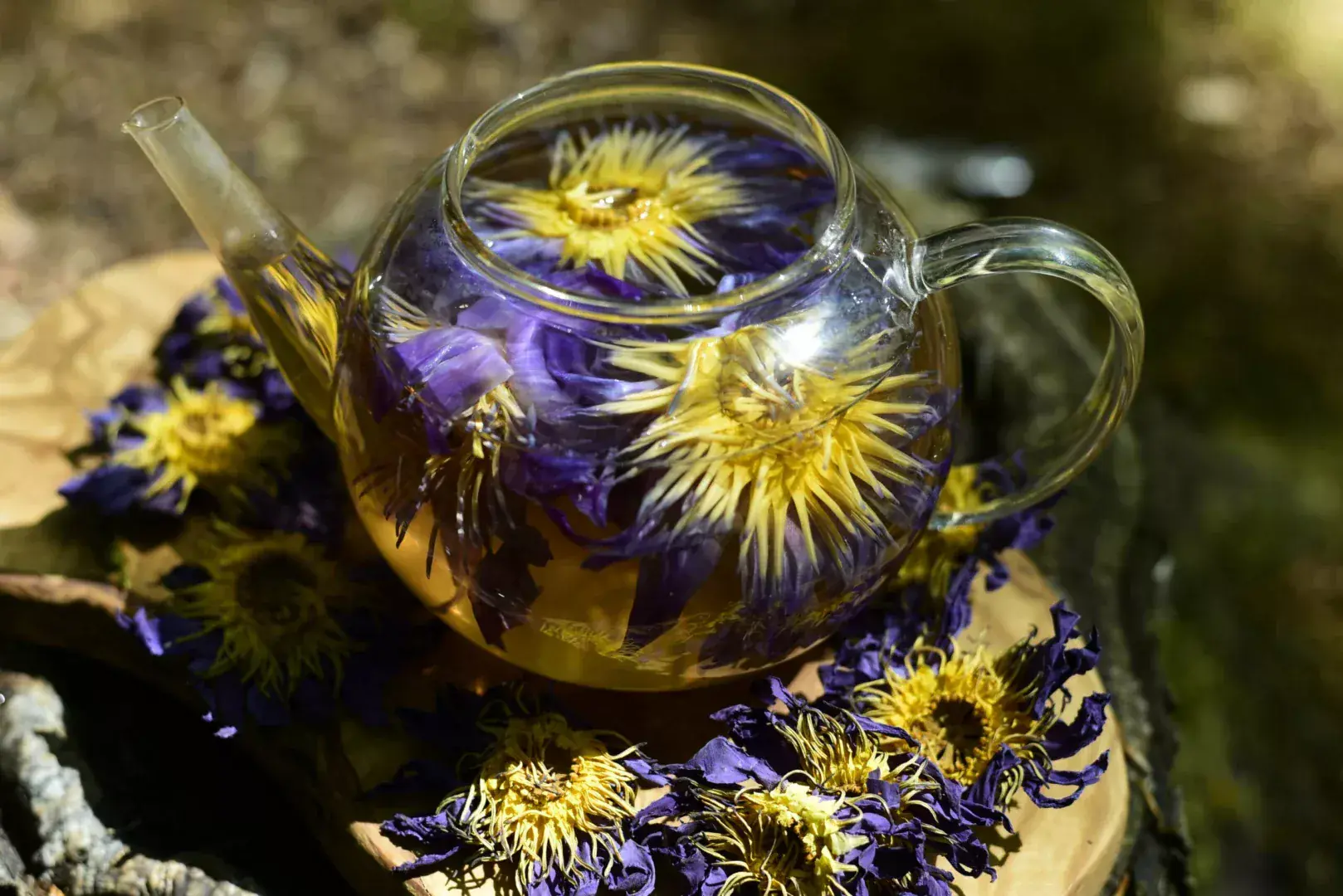
The classic European evening duo is lavender and noble chamomile. Rose and lemon balm accompany her too. For dream work, she marries with mugwort and blue lotus.
⊹ Chapter · Questions ⊹
Ask, answer, share.
One question, one answer — sometimes several voices. The community answers first; INFUSE steps in when it should.
Nobody has opened a thread yet about this plant. You can be the one — a real question, a use, a doubt, a detail.
Anonymous if you prefer.
In depthbotany · phytochemistry · history
Botany — true lavender, spike lavender and lavandin
True lavender is botanically Lavandula angustifolia Mill. (formerly L. officinalis), an aromatic subshrub of the Lamiaceae — the great family of the mints, rosemary, lemon balm, tulsi and sage. Angustifolia means "narrow-leaved", which sets her apart from her cousins. The part used is the dried flowering tops.
Three lavenders are often confused in the trade, and the distinction matters. True lavender (angustifolia) grows above 600 metres, where linalool and linalyl acetate reach their highest levels: hence her soft scent. Spike lavender (Lavandula latifolia) has broader leaves and a more camphoraceous profile. Lavandin (Lavandula × intermedia) is a hybrid of angustifolia and latifolia, grown in the lowlands for yield — robust and fragrant, with a different chemical profile. Provençal tradition has worked true lavender since the 19th century; industry mostly supplies lavandin.
Native to the Mediterranean basin, lavender thrives in chalky soils and harsh climates. In Provence, true lavender's home ground is the Sault region, from about 750 metres up, where the harvest runs from mid-July to mid-August; the lower Valensole plateau is planted mostly with lavandin. It takes about 130 kg of flowers to distil one litre of true lavender essential oil (Musée de la Lavande) — a measure of her preciousness.
Phytochemistry — the signature of true lavender
True lavender carries a precise chemical signature, dominated by two volatile compounds. Linalool, a monoterpene alcohol, makes up 25 to 45% of the essential oil; it is shared with other Lamiaceae, but angustifolia carries it in a particular balance. Linalyl acetate, the main ester (25 to 45%), is more typical of true high-altitude lavenders and gives the soft profile, in contrast with the more camphoraceous lavandin. Lavandulol and lavandulyl acetate complete this signature. Also present, in smaller amounts: 1,8-cineole, camphor (far higher in lavandin), geraniol, light coumarins, tannins and flavonoids.
What the studies report — a descriptive account
The mechanisms below come from pharmacological research: they describe molecules, and promise no effect for a cup of tea. Studies report that linalool modulates 5-HT1A (serotonin) receptors, inhibits certain voltage-gated calcium channels and raises parasympathetic tone. The olfactory pathway has one often-noted particularity: smell reaches the limbic system (amygdala, hippocampus) without first passing through the thalamus, unlike the other senses. Lavender pillows and scented bedrooms belong to the plant's tradition.
A standardised oral extract of angustifolia lavender (Silexan) has been assessed in several randomised clinical trials, and in 2012 the European Medicines Agency (EMA) published a monograph on lavender flower (Lavandulae flos) for traditional use. These data concern standardised extracts studied clinically; they do not transfer mechanically to a cup of tea, and this page makes no therapeutic promise. The flower as a tea belongs to a tradition of gentle use.
Lineage and long history
In the 12th century, Hildegard of Bingen devotes a chapter of her Physica to lavender (lavendula). From the 19th century to today, Provence has made true lavender its agricultural soul: its traditional distilleries and cooperatives carry on the craft of harvesting and distilling.
Safety and points of use
Lavender flower as a tea is very well tolerated in European herbal practice. It might interact with some sedative drugs or herbs, which matters before scheduled surgery (NCCIH). The main caution concerns pregnancy, where large amounts are avoided, and the essential oil, which is never swallowed without qualified guidance and should not be confused with the flower as a tea. People allergic to the mint family (Lamiaceae) should abstain. A disputed study suggested a mild oestrogen-like effect of the essential oil in young boys (reversible prepubertal gynaecomastia); it concerned the oil, and calls for restraint with the oil in that group. Lavender is freely sold in France and the European Union. This page documents a lineage and traditional uses; in case of doubt, the advice of a health professional comes before the plant.