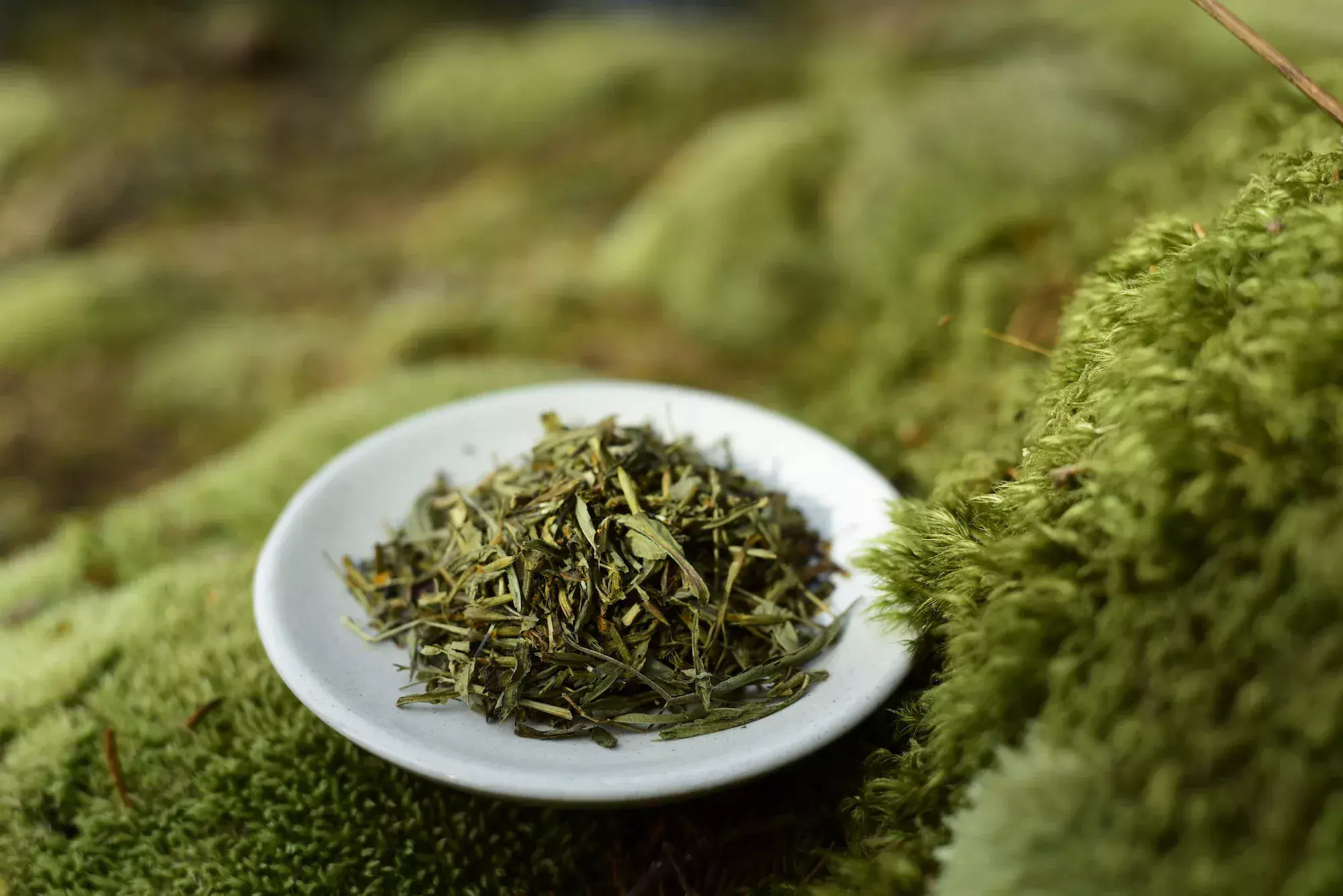
Mexican Tarragon "Yauhtli"
The Lightning of the Soul
from €7.00
In Mexico, it is the community that names a curandera. In the highlands of Piura, in Peru, the curandero blows waterfall water mixed with Florida Water over each person. In Brazil, the benzedeira prays under her breath, with small sprigs of rue or guiné. What the words mean, and what the people who carry them tell.
Among Mexicans, in Mexico as in the United States, a curandera rarely calls herself one: the people she serves give her the name, as a mark of respect.
In the highlands of Piura, in Peru, don Ángel Montalván began at twelve, following his father on his journeys; at eighteen he knew most of the plants, and it took him longer still to become a curandero.
The Lightning of the Soul
from €7.00
The water that awakens
from €14.00
« This is my 2nd order, am drinking daily and can certainly feel the benefits. This is my first go to shop when buying teas as I love the energy of their teas with every mug, certainly packed with love 🫶🏼 »
« I’ve lost count of how many times i have ordered already. I love ubulawu herbs. Blue lily and tarragon are the best. »
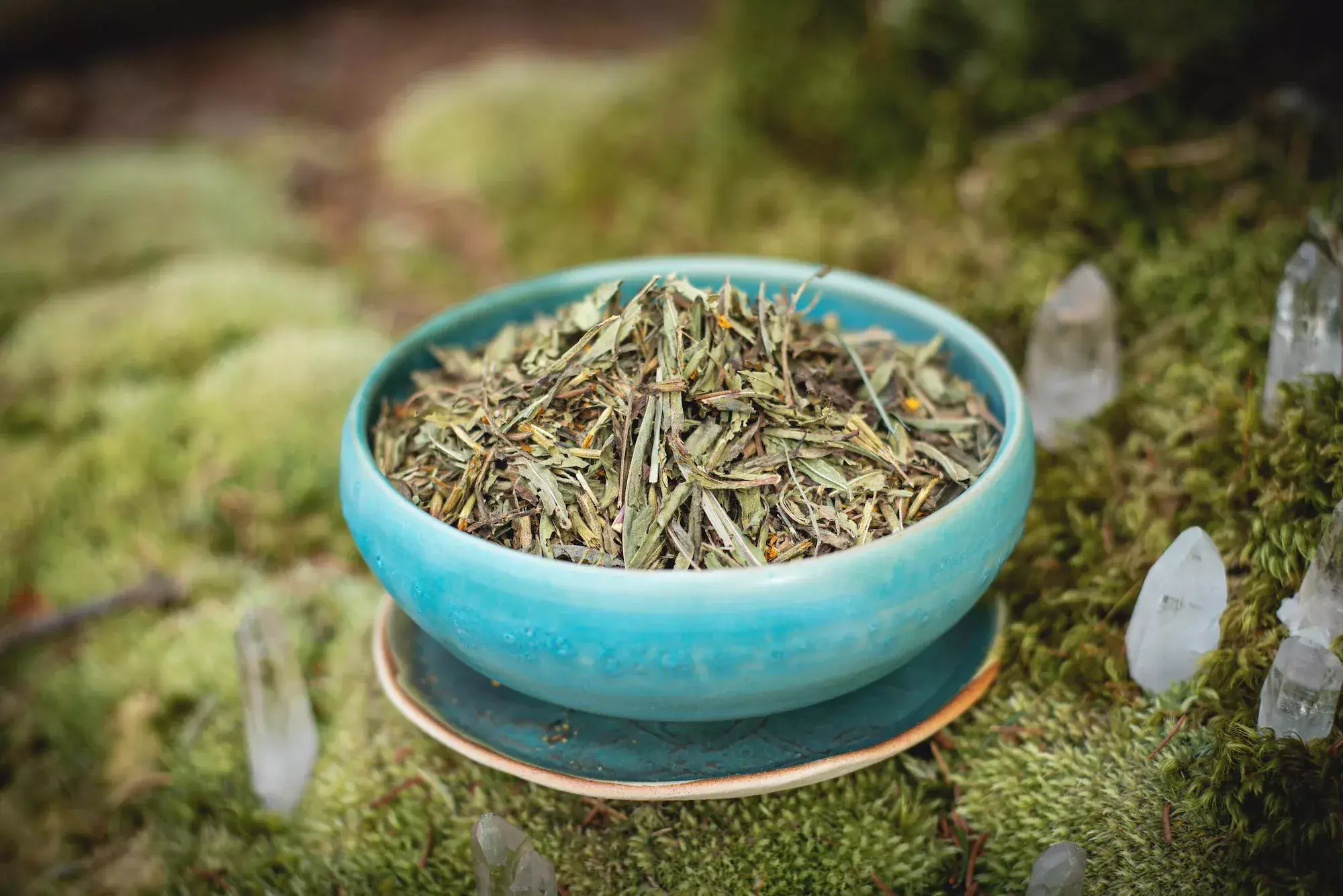
Curanderos rarely call themselves curanderos, writes Imanol Miranda: their patients, friends, relatives and colleagues give the title to someone they find worthy of it. For Grace Alvarez Sesma, it is a term of respect given by the community.
In Mexican culture, much of the knowledge passes through apprenticeship, often within the family, from a grandmother or an elder. In Albuquerque, the curandera Jaysa Jones learned from doña Maclovia, a herbalist and *consejera* in the Barelas neighbourhood.
In the *barrida* that Grace Alvarez Sesma describes, a bundle of rosemary, rue, basil and peppertree branches is swept over the body, often with a sprinkling of consecrated floral waters.
At Aypate, in the highlands of Piura, the curandero scoops water from the falls in a seashell, adds a trickle of Florida Water and blows it over each person: this is the *shulalar*.
In Juruena, Brazil, the benzedeiras recite the Lord's Prayer, the Hail Mary or other prayers in a low voice during the *benzimento*, and may use small sprigs of rue, guiné or rosemary.
Curandero, feminine curandera, comes from curando, from the verb curar, to heal or treat, and the suffix -ero. The Royal Spanish Academy's dictionary gives it two senses: a person who, without being a doctor, carries out empirical or ritual healing practices, and a person who practises medicine without an official qualification. Among the related words, it lists brujo, yerbero, santero and ensalmador (RAE, in Spanish).
The ending gives the gender: curandero for a man, curandera for a woman. In the United States, some people use curanderix for those who identify as neither, notes Imanol Miranda (Curandero Project). In the glossary of her practice, Grace Alvarez Sesma translates the two words as healer and adds that the term is culture-specific (glossary of curanderismo).
Curanderismo also has two senses in the Academy's dictionary: a synonym of curandería, “the art and practice of the curandero”, and “the intrusion of curanderos into the practice of medicine” (RAE, in Spanish). In Mexican and Mexican American communities the word names the tradition itself: at the University of New Mexico, in Albuquerque, Eliseo “Cheo” Torres founded a curanderismo class in 2000, which more than 2,000 students have completed, according to the Curandero Project (the university's programme).
Curanderos rarely call themselves curanderos, writes Imanol Miranda: their patients, friends, relatives and colleagues bestow the title on someone they find worthy of it. The word implies that the person is the one doing the healing, which may be why some avoid it: most curanderos agree that healing comes from a divine source or God, and many say they are merely conduits (Curandero Project).
There is a popular belief that curanderos are born with the don, a God-given gift. Eliseo Torres holds that the work can be taught and learned. Much of the knowledge is passed down through apprenticeship, often within the family, from a grandmother or an elder: in Albuquerque, the curandera Jaysa Jones learned from doña Maclovia, a herbalist and consejera in the Barelas neighbourhood.
Grace Alvarez Sesma's glossary sets out the specialities. The curandera is the most well-rounded: she works with herbs, pláticas (heart-to-heart talks), dream interpretation, massage and spiritual work (glossary).
| The word | What it means, according to Grace Alvarez Sesma |
|---|---|
| Yerbera, yerbero | The herbalist: herbs, roots and teas brewed from leaves. |
| Sobadora, sobador | Traditional bodywork, based on Indigenous massage. |
| Huesero | The bonesetter, trained in the Indigenous way of setting bones. |
| Partera | The traditional midwife, before, during and after the birth. |
| Consejera | The counsellor; some offer divination with cultural tools or tarot cards. |
| Temascalera, temascalero | The keeper of the temazcal, the sweat lodge, who leads its purification ceremonies. |
| Espiritista | The spirit medium, who enters trance to channel a famous healer such as El Niño Fidencio. |
| Maestra, maestro | A curandera or curandero who also teaches. Other forms of address: doña, don, abuela, nana, tata. |
The same glossary defines the bruja and the brujo in the Mexican cultural way, which it sets apart from the European tradition: a person who performs coercive rituals to harm another. The curanderos Imanol Miranda spoke with draw the line clearly: what they do, they say, is oriented towards healing only (Curandero Project).
The limpia, the cleansing, is done with prayer and sacred tools: a feather, or a fresh raw egg rubbed over the body in a set pattern, then broken into a glass of water so that the practitioner can “read” it. There are many kinds, with copal or sage smoke, water, candles, breath. The barrida, the sweeping, passes a bundle of rosemary, rue, basil and peppertree branches over the body, often with a sprinkling of consecrated floral waters (Grace Alvarez Sesma's glossary).
In the Sierra de Huautla, in Morelos, the biologist Belinda Maldonado Almanza recorded in her 1997 thesis the plants the villages use: peppertree (pirul) leaves and the flowers of pericón serve there for limpias. Pericón is also one of the seven ceremonial plants, with copal and cempasúchil: those of May, when flowers are offered to the Virgin, of the Day of the Dead and of St Michael's Day (UNAM thesis, PDF pp. 54, 55 and 80, in Spanish).
In the highlands of Piura, near the archaeological site of Aypate, Julia Zevallos Ortiz, of the Qhapaq Ñan project at Peru's Ministry of Culture, followed don Ángel Montalván of Lagunas de Canli. He began at twelve, going with his father, also a curandero, on his journeys. At eighteen he knew most of the plants; he was, he says, a hierbatero, someone who knows herbs. It took him longer to become a curandero. “Curandero no es cualquier persona, son personas escogidas”: not just anyone is a curandero, they are chosen people (Zevallos, Aypate como centro de sacralidad, in Spanish).
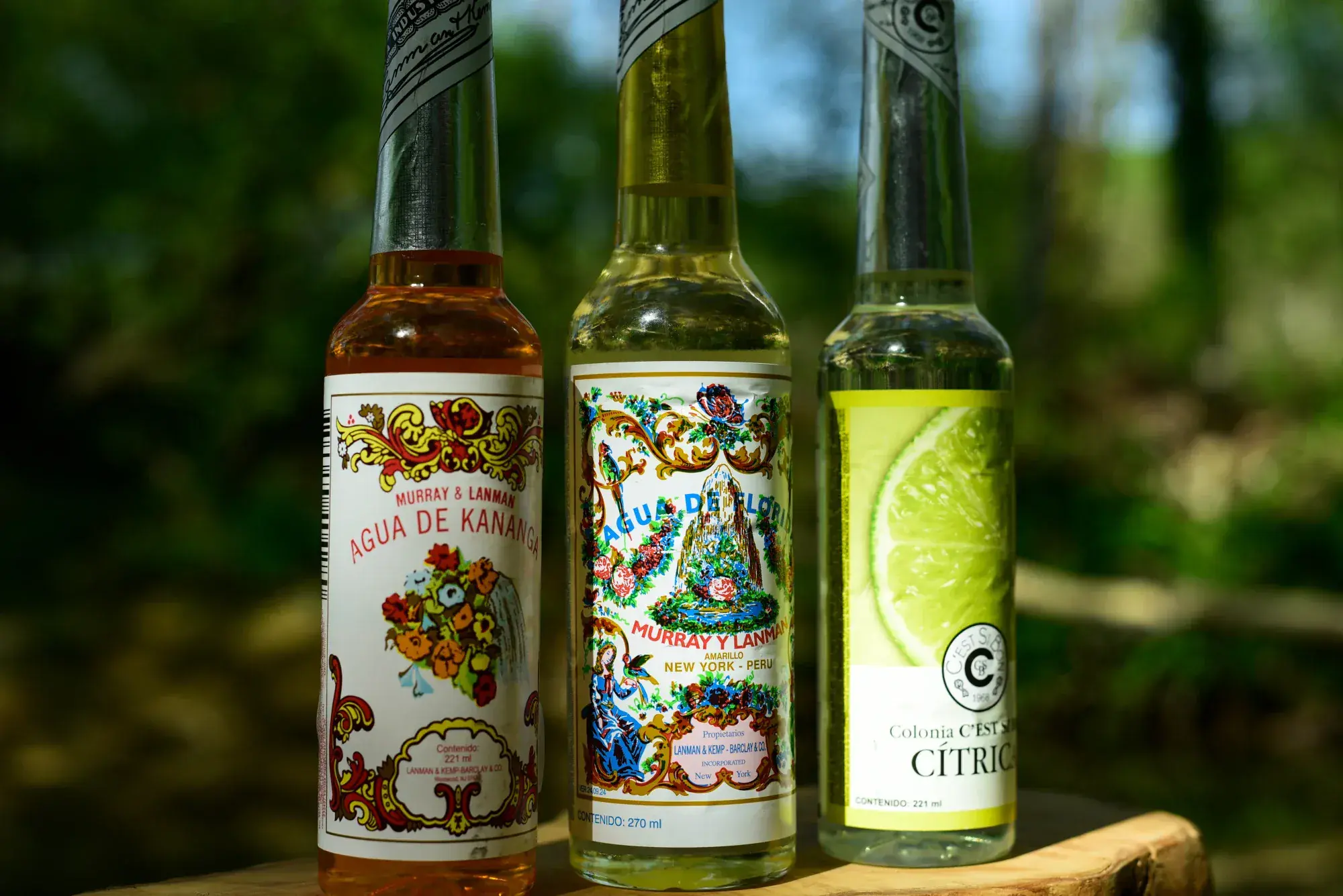
When the cards and the plants call for the bath, the group walks up, the day after a night-time mesa, to the Chorro del Inca, a waterfall on the north side of the Aypate hill. The master lays a small blanket on the ground and sets out his “arts”: swords of metal and wood, seashells, images of saints, little bells, cane spirit and perfumes. The participants place their offerings on it, among them Agua de Kananga and Florida Water. With a seashell he scoops a little water from the falls, adds a trickle of Florida Water, takes some in his mouth and blows it over each person: this is the shulalar, to refresh (Zevallos, p. 5).
In Iquitos, in the Amazon, Luis Eduardo Luna described four mestizo shamans in 1984. Luna classes them as vegetalistas, plant specialists, a term used in the area to set them apart from the oracionistas, who use only prayers, and the espiritistas, who work solely with spirits; among the vegetalistas, the perfumeros use the essence of flowers. Some plants, they say, are doctores, plant teachers, and these give them their songs, the icaros (Luna, 1984).
Perfumes, incense, colognes and plant and flower essences are a hallmark of vegetalismo, writes the anthropologist Olivia Marcus: sprayed, smoked, rubbed on bodies and poured into baths, they are the curandero's allies for cleansing bodies and spaces, and for protection, the citrusy Florida Water in particular (Marcus, 2022).
Benzedeira comes from benzer, to bless, from the Latin benedicere, to speak well. The Priberam dictionary defines her as “the one who performs benzeduras”, blessings; its masculine, benzedeiro, has bruxo, witch, as a second sense (Priberam, in Portuguese). So the word speaks of blessing, where curandera speaks of healing.
In Juruena, in Mato Grosso, Márcia Maciel and Germano Guarim Neto interviewed four benzedeiras between 2002 and 2003. During the benzimento they recite the Lord's Prayer, the Hail Mary or other prayers in a low voice, and may use small sprigs of rue (arruda), guiné or rosemary (alecrim). They also prepare teas, garrafadas, baths and ointments. Their knowledge is passed on orally and by example, “ouvir-falar” and “ver-fazer”, by hearing and by watching (Maciel and Guarim Neto, 2006, in Portuguese).
The authors recall that the benzimento is an old form, used in Europe since the Middle Ages. The baths of the Juruena benzedeiras also appear in the spiritual cleansing bath.
We offer neither limpias nor consultations: we sell plants. Two of them appear in the stories on this page.
Vegetalistas · Peruvian Amazon
A cologne of flowers and citrus. Olivia Marcus counts it among the perfumes of vegetalismo; at Aypate, the curandero blows it mixed with water from the falls. Ours comes from Peru, and its page also offers Agua de Kananga.
Sierra de Huautla · Morelos, Mexico
Its flowers are among the ceremonial plants of the Sierra de Huautla: May offerings to the Virgin, the Day of the Dead, St Michael's Day (Maldonado Almanza, 1997). Ours comes from the Puebla region, as whole leaves.
To read on: witch herbs, the herbs of Europe's healers; herbs for protection; the spiritual cleansing bath; ritual waters; the story of Yauhtli.
A healer; a woman is a curandera. The word comes from the Spanish verb curar, to heal or treat. The Royal Spanish Academy defines a curandero as a person who, without being a doctor, carries out empirical or ritual healing practices. In Mexico it is also a term of respect that the community gives to a practitioner, according to Grace Alvarez Sesma.
A female healer, the feminine of curandero. In the United States some people say curanderix, a gender-neutral form. In Grace Alvarez Sesma's glossary, the curandera is the most well-rounded of the practitioners, alongside the yerbera (herbalist), the sobadora, the huesero (bonesetter) and the partera (midwife), each with a speciality.
The tradition of curanderas and curanderos, in Mexico and among Mexican Americans. The Royal Spanish Academy's dictionary gives it two senses: a synonym of curandería, the art and practice of the curandero, and the intrusion of curanderos into the practice of medicine. The University of New Mexico has taught a class on it since 2000.
The Spanish dictionary lists brujo, witch, among the words related to curandero. Those who carry the name draw the line: in Grace Alvarez Sesma's glossary, the Mexican bruja is someone who performs coercive rituals to cause harm, and the curanderos Imanol Miranda spoke with say their work is oriented towards healing only. The story of Europe's healers and witches is told in witch herbs.
Often through apprenticeship, within the family, from a grandmother or an elder, according to the Curandero Project. Some say you are born with the don, the gift; Eliseo Torres holds that the work can be taught and learned, and the University of New Mexico runs a two-week class every year. In Peru, don Ángel Montalván followed his father from the age of twelve. The title itself is received: the people you serve give it.
The one who blesses: benzedeira comes from benzer, to bless. In Juruena, in Mato Grosso, the benzedeiras interviewed by Maciel and Guarim Neto pray in a low voice during the benzimento and may use small sprigs of rue, guiné or rosemary. Her name speaks of blessing, the curandera's of healing.
Two: Agua de Florida, which the vegetalistas of the Peruvian Amazon count among their perfumes and which the Aypate curandero blows over each person, and pericón, or Yauhtli, whose flowers are offered in the ceremonies of the Sierra de Huautla, in Mexico. We offer neither limpias nor consultations.
OTHER INTENTIONS · Ritual