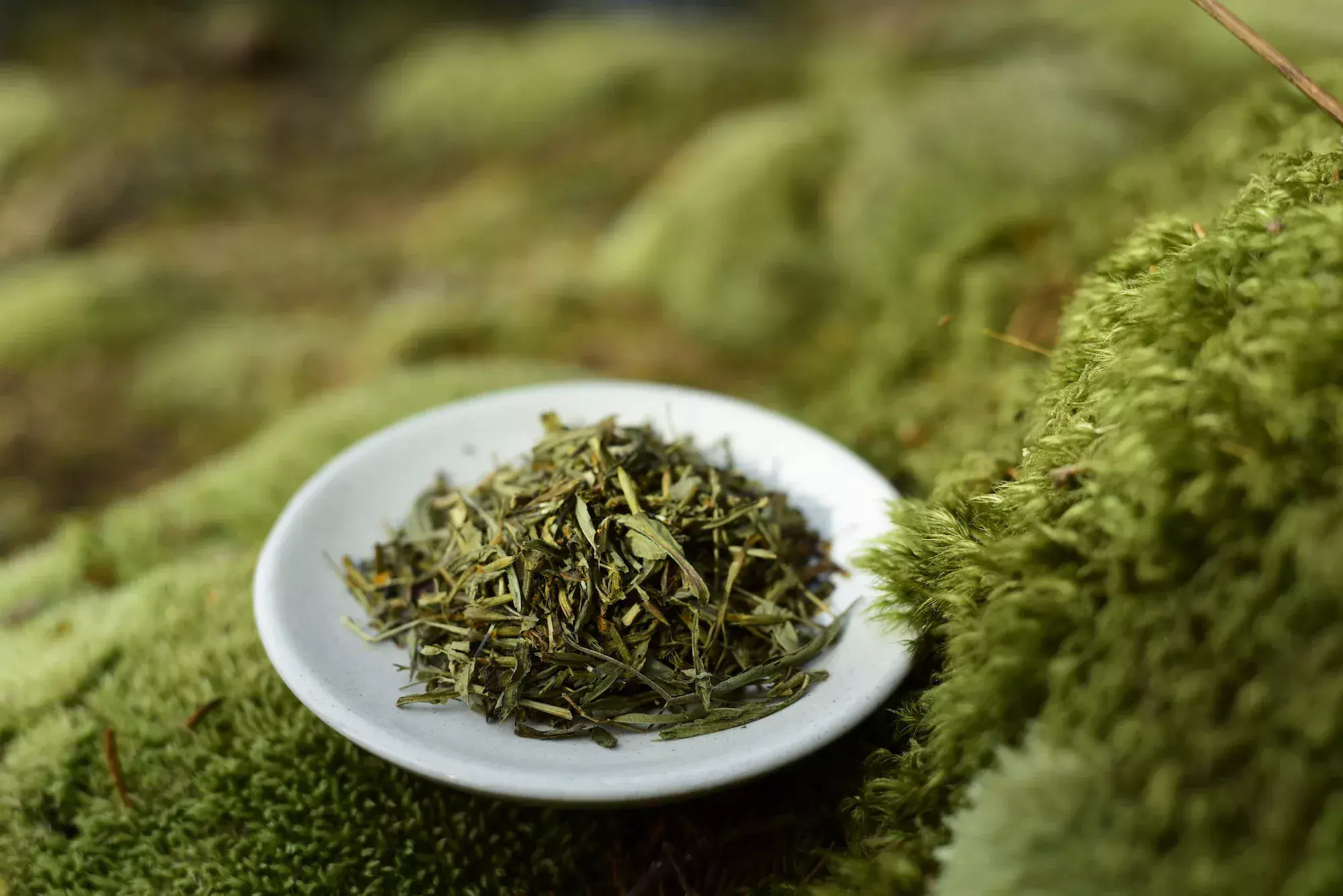
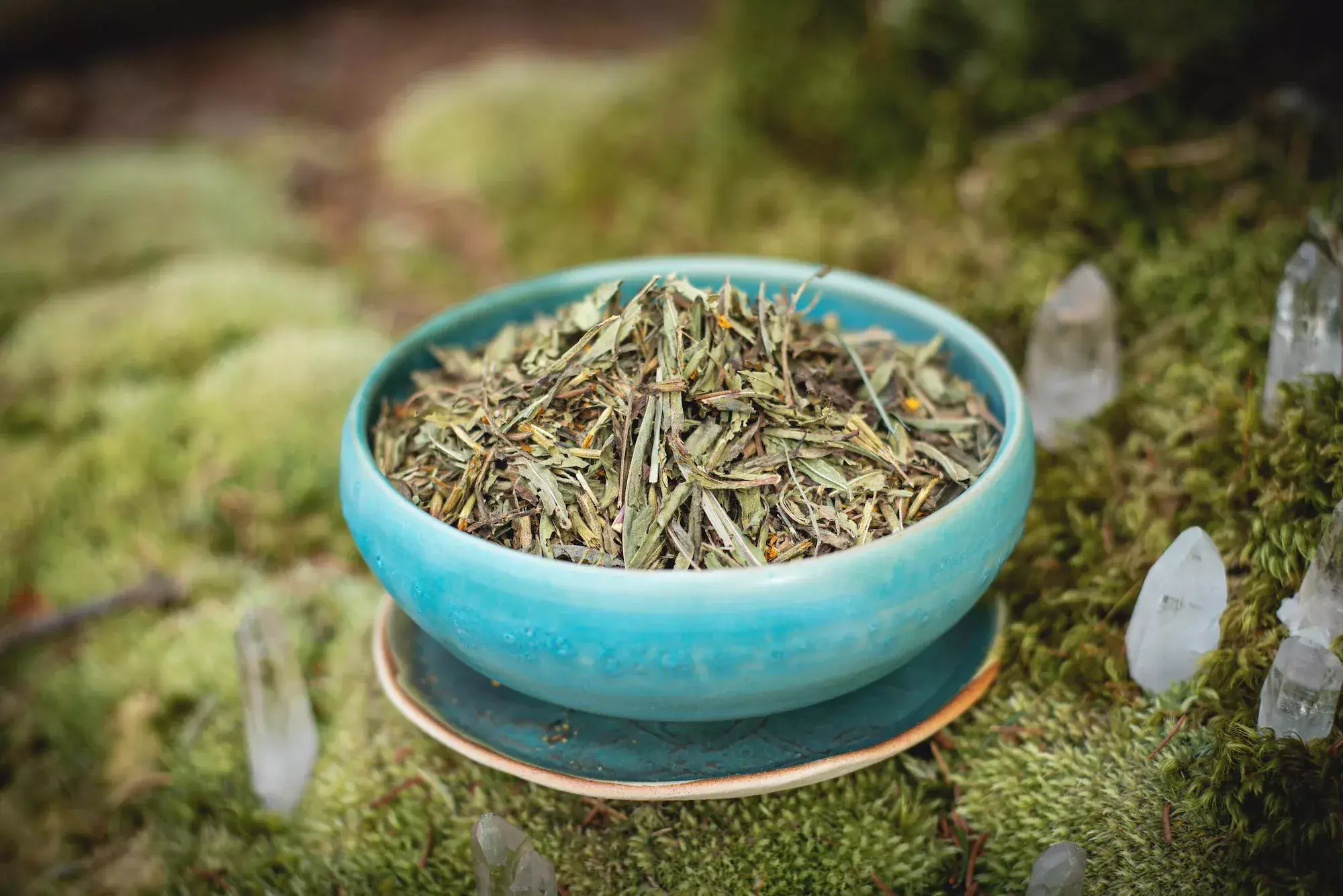
Mexican Tarragon "Yauhtli"
The Lightning of the Soul
from €7.00
For the Lakota, Inípi means “to live again”; on the central highlands of Mexico, a new temazcal is given a godfather and a Christian name. What happens in a sweat lodge, what the word temazcal means, and where pericón, our Yauhtli, comes into the steam.
The Lakota call the sweat lodge Inípi, “to live again”: sixteen young willows bent into a dome, a door opened four times, and heated stones known as grandfathers.
Among the Anishinaabe, women call the stones grandmothers, and cedar water is poured over them.
The Lightning of the Soul
from €7.00
« This is my 2nd order, am drinking daily and can certainly feel the benefits. This is my first go to shop when buying teas as I love the energy of their teas with every mug, certainly packed with love 🫶🏼 »
« I’ve lost count of how many times i have ordered already. I love ubulawu herbs. Blue lily and tarragon are the best. »
In the sweat lodge described by Quebec's heritage register, the firekeeper heats the stones outside for several hours, facing the door. They are called grandfathers; the Lakota call them so too.
In Quebec, the leader purifies the lodge and each participant with smoke. People go in clockwise, then each one gives their name and says where they come from.
Four rounds of 20 to 30 minutes, each one dedicated to a direction. At each door come new stones, water poured on them, songs with the drum and prayers; between rounds, the door is opened to let the heat out.
The ceremony closes by the fire with a last offering of tobacco. As early as 1618, Champlain noted that the sweat was often followed by a feast.
A low dome of bent saplings, covered with hides or, today, with canvas and blankets that keep the light out and the heat in. Stones are heated in a fire outside, carried in and placed in a pit at the centre, and water is poured over them. The word also means the ceremony held inside: songs, prayers, the drum, and a set of rounds, often called doors. The sweat lodge ceremony “forms part of the ceremonial life of many First Nations”, writes the Anishnawbe Mushkiki centre, and even within one territory the way it is conducted can differ (Anishnawbe Mushkiki).
Among the Anishinaabe the frame may be red willow, ash, birch, maple or jack pine, and the door faces east, south, or changes with the seasons, depending on the conductor's teachings. Women call the stones Grandmothers and men call them Grandfathers; cedar water poured on them fills the lodge with steam. Among the Innu of Quebec, the ethnologist Jacques Rousseau noted in the mid-twentieth century that only someone who had received a drum song in a dream could lead the ceremony (Répertoire du patrimoine culturel du Québec, in French).
“The Lakota term for sweat lodge is Inípi which means ‘to live again’,” writes the Aktá Lakota Museum. Its lodge is a dome of sixteen young willows set in a circle, traditionally covered with hides so that no light gets in. Outside, facing east, an earth mound stands before the door, and the fire pit holds the stones: the fire represents the sun, a second, crescent-shaped mound the moon. The lodge itself represents the womb of the universe, from which souls are created anew. The leader of the Inípi burns sweetgrass to purify the lodge; the others sit in a circle on sacred sage, and the pipe is smoked (Aktá Lakota Museum).
The door is thrown open four times, for the four ages described by the Sacred White Buffalo Calf Woman. The fourth time, everyone comes out, from dark to light, leaving behind all that is impure. At St. Joseph's Indian School in South Dakota, students help build the lodge; in the dark, with the steam from the grandfathers, they sing and pray to Wakȟáŋ Tȟáŋka, then gather round a table for a meal (St. Joseph's Indian School).
The word comes from the Nahuatl temazcalli, “house of baths” (Real Academia Española, in Spanish). At Xochicalco, in the Mexican state of Morelos, INAH presents the finest and best-preserved temazcal found so far in all of Mesoamerica: a four-sided building for about fifteen people, linked to the purification rites that came before the ball game next door, where the space in which the stones were heated with firewood can still be seen (INAH, in Spanish).
In 1984 Librado Silva Galeana described, in Nahuatl and in Spanish, the temazcal of the central highlands. Its upper part is built of tezontle stones held with mud; four to six people fit inside. Once built, it is given a godfather, who decorates it with flowers and tissue paper, and the priest blesses it and gives it a Christian name: José, Juan, Luis. For a very hot bath, oak or madrone is burnt; for a milder one, only ocote pine. Eight days after a birth, the mother bathes there with her baby, once the temazcal has been called by its name and incense and candles have been set inside (Silva Galeana, Estudios de Cultura Náhuatl, 1984, in Spanish).
Among the Maya of highland Guatemala, the steam bath is called tuj in K'iche' and chuj in Mam. The opening is so low that people stoop to go in, and an image of the Virgin or a saint often hangs above it. Missionaries, writes Leda Peretti, tried from the Conquest onwards to stamp out its use (Peretti, 2009, in Portuguese). The temazcal also belongs to the rites of birth; we tell that story in yoni steam.
Everywhere, water on hot stones; each people has given the steam its own name.
| Name | People and place | What the sources say |
|---|---|---|
| Inípi | Lakota, Great Plains | Sixteen young willows in a dome, the door opened four times; the name means “to live again”. Aktá Lakota Museum |
| Sweat lodge | Anishinaabe | A frame of red willow, ash, birch, maple or jack pine; cedar water poured on the Grandmothers and Grandfathers. Anishnawbe Mushkiki |
| Suerie | Mi'kmaq, Huron, Innu (Quebec) | Flexible wood, a floor of fir boughs, four doors of 20 to 30 minutes; described by Lescarbot as early as 1609. Répertoire du patrimoine culturel du Québec |
| Temazcalli | Xochicalco (Morelos, Mexico) | The best preserved in Mesoamerica according to INAH, beside the ball court. INAH |
| Tuj | K'iche' Maya (highland Guatemala) | About 4 m by 2 m, a very low opening, an image of the Virgin or a saint above it. Peretti, 2009 |
| Sauna | Finland | Löyly, “the spirit or steam” that rises from the stones; inscribed by UNESCO in 2020. UNESCO |
| Balneário-sauna | Iron Age hillforts of north-west Iberia | About thirty known, from Galicia and Asturias down to the Douro; a carved slab, the pedra formosa, divides the steam from the cold water. Matos da Silva, 2019 |
Each source describes its own house, and Quebec's heritage register stresses that the teachings vary from one leader to another.
In the temazcal, plants are made into bunches that bathers strike themselves with, which also fills the bath with fragrance, writes the Spanish Americanist José Alcina Franch. He gathered the plants named from the sixteenth century to the present: 55 in all, of which only 27 could be identified. In the sixteenth century, Sahagún mentions maize leaves boiled in the bath water itself, used to strike the bathers' backs. Among the Tzotzil of Zinacantán, in Chiapas, one informant listed ten flowers for the bath, among them red geranium and copal (Alcina Franch, 1994, in Spanish).
On the central highlands, Librado Silva Galeana writes that bathers strike themselves with pirú or capulín, “and sometimes with aromatic herbs called pericón and poleo”. Alcina Franch identifies this pericón as Tagetes lucida: the Aztecs' Yauhtli, the plant of our page.
Central highlands · Mexico
Named pericón among the herbs of the temazcal (Silva Galeana, 1984; Alcina Franch, 1994); ours comes as whole leaves, wild-harvested in the Puebla region.
We run neither sweat lodges nor temazcales, and we sell no blend for the steam. With us, Yauhtli is drunk as an anise-flavoured infusion; its page tells of its other lives, as incense on home altars and on the Wixárika pilgrimage.
Further reading: Yauhtli in the Forest, the herbal bath, yoni steam and ritual incense and sacred waters.
A low dome of bent saplings (sixteen young willows among the Lakota; red willow, ash, birch, maple or jack pine among the Anishinaabe), covered with hides or blankets that keep the light out. In the centre, a pit holds stones heated on a fire outside, and water is poured over them. The word also means the ceremony held there, with its songs, prayers and rounds; it differs from one nation to the next, and often from one leader to the next.
The steam bath of Mesoamerica. The word comes from the Nahuatl temazcalli, “house of baths”. At Xochicalco, in Mexico, INAH keeps the finest and best-preserved one known, linked to the purification rites that came before the ball game. Among the K'iche' Maya of Guatemala it is called tuj.
The steam is the same: water poured on hot stones. The Finns call it löyly, “the spirit or steam”, and traditionally regard the sauna as a sacred space, a “church of nature”, according to UNESCO, which inscribed Finnish sauna culture in 2020. A sweat lodge is built for a ceremony, led by someone who has received its teachings, with its doors, songs and offerings. The temazcal is a house of stone or adobe, used for rites as well as for washing. The gesture of the bunch of branches travels: in Guatemala, people strike themselves with branches “exactly as in Finland”, wrote Virkki, quoted by José Alcina Franch.
It depends on the lodge. The University of Manitoba, which has one on its campus, suggests comfortable clothes and dressing for the weather, because the rest of the ceremony takes place outdoors; inside, everyone sits on the ground. It adds that protocols vary from lodge to lodge. Quebec's heritage register says women wear a skirt; in the lodges in Japan described by Moe Mamiya, of Hokkaido University, men wear only boxer shorts, and women a T-shirt and a long skirt.
In Quebec it usually has four doors of 20 to 30 minutes, and the firekeeper has heated the stones for several hours beforehand. Among the Lakota, the door is opened four times. In Japan, according to the schedule recorded by Moe Mamiya, the day starts at 9.30 am with the lighting of the fire and ends around 4 pm, meal included.
They change from one village to the next. José Alcina Franch found 55 named in texts from the sixteenth century to today, and could identify only 27. Sahagún mentions maize leaves boiled in the bath water; on the central highlands, Librado Silva Galeana names pirú, capulín, and sometimes pericón (Tagetes lucida) and poleo; among the Tzotzil of Zinacantán, one informant listed ten flowers, among them red geranium and copal.
Each lodge has its own. The temazcal described by Librado Silva Galeana has its upper part built of tezontle held with mud; before the bath, water is thrown on the tezontle stones of the “navel of the fire” to clear the ash. In Quebec, round river stones, well dried, 20 to 30 cm across, are chosen. In Japan, the lodges described by Moe Mamiya take their stones from near Mount Fuji, the Kannabe highlands or Tottori.
None of our sources gives a temperature. In Quebec, the heat rises with each door, as the firekeeper brings in new grandfathers; between doors, the lodge is opened to let it out. In Librado Silva Galeana's temazcal, the wood sets it: oak or madrone for a very hot bath, ocote pine alone for a milder one.
OTHER INTENTIONS · Ritual