The best herbs for lucid dreaming — a field guide to the dream plants
Calea, ubulawu, Entada, blue lotus, mugwort, guayusa: thirteen dream herbs, their lineage, the research, our dreamers, how to take them.
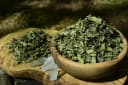 The plant of this articleCalea Zacatechichi · Calea zacatechichi (Calea ternifolia)4.8(280)from €7.20View →
The last sovereign territory. You enter through the plants, through silence, through a return to the dreams of the elders.
Short answer. The best-documented dream herbs are Calea (Calea ternifolia, used by the Chontal of Oaxaca), the ubulawu family of southern Africa (Silene undulata, Synaptolepis kirkii and their sisters, whisked into a white foam), and guayusa, which the Kichwa drink before dawn to tell each other their dreams. Around them: Entada, blue lotus, imphepho, mugwort, yauhtli, bobinsana and others, each with its own lineage and its own way of opening the night. Lucidity is a skill you grow; the plant makes the dream more vivid, more present, easier to remember, and prepares the ground.
The herbs from this guide that we offer are gathered, with their tradition, their preparation and the dream tea they make, on our dream herbs page.
How to read this guide
For every plant we bring four voices together, and we say which one is speaking.
- ◆ Documented tradition: a people, a practice, a written source (ethnography, archaeology).
- ◇ Research: what science has measured, in people or in the lab.
- ● Our dreamers: what our customers report in their reviews. Out of 1,928 reviews left on our dream herbs, 174 describe a night: 89 speak of more vivid dreams, 28 of meaningful dreams, 26 of better recall, 16 of a lucid dream. And 26 noticed nothing: we quote them too.
- ☾ The House: what fifteen years of working with these plants have taught us.
The dream herbs at a glance
| Plant | Tradition | What people report | How | Evidence |
|---|---|---|---|---|
| Calea | Chontal (Mexico) | vivid dreams, recall | bitter tea or smoke, at night | ◆ ◇ ● |
| Ubulawu family | Xhosa, Zulu, Sotho (southern Africa) | deep dreams, messages | whisked foam, morning, fasting, 3 to 5 days | ◆ ● |
| Guayusa | Kichwa, Jivaro (Amazon) | recall, sharing dreams | brew before dawn | ◆ ● |
| Entada | southern Africa | vivid dreams, recall | seed carried, under the pillow | ◆ ● |
| Blue lotus | ancient Egypt, Zulu diviners | narrative dreams, ease | tea or resin, at night | ◆ ◇ ● |
| Imphepho | Xhosa, Zulu | clearer dreams, ancestors | smoke at bedtime | ◆ ● |
| Mugwort | Europe | more dreams | light tea, dream pillow | ● ☾ |
| Yauhtli | Aztec, Maya, Huichol | vivid dreams, presence | tea or smoke | ◆ ● ☾ |
| Bobinsana | Amazon (master plant) | intense dreams | tea, dieta | ◆ ● |
| Ajo sacha | Amazon (master plant) | auditory dreams | tea, dieta | ◆ ● |
| Sinicuichi | Mexico | a reputation for memory | sun-fermented leaves | ☾ |
| Shatavari | India (Ayurveda) | gentle sleep, beautiful dreams | powder in warm milk | ● |
| Celastrus | India (Ayurveda) | clearer dreams, memory | seeds | ● |
1. Calea — thle-pela-kano, the leaf of God
Calea ternifolia (syn. Calea zacatechichi), Asteraceae. Mexico and Central America.
◆ Tradition. The Chontal of Oaxaca use it to receive divinatory messages in dreams: to find the cause of an illness, or someone far away or lost. The dried leaves are smoked, drunk as a tea and slipped under the pillow before sleep (Díaz, 1979). Its Nahuatl name, zacatechichi, means "bitter grass".
◇ Research. In 1986, Mayagoitia, Díaz and Contreras tested it double-blind against a placebo and against diazepam. During a monitored nap, dream reports were significantly more frequent on Calea than on either comparator (J Ethnopharmacol 18:229-243). It is the most direct human trial in this whole guide. How it works remains unknown.
● Our dreamers. 40 reviews describe a night on Calea: 22 more vivid dreams, 10 sharper recall, 6 lucid dreams, 5 no effect.
"insightful dreams, lots of colour and symbols, amazing dream recall." — Emily
☾ The House. Calea awakens the Dreamer inside of us. She is known to offer spectacular, vivid, memorable dreams at night, while enhancing our ability to self-reflect and journey within. She opens the door to the true wishes of our souls, whispering to us our reason to be here on Earth.
How to take it. A small pinch of leaves steeped in the evening and sipped slowly: it is very bitter, and a little goes a long way. As an elixir, 3 to 5 drops at bedtime. As a smoke, rolled with a gentle base.
Precautions. Human safety data are scarce and animal studies report toxicity at high doses: keep to small amounts, in cycles of a few nights. Avoid during pregnancy and breastfeeding.
2. The ubulawu family — the White Paths
Among the Xhosa and Zulu of southern Africa, ubulawu are roots (sometimes stems or bark) beaten in cold water with a forked stick until a white foam rises. The word is said to come from ukulawula, "to control". For diviners, ubulawu "casts a white light" on the dream, which becomes more vivid and easier to remember (Hirst, 2005). The initiate drinks the foam in the morning, fasting, and washes the body with it; the Sotho prefer to eat the foam (Sobiecki, 2012). Hirst, who drank it himself, reports "very vivid dreams at night". Diviners set these plants apart from hallucinogens: they give "true visions" (Sobiecki, 2008). As one diviner put it: "The plants give you what you are."
☾ The House. The great masters of the dream of the Sangomas of South Africa (Zulu, Xhosa). After taking these medicines for 3 to 5 days with prayers and respect, the Dream Gates open up. A path you choose to take, to meet the roots of your soul, to remember who you are and why you came to Earth. This simple cure is usually enough for months of Dream Activation.
Undlela Ziimlophe — Silene undulata (syn. S. capensis), the white paths
◆ The dream plant of Xhosa diviners (amagqirha). Novices drink the foam fasting for three days at the full moon, "to strengthen the dream". Hirst reports that only a diviner initiated at the river gathers it. One diviner dreamt of the place where it grew: "the whole plant will be surrounded by a white light."
● 31 reviews describe a night: 15 more vivid dreams, 7 better recall, 6 lucid dreams.
"After just one use, I remembered four dreams in one night, including a dream within a dream where I met an entity." — Cleo
Uvuma Omhlope — Synaptolepis kirkii, the white root
◆ Used as a ritual emetic and body wash to help diviners "see" (Van Wyk & Gericke, 2000). ◇ A compound from its root, kirkinine, makes neurites grow in the lab (He et al., 2000): a lead for chemistry, with no promise for people.
● 14 reviews: 7 meaningful dreams, 7 more vivid dreams.
"This stuff will give you some serious symbolic dreams. A whole story line." — Salem
Mukanya Kude — Vachellia xanthophloea, the light seen from afar
◆ Its Zulu name, umkhanyakude, names the yellow-green bark of the acacia you can see from far away. Zulu medicine uses root and bark as an emetic (Hutchings, 1996). ☾ For the House, it is an ubulawu in its own right: the bark of light in the family, the one that watches over the dreamer.
● 5 reviews, one lucid dream.
"My dreams were so vivid felt so real! So many messages." — Tara
Uqume — Hippobromus pauciflorus
◆ Zulu diviners rinse their nose with its foam before going into trance (Watt & Breyer-Brandwijk). Among the Xhosa, its bark goes into an initiation ubulawu with Silene and Rubia petiolaris, for dreams of the ancestors (Broster, 1981).
Ubhubhubhu — Helinus integrifolius
◆ Drunk at the initiation of Zulu and Pedi diviners "to strengthen the memory and give keen observation" (Bryant; Mönnig).
How to take it. A small amount of powdered root in a large glass of cold water, whisked with a fork or a stick until it foams. Drink the foam in the morning, fasting, for 3 to 5 days, with an intention set the night before. In the evening, a notebook by the bed.
Precautions. Several of these roots are emetic: nausea is part of the traditional preparation, and it signals you have had enough. Taken in capsules, at high doses and outside any ritual, Silene and Uvuma gave some people confused, disturbing dreams (Sobiecki, 2012): the foam, in small amounts, is the way. Uqume was toxic to the liver and kidneys of rats at high doses (Pendota, 2009). Avoid during pregnancy, breastfeeding or any ongoing treatment.
3. Guayusa — wayusa, the dawn of dreams
Ilex guayusa, Aquifoliaceae, a cousin of yerba mate. Upper Amazon (Ecuador, Peru, Colombia).
◆ Tradition. Among the Kichwa, the wayusa upina begins before dawn, once around three or four in the morning: the guayusa is heated over the fire, drunk together, the elders talk, and the night's dreams are interpreted to decide the day, above all the hunt. A 2026 study notes that dream interpretation has become rare there (Espinosa Andrade & Vásquez-Castillo, PLoS One). Among the Jivaro, guayusa gives "little dreams" in which you see whether the hunt will go well (Rätsch, 2005, after Karsten). And prepared guayusa leaves were found in a healer's tomb at Niño Korin, Bolivia, dated to the year 355.
● 4 reviews: dream recall, symbolic animals.
"I experience symbolic animals and awareness in dreams." — Samonyai
☾ The House. Powered by the Jaguar Spirit. The Kichwa describe how guayusa makes them feel Runa: fully alive. It holds the caffeine of coffee, the theobromine of cacao that opens the heart, and the L-theanine of tea that relaxes: a calm, present, available, playful energy, with an open heart. And it carries its lucidity into your dreams: gentler sleep, memorable dreams, easier mornings.
How to take it. In a gourd or as a 20-minute decoction, in the morning: it is a waking plant. Drink it on waking, notebook open, to hold and tell the night.
Precautions. It contains caffeine: drink it in the morning, like the Kichwa, and gently if you are sensitive.
4. Entada — umbhone, the seed that crossed the seas
Entada rheedei, Fabaceae. Tropical Africa, Madagascar, South Asia, Australasia. Its seeds float and travel the ocean for years.
◆ Tradition. In South Africa, diviners use it to remember dreams (Manana, 1968; Sobiecki, 2008), and tobacco smoked in a pipe carved from the seed was said to bring vivid dreams (Van Wyk & Gericke, 2000).
● 11 reviews: vivid dreams, many dreams remembered, one lucid dream, and 4 no effect.
"I can remember multiple dreams very vividly, because of this I was able to receive a lot of messages." — Samonyai
☾ The House. To unlock its power, this magical bean is to be carried with you for a few weeks, to fill it up with your energy, prayers and intentions. You can also sleep with it, keep it next to you or under your pillow. It is also a powerful luck charm. Once you feel the moment has come, you open the seed and prepare its flesh.
Precautions. Raw, the seed is toxic: its flesh is prepared cooked or steeped, in small amounts. Avoid during pregnancy and breastfeeding.
5. Blue lotus — the flower of the Egyptian priestesses
Nymphaea nouchali var. caerulea (syn. N. caerulea), Nymphaeaceae. The blue lotus most often sold, commonly called Nymphaea caerulea, is in fact Nymphaea nouchali: we offer both, and say so.
◆ Tradition. Garlands of blue lotus petals accompanied Tutankhamun, laid on his coffins (identified by Newberry). In 2024, the analysis of a Ptolemaic vase in the image of Bes revealed blue lotus mixed with fermented fruit, honey and Syrian rue (Tanasi et al., Scientific Reports); one of the authors sees in it a ritual drink "inducing dreams and visions". In South Africa, the lotus even counts among the ubulawu: the Xhosa wash with it (uzuba, Hirst 2005), and Zulu diviners buy its flowers, izibu, in Johannesburg's markets for visions of the ancestors (Sobiecki, 2008).
◇ Research. Its nuciferine acts on several serotonin and dopamine receptors (Farrell et al., 2016). A direct link to dreaming has not been measured.
● 25 reviews: 12 gentler sleep, 12 more vivid dreams, better recall.
"Also dream recall increased significantly!" — Denisa
☾ The House. Like the lotus growing from mud to sky. This magical flower gives you what you are ready to receive. Her power also reaches beyond the waking state, gifting conscious and lucid dreams, elevated messages from our soul through introspection, meditation and sleep.
How to take it. A few flowers in hot, not boiling, water, steeped ten minutes, in the evening. As a resin or an elixir, a few drops.
Precautions. It relaxes and can make you drowsy: leave driving for another time. Avoid during pregnancy and breastfeeding.
6. Imphepho — the smoke that calls the ancestors
Helichrysum odoratissimum and related species, Asteraceae. Southern Africa.
◆ Tradition. Xhosa healers burn imphepho to induce and clarify dreams (Bührmann, 1984); Zulu izangoma inhale its smoke to enter trance (Sobiecki, 2008). A healer puts it simply: we burn it to bring our ancestors close and speak with them.
● 12 reviews: calmer sleep, dreams richer in messages.
"What I needed this to do was give me more information in my dreams and it did just that." — Crystal
How to take it. A small sprig lit then blown out, its smoke carried through the bedroom before sleep.
Precautions. Air the room afterwards. Asthma, pregnancy: avoid the smoke.
7. Mugwort — Mater herbarum, the mother of herbs
Artemisia vulgaris, Asteraceae. Europe and Asia.
◆ Tradition. It opens the Anglo-Saxon Nine Herbs Charm (10th-11th century), the first herb invoked. Pliny hesitates between a queen and a goddess to explain its name. It was gathered on St John's Eve for protection. The old texts link it to women, to travel, to protection; the mugwort dream pillow belongs to a more recent tradition, carried by the herbalists of the 20th century (Gladstar, 1993) and alive among today's dreamers.
● 8 reviews: more dreams, easier to remember.
"the herb does give you stronger dreams that are also easier to recall." — Mirna
☾ The House. Mugwort is a herb of high magic, renowned for its incredible powers over dreams and its way of intensifying extra-sensory perceptions, making it a herb of prophecy and shamanic journeys. Mugwort teaches the understanding of one's dark sides, helping us to transcend our nightmares and the destructive patterns of our subconscious.
How to take it. A teaspoon as a light tea half an hour before bed, or a handful of leaves in a small pillow by your head.
Precautions. Avoid during pregnancy (historically used to bring on menstruation); take care if you are allergic to the daisy family.
8. Yauhtli — Tagetes lucida, the herb of the clouds
Tagetes lucida, Asteraceae. Mexico and Central America.
◆ Tradition. An Aztec incense linked to Tláloc; Hernández calls it the "herb of the clouds". Residues of yauhtli mixed with tobacco were found in small Maya flasks buried more than a thousand years ago (Zimmermann et al., 2021). The Huichol are reported to smoke it, alone or with tobacco, to make visions clearer (Siegel et al., 1977).
● 12 reviews: sleep, intense dreams, a dreamer who found their dreams again.
"Really helped me recover my dreaming!" — Deko
☾ The House. Yauhtli breathes life into our souls: like a lightning bolt of vital energy, it brings colour, scent and flavour back to the arid landscapes within us. It chases fear away and invites the soul back into the body. At night, it unveils its magic through vivid, meaningful dreams. Magnificent Yauhtli.
How to take it. As a tea (a teaspoon, simmering water, 5 to 7 minutes) or as a gentle smoke, in the evening.
Precautions. It contains estragole: keep it to short courses, and avoid it during pregnancy.
9. Bobinsana — a plant of Courage
Calliandra angustifolia, Fabaceae. Western Amazon.
◆ Tradition. Among the healers of Iquitos, bobinsana is one of the master plants that "teach medicine if one keeps the diet"; some of them, Luna writes, teach only in dreams (Luna, 1984).
● 5 reviews: nights of dreams found again.
"on the first night I had dreams for the first time in a long time." — Jasmine
☾ The House. The companion of the tired heart. A plant of Courage: it helps you live in the truth of your heart, integrate the wounds of the past, walk your truth, find the courage to embody who you really are.
How to take it. As a tea, 10 minutes, in the evening; as an elixir, one dropper.
10. Ajo sacha — the master plant that smells of garlic
Mansoa alliacea, Bignoniaceae. Amazon.
◆ A master plant of the Iquitos healers, one that can be taken alone (Luna, 1984). The vegetalista don Francisco Montes Shuña describes its dreams as singularly auditory: the plants begin to sing (Beyer, 2009).
● "insightful dreams, powerful herb." — Emily
11. Sinicuichi — the herb of the sun
Heimia salicifolia, Lythraceae. From the southern United States to Argentina.
◆ Reputation. In 1896, Calderón reported that its drink was said to turn the world yellow and make sounds seem to come from far away; he tried it and felt nothing. Reko later described the preparation: wilted leaves, fermented in the sun for at least a day. ◇ Malone and Rother (1994) found its alkaloids lacking the effect attributed to them. It is the most mysterious plant in this guide, and the least demonstrated.
☾ The House. Keeper of Memories and Guide to the Inner Realms: the plant of memory and vision, called upon to recall dreams and times past.
Precautions. Safety data are scarce: keep to small amounts, and avoid it during pregnancy or with heart medication.
12. Shatavari — she of a hundred roots
Asparagus racemosus, Asparagaceae. India.
A true elixir of youth and wisdom, a Queen of the vegetal realm, Master of the Yin energy: a rasayana of Ayurveda, an ally of women through every season of their lives. Its Chinese cousin, tian men dong (Asparagus cochinchinensis), is known among Taoists as the "flying herb": taken over a long time, it is said to make you so light you could fly, even in your dreams (Teeguarden). Chinese medicine in fact calls shatavari zhang ci tian men dong. Our dreamers describe it as gentle and soothing, with beautiful dreams. ● "Sends you right off to sleep, beautiful dreams."
13. Celastrus — jyotishmati, the luminous one
Celastrus paniculatus, Celastraceae. India.
An Ayurvedic plant of intellect and memory. Its link to dreaming is modern: dreamers report clearer dreams. ● "They help a lot my dreams and concentration levels." — Fabiola
Sleep herbs and dream herbs
Wild poppy, wild lettuce, valerian, passionflower, chamomile: beautiful sleep herbs. They help you fall asleep and sleep deeply. The plants in this guide work on something else: the substance of the dream, its colour, its memory. You often find both in the same lists. For difficult nights, see our herbs for deep sleep; for the substance of the dream, the thirteen plants above.
Choosing your plant
- To remember your dreams: Calea, Undlela Ziimlophe, guayusa on waking.
- For more vivid dreams: Calea, Uvuma, Entada, mugwort.
- For dreams that carry messages: the ubulawu family, imphepho, yauhtli.
- To begin gently: mugwort as a light tea, blue lotus.
- For a complete ritual: the ubulawu discovery pack, 3 to 5 days.
What goes with the plant
- The intention, the night before. A simple question, written or spoken before sleep.
- The plant, at the right time. Evening for Calea, lotus, mugwort, yauhtli; morning and fasting for ubulawu; on waking for guayusa.
- The notebook, on waking. Before you move, before the phone: a few words, an image. Recall grows stronger night after night.
- Lucidity. For those who seek it: reality checks during the day, and waking in the middle of the night before going back to sleep with the intention to recognise the dream.
- Cycles of a few nights. 3 to 5 nights, then a pause: the dream opens through repetition rather than intensity.
Safety and the law
- Pregnancy and breastfeeding: none of these plants, for lack of data.
- Ongoing treatment (antidepressants, anxiolytics, sleeping pills, heart medication): medical advice before any plant.
- Driving: not after blue lotus, Calea, or any plant that made you drowsy.
- Mental health: dream plants belong far from times of fragility.
- The law: all these plants are sold freely in France and the European Union.
What is the best herb for lucid dreaming?
Lucidity is a skill you grow, and it starts with a vivid, well-remembered dream. Calea is the most studied; among our dreamers, Undlela Ziimlophe gathers the most accounts of lucid dreams.
How many nights before I notice something?
Some dreamers report an effect on the first night; many describe it over 3 to 5 nights. A notebook on waking shows what is changing.
Can I combine several herbs?
Our dreamers often pair Calea with mugwort, or yauhtli with chamomile. One plant on its own first, for a few nights: that is how you learn its signature.
Are these drugs?
They are traditional plants, sold dried and whole, freely available in France and the European Union.
Why is ubulawu taken in the morning?
Among the Xhosa, the foam is drunk fasting in the morning, several days in a row. It is the following night that carries the dreams.
What is African dream root?
The name most often refers to Silene undulata (Undlela Ziimlophe), the Xhosa dream root. Uvuma Omhlope (Synaptolepis kirkii) is another African dream root of the same ubulawu family.
Sources
- Mayagoitia L., Díaz J.L., Contreras C.M. (1986). Psychopharmacologic analysis of an alleged oneirogenic plant: Calea zacatechichi. J Ethnopharmacol 18:229-243. PMID 3821139.
- Díaz J.L. (1979). Ethnopharmacology and taxonomy of Mexican psychodysleptic plants. J Psychedelic Drugs 11:71-101.
- Hirst M. (2005). Dreams and medicines: the perspective of Xhosa diviners and novices in the Eastern Cape. Indo-Pacific J Phenomenology 5(2):1-22.
- Sobiecki J.F. (2008). A review of plants used in divination in southern Africa. Southern African Humanities 20:333-351.
- Sobiecki J.F. (2012). Psychoactive ubulawu spiritual medicines and healing dynamics in the initiation process of southern Bantu diviners. J Psychoactive Drugs 44(3):216-223.
- Van Wyk B.-E., Gericke N. (2000). People's Plants. Briza.
- He W. et al. (2000). Kirkinine, a new daphnane orthoester with potent neurotrophic activity from Synaptolepis kirkii. J Nat Prod 63:1185-1187.
- Pendota S.C. et al. (2009). Afr J Tradit Complement Altern Med.
- Espinosa Andrade & Vásquez-Castillo (2026). PLoS One. PMID 42228731.
- Rätsch C. (2005). The Encyclopedia of Psychoactive Plants. Park Street Press, p. 289.
- Tanasi D. et al. (2024). Scientific Reports 14:27891.
- Farrell M.S. et al. (2016). PLoS One 11:e0150602.
- Zimmermann M. et al. (2021). Scientific Reports 11:1590.
- Siegel R.K., Collings P.R., Díaz J.L. (1977). Economic Botany 31:16-23.
- Luna L.E. (1984). The concept of plants as teachers among four mestizo shamans of Iquitos. J Ethnopharmacol 11:135-156.
- Beyer S.V. (2009). Singing to the Plants. University of New Mexico Press, pp. 274-275.
- Malone M.H., Rother A. (1994). Heimia salicifolia: a phytochemical and phytopharmacologic review. J Ethnopharmacol 42:135-159.
- Manana C.J. (1968). Umongo Wolwazi. African Medical Herbs. Durban.
- Bührmann M.V. (1984). Living in Two Worlds. Human & Rousseau.
- Gladstar R. (1993). Herbal Healing for Women. Simon & Schuster, p. 250.
- Teeguarden R. (1984). Chinese Tonic Herbs. Japan Publications.
- Pliny the Elder, Natural History XXV, 73.
 4.8(280)from €7.20View →
You have a story to drop into the Forest too?
Share a story →What this reading opened
Be the first voice. Each word is read before joining.
Sign in to share what this reading opened in you.
Sign in →