⊹ To weave around
To accompany Passiflora · Passion Flower
Click a card to see why it pairs — and choose your form.
Read it through your world
The whole page is read through this lens.
✦ Passiflora · Passion Flower · in one breath ✦
The passionate one who learned quietude — she holds you while you weep, and softens the descent.
⊹ The path of the plant
⊹ Community voices
What the community murmurs.
Average · 39 reviews
including 39 left on our Etsy shop
Breakdown
While many calming herbs don't have much effect on me, the passionflower resin extract is excellent for my insomnia! Highly recommended.
Jean
Dream · left on our Etsy shop · 25 September 2024
I wrote a lot of them so much I love your shop. Nothing has changed Fresh passion passion, delicious, powerfully calming, subtle and at the same time strong Plant of choice I also love the Pink Lotus that I recommend at the bottom! And many more Passionflower, perfect to cure nightmares, sleep like a baby and drug withdrawal or just to have fun. My thing is to smoke Passionflower and vaporize it too. everything is excellent! In herbal tea of course or other!
Nébuleuse
Dream · left on our Etsy shop · 11 June 2022
Passionflower is fantastic and helpful, I use an assortment of herbs and this one once or twice a day is always pleasant, flower or powder is really good, it lasts a long time too as you don't need to use much. Plus, it goes with elderberry and oolong nicely as well, so you can get creative with it.
James
Dream · left on our Etsy shop · 7 February 2025
I love the passionflower tea. I use it often to help me get to sleep. Well packaged too. Will buy again.
Emma
Dream · left on our Etsy shop · 26 March 2021
I love this product. The taste is smooth and the effects are gentle. It really helped with my sleep
Emma
Dream · left on our Etsy shop · 4 February 2021
I put some Pasioneflower in a teastepe and made a tea of it and drank it and it was very nice. Thanks DreamHerbsTemple
ridlond
Dream · left on our Etsy shop · 24 August 2019
Top quality. Really good products. Already made a herbal tea, it calms the mind and prepares for a good sleep.
Lorenzo Galli
Dream · left on our Etsy shop · 16 November 2023
Great pharma-herba enhancer for my smoking and tea blends.
devin
Dream · left on our Etsy shop · 11 May 2023
I've never tried Passion flower before, kind of a grassy taste and gets some getting use to. feel very relaxed after tho.
Thomas-Jay
Dream · left on our Etsy shop · 25 March 2021
I've been drinking this tea in the afternoons and it's really good! The flavor of the tea alone isn't too bitter, and I've mixed it with some of my other herbal teas to great results! I'm working through this bag pretty fast, so I'll probably be ordering again soon. Thank you!
Alyse
Dream · left on our Etsy shop · 3 September 2020
Ask the Forest about Passiflora · Passion Flower
408 books digested, 97,512 indexed passages. She answers on lineages, synergies, cautions, ritual variations.
⊹ FREQUENT QUESTIONS ⊹
We answer.
What is Passionflower (Passiflora incarnata)?
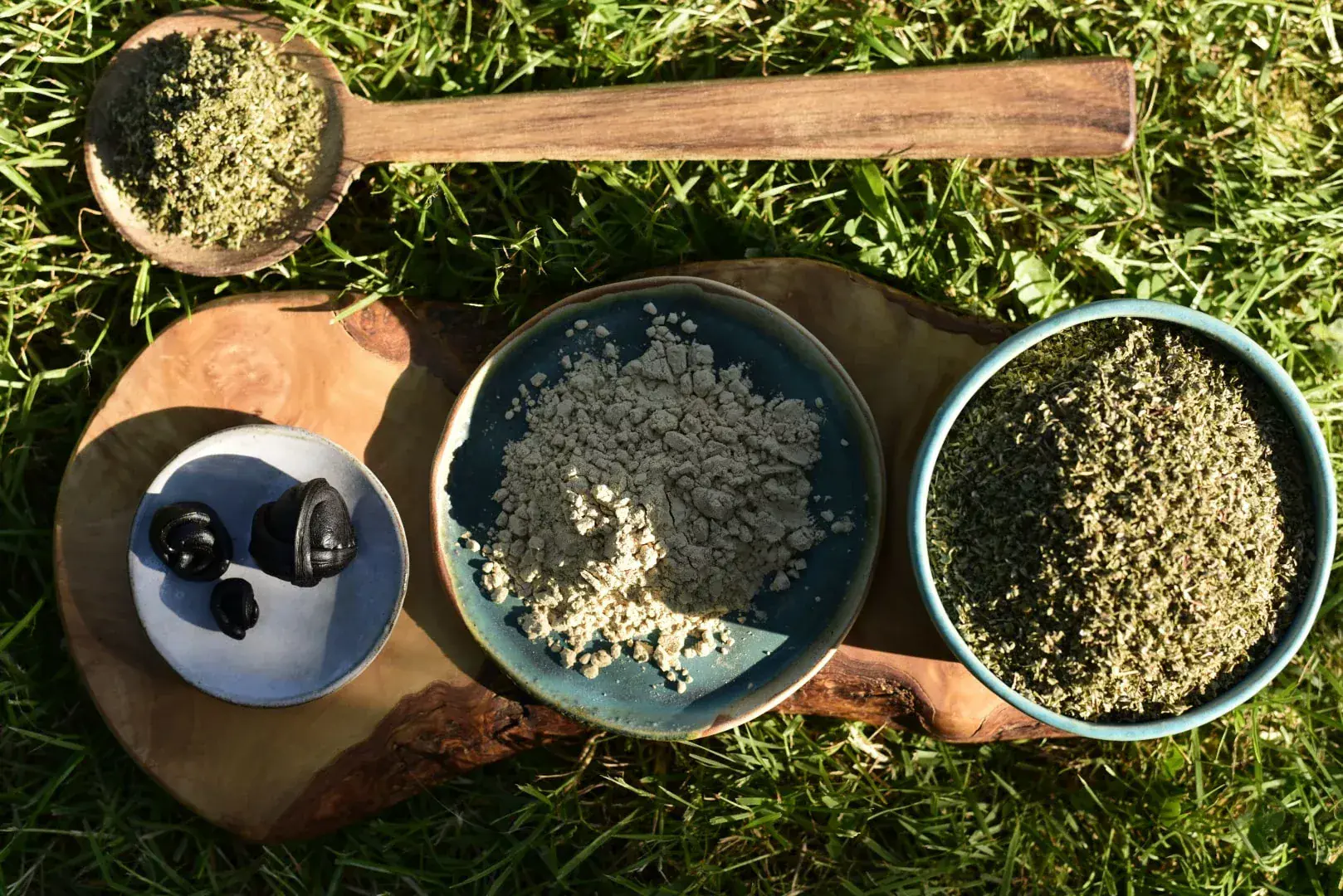
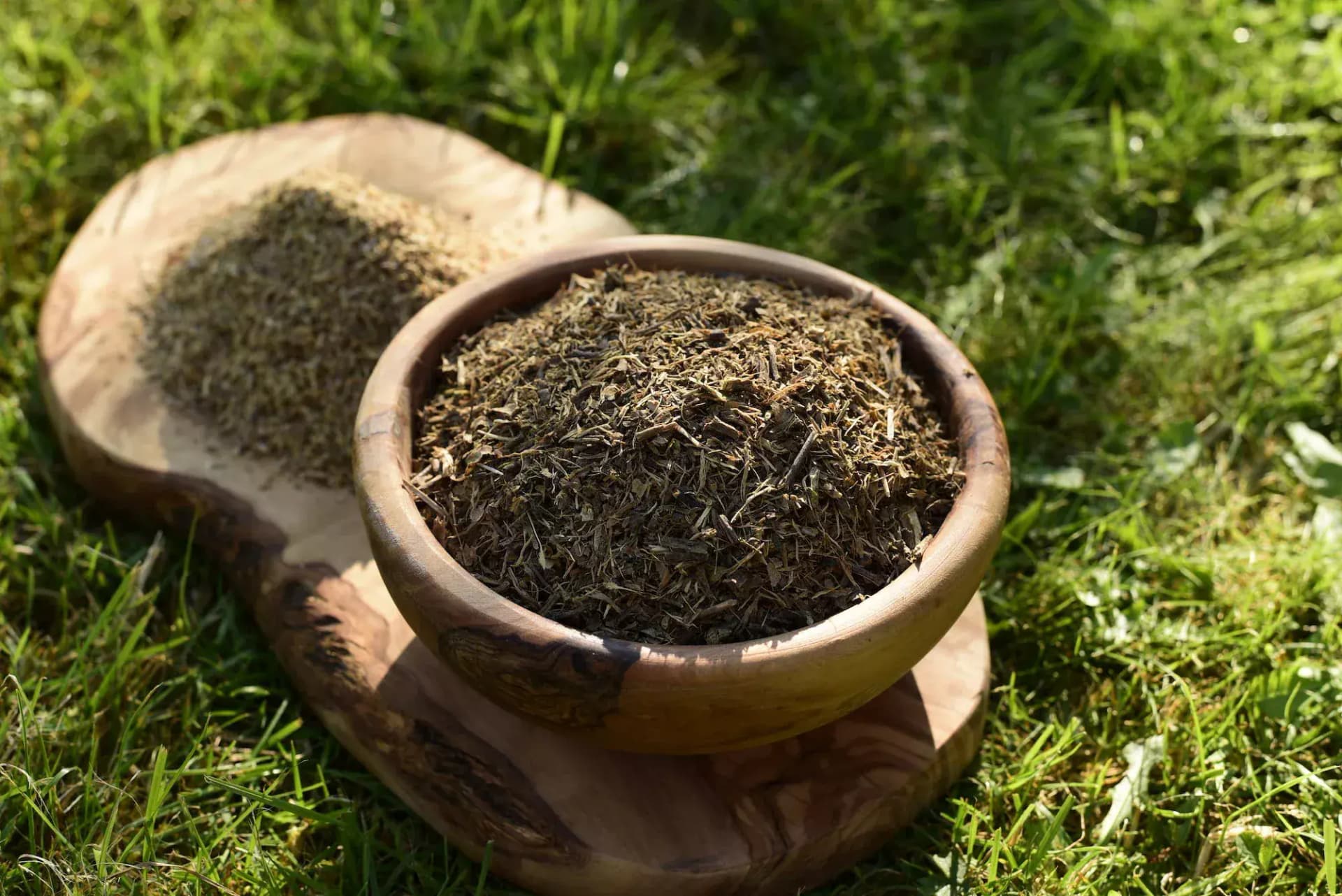
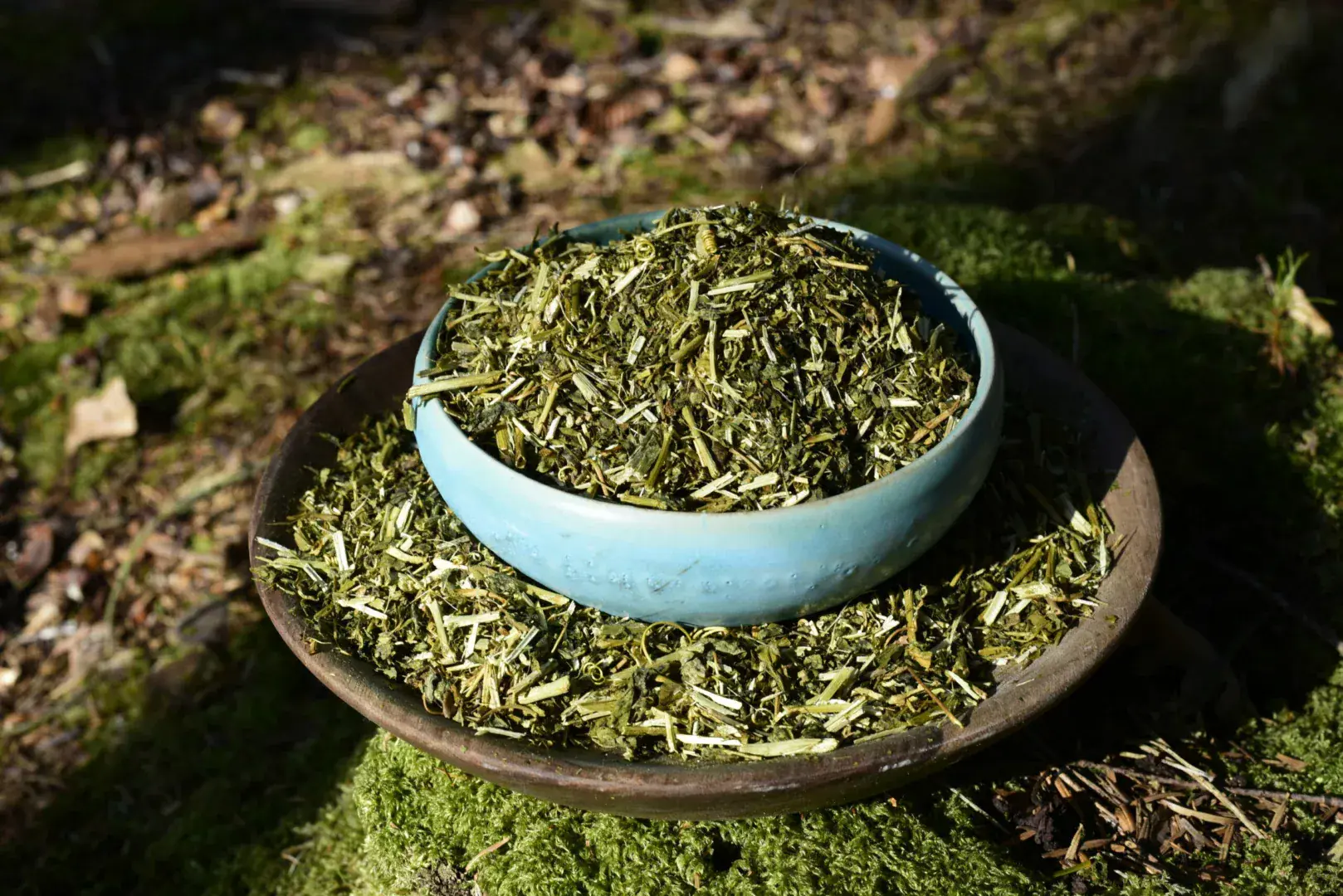
Officinal passionflower (Passiflora incarnata) is a perennial liana native to the southeastern United States, food and medicine for the Cherokee, who call her uwa'ga. She has a monograph in the European Pharmacopoeia. INFUSE offers her as whole leaves, powder extract and resin paste, harvested in France, organic.
Why is she called Passion Flower — what link with passion?
The word passion comes from Latin passio, from Greek pathos — "that which is endured, suffering". Around 1609 in Mexico, the Augustinian friar Emmanuel de Villegas read in the flower the Passion of Christ (the 5 anthers, the crown of filaments, the 3 stigmas, the tendrils, the 10 petals); in 1610 Giacomo Bosio, historian of the Order of Malta, published the allegory in Rome, and it spread across Catholic Europe. The name therefore evokes the passion-suffering of Christ rather than amorous passion.
What are the traditional uses of passionflower?
Three living lineages cross the history of the plant. Among the Cherokee, the maypop is food and medicine (raw fruits, pounded roots, boiled young shoots). Among the Aztecs in Mexico, Passiflora was described for her sedative, hypnotic and magical properties, and used as a potentiator of other preparations. In Europe, she has grown in gardens since the 17th century and today has a monograph in the European Pharmacopoeia, as well as one from the German Commission E.
How do I prepare a passionflower tea?
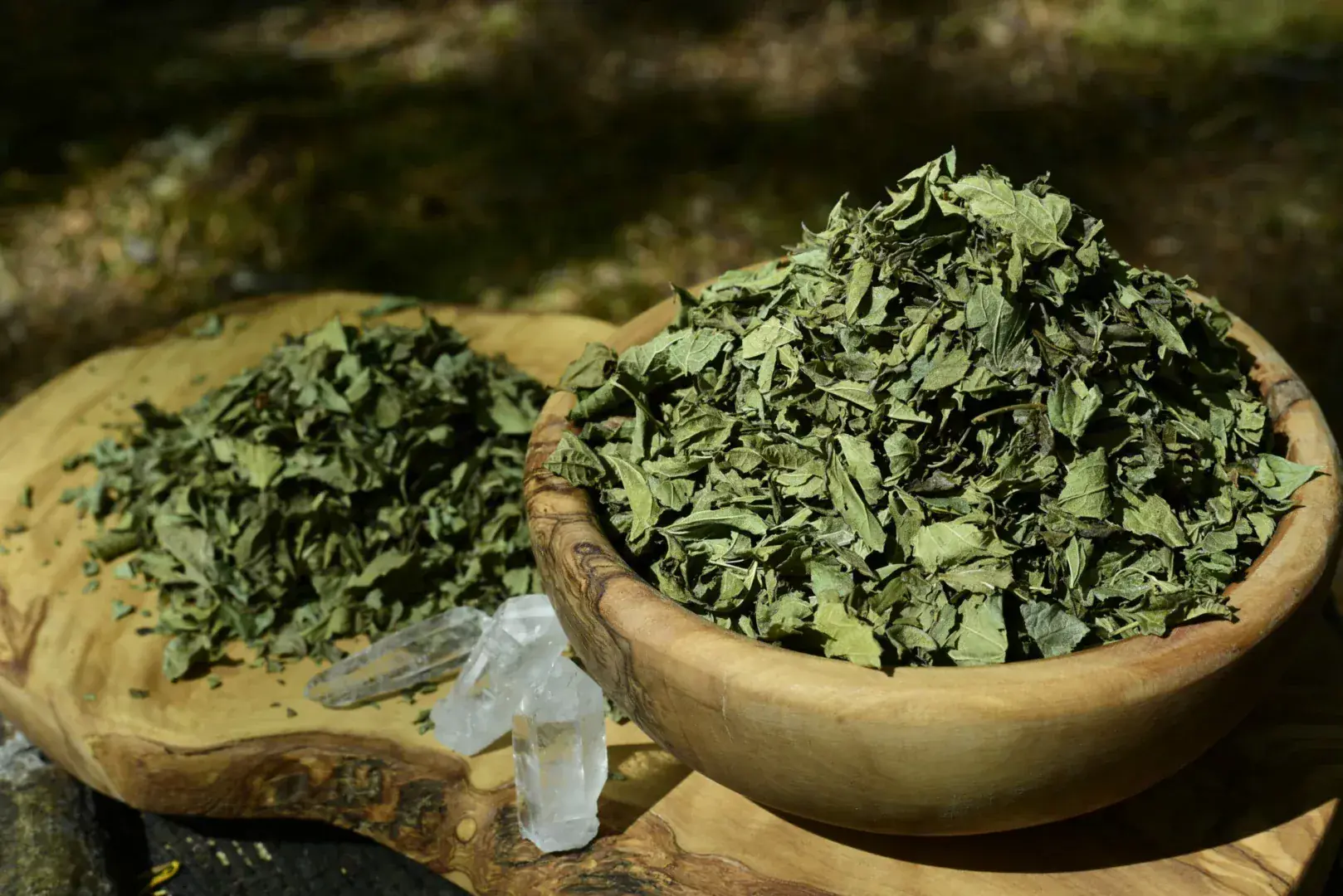
For whole leaves — 1 to 2 teaspoons in a cup of simmering water (~90°C), infuse 10 to 15 minutes, strain. To drink early evening or 30 minutes before bedtime. The leaves can be reinfused up to 3 times. For powder extract — 1 to 2 teaspoons in a warm drink. For resin paste — from the size of a grain of rice to that of a chickpea, under the tongue (stronger) or dissolved in a warm drink (~50-60°C).
How to use passionflower in the evening?
Drink the tea around 9 pm, low lights, no screens. The European Medicines Agency has published a monograph on passionflower (EMA, Passiflorae herba), which reserves her for adults and adolescents over 12. To combine with Mulungu and Chamomile for the Brazilian "Sleep Trinity" formula.
What are passionflower's active principles?
Flavonoids are her main compounds — chrysin, apigenin, vitexin, isovitexin, orientin, schaftoside. *In vitro*, chrysin and apigenin act on the GABA-A receptor at the benzodiazepine site. The plant also contains maltol (an aromatic compound) and traces of beta-carbolines (harmane, harmine, harmaline) at concentrations too low for clinical MAOI effect. Her chemical profile is complex.
What are the contraindications of passionflower?
Avoid in pregnancy and breastfeeding (lack of solid data). Avoid in combination with sedatives, benzodiazepines, barbiturates, prescription hypnotics (potentiating effect). Avoid with monoamine oxidase inhibitors (MAOI). Caution with anticoagulants (warfarin, aspirin, clopidogrel). Stop at least 2 weeks before scheduled surgery. Avoid before driving or operating machinery. Passiflora family allergy rare but possible. Long-term tolerance is poorly documented.
⊹ Chapter · Questions ⊹
Ask, answer, share.
One question, one answer — sometimes several voices. The community answers first; INFUSE steps in when it should.
Nobody has opened a thread yet about this plant. You can be the one — a real question, a use, a doubt, a detail.
Anonymous if you prefer.
In depthbotany · phytochemistry · history
Botany — the vine of five hundred species
Passiflora incarnata — purple passionflower, or maypop — is a perennial vine native to the southeastern United States. It is the state wildflower of Tennessee. The genus *Passiflora* counts around 500 species, almost all native to the New World tropics (the Caribbean, Central America and, above all, South America). P. incarnata is the main medicinal species; P. edulis gives the commercial passion fruit (maracujá).
The name "maypop" is English: the ripe fruit makes a loud pop when stepped on — a country onomatopoeia of the American Southeast.
The flower is strikingly complex: layered crowns (the corona of filaments), pistils, stigmas and stamens in purple and white.
A major ecological role: P. incarnata is a host plant for the caterpillars of several American butterflies — the Gulf Fritillary, the Zebra Longwing and the Variegated Fritillary. The leaves contain defensive compounds that make the caterpillars toxic to predators, while the caterpillars themselves withstand these defences.
Beware the confusion: Passiflora caerulea, the ornamental blue passionflower (from South America, widely grown in European gardens), is a different species, and the herbal tradition belongs to P. incarnata. Many European gardeners grow P. caerulea for its flower without knowing that the herbal use lies with its American cousin. P. incarnata is the species INFUSE offers — an important detail for sourcing.
A long history — Cherokee, Villegas, pharmacopoeia
The history of passionflower is one of sweeping symbolic reappropriations.
Cherokee: for the Cherokee of the southeastern United States, the maypop — uwa'ga in Cherokee — is a food and medicinal plant. Documented uses cover food (the fruit, eaten raw or as juice, and the young shoots, boiled and fried) and medicine (the pounded roots for the skin, the liver and earache, and to help wean babies). The Houma of Louisiana drank a root infusion as a blood tonic. The Ocoee River in Tennessee takes its name from Uwagâ'hi, "the place of the maypop", and hosted the whitewater slalom events of the 1996 Atlanta Olympics.
Villegas and Bosio, 1609–1610: around 1609, Emmanuel de Villegas, an Augustinian friar in Mexico, sent drawings of the flower to Rome, reading in it the instruments of Christ's Passion. In 1610, Giacomo Bosio, historian of the Order of Malta, published them in his treatise on the Cross (La trionfante e gloriosa croce), and the allegory spread across Catholic Europe.
Modern pharmacopoeia: passionflower reached European gardens in the 17th century as a botanical curiosity. Today it has a monograph in the European Pharmacopoeia, and both the German Commission E and the European Medicines Agency have published monographs on it.
Darwin: Charles Darwin was fascinated by passionflower tendrils. In The Movements and Habits of Climbing Plants (1875), he describes the tendrils of Passiflora gracilis, remarkably sensitive to touch, which sweep the air in search of a hold.
Safety notes
Passionflower is generally well tolerated at traditional doses. Documented precautions:
- Pregnancy and breastfeeding: to be avoided — solid data are lacking, and some sources mention a theoretical mild effect on the uterus.
- Sedatives, benzodiazepines, prescription sleeping pills: documented potentiation — combine only with caution, and always under medical supervision.
- Alcohol: potentiation — avoid the combination.
- MAOIs (monoamine oxidase inhibitors): to be avoided (Winston & Maimes, p. 226).
- Anticoagulants (warfarin, aspirin, clopidogrel): caution — theoretical risk of potentiation.
- Before scheduled surgery: stop at least 2 weeks beforehand.
- Driving and operating machinery: to be avoided after taking it (possible sedative effect).
- Allergy to the passionflower family (Passifloraceae): very rare but possible.
Possible side effects at high doses: mild headaches, digestive upset (rare in the literature). Long-term tolerance is poorly documented.
Do your own research (DYOR): consulting a health professional is recommended in case of a medical condition or ongoing treatment, and before stopping any psychotropic medication.