Entada rheedii (Entada rheedei): the African dream bean
Entada rheedii is a giant climbing vine of the pea family whose seeds float and travel the sea for years. In South Africa, diviners use it to remember dreams, and a pipe carved from the seed was said to bring vivid dreams. Raw, the seed is toxic; no study has measured its effect on dreaming.
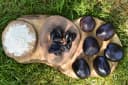 The plant of this articleEntada Rheedii — African Dream Bean · Entada rheedii4.9(122)from €4.00View →
The last sovereign territory. You enter through the plants, through silence, through a return to the dreams of the elders.
tagline · path
| Key point | What is known |
|---|---|
| Accepted name | Entada rheedei Spreng.; Entada rheedii is the most common spelling |
| Family | Fabaceae, the pea and bean family |
| Names | African dream bean; dream seed; umbhone (Zulu); inkwindi; intindile; snuff-box sea bean; sea heart |
| Range | tropical Africa, Madagascar, South and Southeast Asia, Australasia |
| Part used | the seed: carried whole, or its flesh prepared |
| Dream use | diviners in South Africa, to remember dreams |
| Chemistry | saponins (rheedeiosides), thioamides (entadamides); no study on dreaming |
| Main precaution | the seed is toxic raw |
| At INFUSE | whole wild-harvested seeds from Thailand: the same species as in southern Africa |
What is Entada rheedii?
Entada rheedii is a large tropical vine of the pea family (Fabaceae), known for its glossy brown seeds, which South Africa links to the memory of dreams. The name accepted by the reference floras is Entada rheedei Spreng.; the more common spelling rheedii honours the same botanist, Hendrik van Rheede. Its pods are among the largest in the pea family.
In English it is called the African dream bean, the sea heart or the snuff-box sea bean. INFUSE offers it on the Entada rheedii page.
Why is the seed said to have crossed the seas?
Because it floats: its hard, watertight coat lets it drift on the ocean for years before washing ashore and germinating. This dispersal by sea, thalassochory, carried the vine to tropical coasts, from Mozambique to Madagascar, from India to Vietnam and on to Australasia, long before human voyages.
The journey gave the seed its names. In Europe, in the nineteenth century, seeds washed up on Atlantic beaches were mounted as snuffboxes, hence the English name snuff-box sea bean. The seed that South African diviners carry for dreaming has already travelled the oceans.
What does tradition say about Entada and dreams?
In South Africa, diviners use the seed to remember their dreams, and tobacco smoked in a pipe carved from the seed was said to bring vivid dreams. Both uses are reported by Sobiecki (2008), after Manana (1968) and Van Wyk and Gericke (2000); its Zulu name is umbhone. The written record comes down to these two mentions.
Dreams are central for Zulu diviners, the izangoma (sangoma in the singular): the amadlozi, the ancestors, speak through them, and an apprentice, the ithwasa, discovers the calling through them. Ethnographers describe this setting well; the precise place of Entada within it is not documented. In the sources we read, the seed is the vessel that brings the dream, the pipe, more than the substance.
Elsewhere the vine has other lives: its saponin-rich seed was used as soap, and folk medicinal uses are reported in Indonesia, India, Vietnam and Madagascar, which we do not detail here.
What does science say about Entada rheedii?
No study has measured the effect of Entada on dreaming. The chemistry of the seed is partly known: saponins, the rheedeiosides, thioamides, the entadamides, and phenolic compounds. The saponins explain why the raw seed is toxic and why it was once used as soap; none of these compounds has been linked to dreaming. The mechanism of any dream effect is therefore unknown, and here tradition is far ahead of science.
Lucky charm, talisman: where does this use come from?
Many people keep the seed whole, unopened, as a talisman or lucky charm: in a pocket, around the neck, under the pillow. This practice is alive among our dreamers and in several countries, from the wawa to the sea heart. This African dream seed is traditionally considered a powerful luck charm: luck charms in African traditions mean that you'll attract the blessings of the Spirits wherever you go, and be protected from negative influences.
At the House, it is the first step: carry the seed for a few weeks, entrust it with your intentions, before opening its flesh.
How is the Entada seed prepared?
The seed is first carried whole; once opened, its inner flesh is prepared cooked or steeped, in small amounts, never raw. In the reported tradition, the seed serves as a pipe; among our dreamers, the flesh is also smoked in small amounts with mugwort, or steeped in the evening. Amounts and detailed precautions: see the Entada rheedii page.
As for all dream medicines, at the House we use Entada over 3 to 7 consecutive evenings, to deeply infuse yourself in its magic; as a tea, the kernel is divided into five portions, one for each night. The market speaks of an "African dream stack" for the pairing of Entada, Undlela Ziimlophe and mugwort.
Is Entada dangerous?
Raw, the seed is toxic: rich in saponins, it is only eaten after cooking and leaching, and its flesh is taken in small amounts.
- Raw seed: never.
- Pregnancy and breastfeeding: avoid.
- Children: no.
- Ongoing treatment (antidepressants, sedatives, opioids): medical advice before the plant.
- Driving: not after taking it.
- The law: the seed is sold freely in France and the European Union.
What is said about Entada?
Around the seed live the words of diviners, sellers and travellers.
- Among Zulu diviners, it is said, the seed is smoked at dusk during the ukubhula, the divination session, with imphepho lit, and the dream is read in the morning.
- Ithwasa apprentices are said to take it night after night to receive the teaching of the amadlozi.
- The hollowed shell becomes the isikhumbo, a sacred snuffbox handed down for generations and never sold, so the story goes; in Europe too, snuffboxes were carved from these seeds.
- Sellers speak of the grated flesh taken in beer; raw, the seed remains toxic.
- The seed drifts at sea for years before it germinates.
What do dreamers say about Entada?
Of the 174 night stories left by our customers, 11 are about Entada: vivid dreams, several dreams remembered in the same night, one lucid dream, and 4 people who noticed nothing (count from September 2026).
"I can remember multiple dreams very vividly, because of this I was able to receive a lot of messages." — Samonyai
All the stories, plant by plant: our dreamers' accounts.
Entada africana or Entada rheedii: is it the same plant?
They are two species of the same genus. Entada africana is a tree of the African savannas; the dream seed comes from the vine Entada rheedei.
Can you eat the Entada seed?
Never raw: it is toxic. The inner flesh is prepared cooked or steeped, in small amounts.
Can you germinate the seed?
The seed is alive and can germinate in good conditions; INFUSE sells it for ritual use, not as seed stock.
How long do you carry the seed before opening it?
At the House, a few weeks: the time it takes to fill it with your intentions. Some never open it and keep it as a talisman.
Sources
- Sobiecki J.F. (2008). A review of plants used in divination in southern Africa and their psychoactive effects. Southern African Humanities 20:333-351. sahumanities.org
- Van Wyk B.-E., Gericke N. (2000). People's Plants: A Guide to Useful Plants of Southern Africa. Briza, Pretoria.
- Manana C.J. (1968). Umongo Wolwazi. African Medical Herbs. Durban.
- Sobiecki J.F. (2012). Psychoactive ubulawu spiritual medicines and healing dynamics in the initiation process of Southern Bantu diviners. Journal of Psychoactive Drugs 44(3):216-223. doi:10.1080/02791072.2012.703101
- Wikipedia, Entada rheedii (accepted name, range, dispersal by sea). en.wikipedia.org
Further reading
- The best herbs for lucid dreaming, the guide to dream plants
- Dream herbs
- Undlela Ziimlophe, the root of the white paths
- Calea zacatechichi, the Chontal herb of dreams
- Imphepho, the telephone to the spirits
- Mugwort, the oldest of herbs
- Our dreamers' accounts
 4.9(122)from €4.00View →
You have a story to drop into the Forest too?
Share a story →270 min déjà parcourues · 276 min jusqu'au seuil de retour
What this reading opened
Be the first voice. Each word is read before joining.
Sign in to share what this reading opened in you.
Sign in →