Shamanic dreaming: the dream that calls, teaches and searches
Among many peoples, the dream calls the future shaman, teaches them, and searches for what waking life cannot find. What the sources report, from Xhosa diviners to the Chontal, the Kichwa and the Iroquois.
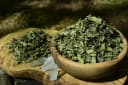 The plant of this articleCalea Zacatechichi · Calea zacatechichi (Calea ternifolia)4.8(280)from €7.20View →
The last sovereign territory. You enter through the plants, through silence, through a return to the dreams of the elders.
Short answer. Among many peoples, the dream is a tool of the shaman's craft: it calls them, it teaches them, and it serves to search for what waking life cannot find (Perrin, 1994; Laughlin and Rock, 2014). Three plants of the House come from those nights: Calea of the Chontal, Undlela Ziimlophe of the Xhosa diviners, guayusa of the Kichwa.
The dream that calls
The anthropologist Michel Perrin asked the question in 1994: why does the dream hold a key place in the election of the shaman? Twenty years later, Charles Laughlin and Adam Rock surveyed the cultures and arrived at the same place: dreaming invites shamanism.
Some languages say as much. In Mohawk, atetshents means "one who dreams", and the same word names the shaman and the doctor (Moss, 2012). Among the Sioux, John Lame Deer tells how you become a pejuta wicasa, a medicine man, because a dream tells you to (Lame Deer and Erdoes, 1972).
In South Africa, Hirst worked with Xhosa diviners and their novices. Ubulawu, roots beaten in water until they rise into a white foam, accompanies the initiation (Sobiecki, 2012).
In the Upper Amazon, doña María is eighteen in September 1958. She drinks a lemongrass tea, lies down at about four in the afternoon and dreams of a hospital of the spirits, where she is given the corona de medicina, the crown of medicine. Other mestizo shamans tell of this journey (Beyer, 2009).
Not everyone gives the dream the same rank. Among the Andaman Islanders, Eliade reports, those who have had only dreams obtain lesser powers (Eliade, 1964). And Lame Deer, who owes his calling to a dream, says elsewhere: "Anybody can dream." For him, the real vision comes with your eyes open.
The dream that teaches
Among Xhosa diviners and their neighbours, the ancestors speak to the novice through dreams, and ubulawu helps them remember those dreams better (Bührmann, 1984; Sobiecki, 2012). Our article on Undlela Ziimlophe tells the story of this root. David Cumes, a surgeon initiated in South Africa, writes that a sangoma may see in a dream the plant she will later dispense (Cumes, 2004).
A related school exists in the Peruvian Amazon, where the teaching comes from the plant itself. In Iquitos, Luis Eduardo Luna interviewed four mestizo shamans in 1984: during isolation and the dieta, these plants, held to be teachers, pass their songs, the icaros, on to the apprentice. The spirits, he adds, present themselves during the visions and during the dreams (cited by Narby, 1998). Stephan Beyer describes the same school in 2009. As a boy, don Francisco Montes Shuña kept the ajo sacha diet: on the first night he dreamt of a queen crowned with gold, with hands of branches; on another night she whistled him the melody of an icaro.
The dream that searches
Among the Chontal of Oaxaca, Calea is called thle-pela-kano, the leaf of God. Curanderos take it to receive messages in dreams: the cause of an illness, a person far away or lost (Díaz, 1979; Mayagoitia et al., 1986). The leaves are smoked, drunk as a tea and placed under the pillow.
Zulu has a word for the plants that initiates take in order to dream of the ancestors: bonisele, from bona, to see. "To see on my behalf", or "to show me the light" (Sobiecki, 2008).
The dream we tell each other
Among the Kichwa of Ecuador, the wayusa upina gathers the family before dawn: they drink guayusa and interpret the night's dreams. Also in Ecuador, Eduardo Kohn followed the Runa as far as the reading of their dogs' dreams (Kohn, 2007).
Further north, the seventeenth-century Iroquois held the dream to be the voice of the soul's secret desires, and the community took care of it. Anthony Wallace described this in 1958. Father Ragueneau had noted the word among the Hurons in 1648: ondinnonk. Whoever dreams of a javelin tries to obtain it; whoever dreams of giving a feast gives one on waking (cited by Moss, 2009).
The plants of those nights
The sources promise nothing: at low doses, Hirst writes, Undlela Ziimlophe brings dreams only to highly sensitive subjects (cited by Sobiecki, 2008), and Sobiecki had no dreams in two weeks of ubulawu (Sobiecki, 2012).
Our words, from the very first product pages. On the Ubulawu family: after three to five days with these medicines, with prayers and respect, the Dream Gates open up. On the Entada seed: "The Dream Seed brings lucidity and intensity in the dream world, often offering spectacular dreams and initiations for the Soul."
The House sells plants and tells where they come from. The shaman's craft is handed down within lineages.
What is shamanic dreaming?
Dreaming as shamans and diviners practise it: it calls them to the craft, it teaches them, and they use it to search for a cause, a person, an answer (Perrin, 1994; Laughlin and Rock, 2014).
How is it different from lucid dreaming?
Lucid dreaming is knowing that you are dreaming while you dream; our method goes into it in detail. In the sources on shamans, the question is what the dream brings: who appears in it, what is said in it, what is done with it in the morning. Harry Hunt notes that the shaman is often said to be "awake" during his or her dream (Hunt, 1989).
What about the Senoi, and Castaneda?
Hunt places Kilton Stewart's Senoi and Carlos Castaneda's accounts among those held to be fiction: the Senoi do not teach their children to steer their dreams (Domhoff, 1985, cited by Hunt, 1989).
Can you dream this way without a plant?
Yes. The calling that Perrin, Laughlin and Rock describe comes through the dream itself. The plant accompanies the night where a lineage has placed it.
Which plants are linked to dreaming in these traditions?
Are there precautions?
Each product page carries its own. During pregnancy and breastfeeding, Calea is set aside: the data are lacking.
Sources
- Perrin M. (1994). Quelques relations entre rêve et chamanisme. Anthropologie et Sociétés 18(2):29-42.
- Laughlin C.D., Rock A.J. (2014). What can we learn from shamans' dreaming? A cross-cultural exploration. Dreaming 24(4):233-252. doi:10.1037/a0038437.
- Hirst M. (2005). Dreams and medicines: the perspective of Xhosa diviners and novices in the Eastern Cape. Indo-Pacific Journal of Phenomenology 5(2):1-22.
- Sobiecki J.F. (2008). A review of plants used in divination in southern Africa and their psychoactive effects. Southern African Humanities 20:333-351.
- Sobiecki J.F. (2012). Psychoactive ubulawu spiritual medicines and healing dynamics in the initiation process of southern Bantu diviners. Journal of Psychoactive Drugs 44(3):216-223.
- Bührmann M.V. (1984). Living in Two Worlds. Human & Rousseau.
- Luna L.E. (1984). The concept of plants as teachers among four mestizo shamans of Iquitos. Journal of Ethnopharmacology 11:135-156.
- Beyer S.V. (2009). Singing to the Plants. University of New Mexico Press.
- Díaz J.L. (1979). Ethnopharmacology and taxonomy of Mexican psychodysleptic plants. Journal of Psychedelic Drugs 11:71-101.
- Mayagoitia L., Díaz J.L., Contreras C.M. (1986). Psychopharmacologic analysis of an alleged oneirogenic plant: Calea zacatechichi. Journal of Ethnopharmacology 18:229-243. PMID 3821139.
- Rätsch C. (2005). The Encyclopedia of Psychoactive Plants. Park Street Press.
- Kohn E. (2007). How dogs dream: Amazonian natures and the politics of transspecies engagement. American Ethnologist 34(1):3-24.
- Wallace A.F.C. (1958). Dreams and the wishes of the soul. American Anthropologist 60:234-248.
- Eliade M. (1964). Shamanism: Archaic Techniques of Ecstasy.
- Lame Deer J., Erdoes R. (1972). Lame Deer, Seeker of Visions.
- Moss R. (2009). The Secret History of Dreaming; (2012). Dreaming the Soul Back Home.
- Cumes D. (2004). Africa in My Bones.
- Narby J. (1998). The Cosmic Serpent.
- Hunt H.T. (1989). The Multiplicity of Dreams.

Receive our weekly letter.
You have a story to drop into the Forest too?
Share a story →What this reading opened
Be the first voice. Each word is read before joining.
Sign in to share what this reading opened in you.
Sign in →