⊹ To weave around
To accompany Sinicuichi
Click a card to see why it pairs — and choose your form.
Read it through your world
The whole page is read through this lens.
✦ Sinicuichi · in one breath ✦
A gentle awakening of memory and intuition — memory, dream, a quiet joy.
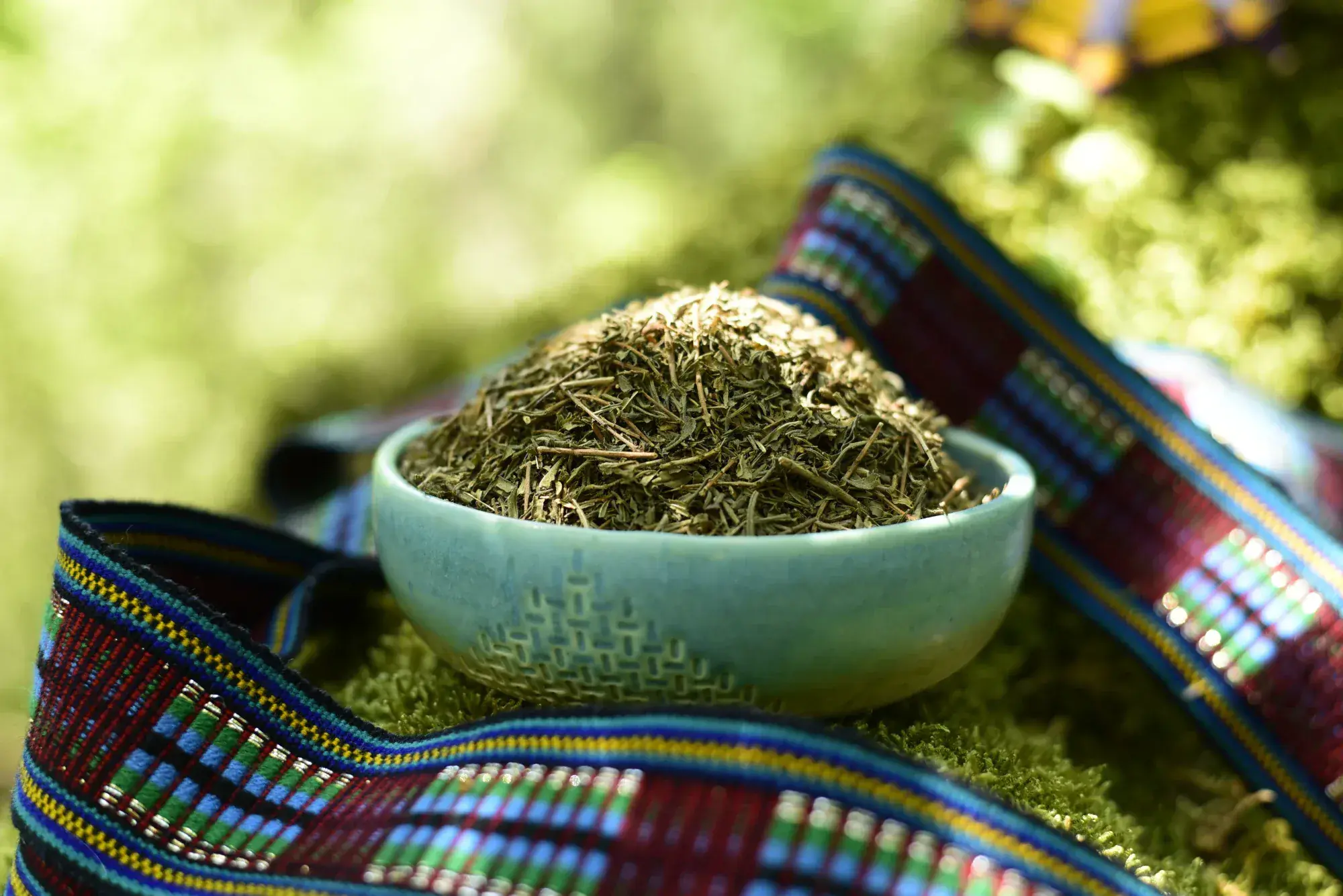
⊹ The path of the plant
⊹ Community voices
What the community murmurs.
No testimony yet for this plant — nothing invented, nothing fabricated. If you have met it, your account can open the way for those who come after.
Ask the Forest about Sinicuichi
408 books digested, 97,512 indexed passages. She answers on lineages, synergies, cautions, ritual variations.
⊹ FREQUENT QUESTIONS ⊹
We answer.
What is sinicuichi (Heimia salicifolia)?
Sinicuichi (or sinicuiche) is a yellow-flowered shrub, Heimia salicifolia, of the Lythraceae family, growing from the southern United States to Argentina. Rätsch also records the folk name yerba de las ánimas, herb of the souls. Its reputation, memory and distant sounds, goes back to Calderón (1896) and Reko (1936).
Sinicuichi or sinicuiche: which spelling?
Both name the same plant, Heimia salicifolia. Sinicuiche is the most common spelling in Mexico; you will also read sinicuichi, and in English, sun opener.
What are the effects of sinicuichi?
What is reported: a pleasant relaxation, the world tinted yellow, sounds that seem to come from far away, old memories rising (Calderón 1896; Reko 1936). What has been measured: Malone and Rother (1994) found its alkaloids, taken by mouth, lacking the effect attributed to them. Calderón himself felt nothing.
How do you prepare sinicuichi as an infusion?
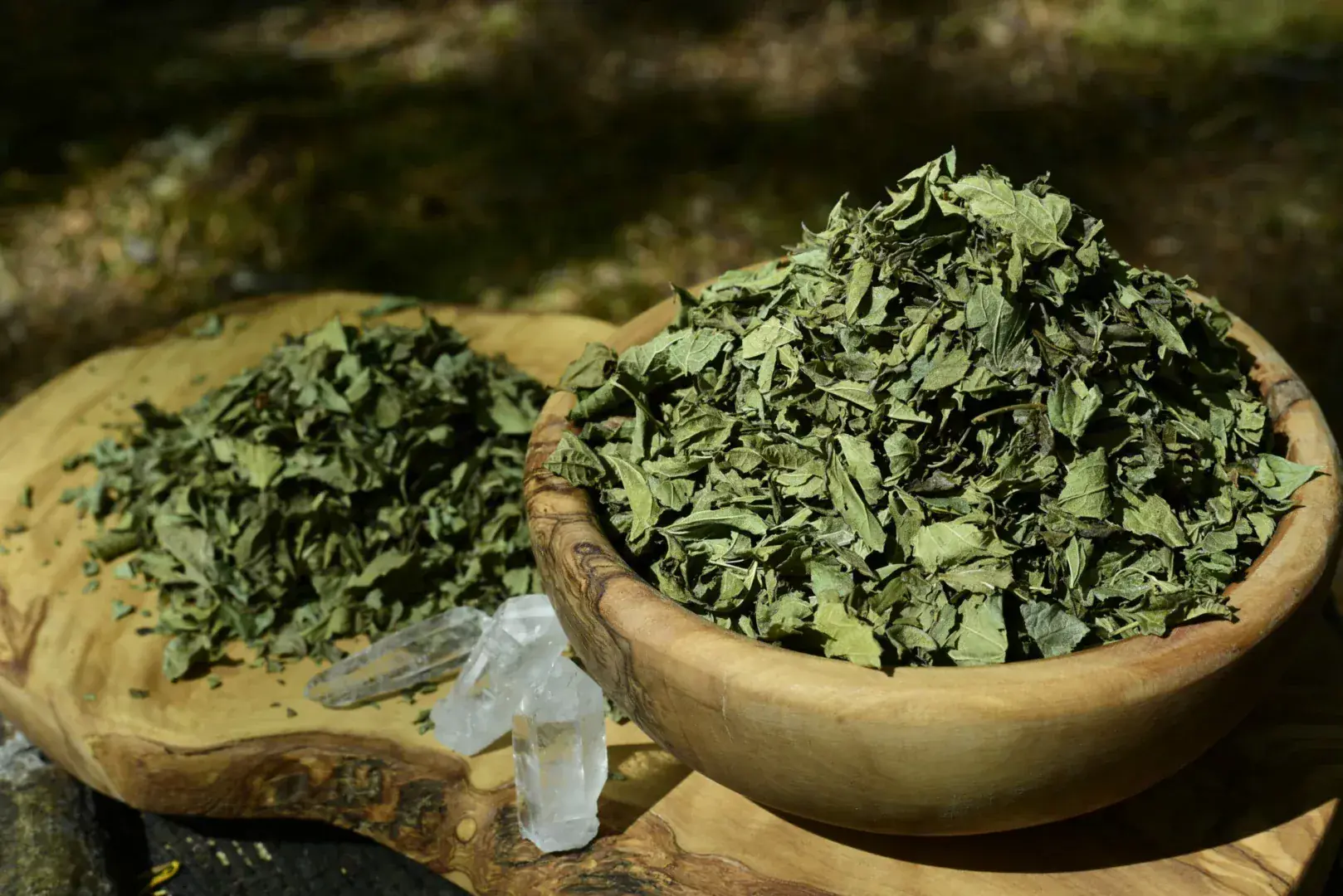
For INFUSE's infusion — 1 teaspoon of whole leaves in steaming water around 80 °C, steep 5 to 10 minutes, rather in the evening. The more complete traditional method is the fermented elixir — leaves lightly wilted in the sun then left to macerate 24 to 48 hours in fresh covered water.
Is sinicuichi a dream herb like Calea?
Calea has a documented dream use among the Chontal and a human trial. Sinicuichi mostly carries a reputation for memory, with no known traditional ritual use (Rätsch 2005). For the House, it is the plant called upon to recall dreams and times past.
Is sinicuichi dangerous?
At traditional doses it is generally well tolerated, but its active compounds influence prostaglandin hormones — it is therefore contraindicated during pregnancy and breastfeeding, and not advised with alcohol, sedatives or antidepressants. It is not a daily plant.
Why is it called the sun opener?
"Sun opener" is one of its folk names in English; its origin is not documented in the sources we have read. It echoes two things: some have proposed that the plant is the tonatiuh yxiuh, the "herb of the sun", of an Aztec herbal of 1552, an identification that remains a hypothesis; and Calderón reported that the world was said to turn yellow under its effect.
Where does INFUSE's sinicuichi come from?
Heimia salicifolia is a shrub native to Mexico through to Argentina.
Where to buy sinicuichi (sun opener)?
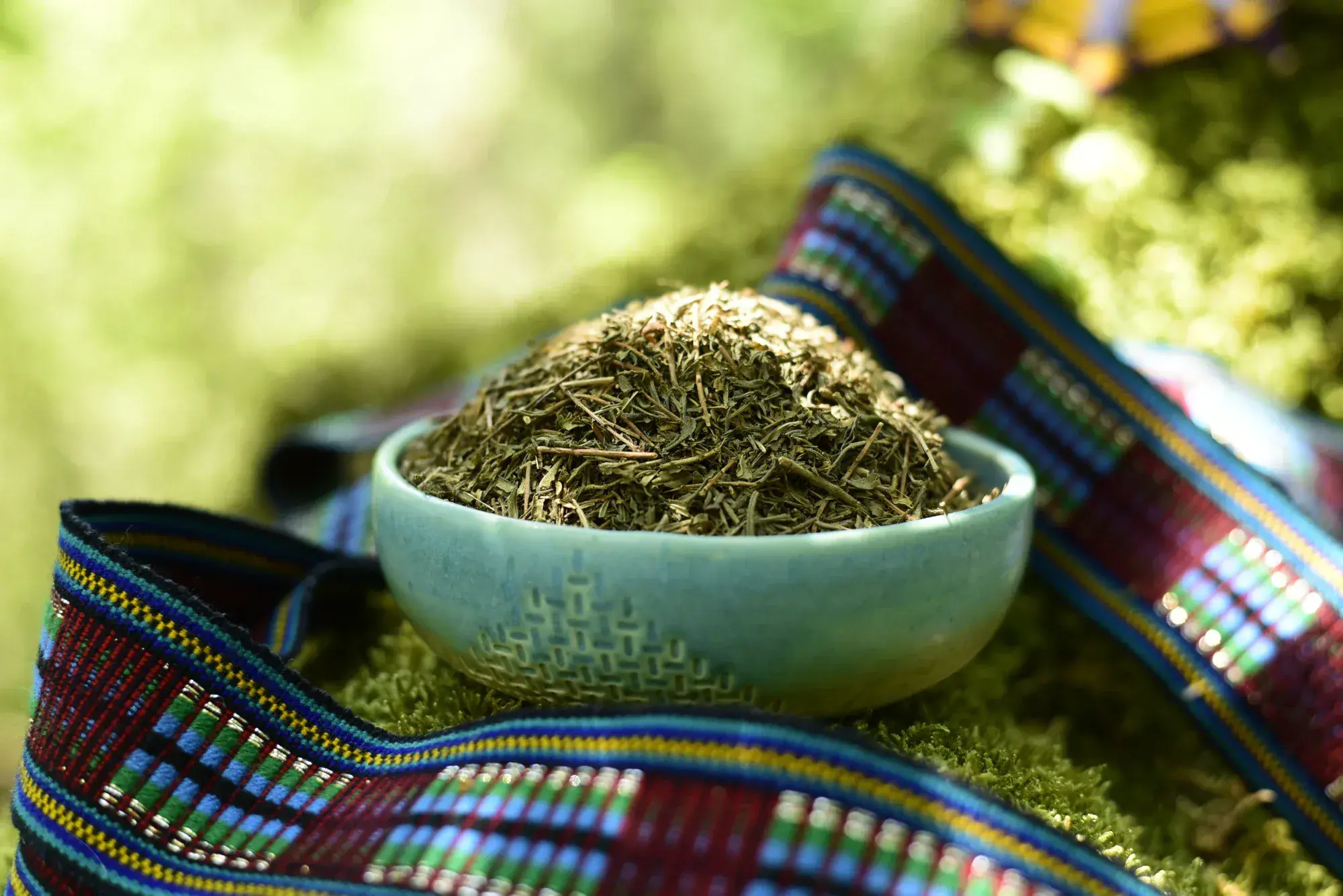
Here: whole sinicuichi leaves (Heimia salicifolia), for an evening tea or the traditional fermented elixir. One teaspoon is enough for a cup.
How often should sinicuichi be used?
The House keeps it for chosen, spaced-out moments, once or twice a month. Start small, as a simple infusion, to discover your own sensitivity.
Is sinicuichi psychedelic?
No such activity has been demonstrated: Malone and Rother (1994) found its alkaloids, taken by mouth, lacking the effect attributed to them, and Calderón, who started its reputation in 1896, felt nothing. We offer it as a plant of memory and dream, to discover gently.
Is sinicuichi legal?
It is freely sold in France. Check the law in your country.
⊹ Chapter · Questions ⊹
Ask, answer, share.
One question, one answer — sometimes several voices. The community answers first; INFUSE steps in when it should.
Nobody has opened a thread yet about this plant. You can be the one — a real question, a use, a doubt, a detail.
Anonymous if you prefer.
In depthbotany · phytochemistry · history
For those who want to go below the page: botany, chemistry, then four voices, each one named. ◆ what the tradition left in writing, ◇ what research has measured, ● what our dreamers tell us, ☾ what the House says.
Botany
Heimia salicifolia (Kunth) Link is a shrub of the Lythraceae, with narrow, willow-like leaves (salicifolia, "willow-leaved") and small yellow six-petalled flowers. Her range runs from the south-western United States through Mexico to Argentina; she likes damp, sunny ground. In English she is called sinicuichi or sun opener. The name is an old source of confusion: as early as 1926, Reko noted that sinicuichi also named other plants, among them Erythrina coralloides, Piscidia erythrina and species of Rhynchosia.
Phytochemistry
More than a dozen quinolizidine alkaloids have been identified (Malone & Rother 1994). The main one is vertine (also called cryogenine), with lythrine, nesodine, lyfoline and others, alongside tannins and flavonoids. Vertine shows a calming (ataractic), anti-inflammatory — partly through inhibition of prostaglandin synthase — and antispasmodic action.
◆ The documented tradition
It comes down to a reputation. In 1896, Calderón reported that its drink was said to turn the world yellow and make sounds seem to come from far away; he tried it and felt nothing. Reko later described the preparation: wilted leaves, fermented in the sun for at least a day (Reko 1936). Rätsch knows of no traditional ritual use (Rätsch 2005, p. 267). It is the most mysterious of our dream herbs, and the least demonstrated.
◇ Sinicuichi effects: what the studies say
Malone and Rother (1994) found its alkaloids, taken by mouth, lacking the effect attributed to them. Vertine, its main alkaloid, proved calming and anti-inflammatory in the lab.
● Our dreamers
This plant has no review published on INFUSE yet.
☾ The House
Keeper of Memories and Guide to the Inner Realms, Sinicuichi is a mystical revealer of hidden truths — an oracle of forgotten times. Known as the Plant of Memory and Vision, used to recall dreams or past events.
Folk medicine
Popular Mexican medicine used Heimia for other purposes, well before its reputation reached the dream: against syphilis, to bring on sweating, to lower fever, as a laxative and a diuretic, and in baths after childbirth (Malone & Rother 1994).
Sinicuichi side effects and precautions
At the doses of popular use (a few grams of leaf as an infusion or in a fermented preparation), sinicuichi is generally well tolerated. A published case describes a 26-year-old man who drank a tea fermented for 24 hours with yeast and sugar: muscle pain and a mild fever, and he went home the next day (Kempf et al. 2008, Forensic Science International). As her compounds act on prostaglandins, and as she was used historically to bring on menstruation, she is not for use during pregnancy or breastfeeding. Avoid combining her with alcohol, sedatives, serotonergic antidepressants and blood-pressure medication. A fermented preparation calls for strict hygiene (a clean jar, good water). Take her with discernment, in cycles of intention.
The monograph on sinicuichi tells the sun opener and its reputation for memory in full; our guide to the best herbs for lucid dreaming places it among the other dream herbs, and our dreamers' accounts are waiting for its first stories.
Sources: Malone M.H. & Rother A. 1994, Journal of Ethnopharmacology 42:135-159 · Kempf J. et al. 2008, Forensic Science International 179:e57-61 · Calderón J.B. 1896 and Reko V.A. 1936, as reported in the literature on Heimia · Wasson R.G. 1973.
Sources for the four voices: Malone M.H. & Rother A. 1994, "Heimia salicifolia: a phytochemical and phytopharmacologic review", Journal of Ethnopharmacology 42:135-159 · Rätsch C. 2005, The Encyclopedia of Psychoactive Plants, pp. 266-268.