Ashwagandha, the strength of the horse
In Sanskrit, ashva, the horse, and gandha, the smell: the root of Ayurveda that smells of horse. Its name, its legend, its botany, and the powder we whisk into warm morning milk.
 A planta deste artigoAshwagandha · Withania somnifera4.8(22)desde € 6,86Ver →
The quiet kingdom — roots, polypores, mycelium. The resilience of the living, ready for every day.
Tradução portuguesa a caminho — este artigo é apresentado noutra língua.
Ashwagandha is one of the major plants of Ayurvedic medicine. Its name is a transliteration of the Sanskrit for "the smell of the horse", after the smell of the root: ashva, the horse; gandha, the smell. Fresh, the root smells of the stable, of a horse's wet coat after rain. It is also translated, more freely, as "the strength of the horse".
A cousin of the tomato
Withania somnifera belongs to the Solanaceae, the nightshade family of the tomato, the aubergine and the potato. It is a small shrub with downy, grey-green leaves and discreet, greenish-yellow flowers. Its orange-red berries ripen inside a papery calyx, like little lanterns: hence its English name, winter cherry. Linnaeus described it in 1753 in the genus Physalis, the genus of the Cape gooseberry and the Chinese lantern; in the nineteenth century the botanist Dunal moved it to the genus Withania.
It likes dry, poor soils, along a long belt that runs from North Africa and the Middle East to the Indian subcontinent. Its root is slender and smooth, pale beige, some thirty centimetres long. That is the part harvested, dried and ground. In the West it was nicknamed "Indian ginseng"; botanically, it belongs to a different family from ginseng.
A rasayana of Ayurveda
Ashwagandha is named in the founding treatises of Ayurveda, the Charaka Samhita and the Sushruta Samhita. Ayurveda places it among the rasayana plants, after one of the eight branches of this medicine. The word translates as "the path of the essence": rasa, the sap, the essence; ayana, the way.
Ayurvedic authors also describe each plant by its tastes and its nature. David Frawley and Vasant Lad, in The Yoga of Herbs, give ashwagandha three tastes, bitter, astringent and sweet, and a warm nature. A root of earth and warmth, in this reading.
The legend of amrita
India tells of the churning of the ocean of milk. The gods and the asuras pull together on the great serpent Vasuki, coiled around a mountain, to raise from the depths the amrita, the nectar of immortality. One legend has it that drops of it fell to earth during the struggle that followed, and that ashwagandha grew where they touched the ground. We keep it as a myth, without making it promise anything.
Outside India, the plant has other names. Arabic calls it sakran, the drunken one; Christian Rätsch lists it among the plants of the ancient pharmacopoeias of the Middle East. In Hindi it goes by asgandh.
Ashwagandha at the House
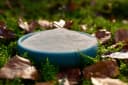
Our ashwagandha is a whole-root powder of Withania somnifera, from India, from a certified organic supply chain. We do not offer a standardised extract: the root as it grows, dried and milled. The powder is a warm beige. Its taste is earthy, slightly bitter, with an undertone of dried apricot; the smell of horse is there, softer, and the milk rounds it out.
The gesture: warm morning milk
- One to two teaspoons of powder in a cup of warm milk, plant or dairy, or simply water.
- Let it simmer gently for about five minutes, stirring.
- A spoonful of honey, a pinch of cinnamon or cardamom, to taste.
- No need to strain: whatever powder remains settles at the bottom of the cup.
It can also go into a smoothie, a yoghurt or a porridge. We drink it in the morning, over twenty-one consecutive days, then let some time pass before coming back to it.
For a delicious and magical morning blend, ashwagandha goes in the same cup with shatavari, maca, mucuna, chaga or reishi. Our Adaptogenic Blend brings several of them together, for the morning latte.
Precautions
- Pregnancy and breastfeeding: avoid. Data are lacking, and an abortifacient effect has been raised.
- Thyroid disorder or thyroid treatment: medical advice before starting.
- Rare cases of liver injury have been reported with ashwagandha supplements: stop and see a doctor at the slightest unusual sign.
- Autoimmune disease, immunosuppressants: medical advice first.
- Benzodiazepines and other tranquillisers, diabetes or blood pressure medication: talk to your doctor.
- Hormone-sensitive prostate cancer: avoid without medical advice.
- Known allergy to nightshades (Solanaceae): avoid.
- Planned surgery: stop two weeks before.
- Start with a small spoonful and increase little by little: the powder can sit heavy on the stomach.
- Ayurveda calls it warm and advises moderation for fiery temperaments (Pitta).
When in doubt, your doctor, or an Ayurvedic practitioner, before the root.
The whole root of Withania somnifera, powdered, from India and from a certified organic supply chain. One to two teaspoons in warm milk, in the morning.
Discover INFUSE ashwagandha →What does ashwagandha mean?
In Sanskrit, ashva means the horse and gandha the smell: "the smell of the horse", for the scent of the fresh root. It is also translated as "the strength of the horse".
How do I prepare ashwagandha powder?
One to two teaspoons in a cup of warm milk, plant or dairy, simmered gently for five minutes. A little honey, cinnamon or cardamom. No need to strain: the powder settles at the bottom.
Should ashwagandha be drunk in the morning or the evening?
We drink it in the morning, in the warm milk of the day that begins, over twenty-one consecutive days. Everyone is free to choose their own hour.
Where does INFUSE ashwagandha come from?
From India. It is a whole-root powder, from a certified organic supply chain, with no standardised extract.
What precautions apply to ashwagandha?
Avoid during pregnancy and breastfeeding, and with an allergy to nightshades. Medical advice first with a thyroid disorder or thyroid treatment, autoimmune disease, hormone-sensitive prostate cancer, or when taking tranquillisers, immunosuppressants, diabetes or blood pressure medication. Rare cases of liver injury have been reported: stop at the slightest unusual sign. Stop two weeks before surgery.
Sources
- Charaka Samhita and Sushruta Samhita, founding treatises of Ayurveda.
- Carl Linnaeus, Species Plantarum (1753).
- David Frawley and Vasant Lad, The Yoga of Herbs, Lotus Press.
- Christian Rätsch, The Encyclopedia of Psychoactive Plants, Park Street Press: ashwagandha.
- INFUSE product sheet: form, origin, preparation and precautions.
 4.8(22)desde € 6,86Ver →
Também tens um relato para deixar na Floresta?
Partilhar um relato →O que esta leitura abriu
Sê a primeira voz. Cada palavra é relida antes de se juntar à leitura.
Inicia sessão para partilhar o que esta leitura abriu em ti.
Iniciar sessão →