⊹ To weave around
To accompany Mucuna Pruriens "Velvet Beans"
Click a card to see why it pairs — and choose your form.
✦ Mucuna Pruriens "Velvet Beans" · in one breath ✦
Warming, in the Ayurvedic reading — L-DOPA, the natural precursor of dopamine.
⊹ The path of the plant
⊹ Community voices
What the community murmurs.
Average · 12 reviews
including 9 left on our Etsy shop
Breakdown
I absolutely love it, got it fast and a great add-on to my morning rituals. Thank you <3
Coralie Castillo
Daily · verified purchase · 26 May 2025
I absolutely love it, got it fast and a great add-on to my morning rituals. Thank you
Coralie Castillo
Daily · verified purchase · 26 May 2025
Nothing has improved my mental and physical health like velvet bean! Thank you :)
Deko
Daily · left on our Etsy shop · 24 December 2024
Parfait : la description des effets positifs de Mucuna Pruriens correspond exactement à ce que j'en obtiens.
Muriel Candela-Straub
Daily · verified purchase · 27 August 2024
Ask the Forest about Mucuna Pruriens "Velvet Beans"
408 books digested, 97,512 indexed passages. She answers on lineages, synergies, cautions, ritual variations.
⊹ FREQUENT QUESTIONS ⊹
We answer.
What is Mucuna pruriens?
Mucuna pruriens, or velvet bean, is a tropical climbing legume (Fabaceae family). In Sanskrit she is called kapikacchu — "that which itches like a monkey", for her pod is covered with stinging hairs — and atmagupta — "the hidden self", for the treasure-seed protected inside. She is one of the central plants of the Ayurvedic pharmacopoeia.
Why is Mucuna associated with dopamine?
Because her seed contains L-DOPA (levodopa), an amino acid that is the direct precursor of dopamine. L-DOPA crosses the blood-brain barrier, which dopamine itself cannot do. Mucuna's seed typically carries 3 to 6% L-DOPA by dry weight: a fact of composition, stated as such.
What is Mucuna pruriens traditionally used for?
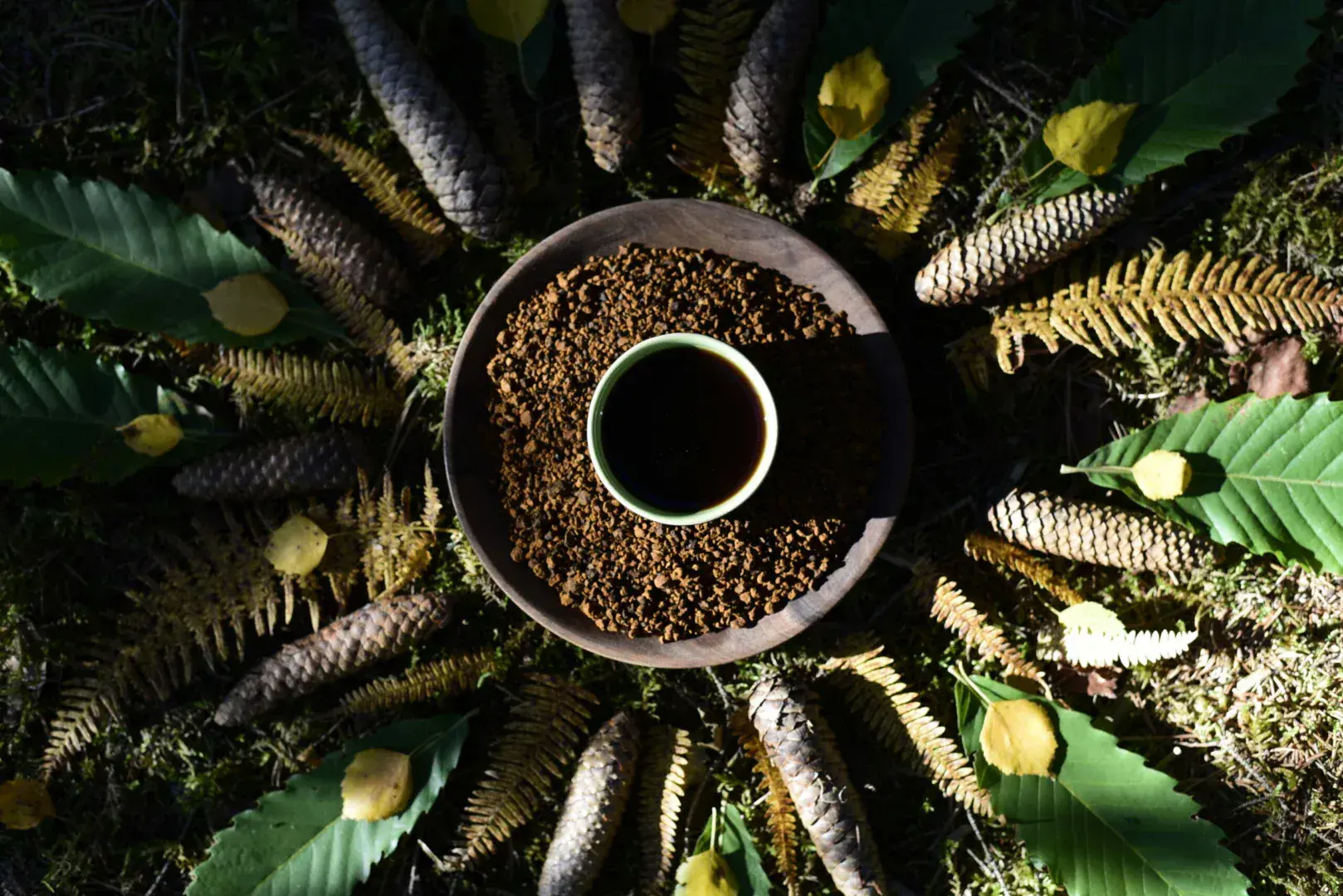
Ayurvedic tradition ranks her among the vajikarana rasayana, tonics said to restore vigour and vital impulse. In Mesoamerica, roasted and ground seeds have long served as a coffee substitute, called "Nescafé". INFUSE offers her as a morning companion.
How do I consume Mucuna powder?
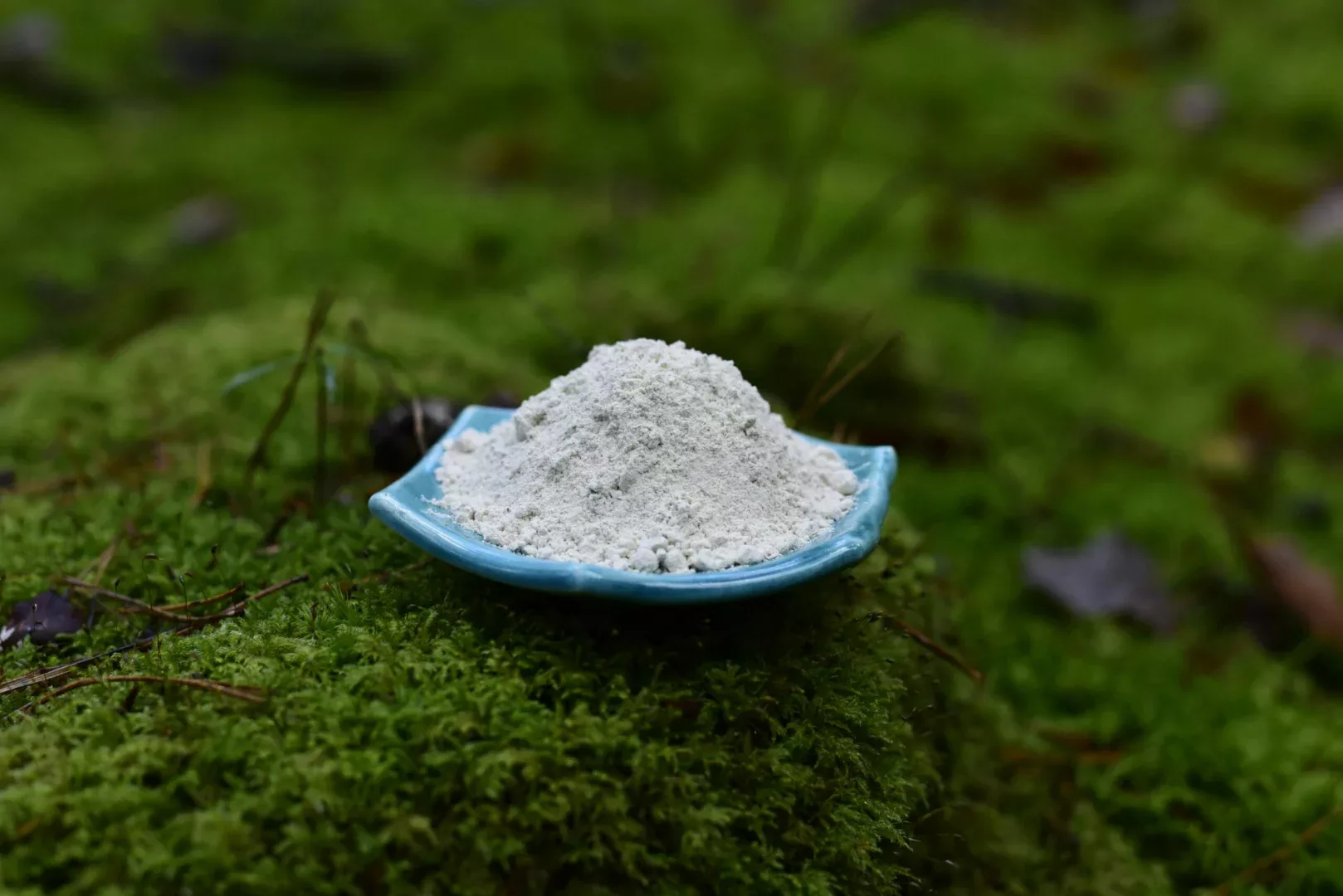
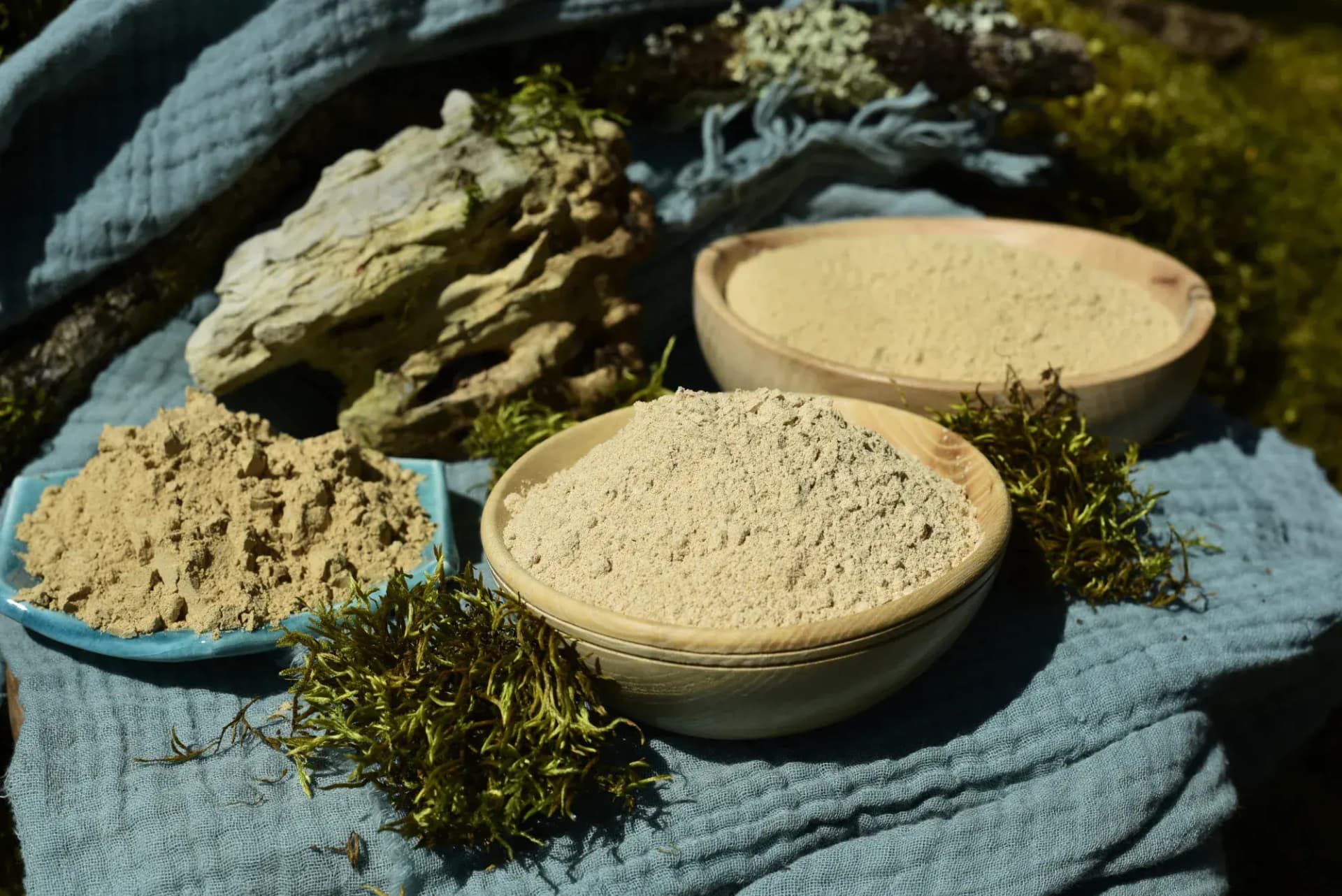
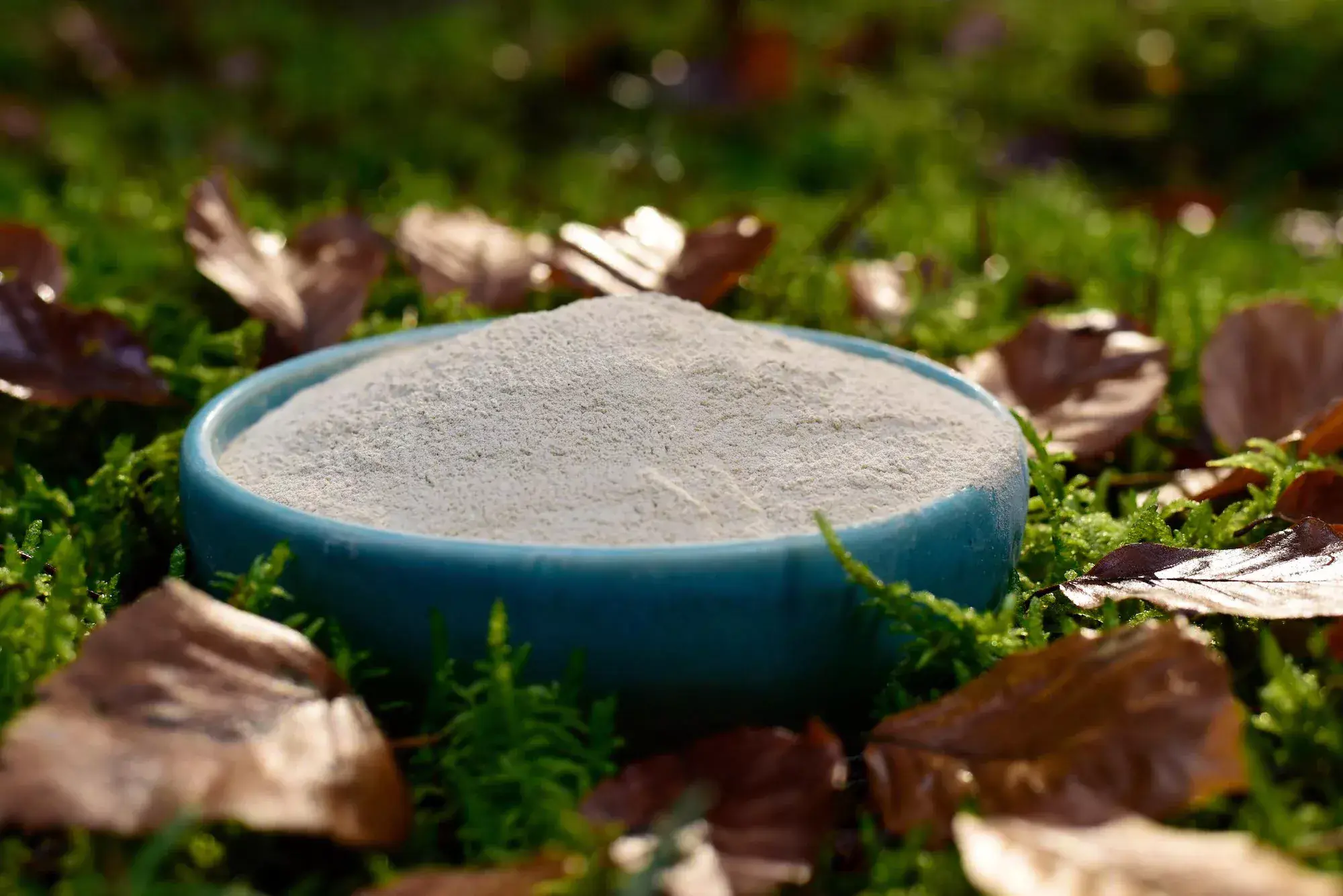
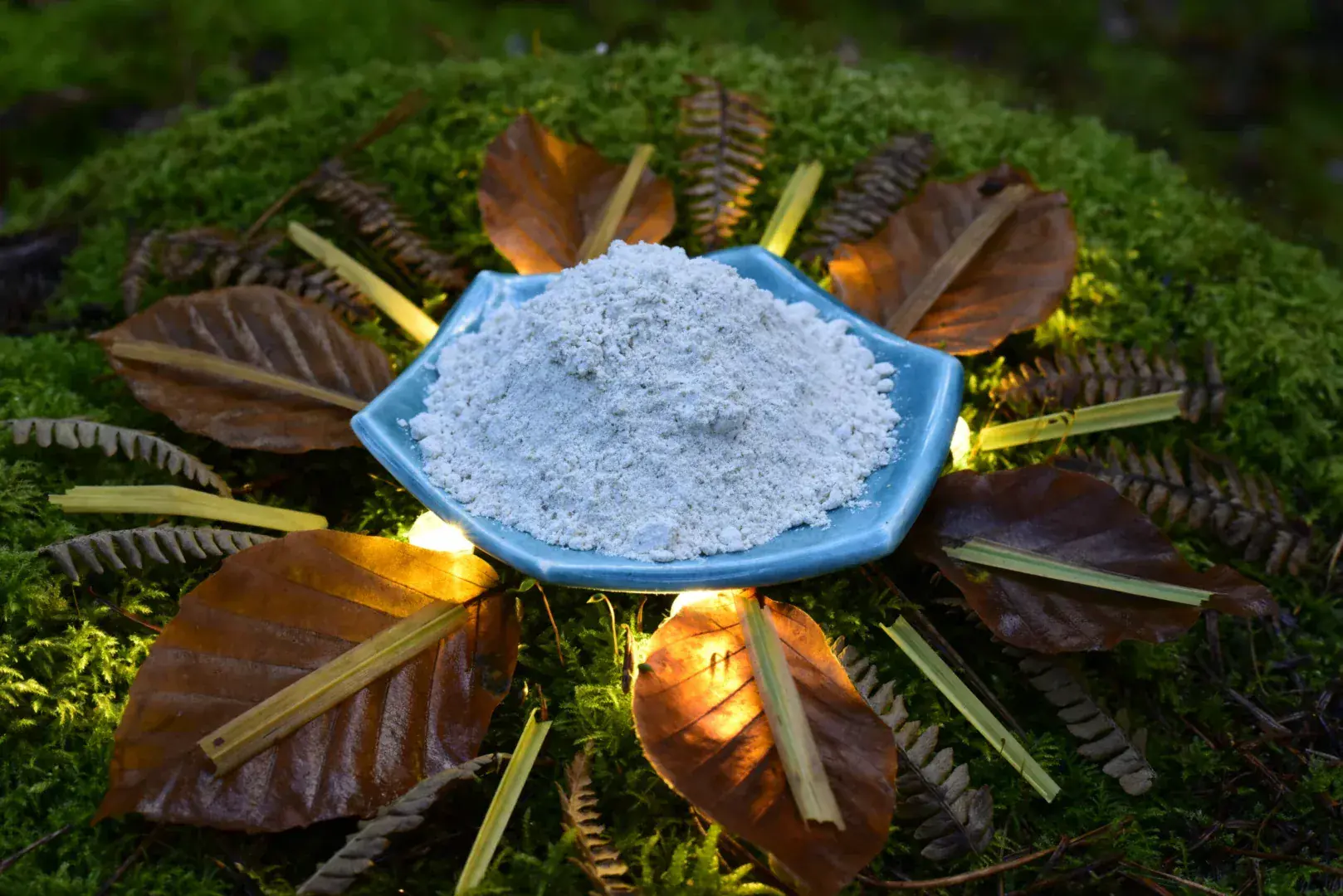
INFUSE offers the whole seed in powder (50g, 100g, 200g). Dissolve about a teaspoon (3 to 5 g) in a warm drink — plant milk, simmering water around 80°C — or in a smoothie, in the morning. Avoid prolonged boiling, which degrades L-DOPA; tradition favours soft heat or the roasted seed.
Should I cycle Mucuna?
Yes. Mucuna is taken in cycles, never in prolonged continuous use. A common rhythm is 5 days of use for 2 days of pause, or cycles of 3 to 4 weeks followed by a week of stop. In the morning or early in the day, not in the evening. This discipline respects the natural regulation of the dopaminergic system.
What are the dangers and side effects of Mucuna pruriens?
Due to her L-DOPA content, Mucuna has serious medication interactions (MAOI, antipsychotics, dopaminergic Parkinson's treatments) and is contraindicated during pregnancy, breastfeeding, in case of psychosis, mania, melanoma or phenylketonuria. Nausea, headache or blood pressure drop can occur. See Precautions and ask a professional's advice in case of treatment.
Is Mucuna pruriens legal?
Freely sold in France. Check the law in your country.
What's the difference between whole seed powder and a standardised extract?
L-DOPA content varies strongly according to variety, terroir and preparation. INFUSE chooses the whole seed in powder — the traditional form, where L-DOPA stays with the rest of the seed's compounds — rather than a standardised extract titred to a fixed percentage. She is a whole, living material.
⊹ Chapter · Questions ⊹
Ask, answer, share.
One question, one answer — sometimes several voices. The community answers first; INFUSE steps in when it should.
Nobody has opened a thread yet about this plant. You can be the one — a real question, a use, a doubt, a detail.
Anonymous if you prefer.
In depthbotany · phytochemistry · history
Botany
Mucuna pruriens (L.) DC. — basionym Dolichos pruriens L. — is a vigorous climbing legume of the Fabaceae family, with violet flower clusters. The genus Mucuna holds about 150 species. Her pods, 8 to 10 cm long, are covered in fine stinging hairs (trichomes) that contain mucunain, a protease, and serotonin, which cause intense itching on contact. The English names cowhage and cowitch come from the Hindi kevā̃c. Inside lie large, flat, dark-brown seeds, the part that is used. Her exact geographic origin is lost (probably tropical Asia); the plant now grows across the tropics of both hemispheres. (Rätsch, The Encyclopedia of Psychoactive Plants, pp. 370-371.)
Names as functions
Kapikacchu — "monkey itch" — points to the stinging pod: the seed is reached only by respecting its hairs. Atmagupta — atma, the self, and gupta, hidden or protected — names the treasured seed kept inside a hostile pod, like the self beneath its defences. Markati, "like a monkey". In English velvet bean, for the down on the young pods; in Spanish ojo de venado, "deer's eye". And fearful names in the places that met the plant without knowing it: mad beans in Mozambique, devil beans in Nigeria, voodoo beans in the United States.
Phytochemistry (descriptive)
The signature compound is L-DOPA (levodopa), typically 3 to 6% of the seed's dry weight. L-DOPA is the amino acid that is the direct precursor of dopamine, and it crosses the blood-brain barrier, which dopamine itself cannot do. The seed also contains, in minor amounts, serotonin, 5-HTP (the precursor of serotonin), beta-carbolines (weak MAO inhibitors) and traces of other indole alkaloids, whose profile varies with variety and region.
Variability and the whole-seed choice
An important point: the actual L-DOPA content varies widely from one variety, soil and preparation to another. That is why INFUSE chose the whole seed as a powder, the traditional form, over an extract standardised to a fixed percentage: in the whole seed, L-DOPA stays with the rest of the seed's compounds. The amount of L-DOPA per spoonful therefore varies, and this plant-food is taken in modest amounts and in cycles.
Roasting and heat
L-DOPA is sensitive to heat: prolonged boiling can destroy a large part of it (sources report up to about 70%). Traditional preparation therefore favours gentle dry roasting, as for coffee, or stirring the powder into a drink that is hot but off the boil. This is the logic of the Mesoamerican "nescafé": roasted, ground seeds infused in hot water, giving a coffee-like drink without caffeine.
Long history and gems
Beyond India and Mesoamerica, mucuna is grown in Africa (Mozambique, Nigeria, Guinea) as a nitrogen-fixing cover crop, and eaten as a pulse after proper preparation. In 1985, in Paterson, New Jersey, an outbreak of itching that residents blamed on "voodoo beans" was traced to Mucuna pruriens (CDC, MMWR).
Safety
Only the inner seeds, shelled and cleared of their hairs, are eaten. Because of the L-DOPA, the contraindications are serious (see Precautions): interactions with MAOIs, antipsychotics and dopaminergic treatments; avoid during pregnancy and breastfeeding, and in case of psychosis, mania, malignant melanoma, phenylketonuria, hyperthyroidism, arrhythmia or angina (Pierre & Gayet, La Bible de l'herboristerie, pp. 604-606). Always take it in cycles, which respects the regulation of the dopamine receptors. In case of doubt or ongoing treatment, a health professional's advice comes first.