⊹ To weave around
To accompany Chuchuhuasi
Click a card to see why it pairs — and choose your form.
Read it through your world
The whole page is read through this lens.
✦ Chuchuhuasi · in one breath ✦
A foundational adaptogenic tonic, to take as a cure over several days.
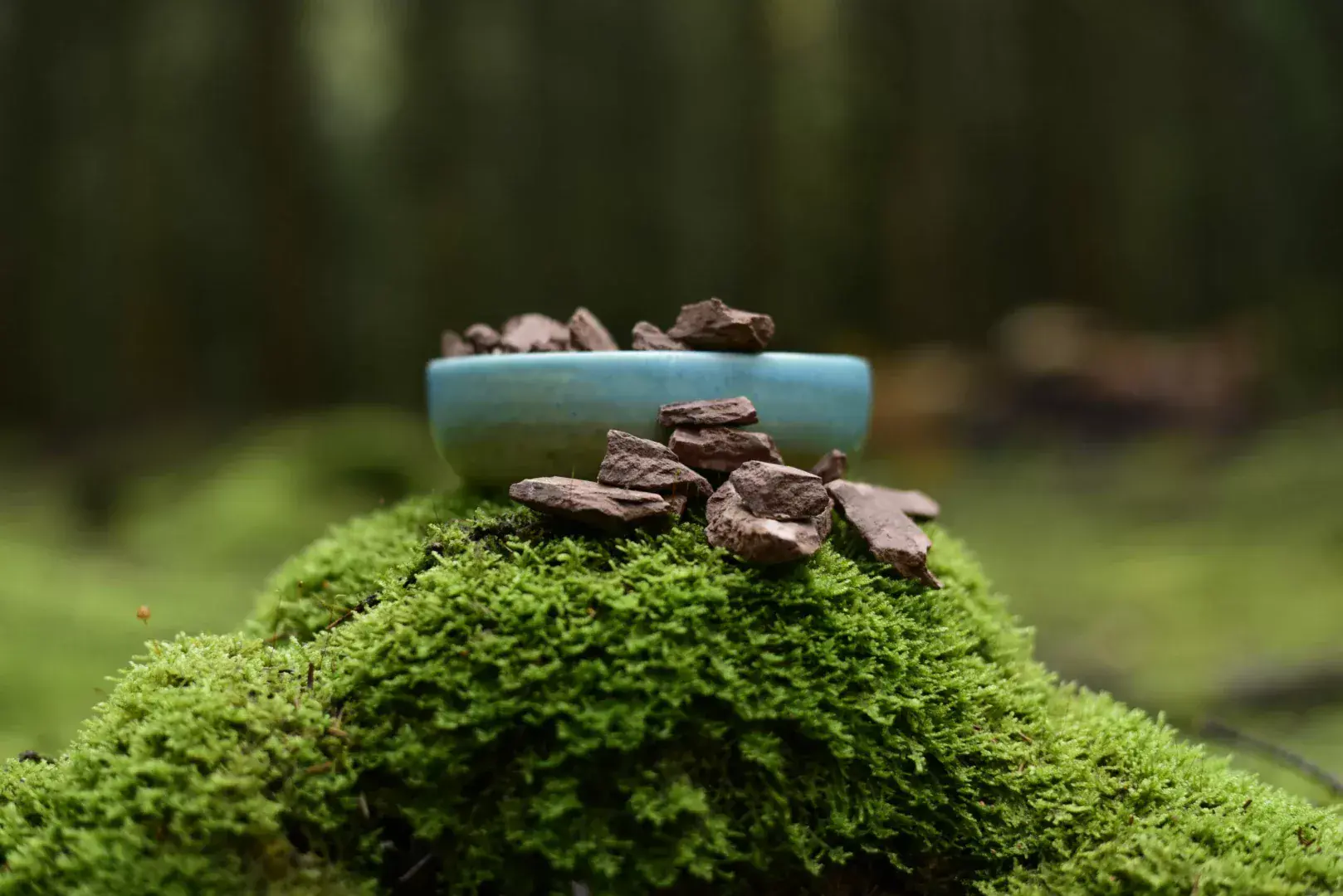
⊹ The path of the plant
⊹ Community voices
What the community murmurs.
Average · 23 reviews
including 23 left on our Etsy shop
Breakdown
I feel instant effects with Chuchuasi. Really high quality.
Gilad
Daily · left on our Etsy shop · 25 March 2025
Thank you to the seller it is a very good herbal tea as usual the products you sell are of excellent quality I recommend it for purchase thank you consistent with the presentation photo.
Mylène
Daily · left on our Etsy shop · 2 July 2024
Great product! Doing 3-week shamanic diet with chuchuhuasi. Definitely strong and quiete fresh. Also fast delivery. Will order again from tge guys)
Reviewed by Inactive
Daily · left on our Etsy shop · 23 October 2022
Cool stuff nice smell and efficient
David Slosar
Daily · left on our Etsy shop · 22 February 2025
Ask the Forest about Chuchuhuasi
408 books digested, 97,512 indexed passages. She answers on lineages, synergies, cautions, ritual variations.
⊹ FREQUENT QUESTIONS ⊹
We answer.
What is chuchuhuasi?
Chuchuhuasi (Maytenus krukovii) is the bark of a tall tree of the Amazon basin, plant ally of the Asháninka, Shipibo-Conibo and Cocama peoples. Quechua names her "trembling back" after her use for weakened lower backs. Nicknamed "Brazilian Ginseng", she is the grandfather-tree of curanderismo.
What are the traditional uses of chuchuhuasi?
Amazonian tradition holds the bark as a tonic of duration — her name recalls her traditional use for aching backs. Hunters and fishermen drink a swig macerated in sugarcane rum (the "Go Juice") before effort. INFUSE transmits the use as the curanderos name it, without clinical promise.
How do I prepare a chuchuhuasi decoction?
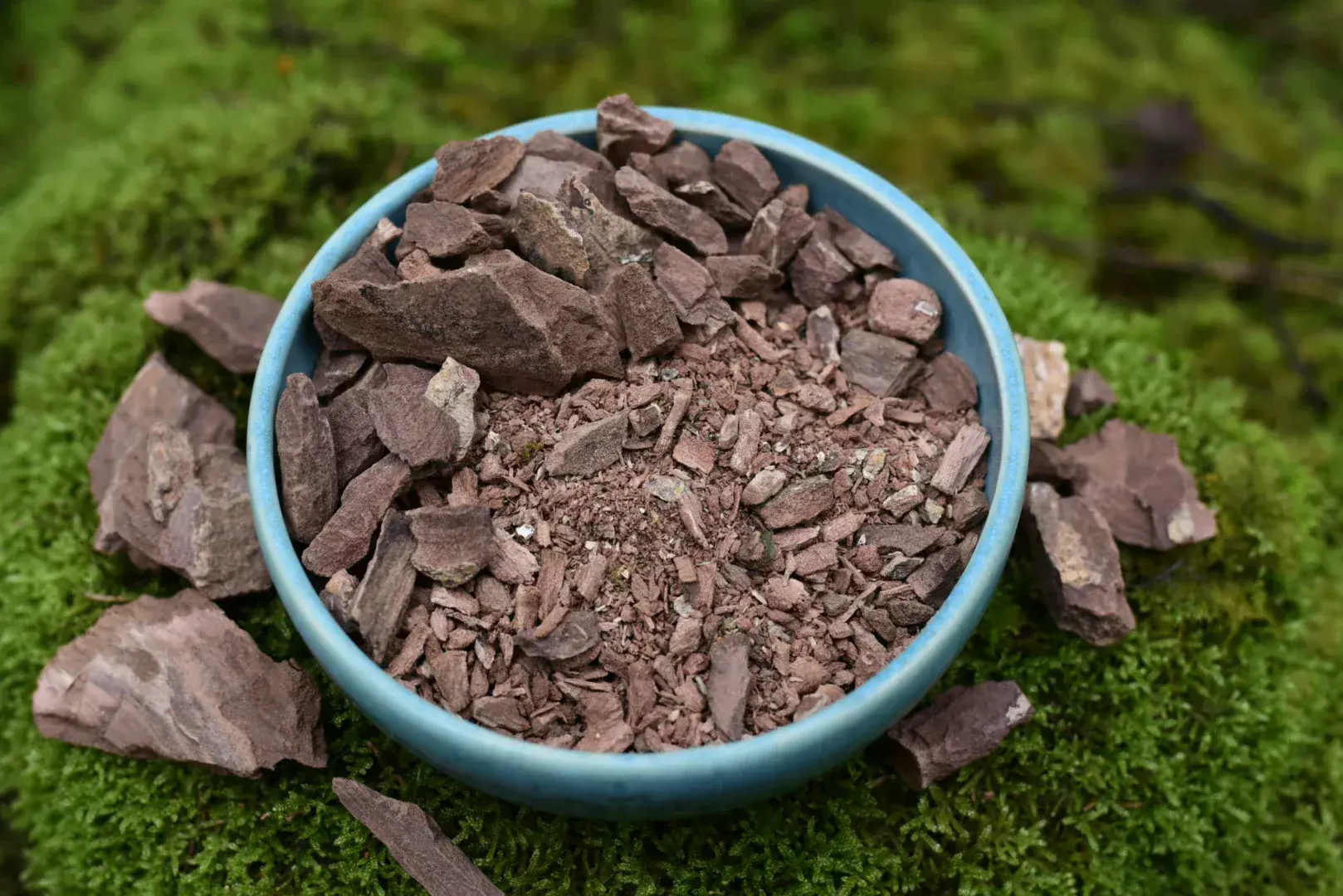
Two ways. The practical way — 1 tablespoon of bark in 250 ml of water, simmer 15 to 20 minutes, strain, drink warm. The long Amazonian tradition way — 1 to 2 tablespoons in 1 litre of water, covered, gentle simmer 30 to 40 minutes until a deep red-brown colour. The bark reinfuses several times, extending the cooking each round.
Chuchuhuasi and Bobinsana: what do they share?
Luis Eduardo Luna (1984) lists both, separately, among the "plant teachers" of the mestizo healers of Iquitos, learned through the dieta. In a dieta, the choice belongs to the curandero who guides it.
How long before I feel chuchuhuasi?
Chuchuhuasi is slow — that is her teaching. Amazonian tradition speaks of her in weeks rather than hours. She is classically used in a cure of 7 to 21 days followed by a pause.
Bark or resin extract, which form to choose?
The raw bark (50g, 100g) is the traditional way of the decoction — for long cures at home and the complete gesture. The resin extract (5g, 10g) is concentrated and more practical daily — a knife tip (size of a rice grain) diluted in a warm drink. For the ceremonial dieta, the bark. For restorative daily use, the resin is enough.
Is chuchuhuasi a plant of the Amazonian dieta?
Chuchuhuasi is one of the plants of the Amazonian dieta: among the mestizo healers of Iquitos, she counts among the "plant teachers" (Luis Eduardo Luna, 1984). In a formal dieta, always follow the guidance of the curandero, never self-prescription.
Where does INFUSE's chuchuhuasi come from?
From Peru, in wild harvest, imported directly at the source and harvested on order to offer the freshest bark. Our supplier works with the Shipibo-Conibo communities and invests each year in replanting.
⊹ Chapter · Questions ⊹
Ask, answer, share.
One question, one answer — sometimes several voices. The community answers first; INFUSE steps in when it should.
- Anonymous voiceSep 1
Le matin ou le soir ?
- flordelparaisoestelarINFUSE teamSep 2
- Le matin, avec ou après le petit-déjeuner, elle pose une tenue de fond pour les heures qui suivent — sans pic, sans crash. - En journée, elle accompagne les longues traversées : travail soutenu, marche, effort qui dure. - Le soir, si tu veux éviter de perturber le sommeil, mieux vaut la garder pour la première moitié de la journée — c'est une plante tonique, pas une plante du soir. Ce n'est pas une plante du coup de fouet mais elle a tout de même une action stimulante et énergisante.
In depthbotany · phytochemistry · history
The name: "the trembling back"
The tree is named for what it accompanies. Chuchuhuasi is usually translated as "trembling back", after its traditional use for aching backs (Leslie Taylor). A form of respect, and of precision: the plant is known by its bond of care with people.
Siete raíces, the seven roots
In the bars of Iquitos and Pucallpa, siete raíces ("seven roots") is a tonic of barks and roots macerated in aguardiente, the local cane spirit, and chuchuhuasi is one of its frequent barks (Stephan Beyer). The bark is also macerated on its own in aguardiente and served in bars and to travellers (Leslie Taylor).
Constituents: what the studies report
The pharmacology of chuchuhuasi is still only partly studied. The compounds described in the bark include:
- Triterpenes, such as the krukovines (Shirota et al., 1996), with in vitro descriptions of anti-inflammatory effects.
- Sesquiterpene pyridine alkaloids, mayteine among them; in vitro, mayteine inhibits protein kinase C (PKC) (Sekar et al., 1995).
- Tannins, polyphenolic flavonols and steroids.
Human clinical trials are rare; most of what is known comes from traditional use and from in vitro and animal research. No acute toxicity has been documented at traditional doses. These data are descriptive and do not amount to a therapeutic indication.
A plant of the dieta
Among the mestizo healers of Iquitos, chuchuhuasi counts among the "plant teachers", learned through the dieta, the retreat during which a plant is taken every day (Luis Eduardo Luna, 1984).
Botany & safety
*Maytenus krukovii* (syn. M. macrocarpa), of the Celastraceae family — the family of Celastrus paniculatus, the lamp-plant of Ayurveda. A tall tree (up to 30 m) native to Peru, Ecuador, Brazil, Colombia and Bolivia; the red-brown bark is the part used. Its taste is rich, robust and earthy.
On the side of caution: avoid during pregnancy and breastfeeding, before scheduled surgery, and with anticoagulants, antidiabetics, antihypertensives or immunosuppressants (possible effects on blood sugar, clotting, blood pressure and the immune system). In case of doubt: a practitioner before the plant.
Conservation & ethical sourcing
Like other traded Amazonian plants, chuchuhuasi is under pressure: deforestation and commercial harvesting threaten wild populations. It makes sense to favour sources that pay the communities and take part in conservation; our supplier invests in replanting every year.
*Sources: Leslie Taylor, The Healing Power of Rainforest Herbs (Raintree) · Stephan Beyer, Singing to the Plants · Luis Eduardo Luna, "The concept of plants as teachers among four mestizo shamans of Iquitos" (Journal of Ethnopharmacology, 1984) · Shirota et al., Journal of Natural Products (1996) · Sekar et al., Planta Medica (1995).*