⊹ To weave around
To accompany Sagan Dalya "White Wings"
Click a card to see why it pairs — and choose your form.
Read it through your world
The whole page is read through this lens.
✦ Sagan Dalya "White Wings" · in one breath ✦
Taken regularly, an adaptogen that helps the body adapt to challenging situations.
⊹ The path of the plant
⊹ Community voices
What the community murmurs.
Average · 94 reviews
including 89 left on our Etsy shop
Breakdown
Dreamy taste! I love it
danielle
Daily · left on our Etsy shop · 26 April 2021
I'm very happy about this tea. It is very fresh, fragrant and vibrant. One tiny leaf is enough to permeate the whole teapot and produce its famous effect. Highly recommend!
Awen
Daily · left on our Etsy shop · 13 January 2025
We absolutely love your shop and your herbs have changed my life. My cognitive function have improved and I am able to manage my ADHD without medication and focus more. Thank you so much!
ashley
Daily · left on our Etsy shop · 13 July 2022
This is so much better than coffee! Sweet taste, and you feel awake and wokused for soo much longer than a caffiene "high". No tiredness or dip at all like you get with caffiene👌🏼
miagkemp
Daily · left on our Etsy shop · 26 May 2022
Merci pour le petit cadeau, la plante semble très intéressante mais malheureusement, je n'avais pas fait attention dans sa description, elle stimule la libido. C'est ce que j'ai ressenti. Il faut avoir un problème à ce niveau pour en avoir l'utilité ou beaucoup de copines (ou copains pour les filles) . Sur 2 tisanes (avec les mêmes feuilles), je n'ai pas ressenti d'effet boost. J'aurais bien aimé la même plante sans le côté "stimulation de la libido".
Kaporal07
Daily · verified purchase · 3 April 2025
Started to take this plant medicine most days. Found that it strengths the whole system on ways that I didn't even expect. Very happy that I did. Also had a unexpected gift. Thank you so much. Blessings to you x
PAUL
Daily · left on our Etsy shop · 12 June 2023
Thank you so much , my package arrived so quickly, I purchased this amazing herb Sagan Dalya and it is exactly as I remember it ( I grew up in Siberia where this herb grows and we used to gather it and make tea) the taste and effect is amazing 🤩😍
Maria
Daily · left on our Etsy shop · 13 July 2022
Great quality of Sagan Dalya and packaging! I'm originally from a town near lake Baikal, but don't live there anymore. When I was little, me and my parents would travel to the lake, visit local markets and bring a bit of this herb home. It was very common for us to have it with black tea. When I found the package in my mailbox I recognised the subtle smell coming from it instantly! It brought back a lot of memories. Thank you for sending a gift with the order, it was a big surprise to me!
Iana
Daily · left on our Etsy shop · 15 March 2022
I'm officially obsessed with sagan dalya, the taste is indescribably delicious and it gives me that "tonic" feeling - a little stimulation but not like caffeine, easy to sleep even after drinking late in the day, a great partner for some of my other favorite herbs
bijoudishes
Daily · left on our Etsy shop · 16 December 2020
Fantastic herb! I have tried to get off coffee several times and this may be the perfect replacement. Interesting taste, makes me feel awake without being wired. Will definitely order again.
Charlotte
Daily · left on our Etsy shop · 25 November 2020
This tea is unlike anything else, the flavor is unique and delicious and its effects are so satisfying.
bijoudishes
Daily · left on our Etsy shop · 5 May 2024
This has an almost indescribably good flavor, the effect on me is more subtle than I hoped (so far) but I am almost addicted to the taste and aroma, for that alone it is absolutely worth it.
bijoudishes
Daily · left on our Etsy shop · 15 March 2020
Ask the Forest about Sagan Dalya "White Wings"
408 books digested, 97,512 indexed passages. She answers on lineages, synergies, cautions, ritual variations.
⊹ FREQUENT QUESTIONS ⊹
We answer.
What is Sagan Dalya (also spelled Sagan Dailya)?
Sagan Dalya (Rhododendron adamsii) is a caffeine-free Siberian adaptogenic tea from the high mountains of Lake Baikal. The Buryat, Mongol and Tibetan peoples have drunk her for centuries to hold over duration — long walks, long meditation, long effort. Her name means "white wing", because of the silvery underside of her leaves.
What are the benefits of Sagan Dalya?
Sagan Dalya is considered an adaptogen — a plant that helps the body adapt to demanding situations. Buryat and Tibetan tradition drinks her for physical and mental endurance, clarity during long meditations, and cold resistance. Her signature is not the energy peak but the ground — to last without burning. She is not a medicine.
Does Sagan Dalya contain caffeine?
No, Sagan Dalya does not contain caffeine. This is what makes her a sought alternative to coffee and black tea — she supports vigilance and endurance without the jitters or the crash of caffeine. Tibetan monks drank her during long retreats to stay awake without agitation.
How do I prepare Sagan Dalya tea?
Count 1 teaspoon of dried leaves (or 8 to 10 leaves) per cup. Infuse in simmering water around 80°C — never boiling — for 5 to 10 minutes, then strain. You can reuse the same leaves up to 3 times by extending the infusion time. To drink in the morning or daytime, not before bedtime.
Is Sagan Dalya an adaptogen like Rhodiola?
Sagan Dalya is a full adaptogen, with a chemistry distinct from Rhodiola: a Siberian cousin.
What does Sagan Dalya taste like?
Sagan Dalya has a subtle floral taste, slightly bitter and coniferous — a sensation that tradition describes as "a fresh wind under the wings". The taste reveals herself with the right dose and the right infusion time; the longer the leaves infuse, the wider the flavour.
Are there precautions with Sagan Dalya?
Avoid during pregnancy and breastfeeding, for lack of data. In case of liver, kidney, hypertension issues or stimulant medications, consult before use as the plant has a soft tonic effect that can raise blood pressure. Not to drink before bedtime. When in doubt, do your own research and ask a healthcare professional's advice.
Where does INFUSE's Sagan Dalya come from?
Our Sagan Dalya leaves are wild-harvested in Siberia, in the Lake Baikal region. She is a rare species, protected in some regions — her sourcing requires special vigilance on sustainability.
Can Sagan Dalya replace coffee?
This is one of its most common contemporary uses: caffeine-free, it supports vigilance and endurance without the jitters or the crash that follow coffee.
Where can I buy quality Sagan Dalya?
INFUSE offers Sagan Dalya as whole leaves (10, 20 or 50 g), wild-harvested in Siberia, in the Lake Baikal region, with shipping to France/EU and worldwide. It is a rare species, listed in the regional Red Books of several Russian regions.
⊹ Chapter · Questions ⊹
Ask, answer, share.
One question, one answer — sometimes several voices. The community answers first; INFUSE steps in when it should.
Nobody has opened a thread yet about this plant. You can be the one — a real question, a use, a doubt, a detail.
Anonymous if you prefer.
In depthbotany · phytochemistry · history
Botany — an Ericaceae of the extremes
Rhododendron adamsii is a small evergreen shrub of the Ericaceae family — the same as blueberry, cranberry and heather. It was named after the Russian botanist Johann Friedrich Adam (1780–1838), who described it for European science in the early nineteenth century. Its Latin binomial already tells of an encounter: Rhododendron, from the Greek rhodon (rose) and dendron (tree), "the rose-tree"; adamsii, after a naturalist — a mountain rose named late by a science from elsewhere, while the peoples of the Baikal had known it for centuries.
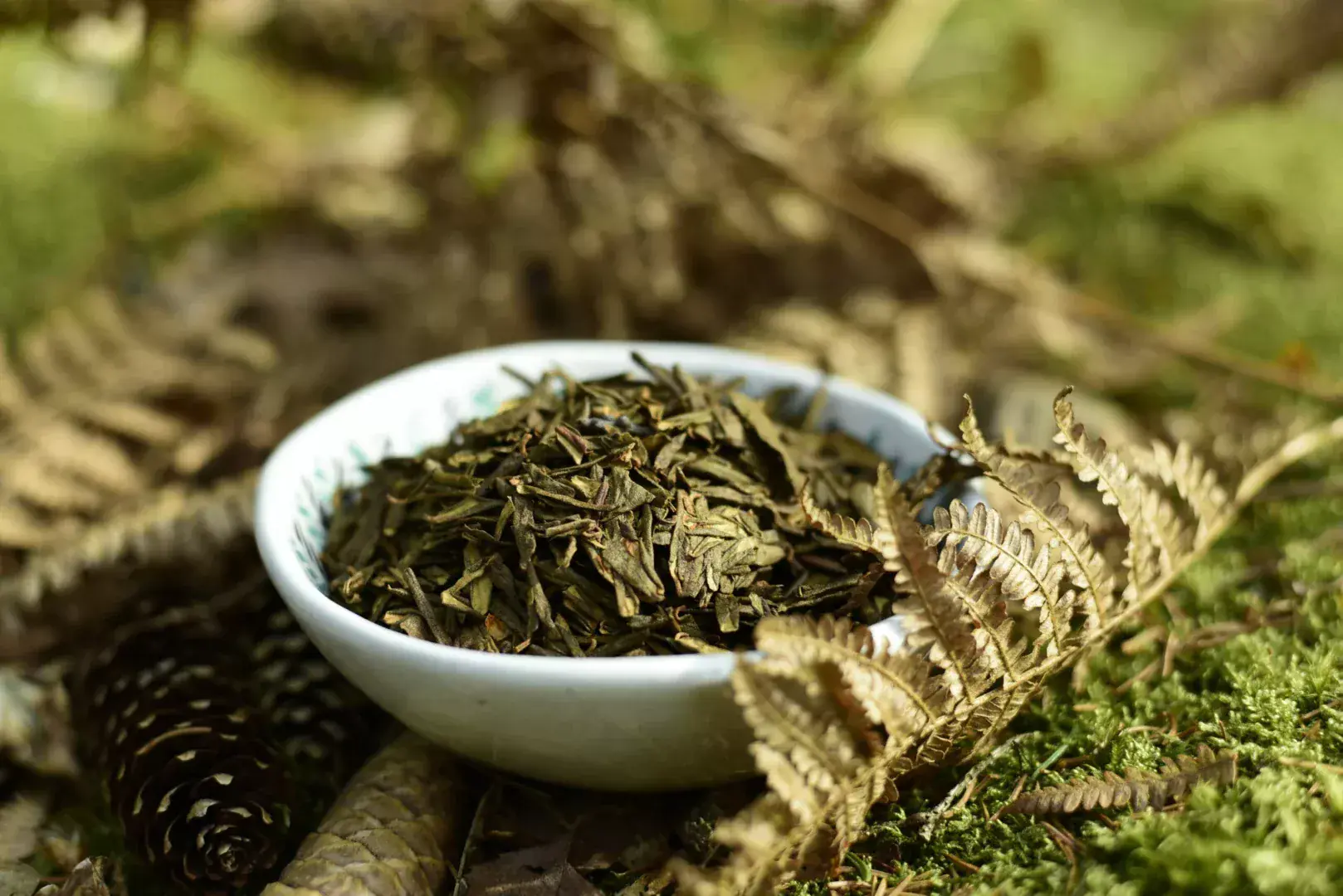
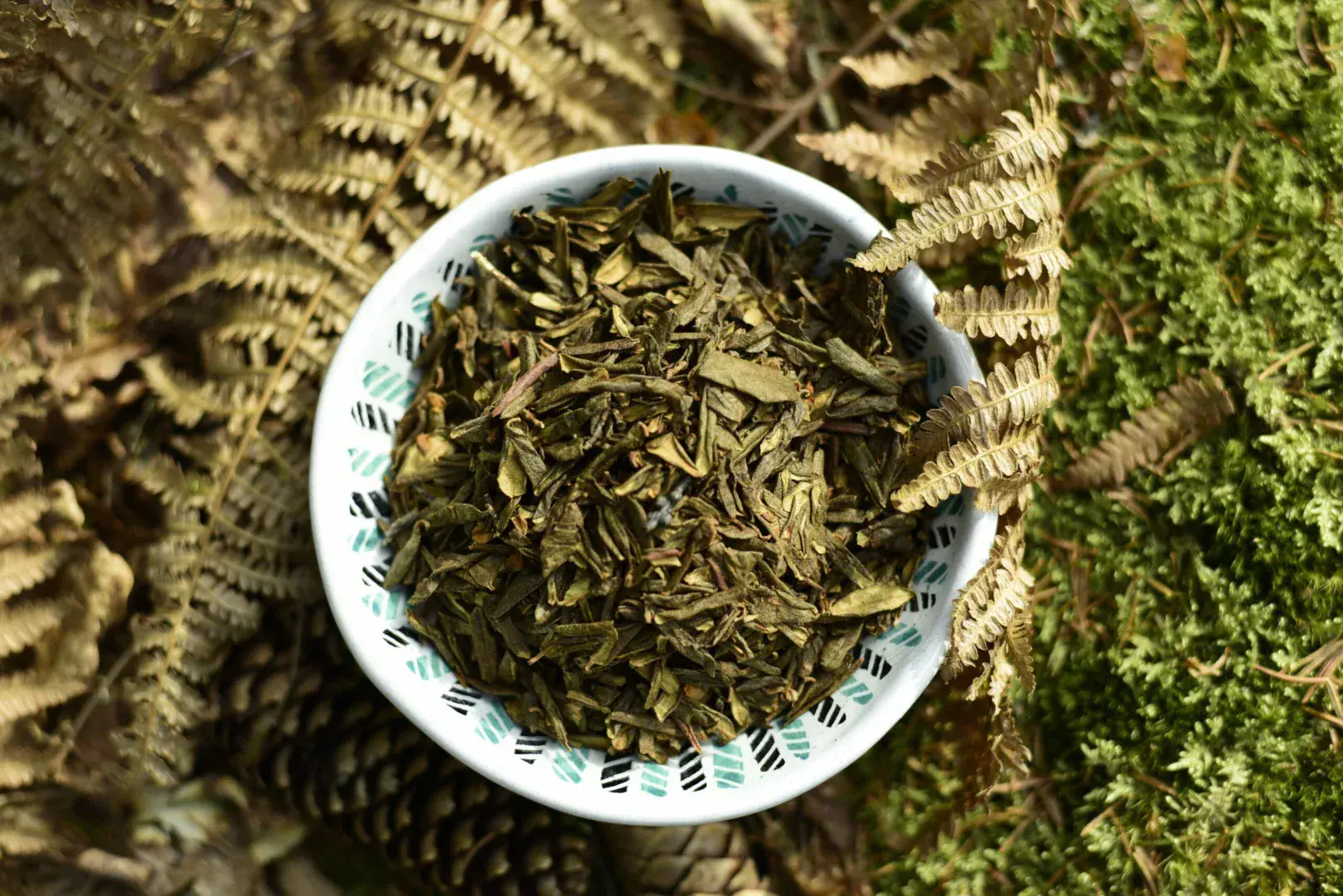
Its range is very restricted: high plateaus and mountains around Lake Baikal, Transbaikalia, eastern Siberia, northern Mongolia, parts of Yakutia and Tofalaria, and a few massifs of north-eastern China. Habitat: alpine and subalpine zones (1,200 to 2,500 m), rocky soils, extreme climates, winters that can fall to −50 °C. Its leaves are small, leathery and persistent, dark green above, covered underneath with a silvery-white down — hence the name "white wing". This morphology is an answer to the cold: holding warmth, reflecting light. Down to its very form, the plant carries the signature of conserving energy — exactly what tradition lends it.
Descriptive phytochemistry — more than 170 compounds
Recent metabolomic work has identified more than 170 compounds in the Sagan Dalya leaf. Among them: triterpenes (uvaol, ursolic acid, oleanolic acid), triterpene glycosides often described as the main adaptogenic actives, an exceptional richness in flavonoids, catechins (close to those of green tea), procyanidins, hydroxycinnamates, arbutin, as well as rarer compounds — dihydrochalcones and prenylated phenols (preliminary research).
On the antioxidant side, the 2021 characterisation reports a very marked radical-scavenging power (DPPH, ABTS), in keeping with the leaf's richness in flavonoids and catechins. This is a descriptive laboratory datum, not a promise of any effect on the body.
What the studies report
Modern research has taken an interest in the traditional adaptogenic claim. Swim-to-exhaustion tests in animals report an increase in physical performance and endurance — a result that runs in the direction of the age-old use, without transposing it as such to humans. The authors of a metabolic characterisation published in 2021 in Metabolites (Olennikov, Nikolaev, Chirikova) conclude that Sagan Dalya confirms its old use as a tonic and deserves in-depth study as a new adaptogenic plant — a chemistry of its own, distinct from that of Rhodiola. Other work describes antioxidant, anti-inflammatory, antimicrobial and immunomodulatory activities in vitro or in animals. All of this remains research: Sagan Dalya is a tea, not a medicine, and nothing here cures or treats any illness.
Lineage and a long history
Human use long precedes science. The Tibetan Gyud-Zhi — the "Four Medical Tantras", compiled between the 8th and 12th centuries — mentions the plant under the name Dal-Garbo and places it among the remedies for the "cold winds in the body", a phrase that in this medicine covers fatigue, chronic chilliness and melancholy. The Buryats made it one of their sacred plants: a shamans' infusion drunk before ceremony, an offering to the spirits of the mountain. The nomadic Mongols carried it on the long roads; the Yakut and Tofalar peoples of the Far North made it an ally of the winter hunt.
Several stories travel with it. The legend of the eagle: a hunter lost in the mountains saw an exhausted eagle land and chew the leaves of a small shrub, recover its strength and take wing again; the hunter tasted the same plant and did the same — ever since, it is said, Buryat hunters follow the teaching of the eagle. The Siberian proverb "drink Sagan Dalya at sunrise and you will outlive your sorrows", which ties the plant not to raw longevity but to a form of emotional endurance. And the monks' tea, brewed in Tibetan monasteries during retreats of several years, to hold wakefulness without the agitation of coffee.
Safety, scarcity and sustainability
The safety profile of Sagan Dalya is not yet fully characterised. The main point of caution concerns the genus itself: some Rhododendron species contain grayanotoxins (the neurotoxins of Turkish "mad honey", from R. ponticum). R. adamsii does not contain them in any significant amount according to the available analyses, but that makes checking the provenance all the more important — no uncontrolled sourcing. As a precaution, the plant is not advised during pregnancy and breastfeeding, and calls for medical advice in case of liver or kidney conditions, hypertension or the use of stimulants.
Finally, Sagan Dalya is a precious plant, not a common one. Growing Western demand has led to over-harvesting at certain sites, and the species is listed in the regional Red Books of several Russian regions. The Buryat wildcrafting tradition — taking only the upper third of the leaves, leaving the plant intact, giving thanks — is no folkloric detail: it is the condition for this white wing to keep beating over the mountains of the Baikal.