Shatavari, the queen of a hundred roots
She of a hundred roots, she of a hundred husbands: the Sanskrit name of India's wild asparagus, its place among the rasayana, the milk of the forty days, and our root powder.
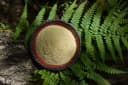 La planta de este artículoShatavari · Asparagus racemosus5.0(20)desde 7,00 €Ver →
The plants that walk with the cycles, to live inside them fully.
Traducción al español próximamente — este artículo se muestra en otro idioma.
Held to be a rasayana and the Mistress of Yin by the ancient Ayurvedic traditions of India, Shatavari is a Queen of the plant kingdom. She is a wild asparagus, Asparagus racemosus, and her whole name lies in what she hides underground.
She of a hundred roots, she of a hundred husbands
Shatavari, in Sanskrit: shata, a hundred. The most common reading makes her "she of a hundred roots", and botany bears it out. Dig up a mature plant and below the crown you find a cluster of white, fleshy tuberous roots that can number around a hundred and weigh several kilos after three or four years.
The vaidyas, the Ayurvedic physicians, give a second reading: vari, husband. Shatavari becomes "she who has a hundred husbands". The tradition holds both readings together: the mother with a hundred fingers plunged into the earth, and the woman with a hundred husbands.
The Bhavaprakasha, Bhavamishra's great lexicon of plants from the sixteenth century, gives her other names, among them Narayani, the feminine form of Narayana, that is, Vishnu. The tantric tradition keeps this bond: there, Shatavari is a plant of devotion.
The queen of Ayurveda
The Charaka Samhita and the Sushruta Samhita, the two founding treatises of Ayurveda, name her, and Vagbhata's Ashtanga Hridaya (around the seventh century) takes her up again. Ayurveda places her among the rasayana, a word that can be read as "the path of essence": plants taken every day, for a long time. Herbalists today call her the Queen, facing ashwagandha, whom they call the King: the root that smells of horse on one side, the hundred white roots on the other.
Shatavari revitalises and grounds the body, softens and deepens the emotions, calms and opens the mind, and brings the spirit into alignment. She is the revered plant of women in Ayurveda, through every season of their lives.
The Shatavari Kalpa, the milk of the forty days
The Shatavari Kalpa is a classic Ayurvedic preparation: the root powder, warm milk, ghee, cardamom, sometimes a touch of saffron and a little raw cane sugar or honey. In many Indian families, mothers and mothers-in-law make it for new mothers, every day for the forty days after the birth. The recipe passes from woman to woman this way, along with the gesture of the cup held out.
The Chinese cousin, the flying herb
Chinese medicine knows shatavari as zhang ci tian men dong, "the long-thorned tian men dong". Her cousin, tian men dong (Asparagus cochinchinensis), carries among the Taoists the nickname "flying herb": whoever takes it for a long time would become so light they could fly, reports Ron Teeguarden, a specialist in Chinese herbs, and some add: even in their dreams. The legend belongs to the cousin; shatavari has inherited the reputation in the West.
The plant
Asparagus racemosus is a thorny climber of the Asparagaceae, the family of garden asparagus. It climbs along forest edges and rocky ground in India, Sri Lanka, the Himalayas and parts of Africa. Its leaves are fine green needles, its small white flowers fragrant, its berries red when ripe. The species is dioecious: there are male plants and female plants.
Heavy demand has emptied wild populations in several parts of its range. Careful harvesters take only a few roots from each plant, leaving the crown in the ground so it grows back. We work with responsibly cultivated sources.
Shatavari at the House
Our Shatavari is a root powder from India, from a certified organic supply chain, in 50 g, 100 g and 200 g. Its flavour is deliciously earthy, slightly nutty, and it slips easily into drinks and dishes.
- The latte: a teaspoon of powder (3 to 5 g) in 250 ml of warm plant milk, almond or oat, or water at around 80 °C; a pinch of cardamom, a little honey, a dab of ghee if you like. Stir well, or use a frother.
- The decoction: a teaspoon in a litre of water, simmered gently for five minutes, with plant milk added just before serving. Drink it unstrained, letting the powder settle at the bottom of the cup.
- In a smoothie, a juice, a yoghurt: one teaspoon.
One to two cups a day, ideally in the morning, or as an evening latte with cardamom. Shatavari is drunk as a regular habit, in cycles of about 21 days, with breaks. She happily shares the morning decoction with ashwagandha; a few rose petals soften the cup.
Precautions
- Known asparagus allergy: avoid (same botanical family).
- Oestrogen-sensitive conditions (breast cancer, uterine fibroids, endometriosis), hormone treatment: medical advice before use, as shatavari has a mild phytoestrogenic activity.
- Pregnancy: only under the supervision of a qualified practitioner. Breastfeeding: ask a health professional.
- Kidney failure: medical advice (mild diuretic effect).
- Thyroid medication: talk to your doctor.
When in doubt, your doctor before the plant.
The root of Asparagus racemosus ground to a powder, from India, from a certified organic supply chain and carefully tended crops. In 50 g, 100 g and 200 g, for warm milk in the morning or the evening.
Discover INFUSE Shatavari →What does the name shatavari mean?
Shata means a hundred in Sanskrit. The usual reading is "she of a hundred roots", and a mature plant does carry a cluster of around a hundred white roots. The vaidyas also read vari as "husband": "she who has a hundred husbands".
Shatavari and ashwagandha, the Queen and the King?
These are the names today's herbalists give them: two roots of Ayurveda, one with a hundred white roots, the other smelling of horse. We like to put them in the same morning decoction, a spoonful of each, with plant milk.
What is Shatavari Kalpa?
A classic Ayurvedic preparation: shatavari powder, warm milk, ghee, cardamom, sometimes saffron and a little raw cane sugar. In many Indian families, mothers and mothers-in-law make it for new mothers for forty days.
How do I prepare shatavari powder?
A teaspoon in warm plant milk or water at around 80 °C, with cardamom and a little honey; or as a decoction, a spoonful in a litre of water, simmered for five minutes. One to two cups a day, in cycles of about 21 days.
What precautions apply to shatavari?
Avoid with an asparagus allergy. Medical advice before use with an oestrogen-sensitive condition (breast cancer, fibroids, endometriosis), hormone or thyroid treatment, or kidney failure. During pregnancy, only under the supervision of a qualified practitioner; while breastfeeding, ask a health professional.
Sources
- Charaka Samhita and Sushruta Samhita.
- Vagbhata, Ashtanga Hridaya (around the seventh century).
- Bhavamishra, Bhavaprakasha Nighantu (sixteenth century).
- Ron Teeguarden, Chinese Tonic Herbs, Japan Publications, 1984.
- David Winston and Steven Maimes, Adaptogens, 2007.
- INFUSE product sheet: origin, certification, formats, preparation and precautions.
 5.0(20)desde 7,00 €Ver →
¿Tú también tienes un relato para dejar en el Bosque?
Compartir un relato →Lo que esta lectura abrió
Sé la primera voz. Cada palabra se relee antes de unirse a la lectura.
Inicia sesión para compartir lo que esta lectura abrió en ti.
Iniciar sesión →