Lavender: the plant of lavare — how Provence teaches us to end the day
Lavandula angustifolia takes its name from the Latin verb lavare, to wash. The Romans perfumed their thermae with it, Hildegard prescribed it against evil spirits, and the Virgin Mary is said to have dried the swaddling clothes of Jesus on its bushes. Here is the plant of the threshold of sleep.
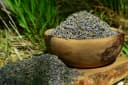 The plant of this articleLavender · Lavandula angustifoliafrom €7.00View →
The plants that walk with the cycles, to live inside them fully.
tagline · path
The name as signature
Lavender comes from the Latin verb lavare — to wash. This is not a late metaphor. The Romans named the plant after the use they made of it: perfuming bath water, disinfecting war wounds, opening the pores at the thermae. From its very name, lavender is the plant of gentle washing.
Ancient Greek called it nardus — from the name of the Syrian city of Naarda. The biblical spikenard, the anointing oil of Scripture, was probably lavender or a related plant. It was a precious oil, used for royal rites and sacred anointings. Lavender enters language through two doors: Roman everyday hygiene and Semitic royal anointing.
Angustifolia means 'narrow-leaved.' This is what distinguishes it from Lavandula latifolia, the aspic — broader leaves, more camphoraceous profile, less therapeutic for sleep. And from lavandin, the hybrid grown on plains for yield. INFUSE works with angustifolia, the true one, which grows above 600 meters elevation where the concentration of linalool and linalyl acetate culminates.
The plant as a person
Lavandula angustifolia belongs to the register of evening companions. Here is how it presents itself:
First, it is the plant of the threshold. Not of deep sleep, not of archetypal dream — of the passage between waking and night. This articulation is precious. Many of us drag the day's agitation onto the pillow. Lavender proposes an airlock — a few minutes where the load is set down before the crossing.
Second, it is purifying through gentleness. Not the confrontational purification of bitter plants or smoked resins. Purification through perfume, through pleasure, through welcome. It does not fight against agitation — it offers an alternative so agreeable that agitation leaves on its own.
Third, it is keeper of the hearth. Medieval folklore: bouquets hung on doors to repel plague, sachets against the evil eye, flowers strewn on church floors during feasts. Lavender is not a plant of adventure — it is a plant of ordinary protection, placed near the threshold, where energies enter and leave.
Fourth, it is trans-frontier. It accompanies the living into sleep and the dead into the tomb. The Egyptians wound it around mummies for its antibacterial properties — and several New Kingdom mummies have retained traces of lavender in their bandages. The same plant soothes the living for the passage of night and accompanies the deceased for the passage of death.
If it could speak, it would say: 'Set down what you carry, wash your face, breathe my fragrance, let the day's warmth come down. I wait at the door.'
Origin and tradition
Four living lineages carry lavender all the way to our drawers and our infusions:
1. The Romans of the thermae. Pliny and Dioscorides document lavender in the imperial pharmacopoeia — perfumed baths, medicinal ointments, disinfection of war wounds. In imperial Rome, the pound of flowers cost 100 denarii, about a month's wages for an agricultural worker. The soldiers of the legions carried it on campaign. Cleopatra, according to a tenacious legend, would have used it to seduce Julius Caesar and Mark Antony.
2. The Egyptians of the New Kingdom. Several mummies have kept traces of lavender in their bandages — antibacterial properties and an agreeable fragrance for the passage. The plant enters the continuity of life and death, soothing the living and accompanying the dead.
3. The medieval monastic herbalists. Hildegard of Bingen, in the 12th century, prescribed lavender in her Physica to clarify vision, kill lice, treat the evil spirits in the head (probably migraines, cognitive and emotional disorders). The gardens of Saint Gall, Lorsch, Cluny cultivated it. It enters the Vinegar of the Four Thieves, a preparation against plague during epidemics. Folklore: bouquets at doors, sachets against the evil eye, strewn on church floors.
4. The Provençal peasant women of the 19th to 21st century. The high calcareous plateaus become blue oceans. Valensole (500-700 m, 800 km² of lavender), Sault (700-900 m, the reference terroir for the finest essential oil), Banon. Harvest mid-July to mid-August, traditional distillation, 200 kg of flowers for 1 liter of essential oil. It is this living tradition that INFUSE links to the evening cup.
Documented traditional uses: evening infusion before bed, perfumed pillow (English folklore: lavender under the pillow gives the true dreams), bath with dried flowers, perfumed toilet water, anti-moth sachet in linen wardrobes, light burning to purify rooms after illness, bouquets at doors against plague (medieval), the anointing of biblical spikenard, Roman care for war wounds, Hildegard's anti-lice, balm based on essential oil for tension headaches, lavender water to rinse the hair.
Signature Provençal recipe: the grandmothers' lavender water. 50 g of dried flowers in 1 liter of boiling water, infused 20 minutes covered, strained, kept cool. Used to rinse the face at the end of the day, to perfume bed linens as a spray, to soak a cloth to place on the forehead in case of tension migraine. Three generations of Provençal women transmit this simple preparation.
A medieval Christian legend says that the Virgin Mary, having washed the swaddling clothes of the infant Jesus, dried them on a lavender bush. Since then, the bush has carried a holy fragrance forever. This mythical inscription persists in the gardens of contemporary Provençal monasteries, where lavender is planted near the chapels.
Constituents and mechanisms
True lavender carries a precise chemical signature. Three compounds govern its action on the threshold of sleep:
Linalool. Major monoterpenic alcohol — 25 to 45% of the essential oil depending on chemotype. Signature compound shared with other Lamiaceae (basil, coriander), but lavandula angustifolia carries a particular concentration and combination of it. Modulates 5-HT1A (serotonin) receptors, inhibits voltage-gated calcium channels, increases parasympathetic tone.
Linalyl acetate. Major ester — 25 to 45%. Specific to true high-altitude lavenders. It is this ester that gives true lavender its marked anxiolytic-sedative profile, compared to lavandin (more camphoraceous) or aspic (more respiratory-tonic).
Lavandulol and lavandulyl acetate. Signature compounds unique to Lavandula angustifolia — virtually absent from other commercial lavenders. Markers of the true one.
Documented mechanisms: GABAergic modulation via volatile compounds reaching the limbic system through the olfactory nerve (olfaction is the only sensory pathway that bypasses the thalamus and reaches the amygdala and hippocampus directly — that is why fragrance acts before thought). Inhibition of serotonin reuptake by the whole oil and linalool. Anti-inflammatory effect through terpenes. Broad-spectrum antimicrobial — bacteria, fungi, viruses. Antispasmodic on the digestive tract. Mild analgesic.
Descriptive statistics sourced: the Silexan extract (80 mg/day orally, lavandula angustifolia) has been tested in randomized clinical trials on more than 1500 patients with generalized anxiety disorder. Efficacy comparable to low doses of benzodiazepines (lorazepam 0.5 mg), with no dependence or withdrawal syndrome documented. The European Medicines Agency recognizes lavandula angustifolia as a herbal medicinal product for the relief of mild symptoms of stress and anxiety. Recent meta-analyses confirm the effect on subjective sleep.
For inhaled essential oil: the volatile compounds reach the limbic system in less than five seconds. It is this rapidity that makes the perfumed pillow effective — the effect precedes the conceptual digestion of the day.
Uses and preparations
Infusion (classical route). 1 to 2 teaspoons of dried flowers in 200-250 ml of hot water. Infusion 5 to 10 minutes maximum — beyond that, bitterness rises. Strain. Drink hot, optionally with a touch of honey. To drink 30 to 60 minutes before bed, ideally within a calm ritual (dim light, soft reading, no screen).
Perfumed pillow. Signature European tradition. Sew a small bag of cotton or linen, fill it with dried lavender flowers, slip it into the pillowcase. The fragrance releases slowly with the warmth and movement of the night. Renew every 2-3 months when the fragrance fades.
Lavender bath. A large handful of flowers in a muslin bag, plunged into hot water. 20 to 30 minutes. Once a week, as a weekly ritual of the most loaded day's end. The bath is the primary Roman inscription of the plant — it is the gesture most faithful to the etymological lavare.
Provençal grandmothers' lavender water. 50 g of flowers in 1 liter of boiling water, 20 minutes covered, strain, keep cool. To rinse the face at the end of the day, perfume bed linens as a spray, soak a cloth to place on the forehead for tension migraine.
Aromatherapy. True lavender essential oil is one of the most precious and best tolerated. A few drops in a bedroom diffuser 30 to 60 minutes before bed. Or 1 to 2 drops on the pillow (no direct skin contact, never ingested without practitioner guidance). Caution: pure essential oil not recommended for young children in prolonged exposure — mild estrogenic effect theoretically studied, debated.
INFUSE variants: dried whole loose flowers (50 g for a month's daily ritual, 100 g for a home in regular use). True lavender — Lavandula angustifolia, the fine high-altitude lavender, not the lavandin grown on the plains for yield. Quality control in France.
Synergies
With Noble Chamomile. Classical European sleep combo. Lavender works mental anxiety and rumination, chamomile works digestion and childlike soothing. Two doors of the threshold — the head and the belly. INFUSE recommends this duo as a shared family evening ritual.
With Lemon Balm (Melissa officinalis). For nighttime anxiety and ruminative profiles. Lemon balm deepens the lavender effect, particularly in children and adolescents.
With Linden. For children difficult to put to sleep. Linden brings a sweeter, more aerial softness, lavender structures the threshold.
With Rose. Cardiac feminine evening combo — particularly precious after grief, breakup, emotional overload. The rose opens the heart, lavender lays the threshold.
With Rosemary. For daytime use however — Mediterranean morning/evening combo, rosemary lighting the morning and lavender setting down the evening. Not in the same cup.
With Hops or Valerian. For more stubborn insomnia. Lavender alone works the threshold; these more sedative allies take over in second line.
With Flowering Oat. For exhausted nervous profiles over duration — burnout, prolonged post-partum. Oat nourishes the nerve, lavender soothes the surface.
True lavender or lavandin, what difference?
Does the perfumed pillow really work?
How long before bedtime?
For children?
Why not in a boiling pot?
Daily use possible?
Pearls and legends
The plant of lavare. The name inscribes the use: lavare, to wash in Latin. For the Romans, lavender was not a plant of deep sleep — it was the plant of the bath, of the threshold between work and rest, of the passage between the public sphere of the forum and the private sphere of the domus. The bath consecrated the boundary. For our era which has lost its thresholds — work entering the bed through screens, days following one another without ritual articulation — lavender proposes a concrete reinstatement: fifteen minutes of infusion, a perfumed pillow, a weekly bath.
The biblical spikenard and royal anointing. Ancient Greek called lavender nardus, from the name of the Syrian city of Naarda. The spikenard mentioned in the Song of Songs, in the Gospels (Mary of Bethany anointing Jesus' feet with a very precious nard), in the royal Mesopotamian inventories — was probably lavender or a related plant. It was a royal anointing oil. Lavender enters civilization through two simultaneous doors: Roman everyday hygiene and Semitic sacred anointing. This double inscription persists in its temperament — humble in the evening cup, sacred in the gesture of the threshold.
Hildegard and the evil spirits. In the 12th century, the abbess Hildegard of Bingen, in her Physica, wrote that lavender clarifies the eyes, kills lice, and removes the evil spirits from the head. What modern medicine today calls tension migraines, anxious ruminations, seasonal depressions, Hildegard named black humors rising toward the brain. The nomenclature changes. The intuition holds. Linalool modulates 5-HT1A, parasympathetic tone rises, and the black humors come back down. Nine centuries of continuity in a single plant.
One hundred denarii per pound. In imperial Rome in the 1st century, lavender flowers sold for one hundred denarii a pound. That was about a month's wages for an agricultural worker. The plant was not a mass commodity — it was a luxury. Cleopatra, according to a tenacious legend transmitted by Pliny and taken up by Roman historians, would have used it to seduce Julius Caesar and then Mark Antony. The fragrance of lavender on an Egyptian queen's skin and the working-class price per pound — the same plant, two ends of the social chain.
The Virgin Mary and the swaddling clothes of Jesus. Tenacious medieval Christian legend: the Virgin Mary, having washed the swaddling clothes of the infant Jesus, dried them on a lavender bush. Since then, the bush has carried a holy fragrance forever. This mythical inscription persists in the gardens of contemporary Provençal monasteries, where lavender is planted near the chapels. The pedagogy: an ordinary maternal gesture (drying laundry) confers a sacred charge on a plant. It is the same operation INFUSE proposes — fifteen minutes of shared cup in the evening is enough to transform lavender into a keeper of the hearth.
Five seconds to reach the amygdala. Olfaction is the only sensory pathway that bypasses the thalamus and reaches the amygdala and hippocampus directly. When one breathes the fragrance of lavender, the volatile molecules reach the limbic system in less than five seconds. Before thought has time to categorize the odor, the body has already begun to lower its guard. It is for this reason that the perfumed pillow works during sleep, and that bedroom diffusion thirty minutes before bed sets down the day's load without our even consciously noticing.
Lavender essential oil at the brow of Roman soldiers. Roman legionnaires carried lavender oil on campaign — to disinfect wounds (broad-spectrum antimicrobial properties, scientifically validated), but also to soothe the nerves at the camp, in the evening, before battles. This warrior inscription of the plant is rarely told. Yet it says something precious: lavender is a threshold plant — used by those who must cross difficult passages and who need to soothe their bodies for the crossing.
Gattefossé and the burned hand. René-Maurice Gattefossé, the French chemist who coined the word aromatherapy in 1937, recounted plunging a hand burned in a laboratory accident into pure lavender essential oil — and described a rapid healing, with no infection. The account comes from him, and it is the one that founded modern aromatherapy. Worth reading as the Romans would have read it: the plant of lavare, still washing wounds, nineteen centuries after the legions.
Main sources
Hildegard of Bingen — Physica (c. 1150). Medieval monastic pharmacopoeia, the first great European documentation of lavender as a remedy for the black humors.
Dioscorides — De Materia Medica (c. 70 CE). Roman pharmacopoeia, uses for indigestion, sore throat, headache.
Kasper S et al. — Silexan, an orally administered Lavandula oil preparation, is effective in the treatment of generalized anxiety disorder. International Clinical Psychopharmacology, 2010-2018. Multiple randomized clinical trials, n > 1500.
European Medicines Agency (EMA) — Community herbal monograph on Lavandula angustifolia Mill., flos. Official recognition as a herbal medicinal product for mild stress and anxiety.
Rosemary Gladstar — Medicinal Herbs: A Beginner's Guide (2012). Lavender as plant of the threshold of sleep, wise woman pedagogy.
Pliny the Elder — Naturalis Historia (~77 CE). Roman price (100 denarii a pound), Cleopatra legend.
Secondary sources
Christian Rätsch & Claudia Müller-Ebeling — Pagan Christmas (2006). Lavender in Roman rituals, function of blessing the threshold.
Wolf-Dieter Storl — The Herbal Lore of Wise Women and Wortcunners. European folklore — Vinegar of the Four Thieves, bouquets at doors, perfumed pillow.
Michel Pierre & Caroline Gayet — La Bible de l'Herboristerie. Francophone reference, clinical distinctions angustifolia vs lavandin, Provençal terroirs.
Matthew Wood — The Earthwise Herbal: A Complete Guide to Old World Medicinal Plants. Doctrine of signatures and animist reading.
 from €7.00View →
You have a story to drop into the Forest too?
Share a story →66 min déjà parcourues · 72 min jusqu'au seuil de retour
What this reading opened
Be the first voice. Each word is read before joining.
Sign in to share what this reading opened in you.
Sign in →