Peruvian black maca: the dark root of the plateau and the legend of the Inca warriors
One root in ten in the maca fields of Junín comes out of the ground black. What the Andes read in its colour, the legend of the Inca warriors, and how it is eaten.
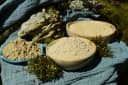 The plant of this articlePeruvian Maca – Yellow, Red & Black · Lepidium meyenii4.9(12)from €6.66View →
The plants that walk with the cycles, to live inside them fully.
tagline · path
On the Junín plateau, in central Peru, maca grows above 4,000 metres, in rosettes pressed flat against the ground. At harvest the field gives up roots of several colours. Most are yellow. About one in ten comes out of the ground black: a dark brown to black skin, grey-violet flesh. This is black maca, the maca negra of Peruvian markets. Same plant, Lepidium meyenii, same seed; a different coat.
A colour the seed decides
Maca is not sown by colour. A single batch of seed gives yellow, red and black roots, and every shade in between. Harvests on the plateau keep roughly the same proportions year after year: 60 to 70% yellow, 15 to 25% red, 10 to 15% black. Black is the least abundant of the three.
The Andes have read these proportions as the plant speaking. What it gives in abundance, the yellow, is eaten every day, by everyone. What it gives in small amounts, the red and the black, is kept for particular uses. We love this way of listening to a field: the plant itself says how much of it to eat.
The legend of the warriors
The best-known story about black maca comes from the Inca empire. Legend has it that warriors ate it before going into battle. The Incas found maca already grown on the high plateaus by the peoples who came before them, the Chavín, Wari and Chanca, and brought it into their economy.
We know of no early written source for this warrior story. It is an oral tradition, and we pass it on as one: a story told in Peru for a long time, which above all says what place the black root holds in the imagination of the Andes.
What the colour says about the plant
The colour is not only skin-deep. Peruvian researchers who compared the three colours found distinct chemistries in them. Black carries the most macamides, fatty compounds described in maca, and the most glucosinolates, the sulphur compounds of the cabbage and radish family. Maca is a crucifer, a cousin of watercress and mustard, and black is the one of the three that says so most loudly.
These glucosinolates also explain a gesture the plateau has never forgotten: maca is not eaten raw. It is dried in the sun for weeks, sometimes up to three months, then cooked.
Black maca in the cup
Like its sisters, black maca is eaten as a powder of dried root, cooked or gelatinised, that is, gently cooked under pressure. The powder is smooth, malty, earthy.
The preparation we love for it is close to a dessert: half a teaspoon of powder (2 to 3 g) in warm plant milk, a spoonful of cacao, a pinch of cinnamon, two to three minutes at a simmer. With plant milk and cacao, maca becomes a delicious and very nourishing traditional preparation. It is drunk in the morning or at midday.
Our black maca is temporarily out of stock. Peruvian maca is available today in yellow and red; the recipe suits them just as well. For the colour of every day, there is yellow maca.
Precautions
- Thyroid disorder: the glucosinolates of crucifers can interfere with thyroid function. Prefer the cooked or gelatinised form and ask for medical advice.
- History of hormone-dependent cancer, severe endometriosis, hormone treatment: ask for medical advice before use.
- Pregnancy and breastfeeding: not enough data, ask a practitioner.
- Digestion: some discomfort is possible at first with raw powder; the gelatinised form is gentler.
- In the evening: taken late, maca can disturb the nights of sensitive people. It is better taken in the morning or at midday.
Our black maca is temporarily out of stock. Peruvian maca is available today in yellow and red, as a 100 g or 200 g powder, from a certified organic supply chain, inspected by a certification body.
Discover Peruvian maca →Is black maca rarer than the others?
It is the least abundant: 10 to 15% of harvests, compared with 60 to 70% for yellow. The seed decides; you cannot sow a field of black maca alone.
Did Inca warriors really eat black maca?
It is a legend from oral tradition, widely told in Peru. We know of no early written source for it, and we tell it as a legend.
What is the difference between black, yellow and red maca?
The same plant, the same seed, three root colours. Yellow is the most abundant and is eaten every day; red is rich in red pigments, anthocyanins; black carries the most macamides and glucosinolates. The Andean reading keeps yellow for every day, red and black for particular uses.
Is black maca available at INFUSE?
It is temporarily out of stock. We offer Peruvian maca in yellow and red, as a 100 g or 200 g powder.
What precautions apply to black maca?
Ask for medical advice first if you have a thyroid disorder, a history of hormone-dependent cancer or severe endometriosis, or are on hormone treatment. During pregnancy and breastfeeding, ask a practitioner. Prefer the cooked or gelatinised form, and take it in the morning rather than late.
Sources
- G. F. Gonzales, "Ethnobiology and Ethnopharmacology of Lepidium meyenii (Maca), a Plant from the Peruvian Highlands", Evidence-Based Complementary and Alternative Medicine, 2012.
- David Winston and Steven Maimes, Adaptogens, 2007.
- Our supplier's sheet: origin, colours available, certification.
 4.9(12)from €6.66View →
You have a story to drop into the Forest too?
Share a story →92 min déjà parcourues · 96 min jusqu'au seuil de retour
What this reading opened
Be the first voice. Each word is read before joining.
Sign in to share what this reading opened in you.
Sign in →