⊹ To weave around
To accompany Wild Dagga
Click a card to see why it pairs — and choose your form.
Read it through your world
The whole page is read through this lens.
✦ Wild Dagga · in one breath ✦
She soothes, elevates, and opens to sensuality and creativity.
⊹ The path of the plant
⊹ Community voices
What the community murmurs.
Average · 178 reviews
including 174 left on our Etsy shop
Breakdown
I bought wild dagga for the first time. Currently smoking my second one. The orange colour is ridiculous! Very surprised it did anything at all! At first there was a kind of lightheadedness not too different from tobacco but more dreamy and long lasting and a mild but noticable euphoria. It is a mood lifter for sure. Beautiful product. Already recommended it to some friends. And the vendor threw in a gift! Thank you so much
Michael
Ritual · left on our Etsy shop · 13 November 2025
Such a light beautiful tea, very easy on the palate too. Before I drank it; I was slightly tense, one of those mornings, after drinking, I felt very light (in the best way) and I was able to relax for several hours, all tension gone. I now mix the dagga petals with my morning hibiscus and, wow, 2 very feminine teas who are great for the soul, together or apart. Thank you again dream herbs
Dorit Phipps
Ritual · left on our Etsy shop · 24 January 2023
Very smooth and potent as an herbal joint. The herbs arrived very fresh. Thank you.
Jareth
Ritual · left on our Etsy shop · 28 November 2025
Professional attention without having to contact the seller. Fresh and quality product. I also appreciate the gift sample you sent. Congratulations!
Jose Gerardo Beas López
Ritual · left on our Etsy shop · 9 July 2024
Very great quality product I love the effects of the smoke nice relaxing and sedating
Matty
Ritual · left on our Etsy shop · 19 October 2023
Well received.. very happy with the plants to order from you.. I test them in several ways by smoking them, in simple herbal teas or fermenting with kombucha...ect. thank you for the additional gifts...all these plants are very interesting ...of medicinal meditation for well-being....which suit me perfectly at the moment...
stephanie
Ritual · left on our Etsy shop · 18 July 2023
Magnificent herbals for unwinding at the end of the day!! Fresh and highly relaxing herbs from nature🌿God Bless your remarkable business!! Much love from our family in Pennsylvania💕
Gerri
Ritual · left on our Etsy shop · 8 November 2022
Very mellow euphoria, calming and warm
Alyse
Ritual · left on our Etsy shop · 11 June 2023
Très agréable et effet intéressant pour se détendre.
Sofiane
Ritual · verified purchase · 22 November 2024
Corresponds well to my expectations. For my part I smoke it and I find it has a pleasant taste
francois
Ritual · left on our Etsy shop · 9 November 2024
Good klip dagga, it's relaxing.
Sebastiano
Ritual · left on our Etsy shop · 26 February 2024
the wild dagga & dagga clip fits the description The delivery was very fast, the items were very well packed, I could only taste this one at the moment. I would do a point on my other purchases as soon as I had tasted everything. Thank you so much to the sellers dreams herbs temple for sharing on a large scale these magnificent plants that mother earth offers us. be blessed. namaste
Shrijani-kumari
Ritual · left on our Etsy shop · 3 June 2021
Ask the Forest about Wild Dagga
408 books digested, 97,512 indexed passages. She answers on lineages, synergies, cautions, ritual variations.
⊹ FREQUENT QUESTIONS ⊹
We answer.
Which family does Wild Dagga belong to?
To the mints, the Lamiaceae, like sage, lavender and horehound. Her major compounds are labdane diterpenes: marrubiin, which she shares with white horehound, and the leoleorins. Her name comes from the Khoikhoi *dachab*, which has designated several plants smoked in the evening.
Are Wild Dagga and Klip Dagga the same plant?
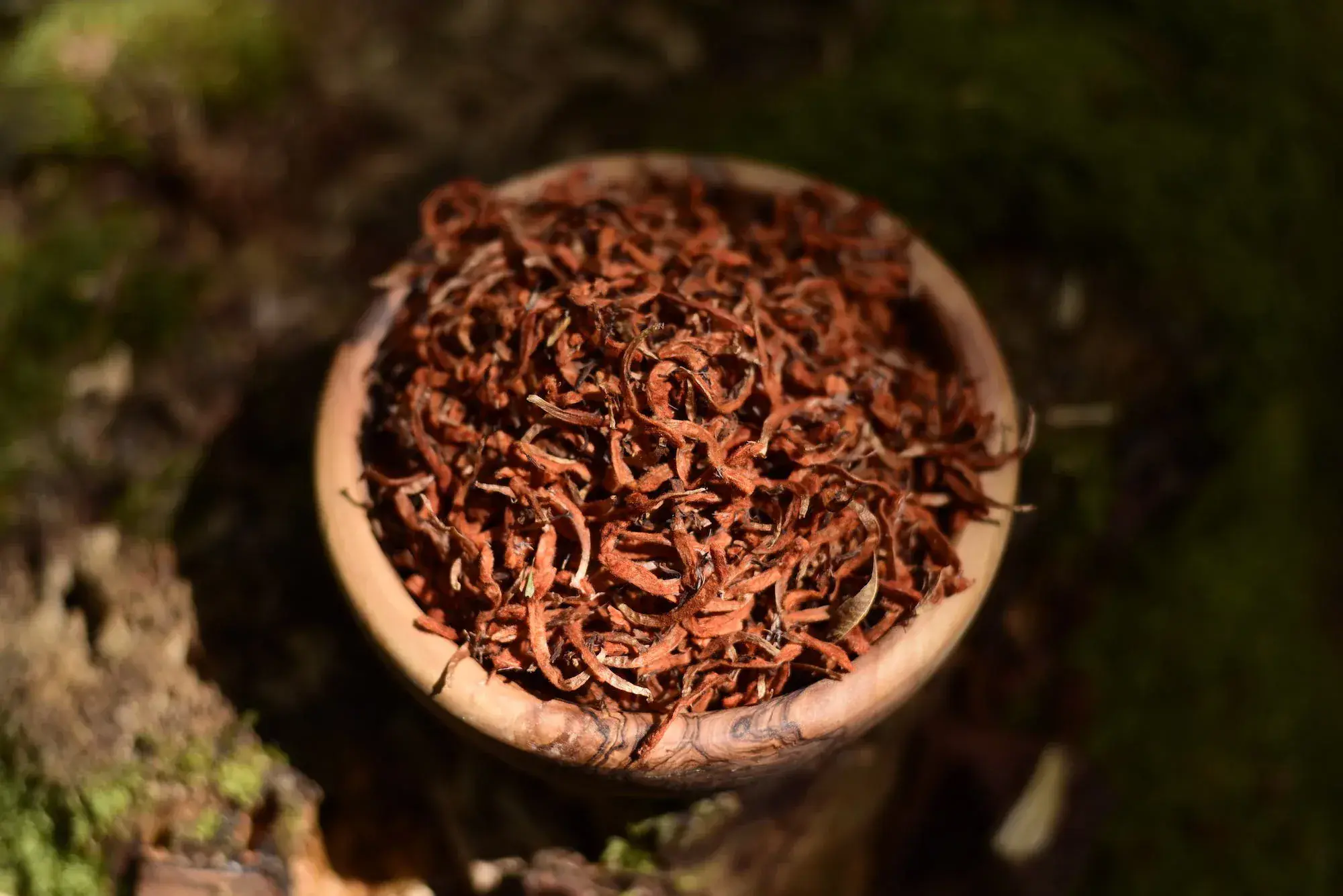
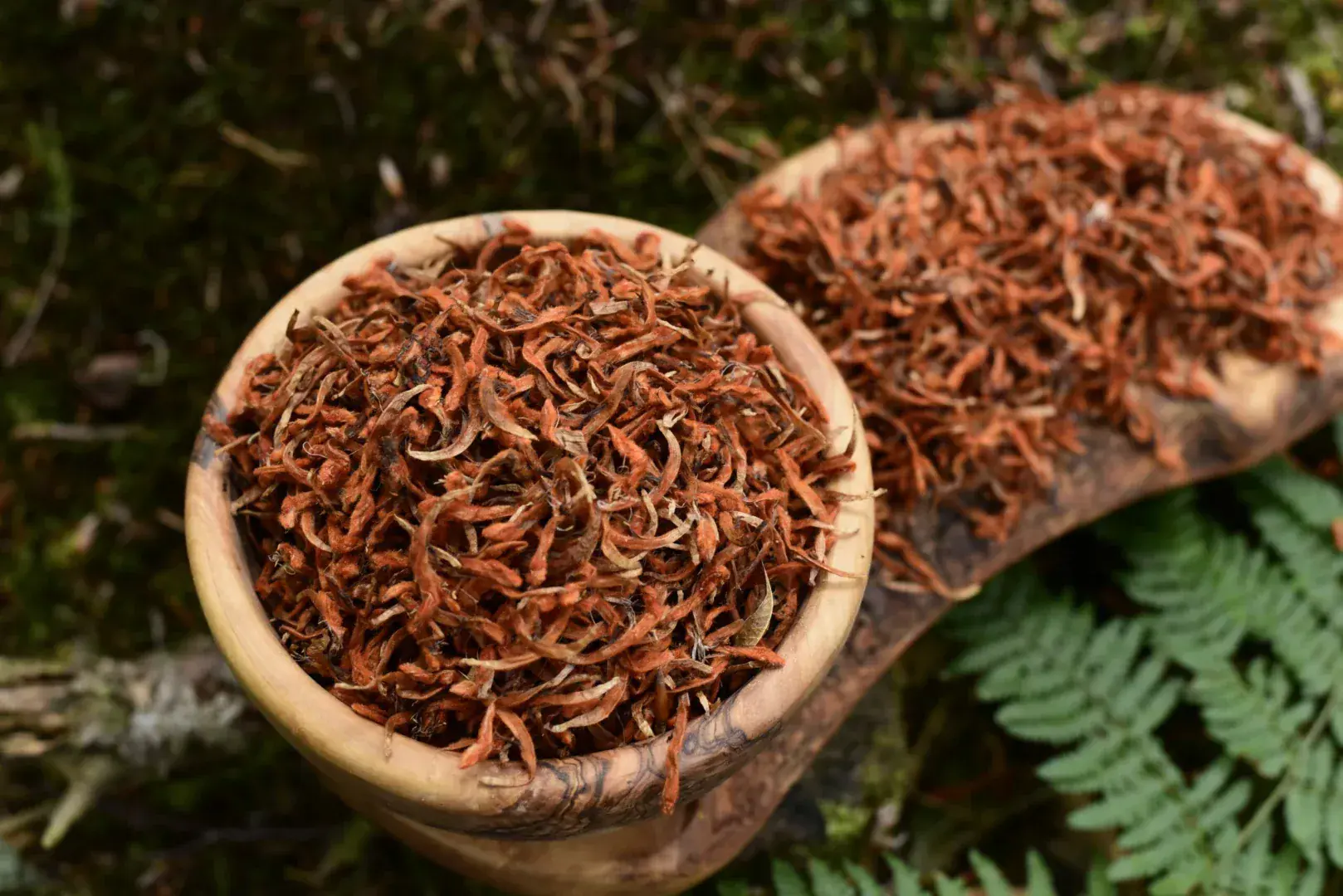
They are two sisters of the genus *Leonotis*. The true Wild Dagga is *Leonotis leonurus*, a shrub of southern Africa with narrow leaves. The Klip Dagga is *Leonotis nepetifolia*, a herb with heart-shaped leaves and ball-shaped flowers, naturalised throughout the tropical zone. Our petals, wild-harvested in Peru, are those of the Klip Dagga; the extract and the resin come from the Wild Dagga of southern Africa.
What are the effects of Wild Dagga?
Tradition lends her soothing, soft and lightly euphoric sensations, with a sensual note. The felt effect is calm and light — an opening of the breath rather than an altered state.
How do I prepare Wild Dagga as a tea?
Pour 1 to 2 tsp of dried petals into 250 ml of simmering water, never boiling (around 80°C). Let infuse 7 to 10 minutes, strain, drink warm. The taste is earthy with a mint note, and the petals can serve for a second infusion.
Can Wild Dagga be smoked?
Yes, this is the traditional use of the peoples of southern Africa and she enters nicely into a smoking blend, finely crushed. Any smoke remains irritating for the respiratory tract — the infusion is the soft way to favour for regular use.
Is Wild Dagga legal?
Freely sold in France. Check the law in your country.
Why is she called dagga?
Dagga is the Afrikaans transcription of the Khoikhoi word dachab. The word named several plants that were smoked in the evening, and the reference dictionary of South African English does not settle which one carried the name first. We say wild dagga to name the orange flower.
What are the contraindications of Wild Dagga?
To be avoided during pregnancy and breastfeeding, and in case of Lamiaceae allergy. Caution if you take hypotensive or sedative medications, in case of hypotension or unstable diabetes, and before surgery. Do your own research (DYOR).
Does Wild Dagga help to sleep and dream?
Tradition uses her as evening companion to soften the entry into the night, and she is reputed to colour dreams without tearing from the real. A light tea 30 minutes before bedtime, over a few nights, is the soft way to explore her.
⊹ Chapter · Questions ⊹
Ask, answer, share.
One question, one answer — sometimes several voices. The community answers first; INFUSE steps in when it should.
Nobody has opened a thread yet about this plant. You can be the one — a real question, a use, a doubt, a detail.
Anonymous if you prefer.
In depthbotany · phytochemistry · history
A mint of southern Africa
Leonotis leonurus is a shrub that can exceed two to three metres, with opposite hairy leaves and orange-coral bilabiate tubular flowers raised in tiered crowns (Dale Pendell, Pharmako/Poeia, p. 220-221). She belongs to the family of Lamiaceae — the mints, like sage, lavender and horehound.
The flower is the fruit of a co-evolution with the African sunbirds, nectarivores with a long curved beak that fits exactly into the floral tube. The plant sculpted her calyx around the bird's beak, and the bird her beak around the calyx. The plant grows easily from seeds and is today mainly cultivated as ornamental beyond her area of origin (Pendell, p. 221). A sister species, Leonotis nepetifolia (« Klip Dagga », lion's ear), has naturalised in the tropics of the whole world; in the West Indies she is called Christmas candlestick for her crowns of flowers that look like lit candles. It is she, the Klip Dagga, that is wild-harvested in Peru: our petals come from her. The extract and the resin, for their part, are drawn from the true *Leonotis leonurus* of southern Africa.
Where the name dagga comes from
The word dagga comes from the Khoikhoi dachab, transcribed by the Dutch settlers. The old sources use it for several plants that were smoked in the evening, and the reference dictionary of South African English does not settle which one carried the name first. Today we say wild dagga to name the orange flower.
Phytochemistry — the labdane diterpenes
The plant's major active compounds belong to the class of labdane diterpenes.
- Marrubiin — labdane diterpene shared with the European white horehound; profile described as bronchodilator, expectorant and mild hypotensive, which illuminates the traditional respiratory use.
- Leoleorins A to J — series of at least ten labdane diterpenes isolated in recent decades. Leoleorin C shows a moderate affinity for the Sigma-1 receptor (Ki ≈ 2.9 µM), receptor of the central nervous system.
- Leonurine — alkaloid related to that of the motherwort (Leonurus cardiaca), with mild cardiac and uterotonic tropism (hence the contraindication in pregnancy).
- Tannins, saponins, phenolic acids, flavonoids — accompanying cortège.
What the studies report
Modern research remains preliminary and largely preclinical. Studies report antinociceptive, anti-inflammatory, hypotensive, anticonvulsant, antioxidant activities, as well as a hypoglycaemic effect in the rat and a moderate inhibition of acetylcholinesterase. The most discussed contemporary lead concerns the bronchodilator profile of marrubiin and the Sigma-1 tropism of leoleorins. None of this constitutes proof of efficacy in humans: these are leads. Dale Pendell, who has tried to test the effects of the smoke, reports « mixed and most often unspectacular » results, one person however finding the smoke « very relaxing and clarifying » (Pharmako/Poeia, p. 221).
Living lineage — Khoisan, Zulu, Xhosa, Sotho
Leonotis leonurus grows throughout southern Africa, from the Cape province to KwaZulu-Natal. The pastoral Khoikhoi and the hunter-gatherer San, whose presence on these lands goes back tens of thousands of years, smoked the dachab alone or in blends — a companion of the evening. The Bantu peoples of southern Africa then integrated her into their popular medicine: decoctions of leaves and flowers for cough, cold and bronchitis, topical applications on bites and stings (Nsuala, Enslin & Viljoen, review on the traditional use and phytochemistry of Leonotis leonurus, J. Ethnopharmacol., 2015). Reported uses, never guaranteed benefits. In the traditional blends, one finds her alongside buchu, wild rosemary and kanna (Sceletium tortuosum), the other great Khoisan plant.
Safety
To be avoided during pregnancy and breastfeeding (uterotonic tropism of leonurine, insufficient safety data). Caution in case of hypotension, unstable diabetes, and with hypotensive, hypoglycaemic or sedative medications, whose effect she can potentiate. Possible allergy to Lamiaceae. Any smoke, whatever the plant, irritates the respiratory tract: for regular use, the infusion is the soft path. Leonotis leonurus is not a threatened species (SANBI red list: least concern), but respect for the communities and territories of origin remains a vigilance. This page is informative and does not replace the advice of a health practitioner. Do your own research (DYOR).