⊹ To weave around
To accompany Eleutherococcus — Siberian Ginseng
Click a card to see why it pairs — and choose your form.
✦ Eleutherococcus — Siberian Ginseng · in one breath ✦
It learns to last with the strength you already have — the patience of the Evenki hunters.
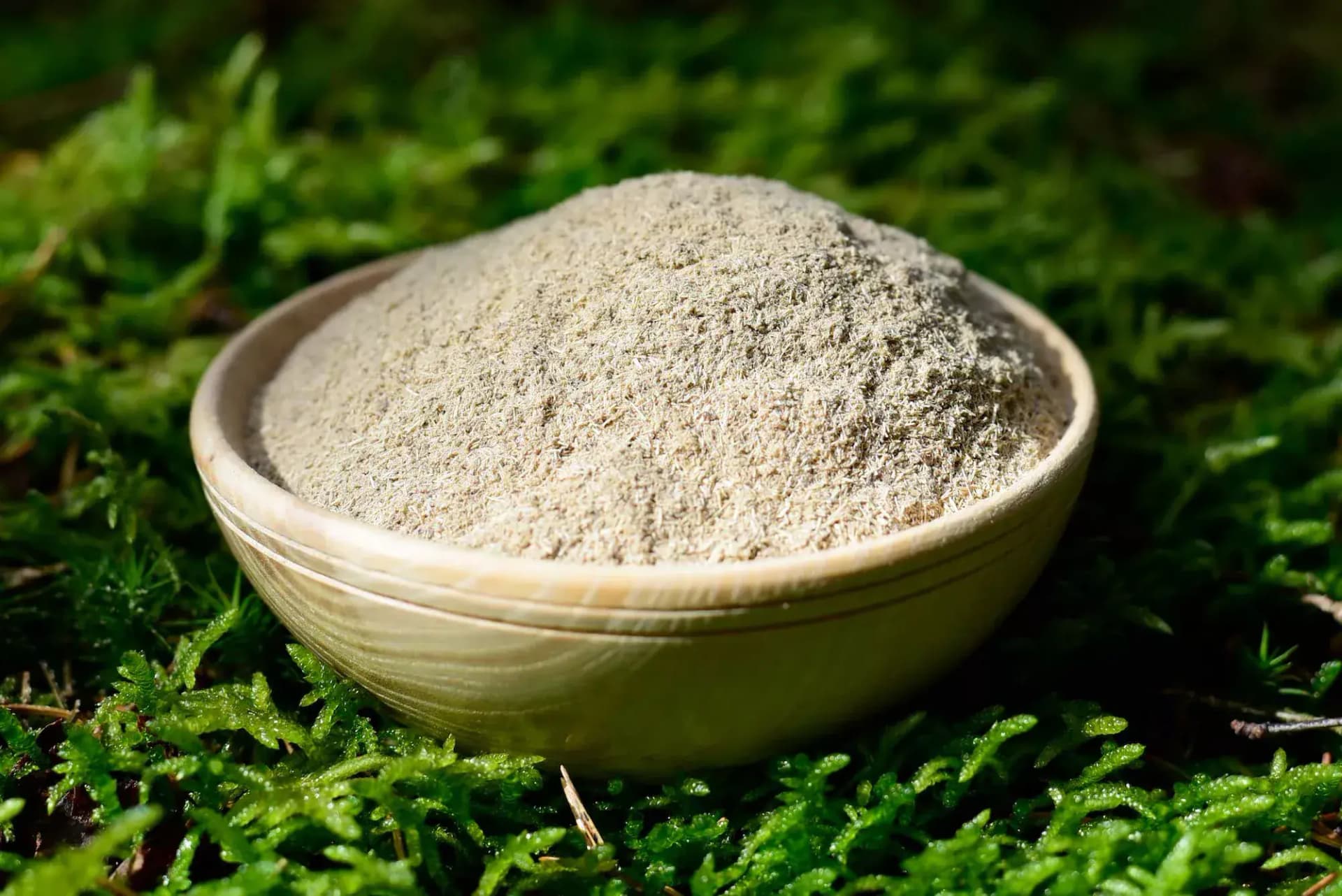
⊹ The path of the plant
⊹ Community voices
What the community murmurs.
Average · 2 reviews
including 2 left on our Etsy shop
Breakdown
Interesting plant to use in infusion
gaelle
Daily · left on our Etsy shop · 13 October 2024
Ask the Forest about Eleutherococcus — Siberian Ginseng
408 books digested, 97,512 indexed passages. She answers on lineages, synergies, cautions, ritual variations.
⊹ FREQUENT QUESTIONS ⊹
We answer.
What is Siberian ginseng (Eleuthero)?
Siberian ginseng, or eleuthero (Eleutherococcus senticosus), is an adaptogenic root of the Far Eastern taiga. Used for centuries by the Evenki and Yakut hunters and in Chinese medicine (Ci Wu Jia), she is known as the plant of long endurance — she does not create energy, she helps protect the one we already have. INFUSE offers her as organic whole root, to prepare as a decoction.
Is Siberian ginseng a real ginseng?
No. The name Siberian ginseng is a commercial appellation born from American market introduction in the late 1960s. Eleuthero belongs to the same botanical family as Asian ginseng, the Araliaceae, but it is a distinct genus, not a Panax. She contains eleutherosides, not ginsenosides. The Chinese name Ci Wu Jia, five prickly thorns, is truer to her.
What are the traditional uses of eleuthero?
Traditionally, eleuthero is the plant of great crossings — long winters, multi-day hunts, loads that last. Chinese medicine ranks her among the superior herbs, to take regularly to support vitality. Soviet pharmacology studied her as an adaptogen for athletes, military and cosmonauts.
How do I prepare Siberian ginseng root?
The historical form is the decoction. Count 2 to 3 tablespoons of crushed root for about 1 litre of water (or 1 to 2 teaspoons for 250 ml), bring to gentle simmer, let 15 to 20 minutes covered, then strain. Drink warm, in several intakes during the day. The same roots can be reused once or twice. The taste is earthy, slightly bitter, with a soft finish.
When to take eleuthero, morning or evening?
Morning and early afternoon. Eleuthero supports baseline energy and may, in sensitive people, disturb sleep onset if taken at the end of the day. The morning decoction is the most traditional form.
How long does a cure of eleuthero last?
Short Russian tradition — 7 to 21 days of intake, then 1 to 2 weeks of pause. Long Western tradition — 8 to 10 weeks, then 2 weeks of pause. Russian research showed that the body's sensitivity to adaptogens declines after 8 to 10 weeks of continuous use; pauses keep the system reactive. Unlike caffeine, the effect accumulates slowly and fades upon stopping.
What are the precautions and contraindications of Siberian ginseng?
Major caution in case of uncontrolled hypertension, cardiovascular disorders, active autoimmune disease or use of immunosuppressants. Avoid during pregnancy and breastfeeding for lack of data. Prefer morning intake in case of insomnia. Caution with anticoagulants, digoxin and oral antidiabetics. In case of ongoing treatment, ask a doctor's advice before starting.
What's the difference between eleuthero and rhodiola?
These are two complementary adaptogens, often associated in the Russian tradition. Rhodiola acts fast, in 1 to 2 weeks, for short intense periods and mental clarity. Eleuthero works the deep capacity over months — the endurance of the crossing. One for the impulse, the other for the duration.
⊹ Chapter · Questions ⊹
Ask, answer, share.
One question, one answer — sometimes several voices. The community answers first; INFUSE steps in when it should.
Nobody has opened a thread yet about this plant. You can be the one — a real question, a use, a doubt, a detail.
Anonymous if you prefer.
In depthbotany · phytochemistry · history
This descriptive section gathers the botany, the phytochemistry and the long history of Siberian ginseng. It describes what the sources and the research report — it makes no promise of efficacy. The page stays short; the depth lives here.
Botany — a thorny shrub of the taiga
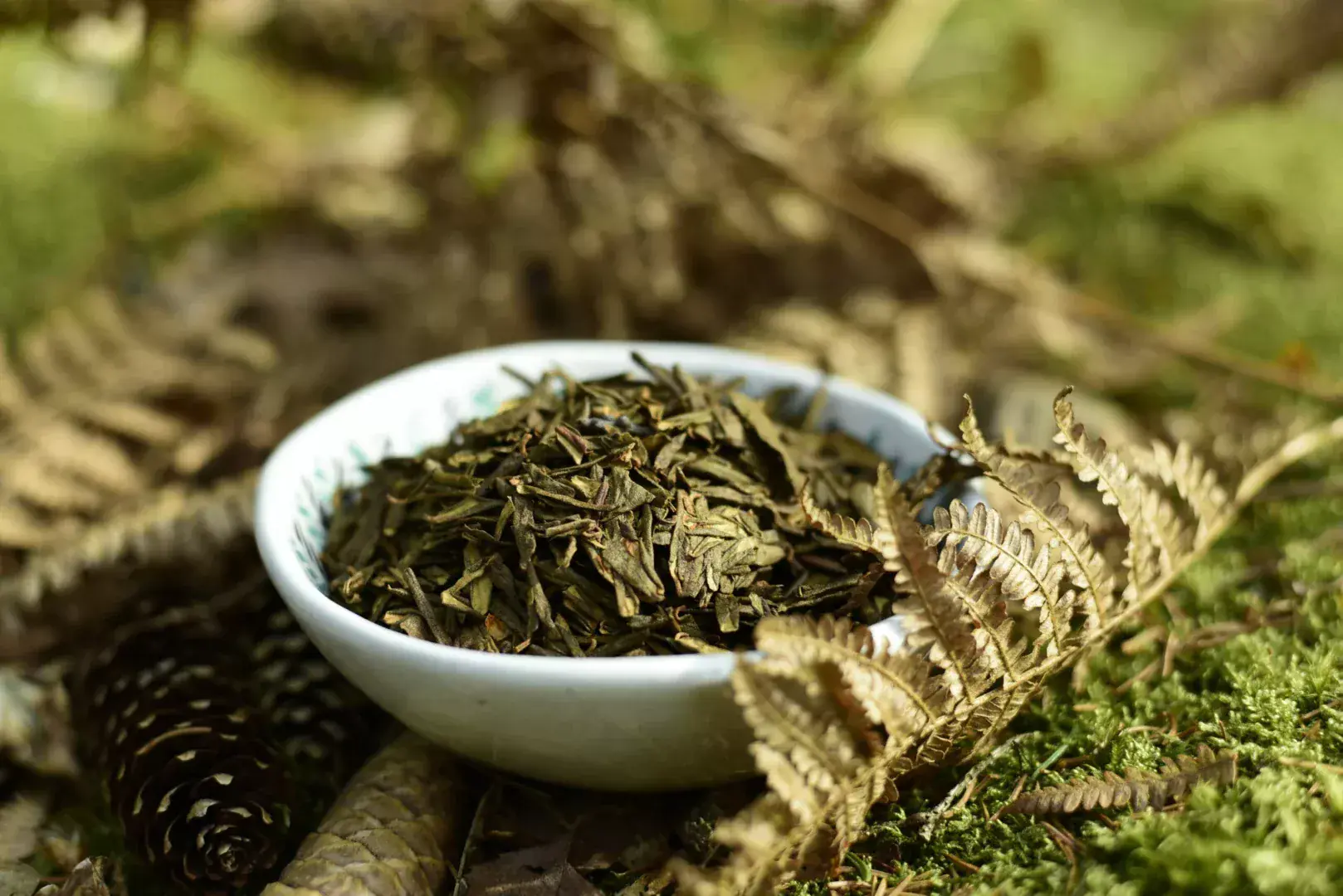
Eleutherococcus senticosus (formerly Acanthopanax senticosus) is a woody subshrub of the Araliaceae family — the same as Asian ginseng (Panax ginseng) and American ginseng (Panax quinquefolius), but of a distinct genus. This is the source of the main confusion of name: the label “Siberian ginseng”, born from American commercialisation in the late 1960s, plays on an analogy of role in the Russo-Asian pharmacopoeia. The plant grows wild in the mixed and coniferous forests of the Russian Far East, north-eastern China, Korea and Japan, often in impenetrable thickets. Its stems are densely covered in fine needles — hence the nickname devil's bush given by Siberian trappers, who had to cross a wall of thorns to reach the root. It is also known as eleuthero, taiga root and, in Japan, shigoka. The part used is the root and rhizome, dried then ground.
Phytochemistry — the eleutherosides and the other families
The chemical signature of the root rests not on a single compound but on several families described in the literature:
- Eleutherosides — a family of glycosides regarded as markers of the plant. The two main ones, retained also by the European Medicines Agency, are eleutheroside B (syringin) and eleutheroside E (syringaresinol diglucoside). They are naturally present in the mature root, at levels typically on the order of 0.8 to 1.5%.
- Polysaccharides (eleutherans A to G), studied for their activity on the immune system.
- Lignans (sesamin, syringaresinol), with described antioxidant properties.
- Coumarins (isofraxidin), flavonoids, phenolic acids and triterpenes.
INFUSE works with the whole root as a decoction, not a standardised isolate: this is the form long brewed in the Russo-Siberian and Chinese traditions, where the plant has never been reduced to a single molecule.
What research reports — cautiously
Eleuthero is one of the most studied plants of the 20th century. Soviet pharmacology explored it as an adaptogen — a term coined for it, describing a substance that would help the organism cope with varied stresses rather than push it in a single direction. The work reports in particular a modulation of the hypothalamic-pituitary-adrenal axis (the stress axis), an increased resistance to hypoxia (low oxygen availability — hence the interest for cosmonauts, mountaineers and divers), immunomodulatory effects and a support of cognitive functions under stress. These data describe studied activities, most often in the laboratory or on small samples; they are not a promise of therapeutic effect for everyone.
Between 1962 and 1986, more than a thousand Soviet scientific publications were devoted to this plant; for reasons of state security, most were never translated. A recent review (referenced under PubMed PMID 34087398, 2021) translated 46 of these studies, which document a wide range of studied activities. Today, the European Medicines Agency (EMA) recognises eleuthero as a traditional herbal medicinal product, used for symptoms of asthenia (fatigue, weakness) — one of the most solid official recognitions granted to an adaptogen.
Long history — from Shennong to the cosmonauts
The oldest written trace of Ci Wu Jia goes back to the Shennong Bencaojing, the founding classic of Chinese pharmacopoeia, where it appears among the superior herbs. Chinese medicine has long credited it with a role as a tonic of the Qi, a support of convalescence and a strengthening of tendons and bones. But it is in the 20th century that the root enters modern history: in the 1950s, in the middle of the Cold War, the pharmacologist Nikolai Lazarev was looking for a tonic of performance, and his colleague Israel Brekhman steered the research towards the plant. In 1959, Brekhman established its advantages over Asian ginseng — more common, less costly, more widely adaptable. The Soviet programme would use it for its elite personnel: athletes, military, chess players, and cosmonauts, from 1977. Hence the nickname plant of the cosmonauts.
Nuggets
The devil's bush. The name has nothing mystical about it: it tells the hardship of the harvest, behind a wall of thorns. The plant that teaches endurance grows where one must endure to gather it — it asks of the harvester the very quality it transmits.
The secret of the Olympic urines. In 1970, Western scientists analysed the urine of Russian athletes at the Olympic Games and detected unknown compounds in it — eleutherosides. The Soviets had for years been using an adaptogen the West knew nothing of. This discovery opened worldwide interest in adaptogens.
The word coined for a plant. The term adaptogen, today omnipresent from wellness marketing to scientific journals, was created to describe the action of this precise root: not a mild stimulant, but a regulator whose effect depends on the state of the subject.
Safety notes
Eleuthero calls for caution in case of uncontrolled hypertension, cardiovascular disorders (rhythm, coronary disease), active autoimmune disease or use of immunosuppressants (immunomodulatory effect). Data are insufficient during pregnancy and breastfeeding: to avoid as a principle. Prefer intake in the morning in case of insomnia. Possible interactions with anticoagulants, digoxin and oral antidiabetics. Respect the cycles (regular pauses): continuous use without pause dulls the effect. In case of ongoing treatment or doubt, a doctor's advice comes before the plant.