Imphepho, the telephone to the spirits
Not a smudge. White sage clears; Imphepho calls. To burn Imphepho is to summon the amadlozi by name. The ancestors' preferred incense — they come to the smell. First plant-medicine revealed to Sangoma healers of South Africa.
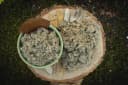 Växten i den här artikelnImphepho · Helichrysum odoratissimum4.9(182)från 7,00 €Se →
The last sovereign territory. You enter through the plants, through silence, through a return to the dreams of the elders.
Svensk översättning kommer snart – artikeln visas på ett annat språk.
— Not a cleansing. A calling. To burn Imphepho is to summon the dead by name. —
The confusion that injures
Imphepho is today sold in the West as a "smudge stick" — the fumigation bundle, a Californian format popularised by the commercialisation of white sage. This is an error. It is not a benign error. The Sangoma elders of South Africa have said so plainly: Imphepho is not an equivalent of white sage. They are two opposed gestures.
White sage (Salvia apiana) clears: it chases, expels, purifies. It closes as much as it opens. Imphepho calls: she summons the ancestral presence, opens the doors toward the dead, creates the channel of communication with the amadlozi — the Zulu and Xhosa ancestors. To confuse the two is to open a door without knowing what you are inviting in. Certain Sangoma elders refuse to sell Imphepho to those who do not understand this distinction.
This is not sectarianism. It is honesty about what the plant does. And it is the first service INFUSE can render: naming things precisely.
First medicine of the Sangoma
It is said that Imphepho was the first plant-medicine revealed to the Sangoma healers of South Africa. This status as the primordial is not botanical — it is cosmological. In the Sangoma tradition, the relation with plants is not discovered through empirical trial: it is transmitted by the ancestors in initiation dreams. Imphepho is first because she is the medium through which all other medicines are taught.
Helichrysum odoratissimum is a strongly aromatic perennial in the Asteraceae family, reaching up to 1.75 metres. Small silver leaves, clusters of yellow flowers that dry without losing their colour — hence the English name everlasting. Native to South Africa, widely distributed across the country. Taxonomic note: the vernacular name imphepho designates several Helichrysum species used interchangeably — H. odoratissimum, H. petiolare, H. cymosum. The Sangoma distinguish them; the trade confuses them.
The Afrikaans name, kooigoed — "stuff for the bed" — reveals a more everyday, less spectacular use: stuffing mattresses with the dried flowers for their scented sedative qualities. The settler's kooigoed and the Sangoma's imphepho — same plant, two entirely different grammars of the world.
Dreams, meditation, protection
Drinking Imphepho before sleep, in the Sangoma tradition, invites the ancestors' dream-messages. The night becomes a space of transmission: the amadlozi speak in dreams, deliver diagnoses, indications, warnings. This is dream incubation — a practice that exists also in ancient Greece (the temple of Asclepios), in Egypt (the temples of Serapis), among many Indigenous peoples of the Americas. The form varies; the gesture is universal: prepare the body and the space, set an intention, sleep, listen.
The protective quality of Imphepho is not protection by exclusion — she does not chase unwanted presences as white sage does. She creates a space so clearly aligned with the benevolent ancestors that unaligned presences find no footing there. Protection by saturation of intention, not by expulsion. The nuance is practically important.
Constituents and pharmacology
Helichrysum odoratissimum contains acetophenones and phloroglucinols — aromatic compounds characteristic of the Helichrysum genus. Flavonoids (notably arenarine, a signature compound of several Helichrysum species). Sesquiterpenes. Phenolic acids. Composition varies significantly between species and chemotypes.
The reported effects — relaxation, focus, light trance, dream richness — are not yet fully resolved pharmacologically. This is one of the plants whose traditional efficacy is well documented and whose pharmacology remains open. That openness does not invalidate the use — it invites scientific humility before a plant whose lineage of use far exceeds our current models.
Plant file
Precautions
An honest protocol
Burn Imphepho with intention. Speak directly to your ancestors — by name if possible. State your request clearly. Let the smoke do its work. This is the Sangoma ceremonial protocol in its most transmissible form. The purpose is not cleansing — it is communion.
For a quiet non-ceremonial daily approach: burn 0.5 g of flowering tops in the bedroom, 30 minutes before sleep, with a simple intention. Or prepare a light infusion — 1 g in 250 ml of 80°C water, 8 minutes, strained, drunk warm. Keep a dream journal. Observe over 2 to 3 weeks whether the dreams change in texture.
 4.9(182)från 7,00 €Se →
Få vårt veckobrev.
Har du också en berättelse att lämna i Skogen?
Dela en berättelse →Det som den här läsningen öppnade
Bli den första rösten. Varje ord läses igenom innan det ansluter till läsningen.
Logga in för att dela det som den här läsningen öppnade i dig.
Logga in →