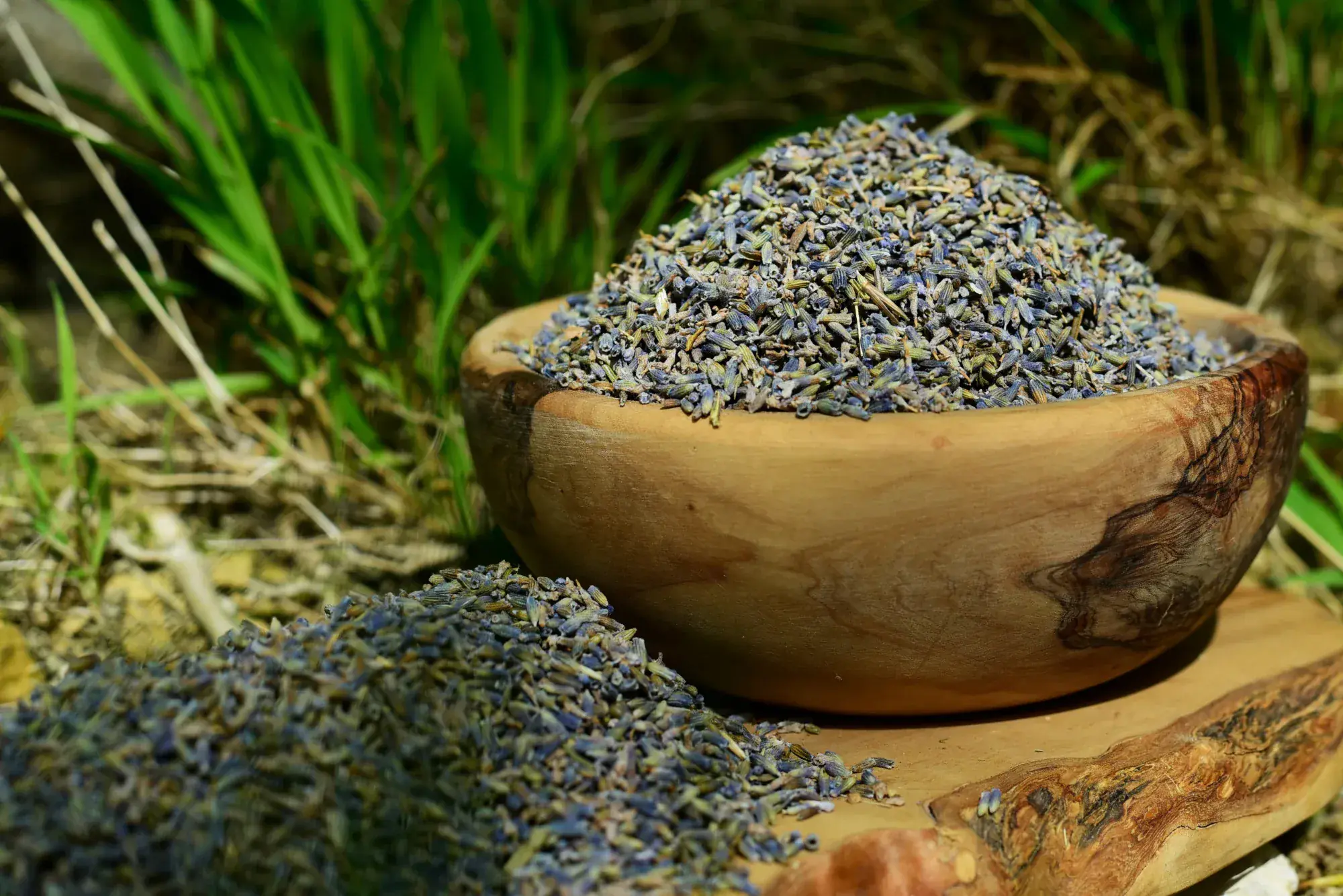
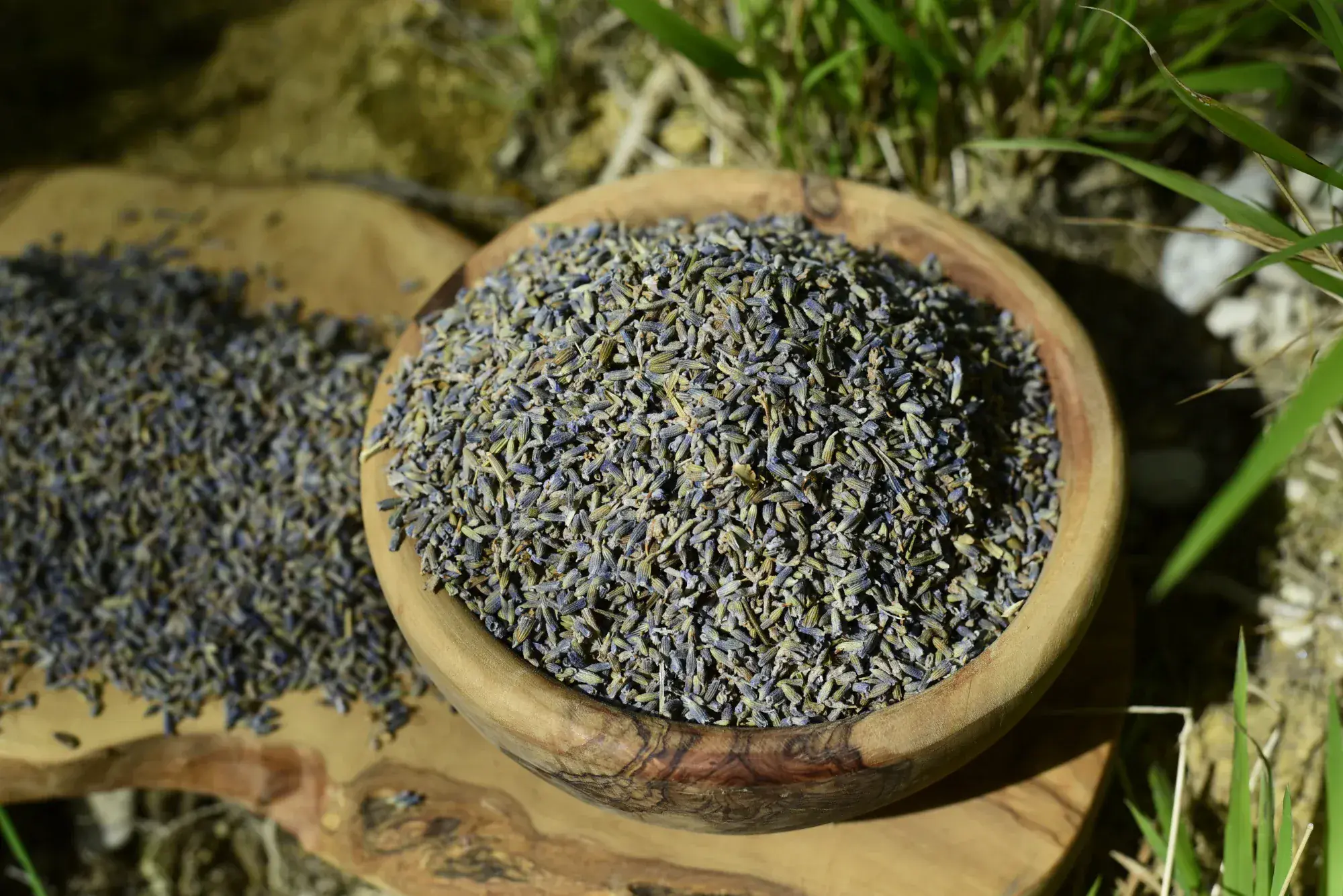
Lavender
€7.00
Also as an oil macerate€15.00
Sparkling rose, lavender lemonade, rose cacao whisked the Maya way: party drinks made with flowers, and the calendar of the months when people raise a glass without alcohol.
In 17th-century England, a piece of spiced toast flavoured the cup, and the word *toast* stayed with the gesture of raising a glass.
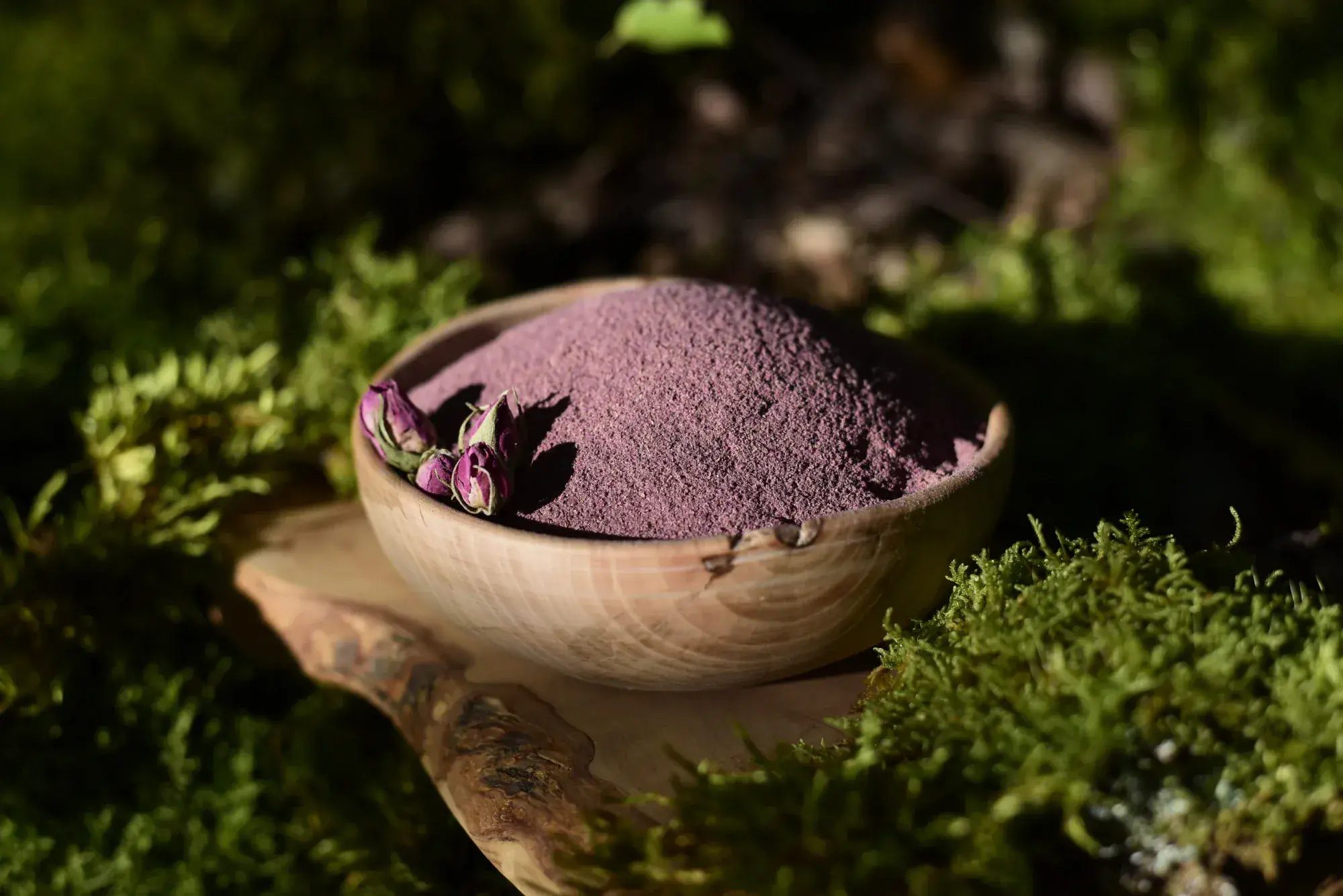
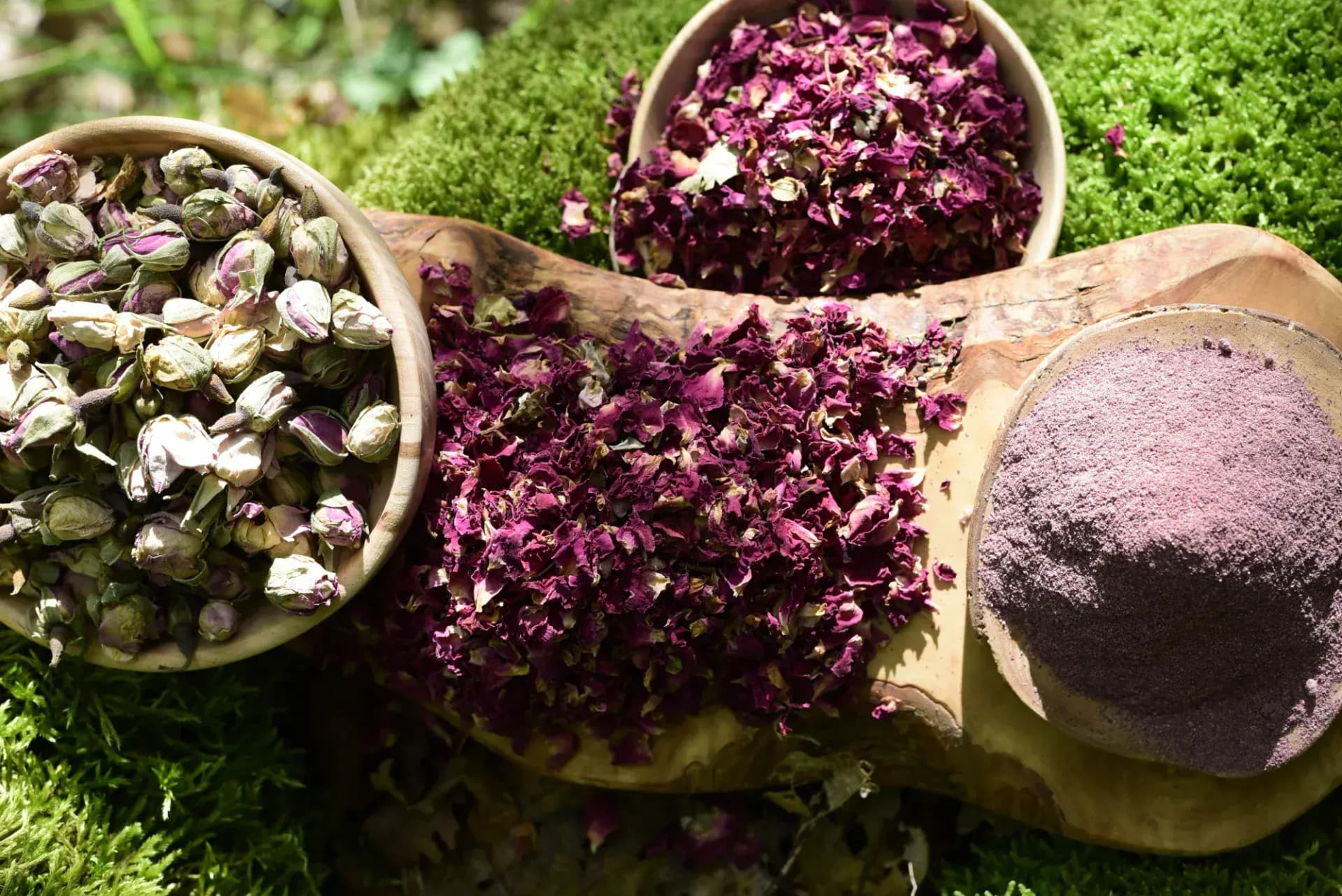
The flower of divine love. Symbol of the royalty of the heart, the Rose is a truly magnificent flower to connect with, and to use in synergy: it pairs ideally with Ceremonial Cacao. Two lineages on our table: the Ancient Wild Rose from India, in petals and powder, and the Damask rose from Morocco, in buds.
Sparkling rose, lavender lemonade, rose cacao whisked the Maya way: party drinks made with flowers, and the calendar of the months when people raise a glass without alcohol.
Flower syrups and infusions are made the day before and spend the night in the fridge. Water just off the boil, around 80 to 85 °C (175 to 185 °F), never boiling: the flowers keep their scent.
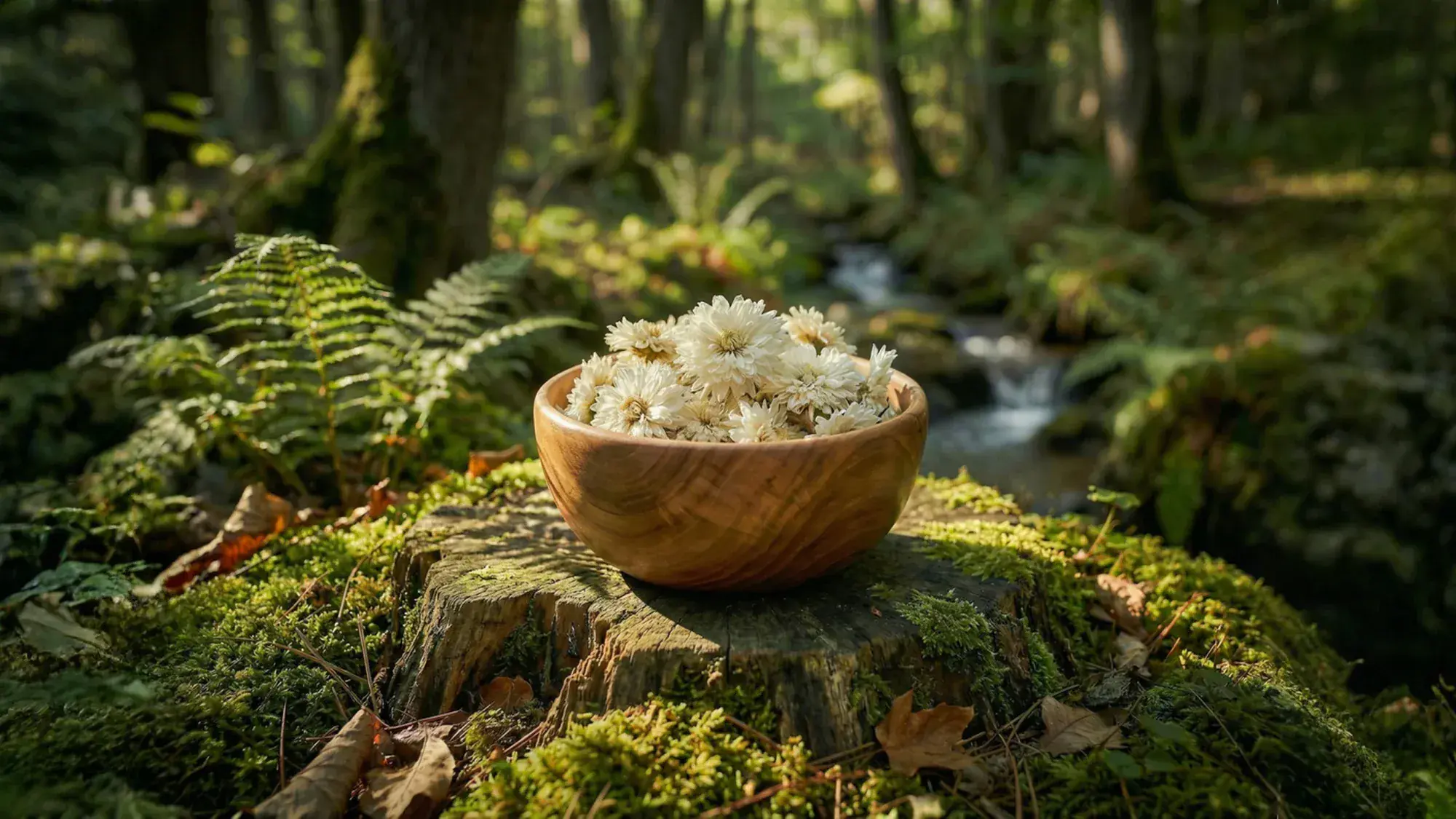
In the glass: the syrup or the infusion, a squeeze of lemon, ice, then the sparkling water, poured gently to keep the bubbles.
A rosebud, three lavender flowers or a chamomile flower on the surface of the glass: each drink is known by its flower.
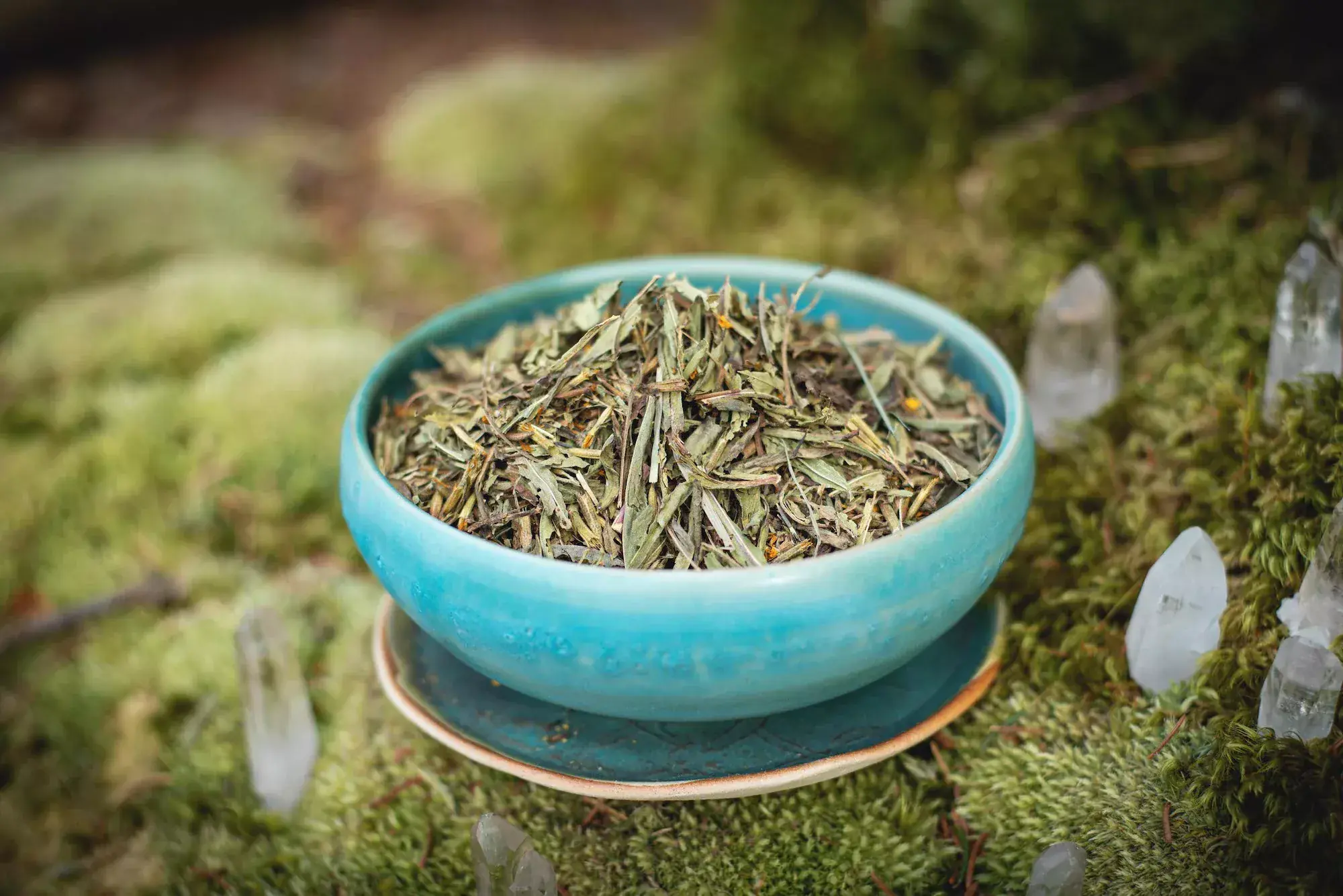
The name of the person you honour, and the glass raised: that is the whole toast, since the 17th century.
These recipes are our own, born from the preparations on our plant pages. Each one fills a jug of about a litre, enough for four to six glasses.
Whole countries give themselves a month, or a few weeks, to raise a glass differently. Here are the campaigns we found, with their sources at the bottom of the page.
| Campaign | When | Where | Since | Who runs it |
|---|---|---|---|---|
| Dry January | January | United Kingdom | 2013 | Alcohol Change UK |
| Sober October | October | United Kingdom | 2013 | now with Alcohol Change UK |
| Dry July | July | Australia | 2008 | the Dry July Foundation |
| Ocsober | October | Australia | — | Life Education Australia |
| Dry January, Défi de janvier (“January Challenge”) | January | France | 2020 | a collective of ten associations, without government backing |
| Dry January | January | Switzerland | 2021 | Blue Cross, GREA and their partners |
| IkPas | January, and the 40 days of Lent | Netherlands | — | the Stichting Positieve Leefstijl |
| Tournée Minérale | February | Belgium | 2017 | the Belgian Foundation against Cancer and its partners |
| Suchej únor (“Dry February”) | February | Czechia | 2013 | an awareness campaign backed by the Ministry of Health |
| 7 Wochen Ohne (“7 Weeks Without”) | the seven weeks of Lent | Germany | 1983 | the Protestant Church; the theme changes every year, and many give up alcohol for it |
| Sierpień, miesiąc trzeźwości (“August, month of sobriety”) | August | Poland | 1984 | the Catholic Church |
| День трезвости (“Day of Sobriety”) | 11 September | Russia | revived in 2014 | the Russian Orthodox Church |
| 休肝日, kyūkanbi | at least one day a week | Japan | — | the Ministry of Health |
In Japan, the word kyūkanbi reads “liver rest day”: there, people count days within the week.
The toast comes from a 17th-century English custom: a piece of toasted, spiced bread flavoured the drink, and the name of the person being honoured was meant to flavour it in the same way. The word passed to the raised glass (Dictionary.com). The mocktail, from mock, “imitation”, and cocktail, appears in 1930s English (Dictionary.com).
Long before these words, people were already raising alcohol-free drinks. Sharbat, from the Persian, “a drink of sugar and water”, is often scented with rose; the Mughals carried it to India (Wikipedia). In Mesoamerica, cacao was drunk hot or cold, with chilli, honey and flowers, poured from a height to foam (Penn Museum).
Chamomile: if you are allergic to the Asteraceae family (ragweed, daisies, chrysanthemums), leave it out; its safety during pregnancy and breastfeeding has not been established, and it can interact with warfarin (NCCIH). Lavender: the European Medicines Agency does not recommend it during pregnancy and breastfeeding, for lack of data (EMA). Yauhtli: avoid during pregnancy and breastfeeding, and if you are allergic to the Asteraceae family; its anise flavour is for moderate use. Rose: if you are allergic to the Rosaceae family, leave it out. Cacao contains natural stimulants: moderation during pregnancy. If you take any medication, ask a doctor before any plant.
A scented base, a sour note, bubbles. The base: a flower syrup or infusion made the day before (rose, lavender, chamomile, Yauhtli). The sour note: a squeeze of lemon. The bubbles: very cold sparkling water, poured at the last moment. Our six recipes are further up this page.
Rose as a syrup, for a sparkling drink; lavender, very light, in a lemonade; chamomile as an iced tea; Yauhtli for a note of anise. In winter, cacao whisked with rose water. A flower floated on the surface of the glass is the garnish.
All through January. Born in the United Kingdom in 2013 with Alcohol Change UK, it has run in France since 2020, carried by a collective of ten associations under the names Dry January and Défi de janvier, and in Switzerland since 2021.
January in the United Kingdom, France, Switzerland and the Netherlands; February in Belgium (Tournée Minérale) and Czechia (Suchej únor); Lent in the Netherlands (IkPas), and in Germany, where many give up alcohol during 7 Wochen Ohne; July in Australia; August in Poland; October in the United Kingdom and Australia. The table above gives the details.
From the English mock, “imitation”, and cocktail. The word appears in the 1930s. It is also called an alcohol-free cocktail.
No: our elixirs are macerated in an eau-de-vie, a distilled spirit, and each dose contains a few drops of it. That is why they are not on this page. All the recipes here are made of flowers, water and fruit.
Ask the Forest: ethics of a plant, dose, lineage, synergy. It shares what peoples have transmitted and what books have written.