The Plants of the Sacred Feminine
The "sacred feminine" has become a product. Online courses, €3,000 retreats, powder-pink packaging. This article will not sell you a queen energy. It speaks of twelve plants that women — witches, midwives, grandmothers — loved and held for centuries, and what we honestly know of them today. Federici, Estés, Kimmerer as sources. Named lineages: Maya, Khoi-San, Chontal, Ayurveda, TCM, medieval European midwives.
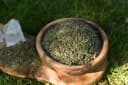 Växten i den här artikelnDamiana · Turnera diffusa4.9(85)från 7,80 €Se →
The plants that walk with the cycles, to live inside them fully.
Svensk översättning kommer snart – artikeln visas på ett annat språk.
The Plants of the Sacred Feminine
Twelve plants that women loved and held for centuries, and what we honestly know of them today.
— The sacred feminine is a memory, often hard, sometimes luminous. —
§0 — A fissure to begin with
The plants of the sacred feminine are plants of reality: the one that bleeds, that transmits, that slows, that no longer holds, that begins again. They accompany bodies that are sometimes ashamed, sometimes in pain, sometimes hungry for tenderness, sometimes longing to be alone. They help to inhabit.
A historical fracture runs beneath these plants. For three centuries — from the 15th to the 18th — Europe burned between forty thousand and a hundred thousand women (Silvia Federici, Caliban and the Witch, 2004). A portion of them knew the names of the plants. The women's knowledge of cycle regulation, contraception, childbirth, miscarriage, the transition to menopause was systematically devalued, criminalised, then replaced by official medicine — which took four hundred years to recognise menstrual pain as a legitimate medical object, and which, in France, only authorised the teaching of gynaecology to women in 1875.
This history is under our feet. When we speak of the plants of the sacred feminine, we also speak of that, to give these knowledges back the dignity of their depth.
I. An embodied opening — where we speak from
The place of INFUSE, the place of a shop, is that of an honest witness and a keeper of precision: to point to what we know, to flag what we do not, to name those who carried these knowledges.
The rose, in a tea, is a taste of childhood, a grandmother who poured the hot water, a gesture older than the brands.
This article is our shared attempt. It has two fissures to carry:
One. These plants accompany cycles, transitions, sensibilities, in every body. A portion of them concern, first and foremost, people who have a womb; others, bodies that have lived through traumas, often transmitted over several generations, that modern culture files under the label “feminine.” We hold the plurality without over-theorising it. The yin never asked for an identity card.
Two. We do not — yet — redistribute to women-healers’ cooperatives, to traditional midwives, to associations protecting women’s knowledges. We aspire to. We write it honestly. Today, INFUSE is a small company carried by a small team and a few allies. The future we want includes that. The present does not yet contain it. We have no right to present an aspiration as an accomplished fact.
It is on these two fissures that everything which follows rests.
"Beauty without history is suspect." — Silvia Federici, Caliban and the Witch, Autonomedia, 2004 INFUSE reading — This is the sentence that holds us. Federici writes the political archaeology of what was destroyed: the knowledge of the women-healers, transmitted from mother to daughter, criminalised by the nascent state to allow the new medical professions — all male — to take hold of women's bodies. When we speak of the plants of the sacred feminine, we also speak of that. History is the condition of dignity.
II. What "sacred feminine" means — the honest version
The “inner goddess” comes from the Jungian archetypes of Jean Shinoda Bolen (Goddesses in Everywoman, 1984), drawn from pre-classical Greek mythologies: Demeter, Persephone, Hecate, Artemis, Aphrodite. Bolen is a psychiatrist trained in Jungian analysis; her book is demanding and nuanced. In her work as in Estés, the goddess is also Hecate at the crossroads, petrified Medusa, the old Cailleach who strips the world bare in winter.
The lunar cycle lasts 29.5 days; the human menstrual cycle, between 21 and 35 days, with a median of 29 days over 600,000 cycles, and a large share of cycles departing from that average (Bull et al., NPJ Digital Medicine, 2019). The average correspondence exists, and each body has its own rhythm.
A cyclical approach — without idealising
The phases of the menstrual cycle correspond to biochemically different hormonal states, and these states echo in energy, memory, sleep, libido, mood. It is physiological. Naming these phases, inhabiting them, and choosing for each the plants that the traditions have linked to it: that is bodily precision.
| Phase | Average length | Dominant hormones | Somatic tendency | |---|---|---|---| | Menstruation (D1–D5) | 3 to 7 days | Oestrogens and progesterone low | An inward fold, possible fatigue, a need to slow down | | Follicular (D6–D13) | about 7 days | Oestrogens rising | Energy rising, creativity, openness | | Ovulation (D14, ± 2 days) | 24–48 hours | A peak of oestrogens, a peak of LH | Sociability, vitality, erotic permeability | | Luteal (D15–D28) | about 14 days | Progesterone dominant | Introspection, emotional sensitivity, a need for a cocoon |
These lengths are sourced statistical averages (Bull et al. meta-analysis, NPJ Digital Medicine, 2019). They vary. A real person's cycle resembles no table.
More broadly, the "cycle" in the sense that Estés, Bolen, Blackie mean it is not only menstrual. It is:
the seasons of life (maiden → mother → mature woman → grandmother, in the Celtic language Blackie takes up; maiden – mother – wise woman – crone);
the long rhythms (gestations, breastfeedings, miscarriages, abortions, menopauses, griefs — all that dilates or shrinks the body in time);
the annual seasons (the part of you that falls asleep in autumn and starts up again in spring is not lazy, it is seasonal);
the intergenerational transmissions (what your mother kept silent, what your grandmother carried — what you will or will not uncover).
The plants that follow work on these four scales, at different moments.
A cut transmission — three generations in the West
Here is a hard observation. The oral transmission of women's plant-knowledge has been cut, in the industrial West, in about three generations. Your great-grandmothers, in France, in Spain, in Poland, in Italy, in Ireland — depending on your lineage — could probably name a dozen local medicinal plants and knew what to do with them during painful periods, the after-births, the transitions. Your grandmothers, as modern medicine grew more medicalised, kept two or three of them (chamomile, sage, verbena). Your mothers, raised in the neighbourhood pharmacy of the 1970s–1980s, often kept none.
It is a loss, and a documented cognitive expropriation. Federici makes its political archaeology; Susun Weed, in Healing Wise, makes the living clinic of it; Rosemary Gladstar made the contemporary teaching of it. These three lineages converge on one point: women's plant-knowledge has not disappeared — it has been displaced, towards parallel medicines often held by herbalists, traditional midwives, peasant grandmothers, and — for thirty years — towards schools of women's herbalism (in France: the Lyon School of Medicinal Plants, the Plant School of Lyon, the trainings of Sabine Lecêtre, the teachings of Christophe Bernard). Reconnecting goes through a slow rebuilding: readings, trainings, a garden, a mentor if possible, over several years.
INFUSE is a shop: it points towards the right sources, says what the traditions know of the plants, and accompanies without pretending to replace what cannot be replaced.
Susun Weed, in Healing Wise (Ash Tree Publishing, 1989), describes a healing knowledge that the persecution of witches drove underground, and that sleeps today in seeds, in grandmothers' notebooks and in herbalists' circles. Federici makes its political archaeology; Weed makes its resumed clinic. They say the same thing in two registers: the knowledge has been displaced. The work is to patiently take up the living lineages where they still exist, and the plants that follow are our modest attempt to point towards them without usurping a costume.
III. The twelve plants — short but dense sheets
For each one: the canonical name, the Latin name, the named people or lineage, what the tradition says of it, what it documents as dose and preparation, honest contraindications, and the voice in which it was received. Traditions and sources, with no promise of healing. When INFUSE offers the plant, we say so; otherwise, we point to it.
The order follows, freely, a four-stage mapping: plants of the blood (cycle, periods, menstrual blood and birth blood) → plants of the heart and of desire → plants of the long transitions (postpartum, menopause) → plants of sensitivity and of the psyche.
1. Yarrow — Achillea millefolium — the warrior who seals
Family: Asteraceae. Named lineage: European folk medicine (Celts, Saxons, medieval midwives); a parallel use among several Mohawk (Haudenosaunee) and Cherokee nations, documented by the ethnobotanist Daniel E. Moerman (Native American Ethnobotany, 1998).
The name Achillea comes from Achilles — the legend says he dressed the wounds of his warriors with this plant. The English name yarrow derives from the Saxon gearwe. It grows everywhere in the northern hemisphere, on embankments, in unfertilised meadows; you have already trodden on it without knowing.
What the tradition says: European herbalism holds yarrow to be an astringent plant, one that tightens the tissues. European midwives used it around the bleeding of childbirth, and contemporary women's herbalism offers it for heavy periods. At a higher dose, the tradition calls it emmenagogue: it calls the period. This double use, tightening and calling, makes it precious and asks for attentive use.
Tradition and preparation: an infusion of dried flowers, 1 teaspoon per cup, infused 5 minutes, up to three cups a day during the period. As a tincture, 1 to 3 ml twice a day. A bitter, slightly camphored taste.
Contraindications: avoid during pregnancy (a documented emmenagogue effect, Hoffmann, Medical Herbalism, 2003). Caution for people on anticoagulants. Possible allergies to the Asteraceae (chamomile, ragweed). In case of medical doubt, your doctor before the plant.
Voice: "The warrior who seals." Yarrow does not console — it tightens. It is a plant of bodily discipline. It is honoured in the Celtic tradition for the work of sealing at moments of passage. INFUSE does not sell it as a single plant — we cite it because it is central to the European feminine mapping and you will find it at any serious herbalist's.
2. Mugwort — Artemisia vulgaris — the patroness of the threshold
Family: Asteraceae. Named lineage: the Greek goddess Artemis (who gives her name to the genus Artemisia), keeper of births and of feminine transitions; medieval European herbalism (the plant "of St John's"); moxibustion in traditional Chinese medicine (used as moxa since at least 1000 BCE, Bensky, Materia Medica, 2004).
Artemis, in archaic Greek mythology, is not the domesticated huntress of late Olympus — she is the Potnia Therôn, mistress of the animals, keeper of childbirth, goddess of thresholds. Mugwort carries her name. It is not an accident.
What the tradition says: mugwort is emmenagogue (it calls the period), antispasmodic (it is given for cramps of the belly) and oneirogenic (it colours dreams). Three uses that do not seem linked until one remembers that Artemis is also the goddess of the night. Women's sleep, blood and dream are, with her, a single symbolic function.
Tradition and preparation: as an infusion at the time of the period, 1 teaspoon of dried leaf per cup, 5 to 7 minutes. A bitter, earthy taste. Under the pillow, dried in a small sachet, for dreams. Smoked in small amounts (see the red lines). As a hot footbath before sleep, to bring the blood back into the pelvis, as the saying goes.
Contraindications: strictly contraindicated during pregnancy (a documented uterine effect, Bairacli Levy, Common Herbs, 1974). Caution for people who are epileptic (thujone, present in a small quantity, can lower the epileptogenic threshold). No long continuous course; a phase use.
Voice: “The patroness of the threshold.” Mugwort is a plant of passage: between waking and sleep, between flow and retention, between cycles. INFUSE offers it as leaves, wild-harvested in France, for dreaming and ritual use. For use around the cycle, we point to the herbalists (Gladstar, Weed, Bairacli Levy): the plant is precise enough to deserve individual guidance.
3. Raspberry leaf — Rubus idaeus — the midwives' herb
Family: Rosaceae. Named lineage: medieval and modern European midwives, a continuous tradition documented to this day; a practice recognised by several contemporary midwives' associations (in France, the use is mentioned in the reference works of Florence Guiraud, Le Grand Livre des plantes médicinales, 2012).
It is probably the most discreet woman's plant in the table: little mystical, never put forward in any “goddess awakening” retreat. And it is perhaps the most present day to day.
What the tradition says: midwives hold it to be a tonic of the womb, one that accompanies the uterine muscle. The leaf is rich in tannins, vitamins (C, E, B group) and minerals (calcium, magnesium, iron, manganese). Its name tells a legend: the nymph Ida, picking raspberries for the infant Zeus, pricked her breast, and the white fruit took the colour of her blood; Rubus idaeus, the bramble of Ida.
Tradition and preparation: as a long infusion (the Susun Weed method): 30 g of dried leaves in a litre of boiling water, left 4 to 8 hours (all night), strained in the morning. One to three cups a day. A green, slightly astringent taste. Many midwives offer it during the last trimester of pregnancy (from 32 weeks, after medical agreement) to prepare for the birth; the tradition also gives it around the period and after the birth.
Contraindications: a controversy on use in early pregnancy — most herbalists recommend waiting for the third trimester as a precaution. In case of pregnancy, prior medical agreement is mandatory.
Voice: “The discreet herb.” Raspberry leaf is a plant of the kitchen, of the country pharmacy, of the teapot on the table. INFUSE offers it as leaves (see the Raspberry page). It deserves its place in the table.
4. Vitex / Chaste tree — Vitex agnus-castus — the chaste tree of priestesses and monks
Family: Lamiaceae. Named lineage: the ancient Mediterranean (Pliny the Elder, Natural History, book XXIV, mentions its use by the priestesses of Demeter during the Thesmophoria); medieval monastic herbalism (the name agnus-castus — chaste lamb — comes from its use by monks to moderate libido); contemporary feminine use since the 1950s in German phytotherapy.
A small Mediterranean shrub with lilac flowers, peppery berries (used in cooking as a weak pepper). An amusing historical particularity: the plant has been used for opposite effects depending on the era — the Greek women for their cycles, the monks for their chastity. The opposite of a simple plant to understand.
What phytotherapy says: since the 1950s, German phytotherapy has used chaste tree around the female cycle, and it is the plant on this list that research has studied most in that field. A 2005 review listed its adverse events (Daniele et al., Drugs): they are rare and mild, hence the precautions below. The plant acts on the hypothalamic-pituitary axis, which explains its interactions.
Tradition and preparation: as a tincture of fresh berries, 40 to 60 drops in the morning, for at least three months. It is a slow plant. A peppery, slightly bitter taste.
Contraindications: do not combine with hormonal contraceptives (a documented interaction — Vitex can interfere with contraceptive effectiveness). Caution in case of oestrogen-dependent fibroids. Possible interactions with treatments for Parkinson's disease (a dopaminergic action). In case of medical doubt, your doctor before the plant.
Voice: “The patient modulator.” Chaste tree is the plant that asks for the most patience in the table: nothing is felt in the short term, everything plays out over months. INFUSE does not sell it. We name it because it sits at the heart of European women's phytotherapy.
5. Damiana — Turnera diffusa — the wild one who tames
Family: Turneraceae. Named lineage: a plant of northern Mexico and the Caribbean arc, of ancient traditional Mexican use, documented by the ethnobotany of New World plants.
A small aromatic shrub of northern Mexico, southern Texas, and the Caribbean arc. Slightly toothed leaves, solar yellow flowers, a resinous and sweet scent recalling the warm seaside. It is a plant you recognise by smell before you recognise it by sight.
What the tradition says: in Mexico, damiana is first a plant of sensuality, and that is its historical reputation. Christian Rätsch, in his Encyclopedia of Aphrodisiacs (2013), ranks it with cacao and rose among the plants that act “through release rather than excitement.” At the House, we call it the teacher of sacred play and sensual delight, a priestess of love and intimacy.
Tradition and preparation: as an infusion, 1 teaspoon of dried leaf per cup, 5 minutes, up to three cups a day. As a shared evening infusion before a moment of intimacy, dilute generously with other plants (Roses, Cacao as a separate drink, Mugwort as a touch). As a smoking tobacco, mixed with Mugwort and Wild Dagga (see Path 3 — Smoking plants).
Contraindications: to avoid during pregnancy (an emmenagogue effect at a high dose). Caution for diabetics (a mild hypoglycaemic effect). No long continuous course; an intermittent use.
Voice: “The wild one who tames.” INFUSE offers damiana as leaves, and in the Love and Euphoria elixirs. It is, with roses and cacao, one of the three plants we hold as plants of the shared table: those that gather without erasing, slow down without putting to sleep, open without forcing.
6. Damask Rose — Rosa damascena — the tender priestess
Family: Rosaceae. Named lineage: ancient Iran (Achaemenid and Sassanid Persia, mentioned in the Avesta), Greco-Arab medicine (Avicenna, Canon of Medicine, 11th century), Ottoman medicine, Mediterranean and Indian herbalism. The distillation of rose hydrosol is documented in Avicenna; the name Damascena refers to Damascus, the hub of the rose trade between Iran and the Mediterranean.
More than 200 cultivated varieties of Rosa damascena. The one traditionally used in women's herbalism is the old red variety — a small flower, tight petals, a deep and grave scent (different from the modern scented rose, more airy).
What the tradition says: Susun Weed calls it an “emotional cardiotonic,” a plant that goes through the heart. It soothes without sedating, opens sensitivity without making it fragile. Its chemistry is known: flavonoids (kaempferol, quercetin), soft tannins, citronellol, geraniol, a little eugenol (Mahboubi, Avicenna Journal of Phytomedicine, 2016).
Tradition and preparation: as a petal infusion (2 g per cup, 5 minutes, with untreated petals). As a hydrosol, a tablespoon in a glass of water. As an oil maceration for massage oils. Taste: light floral, a slightly bitter finish, very hot water opens it.
Contraindications: very few — the rose is one of the gentlest plants. Check the organic origin (ornamental roses are massively treated). Allergies are rare.
Voice: “The tender priestess.” The rose, in our kitchen, in our infusions, in our oils, is the flower of divine love: a taste of childhood, a sweetness one drinks. INFUSE offers it as buds, petals and powder. It is the plant of the feminine heart, in the sense of the muscle, and in the sense of meaning.
7. Shatavari — Asparagus racemosus — she of the hundred husbands
Family: Asparagaceae. Named lineage: the Ayurveda of the Indian subcontinent (Bharat), documented in the Charaka Samhita (between 600 and 300 BCE) and in the Sushruta Samhita, as a major feminine tonic (rasayana) and a galactagogue. Frawley & Lad, Yoga of Herbs (1986), describe it as "the queen plant of the female reproductive system" — a classic formulation in contemporary Ayurveda.
Shatavari reads in Sanskrit as “she of the hundred roots,” and the tradition also hears “she of the hundred husbands”: an image of all the seasons a woman passes through, puberty, desire, conception, gestation, birth, breastfeeding, menopause. It is a plant of long durations, which Ayurveda ranks among the rasayana, the nourishing plants.
What the tradition says: Ayurveda reveres it as the ally of women in all the seasons of their life, from puberty to menopause and beyond, and gives it after childbirth for the milk. At the House, we call it a queen of the plant realm, an elixir of youth and wisdom. Its root contains steroidal saponins, the shatavarins.
Tradition and preparation: as a powder, 3 to 5 g a day, mixed in warm milk (the classic Ayurvedic method) with a touch of cardamom or saffron. A characteristic sweet-bitter taste. A course of 6 to 12 weeks, renewable.
Contraindications: caution in case of oestrogen-dependence (hormone-dependent cancers: to avoid without specialist advice). Not during early pregnancy (the first trimester). Compatible with breastfeeding (and recommended by Ayurveda).
Voice: “She of the hundred husbands.” The name is pondered with each cup. Shatavari is a plant for a long course, never for an emergency, rasayana in the Ayurvedic sense: taken for a long time, gently. INFUSE offers it as a powder.
8. Dong Quai / Chinese Angelica — Angelica sinensis — the blood that circulates
Family: Apiaceae. Named lineage: traditional Chinese medicine (TCM) — documented in the Shen Nong Ben Cao Jing (a Han compilation, ~200 BCE), classed among the Blood tonics. Regarded by contemporary TCM as one of the three or four reference plants for traditional Chinese gynaecology (Bensky, Materia Medica, 3rd ed. 2004).
A fleshy, brownish root with a deep, earthy scent, growing at altitude (1,500 to 3,000 m) in Gansu and Yunnan. The Chinese name dāng guī is often translated “she who ought to return,” and popular tradition reads in it the woman awaiting her husband's return.
What the tradition says: in Chinese medicine, dang gui nourishes the Blood, moves it and harmonises it, a register that does not translate into biomedicine. Chinese tradition uses it around the period and after childbirth, always in a formula. Its root contains ferulate, lactones and polysaccharides.
Tradition and preparation: as a decoction, 5 to 15 g of dried root a day, simmered 30 to 60 minutes (the TCM method). Always in a formula in TCM practice (associated, for example, with Bai Shao — white peony, with Chuan Xiong — ligusticum, with Shu Di Huang — prepared rehmannia). Taste: sweet-bitter, deeply earthy.
Contraindications: DO NOT use during heavy periods (can increase the flow); avoid during pregnancy; documented interactions with anticoagulants (warfarin notably). Ideally to be used under the supervision of a trained TCM practitioner.
Voice: “The blood that circulates.” Dang gui is a specialist's plant. It is cited here because, in any honest discussion of the sacred feminine, it appears at some point. INFUSE does not sell it. It is taken with a practitioner trained in Chinese medicine.
9. Wild Yam — Dioscorea villosa — the patient one of transitions
Family: Dioscoreaceae. Named lineage: the folk medicine of the Appalachians (United States), the Cherokee and Mohawk nations documented by Moerman (Native American Ethnobotany, 1998), where the plant was used for feminine and abdominal pains; contemporary North American women's herbalism.
A vine with a tuberous root that grows in the humid forests of north-eastern America. Its fame rests on a biochemical detail — and a persistent confusion: it is indeed from the genus Dioscorea that the American chemist Russell Marker drew, in the 1940s, diosgenin — but from Mexican yams (Dioscorea mexicana, "cabeza de negro"), not from the North American wild yam described here. From this molecule progesterone was synthesised, then the first synthetic progestins (norethindrone, 1951; the pill commercialised in 1960). The pill has a yam root — a Mexican one.
What the market attributes to it, and what chemistry says: the Western market sells a lot of “wild yam cream that raises progesterone.” Pharmacology has checked it: the human body does not convert diosgenin into progesterone. The conversion calls for laboratory steps (oxidations, hydrolyses) that happen neither in the liver nor in the skin. Creams with “natural progesterone” in fact contain progesterone synthesised from yam and added to the cream (Komesaroff et al., Climacteric, 2001).
North American tradition uses wild yam as an antispasmodic, around cramps of the belly, and research on diosgenin continues (Park et al., Phytomedicine, 2014).
Tradition and preparation: as a tincture, 20–40 drops two to three times a day. Short courses (4–6 weeks). A pronounced bitter taste.
Contraindications: avoid during pregnancy. Possible interactions with oestrogenic treatments (HRT).
Voice: "The patient one of transitions." INFUSE does not sell it. We name it because the misinformation around it is massive, and untangling the true from the false is part of the work.
10. Mucuna pruriens — Mucuna pruriens — the plant dopamine
Family: Fabaceae. Named lineage: Ayurveda (where it is called Kapikacchu — "she who resembles the monkey"), with mentions in the Charaka Samhita and the Sushruta Samhita as a nervous and reproductive tonic; a parallel use in traditional Yoruba medicine and in several cultures of the Caribbean.
A tropical vine with downy pods (the hair causes intense itching — hence the name pruriens, which itches). The seed is rich in L-DOPA (in the order of 4–7% of the dry weight depending on the variety) — a direct precursor of dopamine that the brain can convert.
What the tradition says: Ayurveda holds it to be a sexual and nervous tonic, under the name kapikacchu. Its seed carries L-DOPA, the precursor of dopamine: it is the most “chemical” plant on our list, and the one most framed by its precautions.
At the House, we call it joyful and heart-warming, a source of pleasure and serenity: a morning seed, in a hot drink, for the mornings when one sets oneself in motion.
Tradition and preparation: as a powder, 2–5 g a day, in the morning, mixed with a little ghee or warm milk (the Ayurvedic method). A bitter taste. A course of 4–8 weeks.
Contraindications: significant interactions with antidepressants (MAOIs, SSRIs — to avoid without supervision), antipsychotics, Parkinson's medications. Caution in case of psychiatric disorders. A significant variability of L-DOPA content by lot — Pendell (Pharmako-Poeia, 1995) flags it as a "plant of chronic variability," which calls for attention to the source.
Voice: “The plant dopamine.” INFUSE offers it as a powder. A morning seed, in measured doses, and a plant to take with respect: its interactions are real.
11. Kanna — Sceletium tortuosum — the ally of the grieving heart
Family: Aizoaceae. Named lineage: the Khoi-San people of southern Africa (Khoekhoe and San, the first people of the southern part of the African continent) — a use attested for at least 300 years in the Dutch colonial documentation (Jan van Riebeeck, 1662), probably far earlier in the oral tradition. The traditional practice includes the fermented chewing of the aerial parts (the kougoed method — "thing to chew").
A small succulent plant of the Karoo and the Western Cape, in South Africa. Its chemistry rests on mesembrine and several related alkaloids, which pharmacology studies for their action on serotonin (Harvey et al., Journal of Ethnopharmacology, 2011).
What the tradition says: the Khoekhoe and the San chewed it as kougoed, the thing to chew, in shared life. At the House, we call it the heart-opener, an ambassador of the intimate revolution, which fills the heart with love and makes one sociable, joyful, present. We also offer it to grieving hearts, after a loss or a break-up.
Tradition and preparation: as an infusion, 0.2 to 0.5 g of fermented plant per cup. Sublingually (powder placed under the tongue), 50–150 mg. Always at a low dose — Kanna is potent in a small quantity.
Contraindications: NEVER combine with SSRIs, MAOIs, or other serotonergic antidepressants (a risk of serotonin syndrome). To avoid during pregnancy and breastfeeding. Caution for people with psychiatric history.
Voice: “The ally of the grieving heart.” INFUSE offers kanna (see its page). An everyday plant that the Khoi called kanna in their Khoekhoegowab language, the same word as “eland” (the sacred antelope), because the use of both opened the spiritual passage. A sacred plant to honour, never to trivialise.
12. Calea Zacatechichi — Calea zacatechichi — the dreamer of the Chontal
Family: Asteraceae. Named lineage: the Chontal people of Oaxaca, Mexico, who use it ritually for divinatory dreams under the name thle-pelakano ("leaf of God"). The founding ethnobotanical study is Lilian Mayagoitia et al., Journal of Ethnopharmacology, 1986. A crossing with Path 1 of the Dream.
Why is it here, in a "sacred feminine" list? Because in the Chontal tradition, Calea is used by the women-dreamers (soñadoras) — those who dream for the community, who consult the ancestors to orient the collective decisions (marriages, sowings, hunting decisions). The divinatory function of the dream is carried, in this tradition, partly by women — and the plant that accompanies it deserves to appear in a non-Western feminine mapping.
What the tradition says: among the Chontal, Calea is a dream plant: vivid, visual dreams, remembered in the morning. In 1986, Mayagoitia and colleagues collected more dream reports with it than with a placebo.
Tradition and preparation: as an infusion, 5–10 g of dried leaves in 250 ml of water at 80 °C, infused 5–10 minutes, drunk in the evening before sleep. A pronounced bitter taste — extremely bitter, one of the most bitter plants in the table. Some traditions add to the infusion a chewing of leaf then a light smoke, but the infusion alone is enough.
Contraindications: avoid during pregnancy. No long course (tolerance sets in quickly after 5–7 nights — the Chontal practice alternates the uses). Caution if you take sleeping aids.
Voice: “The dreamer of the Chontal.” INFUSE offers it (see the Calea page). A plant of feminine divination when honoured as the Chontal honour it. To meet it, first read Mayagoitia 1986 (Journal of Ethnopharmacology, online): it is the unit of measure of honest transmission.
Five more plants of the House
Other plants accompany this family at INFUSE. Here is what their traditions say of them.
- Aparajita (Clitoria ternatea): the flower of the goddess Durga, the Invincible. Infused, it gives an indigo-blue water that turns violet with a few drops of lemon.
- Passionflower (Passiflora incarnata): in the early seventeenth century, men of the Church read in its flower the instruments of the Passion of Christ, and gave it its name.
- Maca (Lepidium meyenii): grown on the Junín plateau, in Peru, above 4,000 metres; the Jesuit Bernabé Cobo described it in 1653.
- Bobinsana (Calliandra angustifolia): the Mermaid of the River, the Daughter of the Tree of Light, a master plant of the Shipibo.
- Lavender (Lavandula angustifolia): a plant of sacred rest in the folk traditions of Europe, slipped under the pillow.
IV. What is not said about these plants
A list like this passes over in silence — out of social discretion, out of legal fear, out of the habit of prettifying — half the reasons these plants exist. Here are the reasons that are not said.
Premenstrual syndrome is not a social comedy
Between 75 and 80% of people who menstruate report premenstrual symptoms (pain, irritability, fatigue, cravings, a drop in mood), and 3 to 8% a severe form (PMDD, premenstrual dysphoric disorder) close to a recurrent depressive episode (Yonkers et al., Lancet, 2008). Medicine took decades to recognise this syndrome as “real.” For centuries, women had the plants of this table as companions: chaste tree, mugwort, yarrow, damiana, rose. Severe forms call for medical follow-up.
Period pains are not a young girl's complaint
Primary dysmenorrhoea (menstrual pain with no identified organic cause) affects up to 60% of young women. Secondary dysmenorrhoea, often linked to endometriosis, adenomyosis or fibroids, is under-diagnosed in France by 8 to 10 years on average (EndoFrance, 2022: an average time to endometriosis diagnosis of 8 years). During those years, plants accompany; the diagnosis remains a doctor's. Tradition gives mugwort, wild yam or rose around the period; severe pain, dyspareunia, an incapacitating cycle are shown to a doctor. A plant does not diagnose endometriosis.
Miscarriages and abortions are silent
It is estimated that 15 to 20% of confirmed pregnancies end in early miscarriage, and the figure rises if one counts very early losses (before detection). It is statistically common and emotionally major. Plants have long accompanied this passage: the rose for the heart, and later damiana, when sensuality finds its way back, sometimes several months later. No woman has to carry this grief alone. And no brand has to claim that a plant “erases” the trace.
Abortion, for its part, is an act of sovereignty when it is chosen. Medieval European midwives knew how to accompany it with plants (rue, pennyroyal, tansy) — it is precisely this knowledge that Federici documents as criminalised. Today, medically, abortion is done within a legal frame (in France, a medical abortion up to 7 weeks of pregnancy and an instrumental abortion up to 16 weeks of amenorrhoea — 14 weeks of pregnancy — since the law of 2 March 2022). The historical contraceptive plants are all toxic at a contraceptive dose — a trap INFUSE refuses to set. We treat this subject separately in the pillar Contraceptive plants: the erased history of the women-herbs (to come).
Endometriosis, adenomyosis, PCOS exist
Three frequent conditions, long ignored by medicine, sometimes mocked (“it's in your head”). They are treated with a doctor: severe endometriosis left without follow-up can damage fertility. The plants of this table remain companions of tradition, alongside that follow-up.
Traumatic menopause exists
The menopausal transition lasts on average 7 to 10 years (Harlow et al., Journal of Clinical Endocrinology, 2012) and can be brutally hard: hot flushes, sleep troubles, depression, lower libido, vaginal dryness, weight gain, cognitive troubles. Presenting it as a “rite of passage” is right; presenting it only that way would be a lie. For many, it is a period of collapse. The traditions have their plants for it, chaste tree, dang gui, wild yam, shatavari, clary sage: companions on the road. Menopausal hormone therapy is a legitimate medical option for severe forms, and INFUSE has no position against it.
The postpartum body is another body
The after-birth lasts far longer than the six weeks of the medical “end of confinement.” The fourth trimester (the three months after the birth) is documented in obstetrics as a period of major hormonal, somatic and psychic upheaval. The traditions bring their plants: the midwives' raspberry leaf, Ayurveda's shatavari and fenugreek for the milk, the rose for the heart. A depression after childbirth is told to a doctor or a midwife. The body from before no longer exists, and that is right: plants accompany the one of today.
"The erotic is a measure between the beginnings of our sense of self and the chaos of our strongest feelings." — Audre Lorde, Uses of the Erotic: The Erotic as Power, 1978 INFUSE reading — Lorde, a Black and lesbian feminist, does not write for the self-improvement market — her text appeared in 1978, before the word "wellness" had become a commercial category. She names the erotic as the inner compass of the yes ("the yes within ourselves") — not the sexual effect, but the capacity to measure what truly nourishes and what does not. The plants of the sacred feminine — Damiana, Roses, Cacao, Kanna — act in this register: they help to find again the measure of the yes, where fatigue, shame or work have flattened it. Not to excite — to weigh. It is radically different. We do not cite Lorde for her moral authority; we cite her for her linguistic precision. She is that precision because she spoke from a position we do not hold (a Black lesbian woman in 1970s America) and because her thought crosses — without belonging to — other positions, including ours.
V. Inhabiting the cycle
The cycle also has its rough phases. The luteal phase does not have the light of ovulation; periods can feel like a cramp and a shame; menopause can cut libido for two years; the postpartum can flatten you. The cyclical body is a body to inhabit, with its discomfort, its variability, its refusal to produce on demand. The plants of the table accompany this inhabiting.
On the relationship to modern medicine
INFUSE does not set the plants in opposition to modern gynaecology. Modern gynaecology has saved millions of lives (pre-eclampsia, postpartum haemorrhage, early-detected uterine cancers, chosen and safe contraceptions). Medicine does not oppose plants; the best professionals on both sides know it. What is in opposition is:
The contempt of certain doctors for traditional knowledges (which pushes women to self-treat without support).
The arrogance of certain contemporary herbalists who present plants as "alternatives" to medicine (and who dangerously delay diagnoses).
The market that exploits both camps to sell everything that sells.
The INFUSE path is narrow: plants AND medicine when it is useful, plants sometimes ALONE when it is a matter of deep accompaniment, medicine ALONE when there is a warning signal. Discernment is not magic; it is learned with a doctor you trust, a midwife, a serious herbalist, and with your own attention. It is slow. It is the only honest path.
On transmission between women
If you are reading this article — a woman, a reader, perhaps at the start of a cycle, perhaps in pre-menopause, perhaps in postpartum, perhaps in grief — you are the transmission you were waiting for. For yourself, for your daughters if you have them, for your friends, for your nieces, for your mothers you still see. The transmission is not received by paying €3,000 to a retreat. It happens when you put a spoonful of raspberry leaf in a teapot, and you name out loud, to your eight-year-old daughter who asks why, "it's a plant that midwives used to prepare the bodies that give birth — and also for periods that are heavy. It's gentle. It's almost not a taste." It happens when you leave the pot of dried Roses on the kitchen sideboard and you explain, when autumn comes, "we use it when the heart needs to take the air." The transmission is a grammar that rests in the gestures of the everyday — not a slot on a spiritual calendar.
It is the deeper teaching of Blackie (If Women Rose Rooted): you are not waiting for an initiation, you are the initiation for someone else, already, now.
"Rise up rooted, like trees." — Rainer Maria Rilke, cited by Sharon Blackie, If Women Rose Rooted, September Publishing, 2016 INFUSE reading — Not to rise above — to rise from. It is the gesture that distinguishes the honest sacred feminine from the commercial queen energy. The inner goddess floats; the rooted woman holds. The plants of the table are not tools of elevation; they are companions of rooting. Damiana that tames the edge; Roses that teach the heart its own softness; Shatavari that nourishes; Kanna that soothes the grief; Calea that opens the divinatory night. None lifts. All accompany the descent.
VI. To go further
Related INFUSE pages
Path 2 — The Circle of the Sacred Feminine (an overview of the 22 articles of this path).
Plants of this article that the House offers: mugwort, raspberry leaf, damiana, rose, shatavari, mucuna, kanna, calea zacatechichi.
A crossing with Path 1 of the Dream: Calea Zacatechichi — the Chontal leaf of God, a complete monograph.
The same plants, goddess by goddess and festival by festival, with their sources: divine feminine herbs.
Readings to go further (a short bibliography)
Clarissa Pinkola Estés, Women Who Run With the Wolves (Ballantine, 1992) — indispensable.
Sharon Blackie, If Women Rose Rooted (September Publishing, 2016) — for the living Celtic lineage.
Susun Weed, Healing Wise (Ash Tree, 1989) or New Menopausal Years (Ash Tree, 2002) — for the contemporary herbalist clinic.
Rosemary Gladstar, Herbal Healing for Women (Touchstone, 1993) — for practical learning.
Silvia Federici, Caliban and the Witch (Autonomedia, 2004) — for the political archaeology.
Jean Shinoda Bolen, Goddesses in Everywoman (Harper & Row, 1984) — for the serious archetypes.
Practitioners we respect (without partnership)
Several French-speaking herbalists and midwives hold serious work: Christophe Bernard (Althea Provence), Sabine Lecêtre, the Lyon School of Medicinal Plants, the College of Midwives. INFUSE has no partnership with these people — we name them because they do the work we point to.
Frequently asked questions
What is the sacred feminine?
The expression is of today; what it names is ancient: practices, knowledges and stories that honour the rhythms of the female body and the transmissions between women, and the lineage of the midwives, healers and herbalists who carried this knowledge before the European witch hunts of the 15th–18th centuries (Silvia Federici, Caliban and the Witch, 2004).
Which plants do the traditions link to the period?
In European traditions, mugwort and yarrow accompany the period; German phytotherapy has used chaste tree (Vitex agnus-castus) around the cycle since the 1950s; Ayurveda gives shatavari to women in all the seasons of their life; rose and damiana hold the heart. Severe premenstrual syndrome is shown to a doctor. Each plant has its contraindications: see the detail above.
Which plants do the traditions link to menopause?
Ayurveda keeps shatavari (Asparagus racemosus) for it, as a powder in warm milk; European phytotherapy keeps chaste tree and clary sage; Chinese medicine keeps dang gui, always in a formula and with a trained practitioner. For wild yam, the chemistry is clear: the human body cannot turn diosgenin into progesterone. The transition lasts on average 7 to 10 years (Harlow et al., 2012); for severe forms, hormone therapy remains a legitimate medical option, and INFUSE has no position against it.
Does wild yam really raise progesterone?
No. It is one of the most frequent pieces of misinformation in the “sacred feminine” market. Diosgenin, present in the wild yam root, is the chemical precursor from which the pharmaceutical industry synthesises progesterone (in the laboratory), since the work of Russell Marker in 1942. The human body lacks the enzymes for this conversion (Komesaroff et al., Climacteric, 2001). Creams sold as “natural progesterone derived from yam” contain, in most cases, synthetic progesterone added to the cream. North American tradition uses wild yam as an antispasmodic, around cramps of the belly.
Which plants do the traditions link to sensuality?
Damiana (Turnera diffusa) first: in Mexico it is the plant of sensuality, and Christian Rätsch ranks it among those that act “through release rather than excitement” (Encyclopedia of Aphrodisiacs, 2013). Rose, the flower of divine love. Raw cacao, shared in a circle. Ayurveda's shatavari, for the ground. Female desire often depends on rest, on the relationship, on a less saturated nervous system: plants accompany it, alongside the relationship, rest and, if needed, therapeutic work.
Is chaste tree taken for a long time?
Yes: it is a slow plant. The tradition takes it as a tincture of fresh berries, 40 to 60 drops in the morning, for at least three months. It is not combined with hormonal contraceptives (a documented interaction), nor taken during pregnancy. If in medical doubt, your doctor before the plant.
What is the difference between Shatavari and Dong Quai?
Two major feminine plants, from two lineages. Shatavari (Asparagus racemosus) comes from Ayurveda, documented since the Charaka Samhita: a women's rasayana, taken as a long daily course, which the tradition also gives for the milk. Dang gui (Angelica sinensis) comes from Chinese medicine, classed among the “Blood tonics” of the Shen Nong Ben Cao Jing, and Chinese tradition uses it around the period. Shatavari is taken alone, as a powder; dang gui always in a formula, never during heavy periods (it can increase the flow), and preferably with a trained practitioner.
Are the sacred-feminine plants safe during pregnancy?
Many of them are set aside. The emmenagogue plants (which call the period) are avoided during pregnancy, as they can provoke uterine contractions: mugwort, yarrow, chaste tree, damiana, wild yam, mucuna are contraindicated in the first trimester, some throughout the pregnancy. Raspberry leaf is the traditional exception: midwives offer it during the last trimester (from 32 weeks, after medical agreement) to prepare for the birth. Shatavari is taken while breastfeeding, and Ayurveda gives it for the milk. During pregnancy, medical agreement before any plant, and if possible the follow-up of a midwife who knows plants.
§9 — Sources (transparency)
Main academic sources
Silvia Federici, Caliban and the Witch: Women, the Body, and Primitive Accumulation, Autonomedia, 2004. The political archaeology of the criminalisation of women-healers' knowledge in 15th–18th-century Europe. A non-negotiable reference.
Clarissa Pinkola Estés, Women Who Run With the Wolves: Myths and Stories of the Wild Woman Archetype, Ballantine, 1992. The Wild Woman archetype, a serious Jungian reading.
Sharon Blackie, If Women Rose Rooted: The Power of the Celtic Woman, September Publishing, 2016. The living Celtic feminine lineage, the Bean Feasa archetype.
Jean Shinoda Bolen, Goddesses in Everywoman: A New Psychology of Women, Harper & Row, 1984. Jungian feminine archetypes — serious, demanding, the source of the "inner goddess" idea before its marketing.
Audre Lorde, Uses of the Erotic: The Erotic as Power, a 1978 lecture, published in Sister Outsider, Crossing Press, 1984. For the definition of the erotic as an inner compass, against pornography as "sensation without feeling."
Robin Wall Kimmerer, Braiding Sweetgrass: Indigenous Wisdom, Scientific Knowledge, and the Teachings of Plants, Milkweed Editions, 2013. For the Grammar of Animacy, the Honorable Harvest, the reciprocal relationship to plants — the Potawatomi people named.
Contemporary women's-herbalism sources
Juliette de Bairacli Levy, Common Herbs for Natural Health, Faber, 1974 / Ash Tree Publishing, 1997. A 20th-century European reference, a Romani lineage of observation and oral transmission.
Susun Weed, Healing Wise: Wise Woman Herbal, Ash Tree Publishing, 1989; and New Menopausal Years: Alternative Approaches for Women 30-90, Ash Tree, 2002. A contemporary American women's-herbalist clinic.
Rosemary Gladstar, Herbal Healing for Women, Touchstone, 1993. A reference pedagogical manual in North American women's herbalism.
David Hoffmann, Medical Herbalism: The Science and Practice of Herbal Medicine, Healing Arts Press, 2003. An academic reference of clinical herbalism.
Ethnobotanical sources
- Bernabé Cobo, Historia del Nuevo Mundo, 1653 (maca).
Christian Rätsch, The Encyclopedia of Aphrodisiacs: Psychoactive Substances for Use in Sexual Practices, Park Street Press, 2013 (the Damiana, Roses, Cacao entries). A reference ethnopharmacological documentation.
Christian Rätsch, The Encyclopedia of Psychoactive Plants: Ethnopharmacology and Its Applications, Park Street Press, 2005 (the Kanna, Mugwort, Calea entries).
Daniel E. Moerman, Native American Ethnobotany, Timber Press, 1998. A reference on the traditional uses among the Mohawk, Cherokee, and other North American nations.
Lilian Mayagoitia et al., Psychopharmacologic analysis of an alleged oneirogenic plant: Calea zacatechichi, Journal of Ethnopharmacology 18 (3), 1986. The founding ethnobotanical study on the Chontal use of Calea.
B.K. Frawley & V. Lad, The Yoga of Herbs: An Ayurvedic Guide to Herbal Medicine, Lotus Press, 1986. A foundational Ayurvedic reference, for Shatavari and Mucuna.
Dan Bensky, Steven Clavey, Erich Stöger, Andrew Gamble, Chinese Herbal Medicine: Materia Medica, 3rd ed., Eastland Press, 2004. An academic TCM reference, for Dong Quai.
Dale Pendell, Pharmako-Poeia: Plant Powers, Poisons, and Herbcraft, Mercury House, 1995. For the variations of L-DOPA content in Mucuna, and the pharmakon posture.
Clinical studies cited
Daniele C., Thompson Coon J., Pittler M.H., Ernst E., Vitex agnus castus: a systematic review of adverse events, Drugs, 65(13), 2005. A meta-analysis on Vitex and PMS.
Komesaroff P.A., Black C.V., Cable V., Sudhir K., Effects of wild yam extract on menopausal symptoms, lipids and sex hormones in healthy menopausal women, Climacteric 4(2), 2001. A key study on the absence of diosgenin→progesterone conversion in vivo.
Park M.K. et al., Diosgenin: An Important Natural Product in Disease Prevention and Treatment, Phytomedicine 21(11), 2014.
Harvey A.L., Young L.C., Viljoen A.M., Gericke N.P., Pharmacological actions of the South African medicinal and functional food plant Sceletium tortuosum and its principal alkaloids, Journal of Ethnopharmacology 137(3), 2011. For Kanna.
Mahboubi M., Rosa damascena as holy ancient herb with novel applications, Avicenna Journal of Phytomedicine 6(1), 2016.
Bull J.R. et al., Real-world menstrual cycle characteristics of more than 600,000 menstrual cycles, NPJ Digital Medicine 2, 2019. For the statistics of cyclical variability.
Harlow S.D. et al., Executive summary of the Stages of Reproductive Aging Workshop +10, Journal of Clinical Endocrinology & Metabolism 97(4), 2012. For the duration of the menopausal transition.
Yonkers K.A., O'Brien P.M.S., Eriksson E., Premenstrual syndrome, Lancet 371, 2008.
— The plants of the sacred feminine are plants of reality: the one that bleeds, that transmits, that slows, that no longer holds, that begins again. They help to inhabit. — INFUSE editorial line
 4.9(85)från 7,80 €Se →
Få vårt veckobrev.
Har du också en berättelse att lämna i Skogen?
Dela en berättelse →The expression is of today; what it names is ancient: practices, knowledges and stories that honour the rhythms of the female body and the transmissions between women, and the lineage of the midwives, healers and herbalists who carried this knowledge before the European witch hunts of the 15th–18th centuries (Silvia Federici, Caliban and the Witch, 2004).
Det som den här läsningen öppnade
Bli den första rösten. Varje ord läses igenom innan det ansluter till läsningen.
Logga in för att dela det som den här läsningen öppnade i dig.
Logga in →