⊹ To weave around
To accompany Kanna
Click a card to see why it pairs — and choose your form.
Read it through your world
The whole page is read through this lens.
✦ Kanna · in one breath ✦
Opens the heart, loosens speech and brings together — the empathic activator.
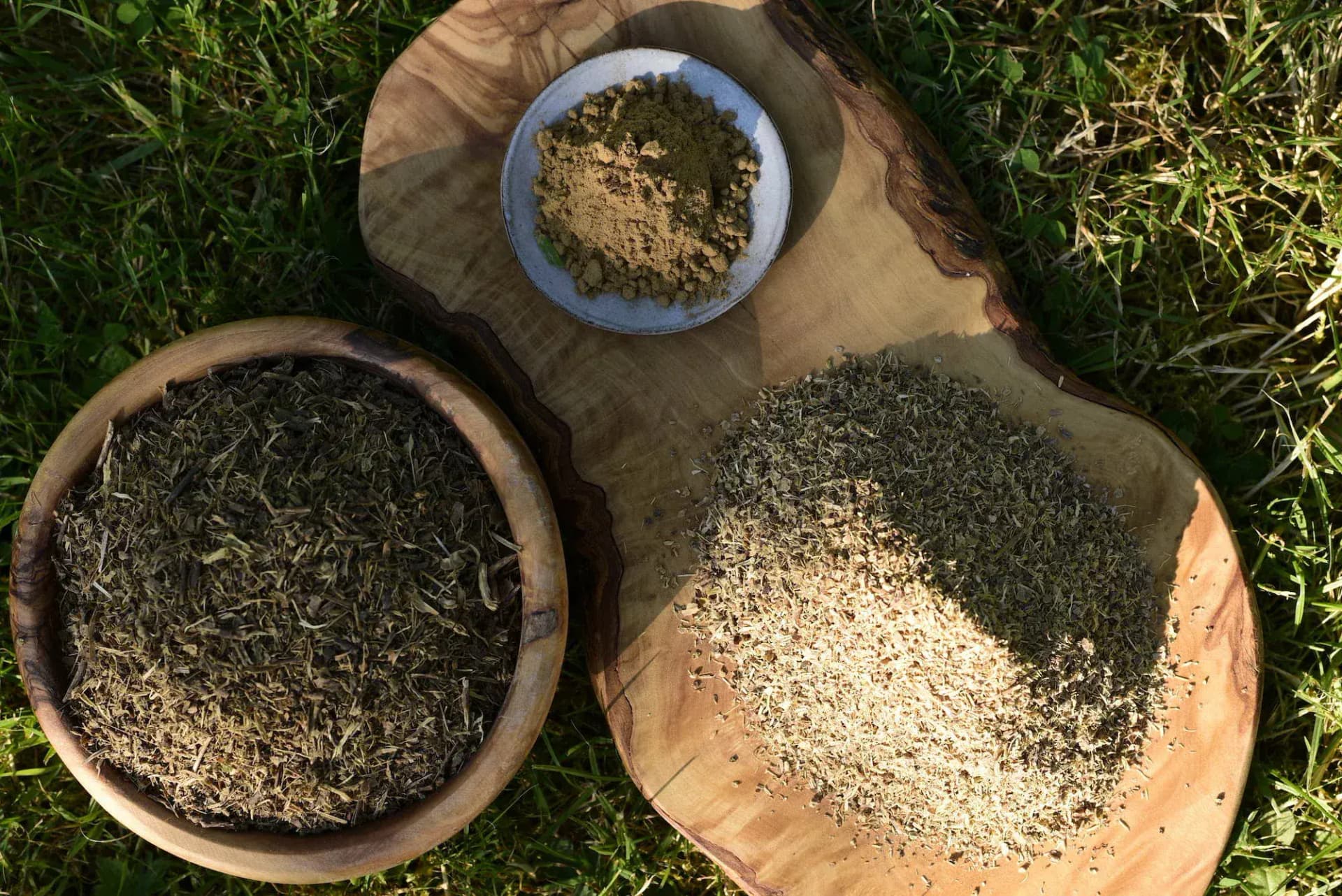
⊹ The path of the plant
⊹ Community voices
What the community murmurs.
Average · 200 reviews
including 200 left on our Etsy shop
Breakdown
Items received packaged very well and the quality is great.
2Infinity
Ritual · left on our Etsy shop · 8 October 2021
Fantastic! Exquisitely well packaged and labeled, with faster than expected shipping to Canada. The kanna is of exceedingly good quality and remarkably potent (my favorite, having also tried MT-55, non-patented extracts and fermented kanna from a variety of purveyors). The free sample was very much appreciated and well thought out in terms of being exactly in-line with what I was seeking! Totally recommend. Thanks a lot, looking forward to ordering again!
Lockhart
Ritual · left on our Etsy shop · 19 December 2022
Truly a brilliant herb! It has helped almost immediately with my mood and general concentration (I suffer from chronic depression and anxiety). Amazing stuff, 10/10
Deko
Ritual · left on our Etsy shop · 11 June 2024
I cannot express how much these sacred plants have changed my life. I am so so so grateful that this seller exists
george
Ritual · left on our Etsy shop · 20 October 2023
Quality Kanna, a euphoric and pleasant effect, 700mg taken in herbal teas with lemon by heating for 15min without boiling to activate the active ingredient. I adore ! 😍
MATHIAS
Ritual · left on our Etsy shop · 10 September 2023
These people are beautiful. This is kanna, for sure, some people seem to be selling fake kanna. Kanna is such an interesting plant, I love it. Helps me feel positive. Being that this came from ol France to me in Illinois, the price was good and I am thankful for these people(or this person). They threw in a free sample of Tagetes Lucides (Mexican marigold) with my order. I just read that ancient Mayans used this plant as a medicine and remnants of it were found in an ancient keep sake jar. Gonna try it with my kanna asap. May God bless these folks with what their hearts desire.
Marty
Ritual · left on our Etsy shop · 1 July 2022
Wonderful quality and a lovely service. Thank you! 🤗
Erik
Ritual · left on our Etsy shop · 11 October 2021
In terms of smell and taste I'm not a fan, but the effect is really nice euphoria and relaxation for my part and I had the impression that the effects lasted quite a long time. I thank the seller for the gift he gave me, it’s very kind and I highly recommend it because the plants are of good quality 👌🏻😇
Lucas
Ritual · left on our Etsy shop · 17 November 2023
Wonderful Product I used dragondroff and the estimated concentration of Alkaloids was 0.05 mg per 5 ml. I am very impressed I showed how to extract and do an acid/base titration to make a natural antidepressant tea.
Daniel Blake
Ritual · left on our Etsy shop · 24 March 2023
I had tried a few months ago, it had hurt me but in fact it was because of a mixture. Now I am a fan and it is extremely pleasant to consume with a rather intoxicating effect very pleasant. (do not consume the plants excessively by mixing them (or as little as possible), a personal advice, before I did this, now I alternate as much as possible according to the periods
Nébuleuse
Ritual · left on our Etsy shop · 8 September 2022
Great quality kanna, the first I've used. I chew 25-50mg for an energetic effect and for focusing, and chew 100-400mg for a relaxing, stoned and sedative effect. Been taking it everyday as an antidepressant and it's helped tremendously.
JC
Ritual · left on our Etsy shop · 16 December 2021
Really effective at boosting mood and overall cognition.
Deko
Ritual · left on our Etsy shop · 25 October 2024
Ask the Forest about Kanna
408 books digested, 97,512 indexed passages. She answers on lineages, synergies, cautions, ritual variations.
⊹ FREQUENT QUESTIONS ⊹
We answer.
What is kanna?
Kanna (Sceletium tortuosum) is a succulent plant from South Africa, of the Aizoaceae family, used for a very long time by the Khoikhoi and San peoples. Her leaves are fermented for several days before use. She is described as a heart-opener plant — social, non-visionary — that relaxes emotional defences.
What are the felt effects of kanna?
Traditional uses and contemporary reports describe a social warmth, an opening of the heart, a freer word and a lighter mood. Kanna is the teacher of moderation — small regular doses are rewarded, excess becomes nauseating and flat. These are reported effects, outside any medical use.
How do I make kanna tea?
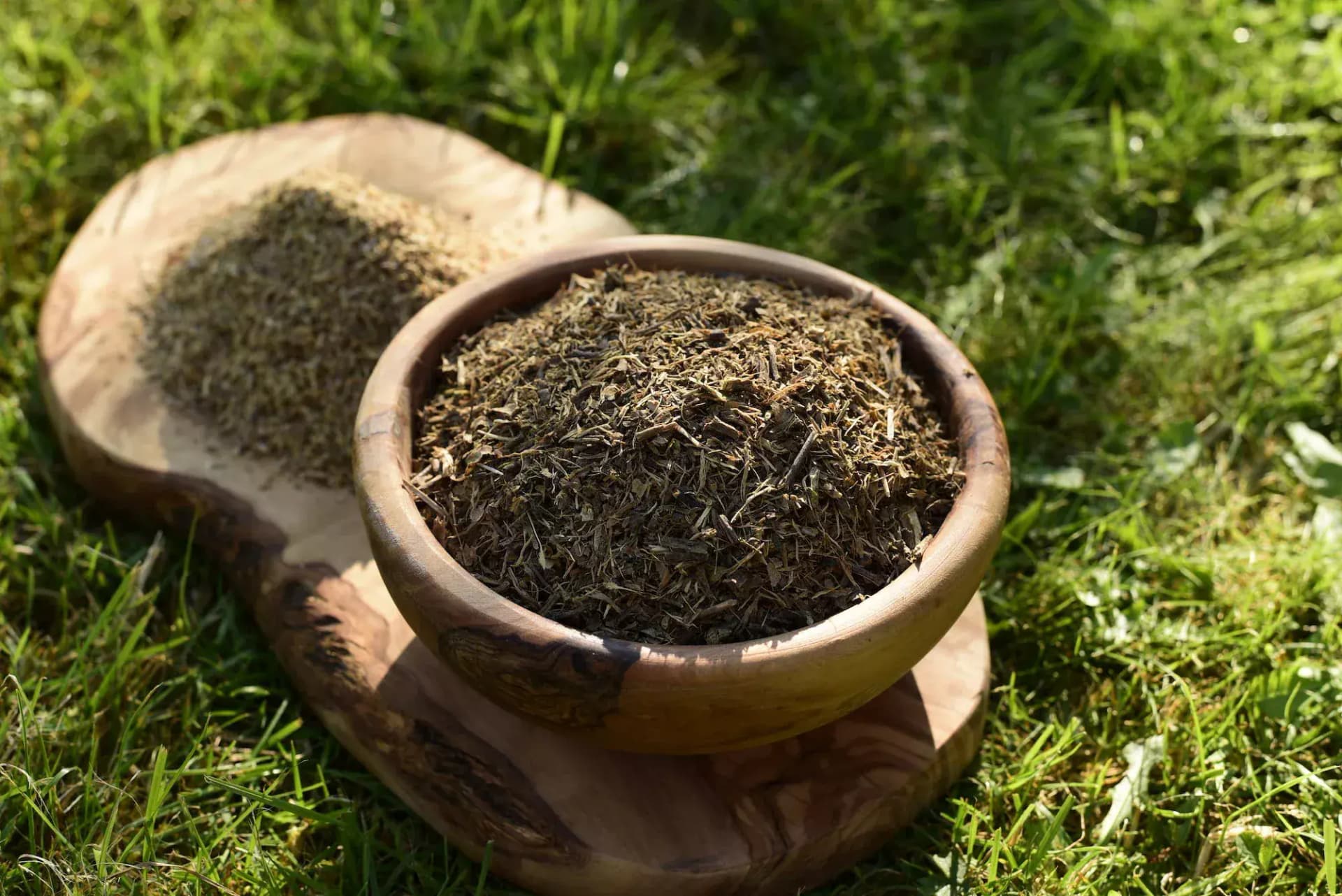
The softest way is the infusion — about a teaspoon of finely minced fermented leaves in a cup of simmering water (never boiling), 10 minutes, strained. The same leaves are traditionally chewed. Start low — kanna rewards measure.
Is kanna compatible with antidepressants (SSRI, MAOI)?
No — this is the most important precaution. Kanna acts on serotonin; combined with serotonergic antidepressants (SSRI, SNRI, MAOI, tricyclics), tramadol, triptans, lithium or MDMA, she exposes to a risk of potentially serious serotonin syndrome. Imperatively seek medical advice before any use if you take these treatments.
Is kanna legal?
Kanna is freely sold in France. Laws differ from one country to another: check the law in your country before ordering.
Can kanna and alcohol be combined?
No. The combination of kanna and alcohol is traditionally avoided. Kanna is taken on its own, as a light infusion, some thirty minutes before dinner.
Why is kanna fermented?
Fermentation is the medicine. The fresh leaves are crushed, placed in the sun for several days, then dried — an enzymatic process that lowers the mesembrine content and softens the plant (Patnala & Kanfer, 2009). It is a Khoisan cultural technology, comparable to the nixtamalisation of maize.
Does kanna create dependence?
At excessive dose, kanna's effect becomes unpleasant and flat, which discourages abuse. Traditional wisdom favours small regular doses and short cures with pauses, never escalation.
Where does INFUSE's kanna come from?
Our fermented kanna leaves come from South Africa, land of origin of the plant. The model of benefit-sharing with the South African San Council remains the ethical reference for this plant.
⊹ Chapter · Questions ⊹
Ask, answer, share.
One question, one answer — sometimes several voices. The community answers first; INFUSE steps in when it should.
Nobody has opened a thread yet about this plant. You can be the one — a real question, a use, a doubt, a detail.
Anonymous if you prefer.
In depthbotany · phytochemistry · history
Botany — a succulent of the South African desert
Kanna is Sceletium tortuosum, of the family Aizoaceae (the "iceplants" or ficoids), a lineage of succulents adapted to the arid soils of South Africa (Schultes, Hofmann & Rätsch, Plants of the Gods, p. 55-56). Recent taxonomy has sometimes reclassified her under Mesembryanthemum tortuosum — both names designate the same plant. She is a low, creeping succulent with fleshy leaves, whose genus name Sceletium refers to the "skeletal" veins visible on the dried leaves. Her common Afrikaans name, kougoed, means "thing to chew". The plant is also known as channa.
Descriptive phytochemistry — the mesembrine alkaloids
The active principles of kanna are mesembrine-type alkaloids: mesembrine, mesembrenone, mesembrenol, and more minor compounds (tortuosamine, channaine, hordenine). Schultes-Hofmann note that these alkaloids of the Mesembryanthemaceae possess a documented sedative activity (Plants of the Gods, p. 71; see also Rätsch & Müller-Ebeling, Encyclopedia of Aphrodisiacs, p. 378-379).
The fermentation does not only preserve the plant: it recomposes her chemical profile. Over the days of sun exposure, the mesembrine content drops sharply — on the order of 1.3% to 0.05% over some ten days in a controlled fermentation (Patnala & Kanfer, 2009, Journal of Ethnopharmacology) — and the balance of alkaloids shifts. This is why traditional fermentation is described as inseparable from the medicine: the simply dried plant does not have the same profile.
What the studies report
Rätsch ranks kanna among the non-hallucinogenic psychoactives. Contemporary research describes several mechanisms: a serotonin reuptake inhibition (SSRI-like effect) and a phosphodiesterase-4 (PDE4) inhibition (Terburg et al., 2013). An fMRI study published in 2013 on a standardised Sceletium extract (Zembrin) reports an attenuation of amygdala reactivity to fearful faces; other trials, at low dose, look at cognitive function and tolerability. These trials are run on the standardised Zembrin extract, often co-authored or funded by its developer — not on the fermented leaf.
These data are descriptive and preliminary: they describe laboratory and imaging observations, not a medical use nor a promise of efficacy. Kanna is not a medicine and does not replace any treatment.
Critical safety note — serotonin
Because kanna acts on serotonin, she must never be combined with serotonergic antidepressants (SSRI, SNRI, MAOI, tricyclics), tramadol, triptans, lithium or MDMA: the cumulation exposes to a potentially serious serotonin syndrome. This precaution comes from the real pharmacology of the plant. After stopping an antidepressant, a washout window of several weeks is necessary before considering kanna, and always with medical advice.
Long lineage
The Khoisan — which gathers the San (hunter-gatherers) and the Khoikhoi (pastoralists) — count among the oldest populations of southern Africa, present for tens of thousands of years (Chennells, 2013). To receive kanna is to enter an ancient transmission that precedes writing, agriculture and the first cities.
In the ethnographic documentation (Manganyi et al., 2021; Rätsch & Müller-Ebeling, p. 378), kanna appears in social communion, in erotic use and in the restoration of those whom grief has emptied.
Modern history — from oblivion to rediscovery
After the colonial mentions of van Riebeeck (1662) and van der Stel (1685), and the praise of the naturalist Peter Kolb (1738), kanna disappears from the European materia medica for nearly two centuries. Her rediscovery at the end of the 20th century culminates with the development of the standardised extract Zembrin by HG&H Pharmaceuticals, marketed under a benefit-sharing agreement with the South African San Council — which passes half of it to the nama communities of Nourivier and Paulshoek — a precedent often cited in matters of bioprospecting respectful of indigenous sovereignty.
Safety and use
Beyond the major serotonergic contraindication, kanna asks for measure. At excessive dose, reports describe nausea, dizziness, headaches and an emotional flattening that follows the peak — the plant "punishes greed". The wisdom of use favours small regular doses and short cures with pauses rather than large occasional intakes. Kanna rather discourages her own abuse.