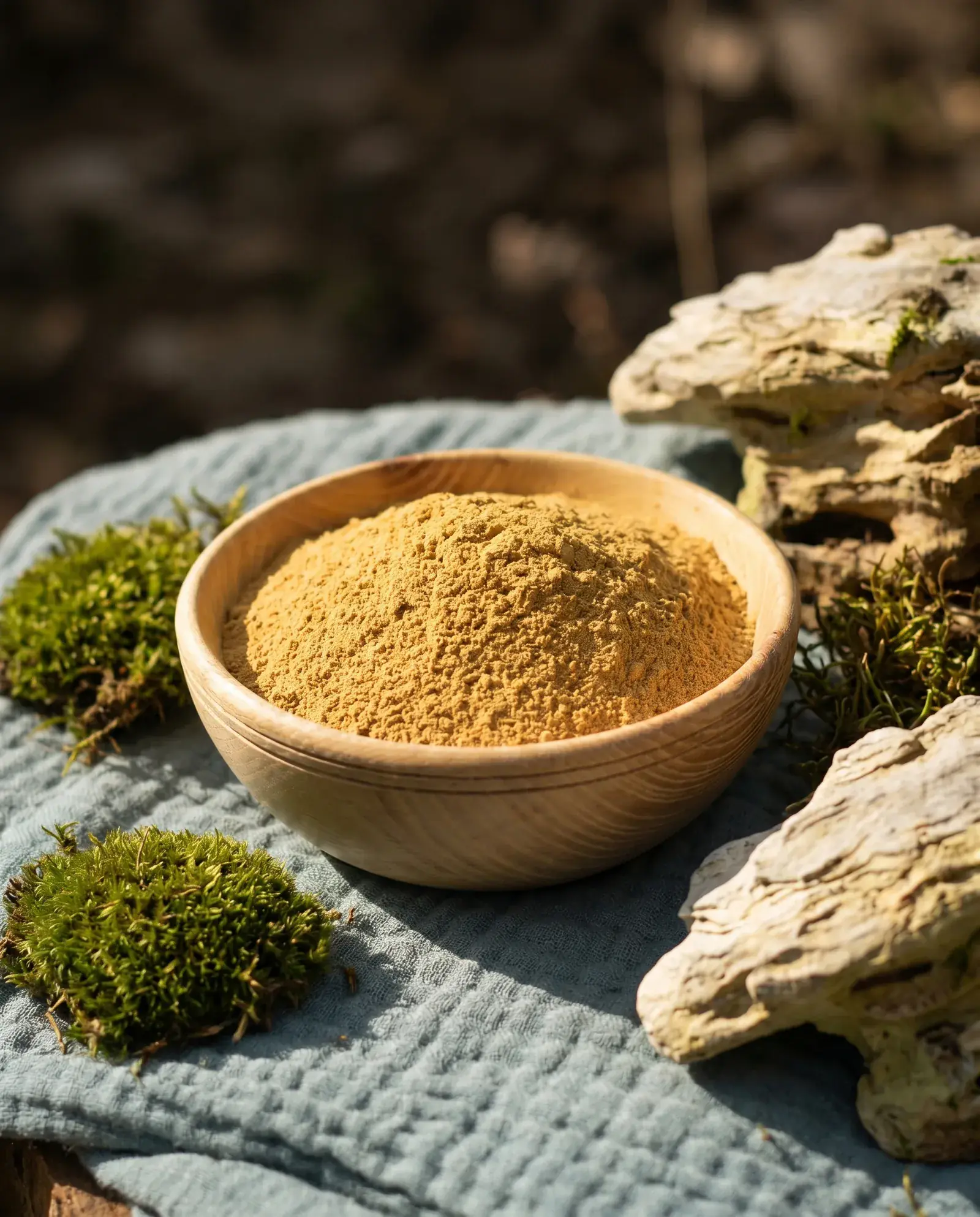
✦ Lucuma · in one breath ✦
An everyday sweetness that sweetens like caramel and nourishes like a food.
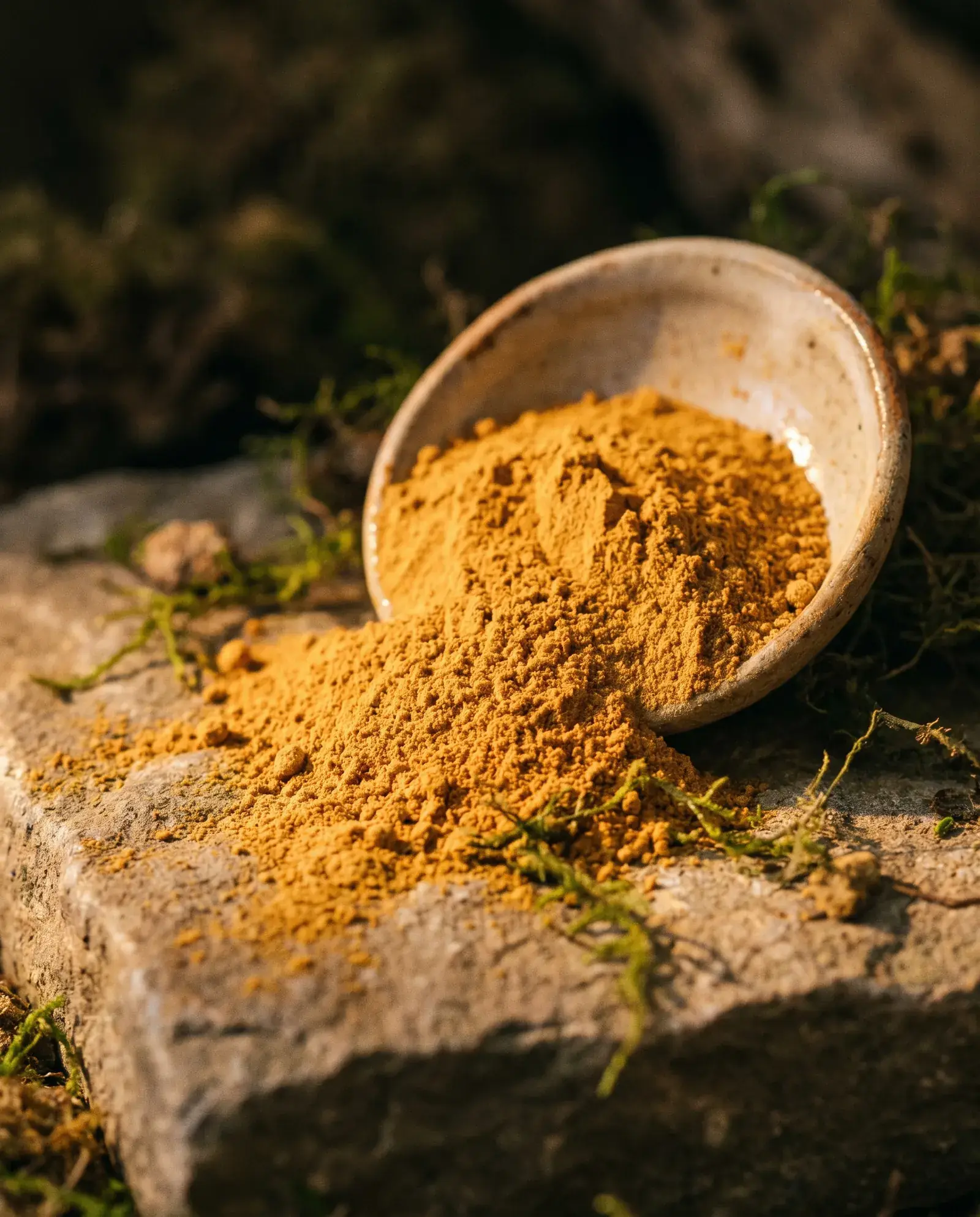
⊹ The path of the plant
⊹ Community voices
What the community murmurs.
No testimony yet for this plant — nothing invented, nothing fabricated. If you have met it, your account can open the way for those who come after.
Ask the Forest about Lucuma
408 books digested, 97,512 indexed passages. She answers on lineages, synergies, cautions, ritual variations.
⊹ FREQUENT QUESTIONS ⊹
We answer.
What is lucuma?
Lucuma (Pouteria lucuma) is the fruit of an Andean tree of the Sapotaceae family, cultivated for millennia in the valleys of Peru, Ecuador and Chile. Its saffron-yellow flesh, dry and floury, has a natural taste of maple, caramel and sweet potato. Dried and ground into powder, she is used as a food and a gentle sweetener for everyday life.
What does lucuma powder taste like?
A warm, round taste, somewhere between maple, caramel and sweet potato, with a light malted note. It is this flavour — not an effect — that made her Peru's most loved ice cream. The powder is not tart like most fruits: she is sweet and earthy, easy to pair with cacao, vanilla and plant milk.
How do I use lucuma powder?
One to two teaspoons (5 to 10 g) in a smoothie, a porridge, a plant yoghurt, a cake batter or a homemade ice cream. Lucuma sweetens gently without overpowering; she thickens slightly and gives a golden colour. Many use her as an alternative to refined sugar in desserts and hot drinks. She is a food, not a cure.
Does lucuma raise blood sugar?
Lucuma has a glycaemic index reputed to be low for a fruit — one of the reasons for her place in Andean kitchens as a gentle sweetener. She brings fibre, which slows the absorption of sugars. That said, these are dietary markers, not a medical promise: in case of diabetes or glycaemic monitoring, ask a practitioner for advice.
What is the difference between lucuma and maca?
Two Andean plants, two uses. Lucuma is a sweet fruit, a pleasure-food with a caramel taste, used mostly to sweeten and nourish. Maca is a high-altitude root, classed among the adaptogens, used for background endurance and morning energy. They can be combined: lucuma sweetens, maca supports.
Does lucuma have use precautions?
Lucuma is an ancient and well-tolerated food. As with any fruit of the Sapotaceae family, people with known allergies to these fruits stay cautious. During pregnancy and breastfeeding, ordinary food use poses no particular problem, but in case of doubt it is better to ask for advice. Do your own research (DYOR).
⊹ Chapter · Questions ⊹
Ask, answer, share.
One question, one answer — sometimes several voices. The community answers first; INFUSE steps in when it should.
Nobody has opened a thread yet about this plant. You can be the one — a real question, a use, a doubt, a detail.
Anonymous if you prefer.
In depthbotany · phytochemistry · history
### Botany
Pouteria lucuma is an evergreen tree of the Sapotaceae family, reaching 15 to 20 metres. Native to the temperate Andean valleys of South America (Peru, Ecuador, Chile), it fruits over several months of the year. The fruit, round to oval, measures 5 to 12 cm; its thin skin ranges from green to golden-brown at maturity, and its yellow-orange flesh is dry and floury — an unusual texture that sets it apart from juicy fruits. Inside, one to several large, shiny brown seeds earned it the nickname "egg fruit". Ripening often finishes after picking, the fruit being harvested firm then left to ripen.
### Taste and culinary use
Lucuma's singularity lies in her taste: where one would expect the acidity of a fruit, one finds a warm sweetness of caramel, maple and sweet potato, with a malted edge. It is this flavour that explains her central place in Peruvian baking — ice creams, mousses, cakes, milkshakes — and her reputation as the country's favourite ice cream flavour. Dried and milled, the powder concentrates this sweetness while staying easy to dose; she serves as a natural, fibre-rich sweetener in drinks and desserts.
### Nutritional profile (descriptive)
Lucuma is above all a food. The pulp and powder bring carbohydrates (including natural sugars accompanied by fibre, which moderates absorption), dietary fibre, as well as minerals (notably iron, calcium, phosphorus, potassium) and carotenoids responsible for her golden colour — precursors of vitamin A. B-group vitamins and vitamin C are also present. Her glycaemic index is generally described as low for a sweet fruit, which makes her a sweetener valued in diets attentive to blood sugar. These data describe a nourishing food, not a remedy.
### Lineage and long history
Lucuma is among the oldest domesticated fruits of the Andes. The pre-Inca cultures of the Peruvian coast — Moche, Nazca and others — grew her and prized her enough to depict her on their pottery, shaped into fruit form or painted on ritual ceramics. Kept dried, she nourished communities through the dry seasons. Her traditional name "Gold of the Incas" tells both her food value and her colour. Today lucuma remains a marker of Andean culinary identity, exported mostly as powder — an everyday fruit become, beyond the Andes, a sought-after sweetness.
« Every plant is a door. Lucuma opens onto a long companionship — listen to it more than you measure it. »