Blue lotus (Nymphaea caerulea): the sacred flower of Egypt
Blue lotus (Nymphaea caerulea, now Nymphaea nouchali var. caerulea) is an East African water lily and the sacred flower of ancient Egypt. It opens at sunrise, carries the god Nefertem and was woven into Tutankhamun's floral collars. In 2024 it was found in a ritual vase that its researchers link to dreaming.
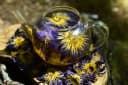 Växten i den här artikelnBlå lotus · Nymphaea nouchali4.9(546)från 6,00 €Se →
Five thousand years afloat. Modernity swapped it for counterfeits. Here is how to find the real one again.
Svensk översättning kommer snart – artikeln visas på ett annat språk.
| Item | What we know |
|---|---|
| Accepted name | Nymphaea nouchali var. caerulea (Savigny) Verdc. ; Nymphaea caerulea Savigny and Nymphaea capensis Thunb. are synonyms |
| Family | Nymphaeaceae, the water lily family |
| Names | blue lotus ; blue water lily ; Egyptian blue lotus ; sacred blue lily ; seshen (ancient Egyptian) ; uzuba (Xhosa) |
| Range | eastern half of Africa and southern Arabia, including Egypt ; ornamental elsewhere |
| Parts used | whole dried flowers, petals, stamens |
| Dream people | ancient Egypt ; among the Xhosa, the root counts among the ubulawu |
| Taste | floral, earthy, lightly nutty, a touch of bitterness |
| Research | nuciferine studied in animals (Farrell et al., 2016) ; no human study of dreaming |
| At INFUSE | wild-harvested flowers from Sri Lanka, identified by eye ; extracts ; elixir |
What is blue lotus (Nymphaea caerulea)?
Blue lotus is a water lily, an aquatic plant of the Nymphaeaceae family with pale blue flowers and a heart of golden stamens, held sacred in ancient Egypt. It carries two names: Nymphaea caerulea, the best known, and Nymphaea nouchali var. caerulea, the botanical name accepted today.
Nymphaea comes from the Greek numphē, the nymph of springs; caerulea means "blue" in Latin: the blue nymph of the waters. Despite its name, it does not belong to the genus of the Asian lotuses (Nelumbo), the pink lotus and the white lotus. INFUSE offers it on the Blue Lotus page and on the Authentic Blue Lotus page.
Nymphaea caerulea or nouchali: what is the difference?
The Egyptian lotus is now ranked as a variety of Nymphaea nouchali, a South Asian species; a 2012 study places it closer to another species, and its rank is still debated. The caerulea variety grows in East Africa and southern Arabia; N. nouchali in the strict sense grows in South Asia, and it is the national flower of Sri Lanka, the nil mānel.
For the House, both carry the same lineage: the Egyptian tradition is told about both. The INFUSE Blue Lotus, sold under the name Nymphaea nouchali, has larger, more fragrant flowers; the Authentic Blue Lotus has smaller, rarer flowers. Both come from Sri Lanka, wild-harvested, and are identified by eye, without laboratory analysis.
Why was blue lotus sacred in Egypt?
Because it opens at sunrise and closes before evening, blue lotus was for Egypt the image of creation and rebirth. In the creation accounts of Heliopolis and Hermopolis, a lotus bud rises from the primordial waters of Nun; it opens, and from its heart comes the light of the first sun.
That fragrant light has a name: Nefertem, the young god who wears a blue lotus flower on his head, god of perfume and of the first ray, linked to Atum and later to Ra. The Egyptian word for the lotus, seshen, is one of the most frequent signs in temples and tombs. The Book of the Dead holds a spell for "taking the form of a lotus": the deceased is reborn each morning with the flower.
On the wall paintings of the tomb of Nebamun, around 1350 BCE, guests hold lotus flowers to their noses; dancers wear them in their hair. The botanist William Emboden, a professor at Cal State Northridge, read these scenes as signs of a ritual use of the flower, perhaps mixed into the wine of banquets (Emboden, 1978 and 1989).
Was blue lotus in Tutankhamun's tomb?
Yes: blue lotus petals were identified in Tutankhamun's floral collars by the botanist Percy Newberry in the 1920s. Howard Carter opened the tomb in November 1922; on the brow of the second coffin lay a wreath of olive leaves, blue lotus petals and cornflowers. The flower reborn each morning went with the young king on his passage.
Does blue lotus make you dream?
No study has measured the effect of blue lotus on dreaming; the strongest lead comes from archaeology. In 2024, a team led by Davide Tanasi analysed a Bes-headed vase from the 2nd century BCE held at the Tampa Museum of Art. It found traces of blue lotus, Syrian rue (Peganum harmala) and a Cleome, along with a fermented fruit liquid, honey or royal jelly, and human fluids.
For the curator Branko van Oppen, the mixture was perhaps used in a magical ritual that brought on dream and vision, in the dangerous moment of childbirth. It is the best-documented link to dreaming for this flower. Our dreamers talk about it often, and the section on their accounts below gives the detail.
What are the effects of blue lotus?
What research has measured fits in a few lines: the flower contains nuciferine, an alkaloid that acts on serotonin and dopamine receptors in animals (Farrell et al., 2016). Apomorphine, often quoted, is debated: absent from six authentic extracts analysed in 2023 (Dosoky et al.), it was found in some commercial products (Poklis et al., 2017). The same 2023 study recognised the profile of authentic extracts in none of the eleven commercial products it tested.
At the House, we call it the flower of enchantment, awakening and rebirth, that takes you on a journey to your Highest Self: it creates an opening to the most honorable parts of our being, the most sensitive and graceful, soft and receptive, creative and sensual. Her power also reaches beyond the waking state, gifting conscious and lucid dreams, and elevated messages from our Soul through introspection, meditation and sleep. We take it in the evening, to promote relaxation.
How do you prepare blue lotus?
At the House, one whole flower per cup is enough: hot water, never boiling, poured gently, five to six minutes. At one point, the flower stops floating and drops to the bottom of your cup, re-forming completely while immersed in water: it is simply magnificent. The same flower can be reused several times. A little honey or lemon lifts the taste.
- In wine: the flower soaked for a few hours or overnight in wine, then strained. This is the preparation associated with Egyptian banquets.
- In the bath: add the flower to your bath for a sensual experience.
- Breathed in: an open flower held under the nose, as in the wall paintings.
- To smoke: petals and stamens crushed in the hand, sprinkled over a smoking base.
- Extracts: the powder dissolves in water, a quarter teaspoon; the paste extract is taken from the size of a grain of rice to that of a chickpea, under the tongue or in a hot drink.
Amounts and formats: see the Blue Lotus page.
Which plants go well with blue lotus?
At the House, blue lotus pairs first with Ceremonial Cacao, for the ceremony that opens the heart most. It also acts as a booster for other herbal essences, intensifying and 'spiritualising' them.
- With pink lotus and white lotus, the flowers of the Buddha: the lotus trilogy, over three evenings.
- With mugwort, for dream work: mugwort helps hold on to the dream, the lotus softens the way in.
- With damiana, for sensual union; with bobinsana, for heart circles.
It is part of the Dream Elixir, with Calea, Bobinsana, Uvuma, Yauhtli, kanna and passionflower; of the Love Elixir, with guayusa, damiana and rose; and of Euphoria, with kanna, rose, damiana and Yauhtli.
Blue lotus, pink lotus, water lily: what is the difference?
Blue lotus is a water lily (Nymphaea), whose flowers float on the surface; the INFUSE pink lotus and white lotus are Nelumbo nucifera, the sacred lotus of India, the flower of the Buddha, whose flowers rise above the water.
| Flower | Botanical name | Tradition | At INFUSE |
|---|---|---|---|
| Blue lotus | Nymphaea nouchali var. caerulea | ancient Egypt, Nefertem | flowers, extracts, elixir |
| Pink lotus | Nelumbo nucifera | India, flower of the Buddha | flowers |
| White lotus | Nelumbo nucifera (white flower) | India, flower of the Buddha | flowers |
| Red water lily | Nymphaea rubra | India, South Asia | flowers |
In southern Africa, the root of Nymphaea capensis, the old name of blue lotus, is called uzuba by the Xhosa: it is an ubulawu, one of the roots churned into foam for dreams, too coarse to be drunk and kept for washing (Hirst, 2005). Blue lotus thus belongs to the same family as Undlela Ziimlophe. Our guide to verified blue lotus tells the flowers apart in detail.
Is blue lotus dangerous?
Human data are scarce: a series of five cases, among service members who had vaped an extract or drunk a preparation, describes drowsiness and perceptual disturbances that resolved with simple supportive care (Schimpf et al., 2023). Blue lotus is taken in small amounts, for chosen moments.
- Pregnancy and breastfeeding: abstain, for lack of data.
- Ongoing treatment (sedatives, dopaminergic drugs such as L-DOPA or Parkinson's treatments, SSRI or MAOI antidepressants, antipsychotics): medical advice before the flower.
- With alcohol: in moderation, lotus wine included.
- Driving: it relaxes and can make you drowsy, so no driving afterwards.
- The law: blue lotus is freely sold in France. Check the law in your country.
What do people say about blue lotus?
Egypt, and those who drink the flower today, have their own words for it.
- It is called the flower of the Egyptian priestesses, and it is told that they steeped its petals in wine.
- At the Festival of Drunkenness (Tekh), the feast of Hathor, people drank to appease the goddess: in the myth, Sekhmet, the raging lioness, was calmed by beer dyed red that she took for blood. It is said that lotus wine flowed on those days, and that drunkenness there was a sacred act.
- The name Nefertem is often read as "the beautiful Atum"; when Atum merged into Ra to become Atum-Ra, Nefertem remained a god of his own, as if the lotus's perfume deserved its own divinity.
- Across the Atlantic, Maya kings also held a water lily, Nymphaea ampla, in their rites; Emboden sees it as a meeting without contact between two civilisations (Emboden, 1981). Legend adds the Aztec royal houses.
What do dreamers who tried blue lotus report?
Of the 174 night reports left by our customers, 25 are about blue lotus: 16 describe an effect on dreams, including 7 more vivid dreams and 4 better recall; 12 mention falling asleep more gently or sleeping more deeply, and one report a lucid dream. Six short reviews say they felt nothing (count from September 2026).
"My dreams are more detailed and longer!" — Yami
"I sleep like a baby and have very symbolic dreams." — Emilio
Every report, plant by plant: our dreamers' accounts.
Where to find blue lotus, and how to recognise it?
INFUSE offers Blue Lotus as whole flowers, powder and paste extract, and Authentic Blue Lotus as flowers and elixir. The flowers are wild-harvested in Sri Lanka and identified by eye. A whole flower is easier to recognise than a powder: thin pointed petals, pale blue, a heart of golden-yellow stamens, a soft sweet scent.
Sources
- Tanasi D. et al. (2024). Multianalytical investigation reveals psychotropic substances in a Ptolemaic Egyptian vase. Scientific Reports 14:27891. doi:10.1038/s41598-024-78721-8
- Dosoky N.S. et al. (2023). Chemical composition, market survey, and safety assessment of blue lotus (Nymphaea caerulea Savigny) extracts. Molecules 28(20):7014. doi:10.3390/molecules28207014
- Farrell M.S. et al. (2016). In vitro and in vivo characterization of the alkaloid nuciferine. PLoS One 11(3):e0150602. doi:10.1371/journal.pone.0150602
- Poklis J.L. et al. (2017). The blue lotus flower (Nymphea caerulea) resin used in a new type of electronic cigarette. Journal of Psychoactive Drugs 49(3):175-181. doi:10.1080/02791072.2017.1290304
- Schimpf M. et al. (2023). Toxicity from blue lotus (Nymphaea caerulea) after ingestion or inhalation: a case series. Military Medicine 188(7-8). doi:10.1093/milmed/usab328
- Emboden W.A. (1978). The sacred narcotic lily of the Nile: Nymphaea caerulea. Economic Botany 32:395-407.
- Emboden W.A. (1981). Transcultural use of narcotic water lilies in ancient Egyptian and Maya drug ritual. Journal of Ethnopharmacology 3(1):39-83. doi:10.1016/0378-8741(81)90013-190013-1)
- Emboden W. (1989). The sacred journey in dynastic Egypt: shamanistic trance in the context of the narcotic water lily and the mandrake. Journal of Psychoactive Drugs 21(1):61-75. doi:10.1080/02791072.1989.10472144
- Hirst M. (2005). Dreams and medicines: the perspective of Xhosa diviners and novices in the Eastern Cape, South Africa. Indo-Pacific Journal of Phenomenology 5(2):1-22. doi:10.1080/20797222.2005.11433901
- Rätsch C. (2005). The Encyclopedia of Psychoactive Plants. Park Street Press, entry Nymphaea caerulea.
- Rätsch C., Müller-Ebeling C. (2013). The Encyclopedia of Aphrodisiacs. Park Street Press.
- Schultes R.E., Hofmann A. (2001). Plants of the Gods. Healing Arts Press.
- Pendell D. (2005). Pharmako/Gnosis. Mercury House.
- Wikipedia, Nymphaea caerulea (taxonomy, range, Tutankhamun). en.wikipedia.org
- Wikipedia, Nefertem. en.wikipedia.org
- Wikipedia, Tomb of Nebamun. en.wikipedia.org
Further reading
- The best herbs for lucid dreaming, the guide to dream plants
- Dream herbs
- Verified blue lotus: how to recognise the real flower
- Pink lotus, flower of the Buddha
- Calea zacatechichi, the leaf of God
- Undlela Ziimlophe, the root of the white paths
- Mugwort, the oldest of herbs
- Our dreamers' accounts
 4.9(546)från 6,00 €Se →
Få vårt veckobrev.
Har du också en berättelse att lämna i Skogen?
Dela en berättelse →Det som den här läsningen öppnade
Bli den första rösten. Varje ord läses igenom innan det ansluter till läsningen.
Logga in för att dela det som den här läsningen öppnade i dig.
Logga in →